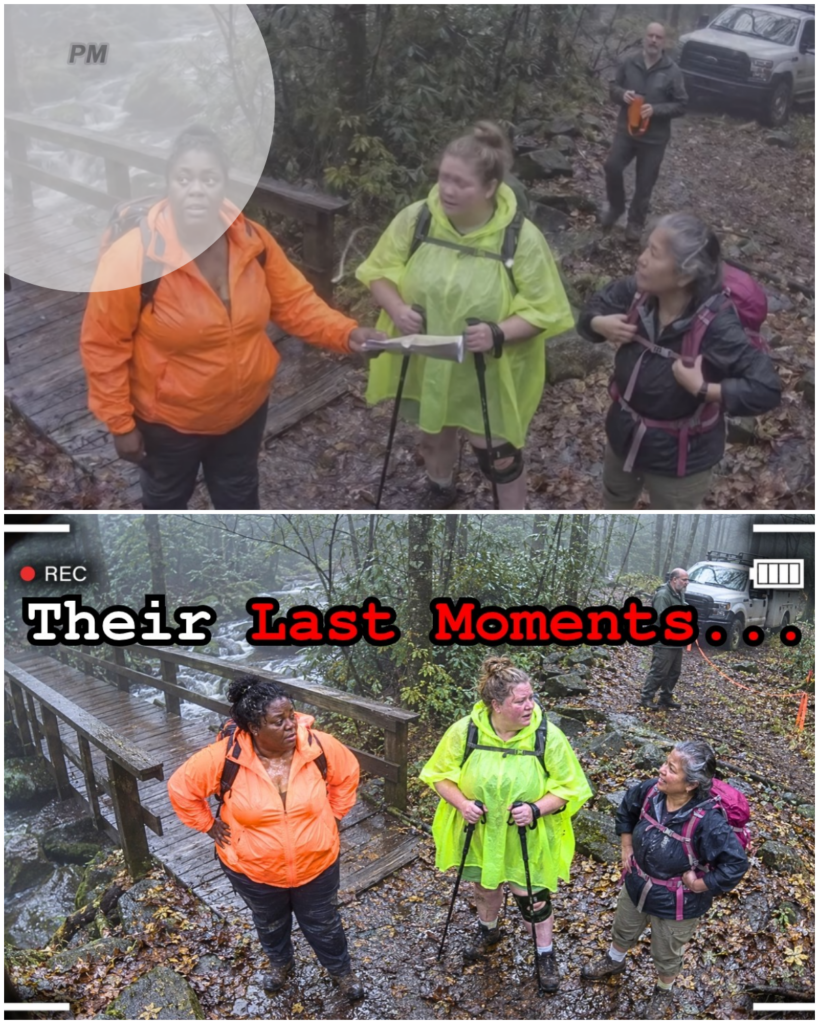
Tasha could have crossed it, but Aaron could barel…
Tasha could have crossed it, but Aaron could barely stand and smoke filled the slope.
Boon used the emergency he created to make the route he wanted appear necessary. At 9:24, the beacon registered rapid movement north.
At 9:31, Colleen’s phone disconnected from the other devices. Searchers later found it beneath leaves near a creek.
The final video showed her breathing hard and whispering, “He has them going to the tower.”
Then orange fabric crossed the lens. Boon caught her within 200 yd. The lookout had been closed for 14 years.
Its stairs were unstable, windows broken, and radio equipment removed. Calvin kept a key because the park had not updated the lock after his district assignment changed.
Boon had copied it. He forced the women into the ground level equipment room. The space contained an old desk, rusted fire tools, and shelves of supplies he had carried there over years.
Investigators would later find canned food, restraints, first aid kits, children’s evacuation diagrams, and dozens of visitor photographs taken from the tower.
Some photographs showed hikers Boon had redirected but eventually released. The women were different because Tasha had activated a beacon and Aaron recorded him.
At 10:03, Boon used Tasha’s phone to message Marcus. Detour longer than expected. All good, signal bad.
The wording immediately concerned him. Tasha never wrote all good when discussing safety. She used a family code in every wilderness check-in.
She named the snack she planned to eat next. No snack appeared. Marcus called park dispatch at 10:11.
Calvin answered. He viewed the beacon coordinates and recognized the maintenance route. He also saw Boon’s truck transponder near the lookout.
Instead of initiating a search, he told Marcus that delayed signals were common and hikers should be given until sunset.
Marcus insisted. Calvin created anformational entry, but did not issue a radio alert. At 10:26, he left the ranger station in his own vehicle and drove toward the service gate.
His actions during the next 2 hours transformed Boon’s attack into a coordinated crime. Calvin reached the lookout at 10:51.
Tasha was shouting from inside the equipment room. Aaron lay on the floor with a worsening head injury.
Colleen had a fractured wrist. Boon paced the stairs and said the women refused to complete the evacuation.
Calvin could have opened the door and called medical help. Instead, he took their phones.
He told Tasha that Boon did not understand consequences and that prison would destroy him.
If the women agreed to describe the incident as confusion during a fire scare, Calvin promised to drive them to a hospital outside the county.
Tasha said the beacon had already sent their location. Calvin removed its battery. The beacon stored that event at 10:57.
Aaron needed emergency treatment. Her speech had become slurred. Colleen begged Calvin to call an ambulance.
He walked outside, contacted dispatch, and asked whether any missing hiker report had been entered.
A dispatcher mentioned Marcus’ call. Calvin deleted theformational entry using supervisor access. Then he drove to the hollow fork camera.
The camera used a cellular modem, but weak coverage prevented full image upload. It transmitted lowresolution thumbnails and saved originals to a memory card.
Calvin removed the card at 11:23. He copied most images to a department laptop, deleted Boone’s Crossing and the next 17 minutes, then returned a reformatted card.
He believed no other copy existed. The manufacturer stored thumbnail check sums whenever the camera attempted transmission.
The images themselves had failed, but the server recorded that four files existed in the missing interval.
Calvin’s download contained only three women and an empty path. The unexplained fourth checkum later proved deletion.
Back at the lookout, Aaron stopped responding. The medical examiner would determine that rapid treatment could likely have saved her.
