You want to be on this line, you're on this line
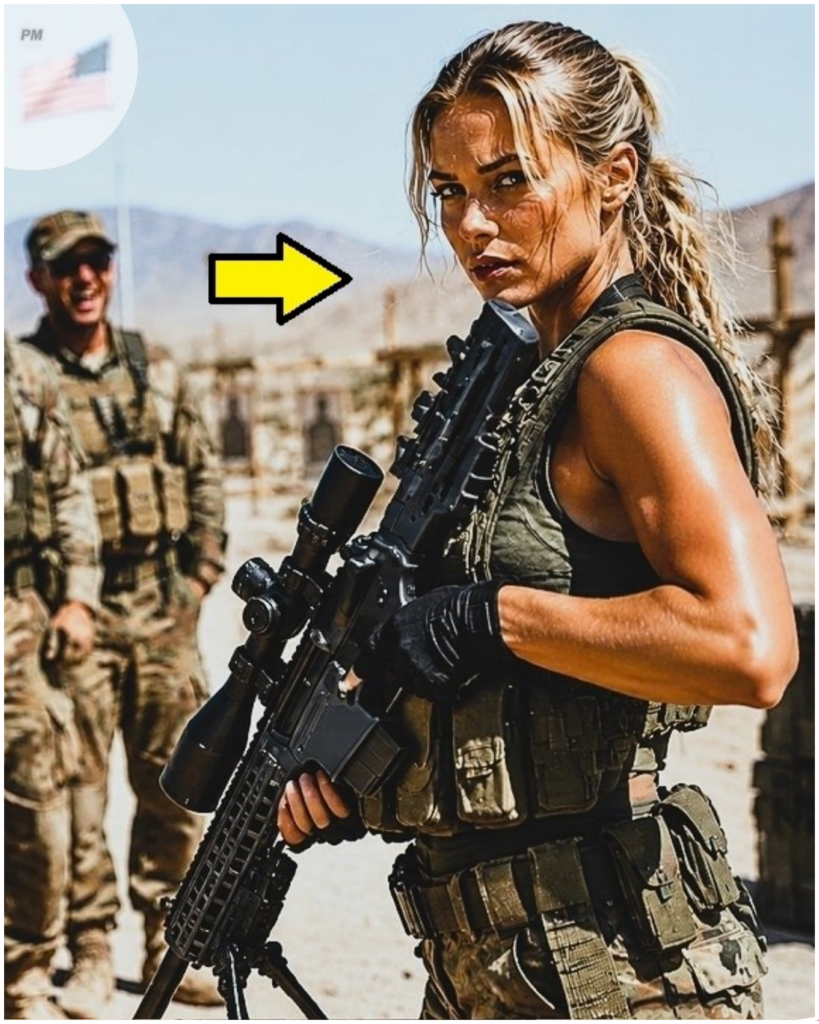
You want to be on this line, you’re on this line. But understand something. I don’t do special treatment.
Not for rank. Not for anybody. You shoot the same course as these men, and you get judged the same way, and if you can’t cut it, you go home the same as anybody else who can’t cut it.
That worked for you. That’s all I ever wanted, Emily said. There was a beat of silence, and in that silence, Ryan Mitchell, who had been watching the whole exchange with his arms crossed and a faint smile on his face, quietly stopped chewing his gum.
He couldn’t have told you why. Something about the way the woman said, “That’s all I ever wanted.
There was no bravado in it. None of the swagger. The rest of them wore like a second uniform.”
There was just a bone deep calm. The calm of a person who has been underestimated so many times that being underestimated no longer even registers as an insult.
It’s just weather. You wait it out. Ryan uncrossed his arms and looked at her a little longer than the others did.
Cross clapped his hands. Enough. We’re burning daylight. First stage. Everybody rack up. Major Carter, you’ll shoot in the rotation with everyone else.
We’ll get to you. He said, “We’ll get to you like a man promising to deal with a small annoyance later once the important business was done.”
He walked back toward the control station, and as he went, he leaned close to his assistant instructor, a wiry sergeant first class named Belle, who had been with Cross for 8 years, and worshiped the ground he walked on.
“Watch her,” Cross said low. When she chokes and she will I want it documented clean.
No sob story afterward about how the range wasn’t fair to her. Everything by the book.
You really think she’ll choke Sergeant Major? Cross looked back over his shoulder at the woman zeroing her rifle at the far end of the line.
Methodical unhurried, utterly unbothered by the 40 men who thought she was a joke. Son Cross said, “I’ve been reading people since before you were born.
She’s out of her depth. She just doesn’t know it yet.” He believed it. That was the tragedy of Daniel Cross.
And in a way, it was the making of him too. Because a man who cannot admit he might be wrong is a man who is about to be taught something he will never forget.
The first stage began. It was a straightforward test by the standards of that range, which is to say it would have terrified almost any ordinary soldier and merely challenged these men.
Cold boore precision. No warm-up. The very first round of the day fired at a small target at distance because in the real world you don’t get a warm-up.
You get one shot when it counts and you either have it or you don’t.
Cross always started this way. He wanted to see who could deliver when their body was cold and their nerves were raw and there was no second chance.
Man after man went to the line. Some of them were extraordinary. The special operations veterans in particular were a marvel to watch.
Economical and precise no wasted motion. A ripple of respect moved through the crowd with each good shot.
This everyone felt was going to be a real fight. And then it was Ryan Mitchell’s turn and Ryan showed everyone why his name was the one they’d all been quietly betting on.
He was beautiful to watch. There’s no other word for it. Where the others worked, Ryan flowed.
He settled behind the rifle like he was lying down in his own bed, breathed once, and put his first cold round exactly where he wanted it, and he did it so easily that it almost looked careless, except that nothing about it was careless.
A murmur went through the crowd. A couple of men shook their heads, and grinned, “Because there’s a particular joy in watching someone do a hard thing effortlessly, even when that someone is your competition.”
Ryan stood up, brushed off his knees, and gave a little shrug as if to say, “Well, that’s just what I do.”
That cross said to Belle, not bothering to lower his voice, “is what a shooter looks like.”
He said it loud enough to carry down the line. He said it everyone understood for the benefit of the woman at the end.
Emily Carter did not react to it. She was still watching the range, but not the way the others watched.
The others watched the shooters. Emily watched the environment. The men who bothered to observe her, and there weren’t many yet, would have seen her eyes tracking things that had nothing to do with the person on the firing line.
The way the dust lifted off the burm and drifted, the lean of the distant grass, a flag on a far pole that most of them had stopped seeing hours ago.
She was reading the range like it was a book written in a language only she spoke, and she was doing it constantly, automatically, the way other people breathe.
Then Cross called her name, Carter. He didn’t say major this time. He said her name flat like a challenge, like a dare.
You’re up. Let’s see it. The whole line turned. This was the moment they’d all been waiting for, whether they admitted it or not.
The technician, the weather girl, the maybe who wasn’t even a real maybe. Every man there expected one of two things.
Either she would go to the line and miss badly and the whole morning of mockery would be vindicated.
Or she would refuse back out, admit she’d been in over her head, and slink back to her little green car.
Either way, they were about to be proven right. Emily Carter picked up her rifle and walked to the line.
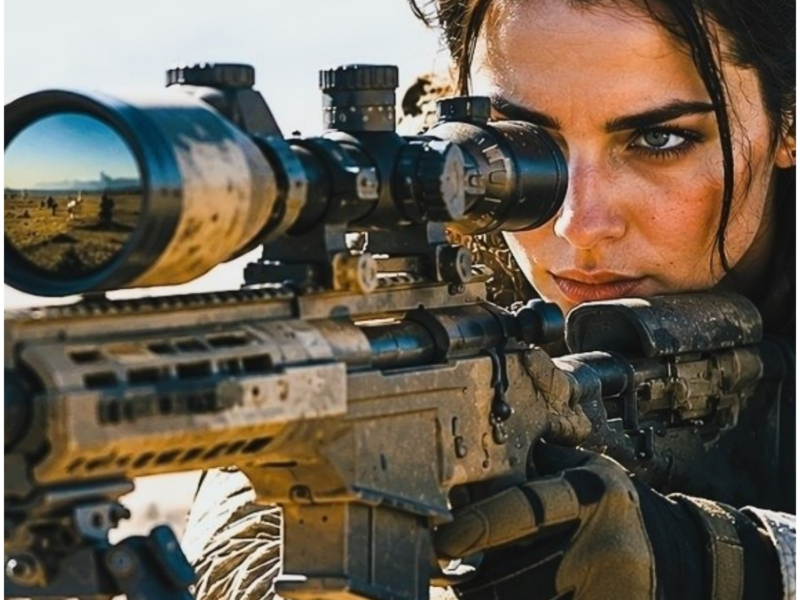
She did not hurry. She did not perform. She lay down behind the weapon the way you settle into something you’ve done more times than you could ever count.
And for a moment, she simply lay there still, her cheek against the stock, her eyes open, and she did not fire.
Any day now, Major Across said. She didn’t answer him. She wasn’t being rude. She simply wasn’t there anymore.
Not in the way the rest of them were. She had gone somewhere else, somewhere quiet, a place a few of the best men on that line recognized because they’d been there themselves in their finest moments.
She was reading the wind. She had been reading it all morning. In fact, every flag and every drift of dust.
So that by the time Cross called her name, she already knew things about that range that the men who had just shot on it did not know.
The dust shifted, the far grass leaned, and in the exact half second between one gust and the next in the pocket of stillness of that only a person watching for it would ever notice Emily Carter fired.
The report cracked flat across the range. For a moment, nothing. The men waited for the spotter’s call.
They were already half smiling, already leaning toward each other to say the thing they’d been dying to say all morning.
Then the call came back over the control station speaker, and the voice that read it out sounded genuinely confused, as if it were reading a number that didn’t make sense.
Dead center. Cold bore. Perfect. The smiles didn’t fall all at once. That’s the thing people always get wrong when they tell this story later.
They didn’t fall all at once. They fell one at a time, man. As each shooter’s brain caught up with what his ears had just heard, a perfect cold bore hit.