Dark stains spreading through the upper quadrant o…
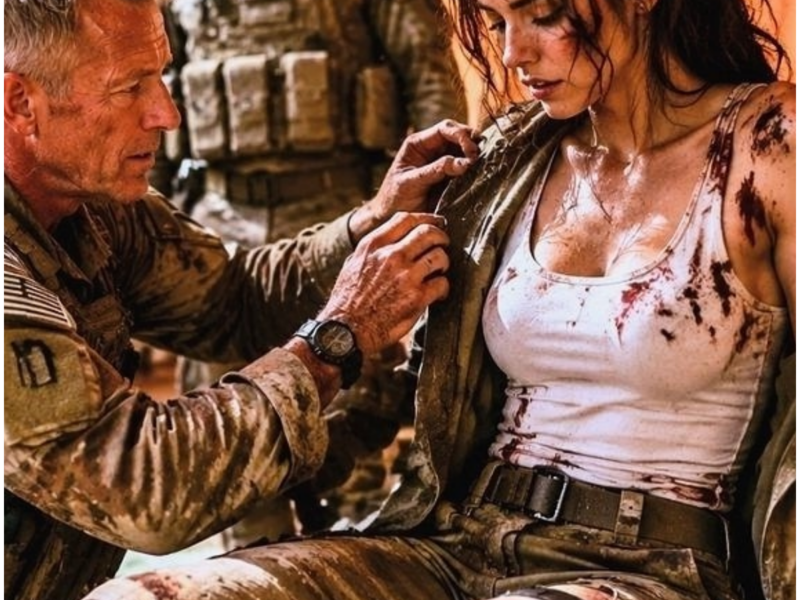
Dark stains spreading through the upper quadrant of his flight suit. Not arterial. He’s moving with too much controlled urgency for arterial.
The arm is compromised enough that he’s carrying his Beretta M9 in his left hand, which means he’s adapted already, which tells her something about how long he’s been in this situation and how he’s been managing it.
He looks at her, then at the radio terminal, then at Vale, she plays him the transmission.
Both of them without preamble. He listens completely still. The pilot stillness that is not the stillness of inaction, but the stillness of a brain running very fast in a very small space.
Commercial encrypted, he says. Private contractor band, American voices, no accent, no foreign language, no translation lag.
He looks at the ceiling for exactly 2 seconds. Then back at her Serion group, he says she waits.
Virginia based PMC. DoD-certified private military contractor. I’ve seen that equipment configuration before. He glances at his shoulder like it’s an interruption.
Flare GPNVG18. The chest rig setup. The team spacing on movement. It’s their operational signature.
The FADEC is sabotaged using her credential. Serion group is in the admin building on a timed operation targeting the server room.
Her father’s name is in that server room. She knows this. Not bad enough to matter.
Can you hold a position? I’ve been holding a position for the last 14 minutes.
She picks up her laptop, looks at Bravo 7, looks at the door, then hold this one, she says.
Nobody touches this aircraft. He looks at the jet, then at her. What are you doing?
He says, finishing what I started, she says. Repairs require depot access and a clean software environment and time she doesn’t have.
What she’s building is a detour. A hard-coded alternative command path that routes the engine control logic around the infected subroutine entirely the way you reroute a fuel line around a compromised fitting using whatever coupling you have available.
It will work. The engine will respond. The bypass will hold for the duration of a flight.
After that is someone else’s problem. Right now the problem is the next 30 minutes.
Rayburn is at the main hangar door sight line to the flight line. Beretta in his left hand.
He hasn’t spoken in 11 minutes. Then two elements just cross the flight line, moving south along the service lane toward us, she says.
200 m. Maybe 220. She runs the math. At a standard tactical movement pace, 200 m is approximately 4 minutes.
Watching the door from Vale’s position at the analog radio terminal. I’m getting Nellis on the emergency frequency.
They’re 32 minutes out. Maybe 28. 28 minutes. She’s been working for 19. The bypass code is 60% complete.
At current pace, she has 9 minutes of work remaining, which leaves 19 minutes of buffer before Nellis arrives, which would be comfortable if the two elements on the flight line stay parallel and don’t turn.
The FADEC module initializes, runs its self-check. The infected subroutine activates. She can see it in the diagnostic readout.
The small spike in the fuel control logic as the malicious code tries to engage and then the bypass routes around it cleanly.
The engine control logic proceeds through the infected section without touching it like water around a stone.
System nominal. She exhaling slowly through her nose. The breath of a system returning to equilibrium.
It’ll fly, she says. Rayburn says, “Good.” Then the south door of the hangar opens, not the main door.
The maintenance access door on the south wall, the one that doesn’t have a camera because the camera mount was damaged in a wind event two years ago, and the work order to replace it has been pending.
Ever since one figure moving low and fast, her hand finds the fire extinguisher mounted to the wall beside the avionics platform before her conscious mind has fully processed the decision to reach for it.
It’s Kowalsik, 31 years old, assigned to the 23rd’s maintenance section, has a habit of eating at a Bigfoot van and once lent her a socket wrench without being asked when hers stripped on a stuck fastener.
A small thing she has not forgotten because small things done without being asked are the ones worth remembering.
Long cut along his left forearm. Contact with something. Two by the fuel depot, he says.
Three at the admin building entrance. They’re inside and one I can’t account for. Last position was the south service road.
How long ago? Rayburn says 4 minutes maybe five. South service road four to 5 minutes ago.
At tactical movement pace that puts the unaccounted elements somewhere between the service road and the south hangar complex somewhere between there and here.
Norah closes the laptop, stands up from the maintenance platform. We need to be done before they get here, she says.
We are done, Rayburn says. She looks at him. The aircraft is done, she says.
We’re not done. He looks at her for a moment. The look she’s seeing more of in the last hour.
He says. She picks up her bag. Checks that the laptop is secure. Checks that the photographs on her phone are backed to the encrypted cloud account she set up 3 years ago because she had a feeling, not a specific feeling, a general one.
Let’s go, she says. The route from hangar 1 to the administrative building is 340 ft of open flight line.
Norah has walked it every working day for 2 years. Never at night. The door is propped open, not forced, not damaged.
A brick placed deliberately in the gap between the door and the frame, precise enough to hold the latch clear without preventing the door from appearing closed from a distance.
Someone who knew this door. Someone who knew this entrance. Someone inside this building put that brick there before the operation began.
She doesn’t stop moving. Level two, one flight up. She can hear the equipment before she reaches the top of the stairs.