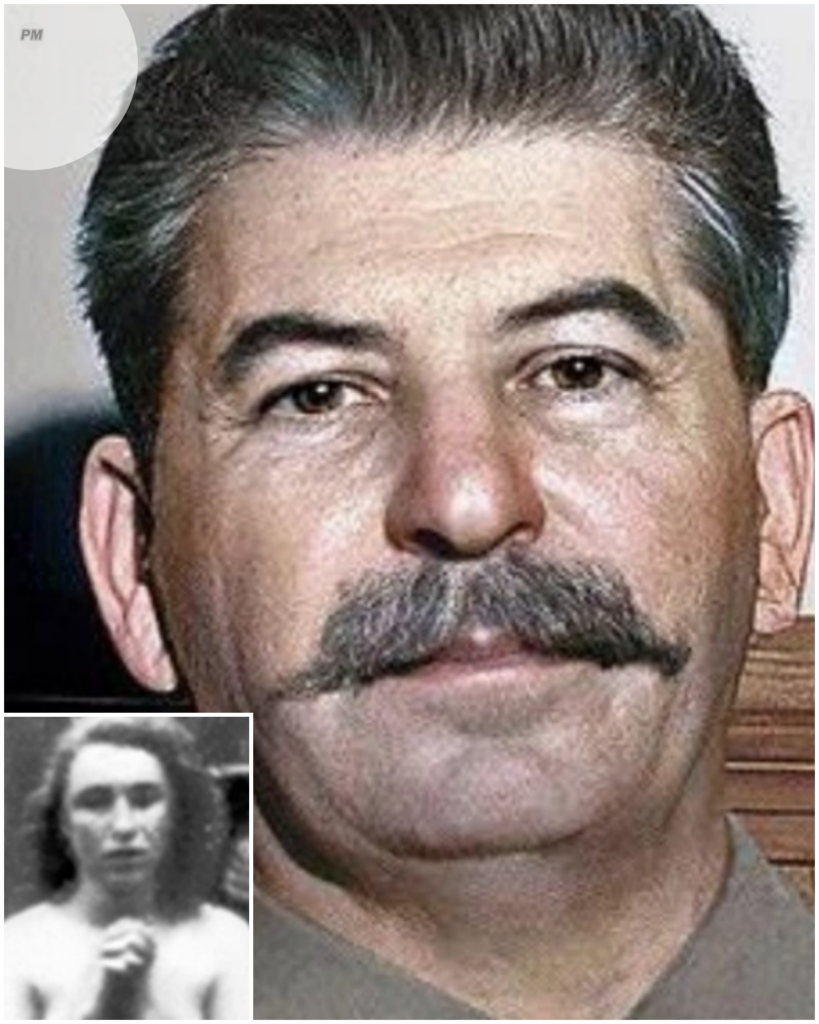
From a small town in Georgia, Joseph Stalin Rose to lead one of the world’s most powerful nations.
His rule was marked by ruthless control, Starvation, and mass imprisonment. He crushed opposition without mercy.
Yet, after decades Of terror, his power finally slipped away, ending with his death in 1953, a lonely end
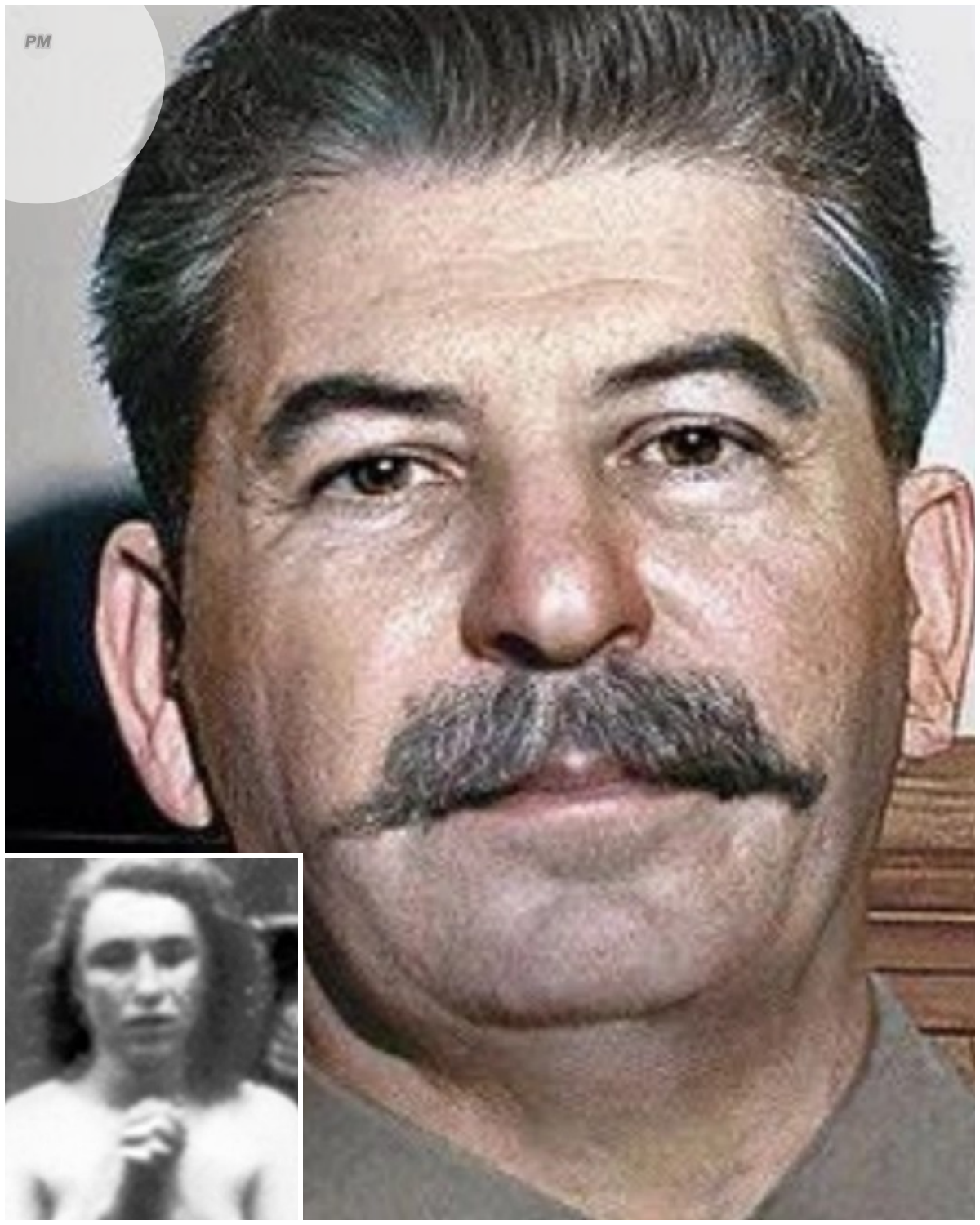
To a reign that changed the world forever. Stalin was born as Ioseb Besarionis Dze Jughashvili on December 18, 1878, in the town of Gori in Georgia, which at the
Time was part of the Russian Empire. His early life was filled with poverty, violence,
And instability. His father, a shoemaker, was an alcoholic who often beat his wife and son.
Stalin’s mother was deeply religious and sent him to a church school with hopes that he would become
A priest. But Stalin rejected religion early on and was eventually expelled from the Tiflis
Theological Seminary in 1899, likely for spreading Marxist ideas. That expulsion marked the beginning Of his involvement in revolutionary politics.
In the early 1900s, Stalin joined the Russian Social Democratic Labour Party, aligning himself with the Bolshevik faction led by Vladimir Lenin.
He took part in organizing strikes, robberies, and underground propaganda, acts that got him Arrested multiple times and exiled to Siberia.
But these hardships only deepened his commitment To the revolution. By 1912, he had adopted the name “Stalin,” meaning “man of steel,” and began
Writing for Pravda, the Bolshevik newspaper. He wasn’t particularly charismatic, and his Speeches lacked the passion of more popular revolutionaries like Trotsky.
But Stalin Made up for it with cunning and political ruthlessness. When the Bolsheviks seized
Power in 1917 after the October Revolution, Stalin gained a position in the new government.
In 1922, Lenin appointed him General Secretary of the Communist Party, a role that, At the time, seemed administrative.
But Stalin used it to his advantage, placing Loyal allies in key positions across the party and gathering detailed information on
Rivals, often through spying and blackmail. Lenin grew suspicious of Stalin toward The end of his life.
In what became known as Lenin’s Testament, he warned other Party members that Stalin was too rude, too power-hungry, and should be
Removed from his position. But after Lenin suffered several strokes And eventually died in January 1924, Stalin suppressed this warning and made sure
It never gained traction among party leaders. Instead of stepping aside, Stalin began a campaign
To consolidate power. He first aligned with Grigory Zinoviev and Lev Kamenev to sideline Leon Trotsky, who many assumed would succeed Lenin.
Trotsky was forced out of his military role And eventually exiled from the country altogether in 1929.
Stalin then turned on Zinoviev and Kamenev, accusing them of factionalism and having them expelled from the party.
Over time, Stalin eliminated almost all his political rivals, often using fabricated charges, public Humiliation, and secret executions to do so.
By 1928, Stalin had absolute control over The Communist Party and, by extension, the Soviet Union.
That same year, he Launched the first Five-Year Plan, a massive economic project meant to transform the
Country from a poor, farming-based society into a powerful industrial nation. The plan focused on
Rapid industrial growth, especially in steel, coal, and heavy machinery. But to make it work,
Stalin needed full control over food and labor. That’s when he turned to agriculture, and
Millions of lives were about to be ruined. He forced farmers across the Soviet Union to give up their private land, livestock, and tools.
These were Small farmers, known as kulaks, many of whom had worked the same land for
Generations. Stalin labeled them as greedy enemies of the state simply because they owned Slightly more than others.
He claimed they were standing in the way of progress and used that as An excuse to crush them.
Their land was taken, and they were forced into massive collective farms Run by the government.
This process was called collectivization, and it wasn’t optional. Anyone who refused was labeled a traitor.
As soon as collectivization started, the Countryside erupted in chaos. Farmers killed their animals rather than hand them over.
Grain production dropped sharply because people no longer had any reason to Work hard on land they didn’t own.
But Stalin didn’t see it that way. Instead of fixing the policies, he blamed the farmers themselves.
He accused Them of hoarding grain and sabotaging the economy. In response, he ordered mass
Arrests, executions, and deportations. In 1929 alone, more than 100,000 so-called Kulaks were sent to forced labor camps.
Thousands more were killed on the spot or Died during transportation. Families were torn apart.
Children were taken from their parents. Entire villages were emptied overnight. Stalin even created a campaign called “Dekulakization,”
Which wasn’t just about economics, it was about complete control. There were no trials. No second
Chances. Once labeled a kulak, you were finished. Meanwhile, the Soviet state continued to demand
Massive grain exports to fund industrial growth, even as food shortages spread across the Country.
Stalin ignored warnings from local officials and experts. When Areas couldn’t meet grain quotas, Red Army troops were sent in to seize
What little food remained. Homes were raided. Storage barns were emptied. People were left with nothing to eat.
One of the most horrifying things Stalin did Happened in Ukraine. Between 1932 and 1933, millions of Ukrainians starved to death.
This famine, now known as the Holodomor, was one of the darkest and most brutal
Chapters in Soviet history. It was the result of Stalin’s aggressive Push for collectivization and his ruthless desire to break any form
Of resistance, especially from Ukraine. Ukraine had long been a fertile region with Rich farmland, and its people were proud of their cultural identity.
Many Ukrainian farmers Were deeply opposed to Stalin’s collectivization orders. They resisted giving up their land, their
Grain, and their independence. In Stalin’s eyes, this resistance wasn’t just disobedience, it was Rebellion.
And he was determined to crush it. In late 1932, Stalin imposed impossibly high Grain quotas on Ukrainian villages.
When villages failed to meet the quotas, Soviet Enforcers moved in and took every bit of food they could find.
Armed groups called “food Requisition brigades” went from house to house, searching walls and floors for hidden
Supplies. If anyone was caught hiding food, they were either executed on the Spot or deported to labor camps.
To make things worse, Stalin introduced a law in August 1932 that became known as the “Law of Five Ears of Grain.”
Under this law, anyone, child Or adult, caught taking even a small amount of grain from a field could be sentenced to ten years
In prison or even executed. It didn’t matter how hungry you were. Stealing state property, even out
Of desperation, was treated like a serious crime. By winter, the situation was catastrophic. Entire regions were starving.
The borders of Ukraine were sealed off so that people couldn’t Leave in search of food.
Trains were stopped. Roads were blocked. Stalin even made sure that Foreign aid organizations couldn’t send help.
The death toll grew rapidly. Estimates say at Least 3.9 million Ukrainians died during the Holodomor, but some researchers believe the
Real number could be over 7 million. Entire villages disappeared. Families collapsed one By one.
Survivors later spoke of eating grass, tree bark, and boiled leather. In the most extreme
Cases, especially in isolated villages, reports of cannibalism began to surface. Parents were Forced to make choices no one should ever face.
And all this time, Stalin knew. He received Regular reports from the countryside. He knew people were dying by the millions, but
He refused to reduce grain quotas. In fact, he increased the pressure, accusing Starving Ukrainians of being lazy, disloyal, or “saboteurs.”
While Soviet cities received food shipments and propaganda claimed the plan was a Success, rural Ukraine was being erased.
In 1934, something happened that changed The Soviet Union forever. Sergei Kirov, a popular Communist Party leader in Leningrad
And seen by many as a possible rival to Stalin, was suddenly assassinated. The details
Around his death were suspicious from the start. Kirov had recently disagreed with some Of Stalin’s decisions, and not long after that, he was gunned down in the hallway of a government
Building, with barely any security around him. Many historians believe Stalin either Arranged the murder himself or allowed it to happen so he could use it as a reason
To go after anyone he considered a threat. Right after Kirov’s death, Stalin passed New laws that allowed the secret police, known as the NKVD, to arrest people
Without evidence and execute them without a trial. This marked the beginning Of what came to be known as the Great Purge, or sometimes “The Great Terror.”
It Started quietly at first, but by 1936, it exploded into one of the most intense and
Violent political crackdowns in modern history. Between 1936 and 1938, Stalin’s regime Arrested more than 1.5 million people.
People were taken from their homes in the Middle of the night. Some were arrested for things as small as making a joke about Stalin
Or being late to a meeting. Once arrested, they were dragged into interrogation Rooms where they were beaten, starved, and tortured until they confessed
To crimes they didn’t commit. The “trials” that followed were just for show. They were called “show trials” because everything was scripted, judges, lawyers, and defendants all
Played roles. The accused were forced to confess to being traitors, spies, or enemies of the state.
Many were told their families would be punished if they didn’t confess. Some were promised mercy,
But once they confessed, they were shot anyway. In 1937 alone, nearly 400,000 people were executed.
Entire families were destroyed. Children of those arrested were labeled “enemy offspring” and placed in orphanages
Or sent to labor camps themselves. Stalin even turned on the Red Army, one Of the strongest in the world.
In 1937, he ordered the arrest and execution of top military Leaders, including Marshal Mikhail Tukhachevsky, one of the Soviet Union’s most respected
Commanders. In just a few months, around half of all army officers were either Executed or imprisoned.
This left the Soviet military weak and disorganized, just a Few years before World War II would begin.
By the end of 1938, the NKVD had Executed about 700,000 people. Millions more were in camps, many
Of them never heard from again. Those who weren’t executed were sent to the Gulag system.
The Gulag system was one of the darkest parts of Stalin’s reign. It was an
Enormous network of forced labor camps spread across the Soviet Union, especially in the Coldest and most remote areas like Siberia, the Arctic, and the Far East.
“Gulag” is Short for “Glavnoe Upravlenie Lagerei,” which means “Main Camp Administration,” And it was run by Stalin’s secret police.
Stalin used these camps as a tool to get Rid of anyone he thought might oppose him.
By 1939, there were already over 1.3 Million people locked inside. But throughout Stalin’s years in power, it’s
Estimated that more than 18 million men, women, and even children passed through The Gulags.
These weren’t just criminals. Many were teachers, doctors, Engineers, students, and peasants. Inside the camps, life was unbelievably harsh.
Prisoners were forced to do backbreaking labor like mining, logging, building railroads, Or digging canals, all with the most basic tools.
They worked 12 to 16 hours a day in extreme Conditions. Food rations were tiny, barely enough to survive on.
If you didn’t meet your work quota For the day, your food would be cut even more.
Medical care was almost nonexistent. Public Punishments were used to scare others into staying quiet.
The weather made survival even Harder. In camps like Kolyma and Vorkuta, temperatures could drop below -50°C in winter.
Frostbite was normal. In these freezing zones, simply falling asleep outside could mean death. Kolyma camp was known as the “Land of Gold
And Death” because prisoners were forced to dig for gold while barely surviving. In some
Years, the death rate in Kolyma reached 30%, almost one in three prisoners dying each
Year. In the first five years alone, over 130,000 people are believed To have died in that region.
Women and children were also imprisoned. Women Often faced se*ual abuse from guards or other prisoners.
Pregnant women gave birth in the Camps, and many babies died shortly after. Some women were arrested just
Because their husbands had been labeled “enemies of the people.” Whole families were torn apart.
Then in August 1939, just before World War II Began, Stalin signed a secret deal with Adolf Hitler called the Molotov-Ribbentrop Pact.
Publicly, it was a non-aggression treaty between Nazi Germany and the Soviet Union, but The real damage came from the secret protocol attached to it.
That hidden section outlined How Hitler and Stalin would divide Eastern Europe between themselves. Stalin wanted
Breathing room to build up Soviet power, and Hitler wanted to focus on invading Western
Europe without worrying about his eastern flank. Just over a week after the pact was signed,
Hitler invaded Poland on September 1, 1939, triggering World War II. Seventeen days later, On September 17, Stalin invaded from the east, claiming he was protecting Ukrainians and
Belarusians. In reality, it was a calculated move to claim his share of Poland as agreed with
Hitler. Stalin’s troops quickly took control of Eastern Poland and, not long after, occupied the
Baltic states, Latvia, Lithuania, and Estonia. These were independent countries, but Stalin annexed them by force in 1940, following rigged elections and the
Installation of puppet governments. One of the darkest outcomes of this invasion Was the Katyn massacre.
In the spring of 1940, the NKVD executed more than 22,000 Polish Military officers, police, doctors, professors, and other members of the Polish elite.
The goal Was to wipe out any potential resistance. The victims were buried in mass graves in places like
Katyn Forest. For decades, the Soviet government blamed the Nazis for the killings. It wasn’t
Until 1990 that Moscow finally admitted the truth. After occupying Eastern Poland and the Baltic
States, Stalin began a massive campaign of forced deportations. From 1939 to 1941, more Than 1.5 million people were rounded up in the middle of the night and loaded onto trains
Headed east. These were not just political activists or military officers. Whole families Were targeted.
Many were arrested for the vague crime of being “socially dangerous,” even If they had no political activity at all.
The conditions on the trains were horrific. People were packed into cattle cars with no food, no water, and no sanitation.
Some trains took Weeks to reach their destinations. Hundreds died along the way from suffocation, starvation,
Or exposure. Babies and elderly people often didn’t survive the journey. When the survivors Arrived in places like Siberia, Kazakhstan, or the Arctic North, they found nothing but
Barren land and forced labor waiting for them. Stalin’s dreams started to shatter on June
22, 1941, when Hitler betrayed him and launched Operation Barbarossa, a massive surprise Invasion of the Soviet Union.
Stalin had ignored multiple warnings, including reports from British Intelligence and his own spies, believing Hitler would honor the pact.
When the attack came, the Soviet military was unprepared, and the Germans advanced quickly. Stalin went silent for days,
Not even addressing the nation until July 3. As the Red Army retreated, Stalin gave brutal
Orders. One of the most devastating was the scorched earth policy: destroy everything of Value, food, bridges, railways, factories, so the Nazis couldn’t use it.
Entire villages were Burned down, and millions of Soviet civilians were left with nothing. This policy, while slowing
The Germans, caused immense suffering for ordinary people. They had no homes, no food, And no way to survive the advancing winter.
Stalin also imposed savage military discipline. His infamous Order No. 227, issued in July 1942, made it illegal for soldiers to retreat
Without permission. The order created “blocking detachments”, Soviet troops stationed Behind the front lines whose job was to shoot any soldier who tried to flee.
That year alone, More than 150,000 Soviet soldiers were executed by their own commanders. Stalin viewed these
Deaths as necessary sacrifices for victory. By 1944, as Soviet forces started pushing back The Nazis, Stalin turned on his own people again.
He accused entire ethnic groups of helping the Germans, even without proof. On February 23–24, that same year, Stalin ordered the mass
Deportation of the Chechens and Ingush from their homes in the North Caucasus. NKVD troops
Stormed villages, gave families minutes to pack, and forced them into unheated cattle cars. Roughly
500,000 people were deported in just two days. Later in 1944, the same happened to the Crimean
Tatars. About 200,000 were deported from Crimea in a matter of days. Like the Chechens, they
Were accused of collaborating with the Nazis, though many had fought in the Red Army.
Soviet Records later showed that nearly half of the Crimean Tatars, about 46%, died within
The first year from starvation, illness, and exposure. Their homes were given to Russian Settlers, and their culture nearly vanished.
Even after the war ended in 1945, Stalin didn’t loosen his grip. Instead, repression intensified.
Millions of Soviet Soldiers who had been held as prisoners of war by the Germans were not welcomed
Home, they were treated as traitors. Many were arrested and sent straight to The Gulags.
Stalin believed that anyone who had been outside Soviet borders might Have been “infected” with Western ideas.
In 1952, Stalin unleashed a new wave of Paranoia: the anti-Jewish purge known as the “Doctors’ Plot.”
He accused a group of Jewish doctors of conspiring to poison top Soviet officials. Though no evidence existed,
Many were arrested, tortured, and imprisoned. The campaign created a wave of fear across The country and led to growing antisemitism.
Historians believe Stalin may have been preparing For mass deportations of Jews before his death.
Finally, on March 5, 1953, Stalin died after Suffering a massive stroke at his dacha near Moscow.
He had been left alone for hours because His guards were too terrified to enter his room without permission.
By the time anyone checked on Him, he was barely alive. He died later that day.
At first, the government honored him as a Hero. But just three years later, in 1956, Nikita Khrushchev shocked the world by delivering
A secret speech that exposed Stalin’s crimes. It was the first time the Soviet people began to
Learn the full extent of what had happened. For the families of victims, the truth came
Too late. Their loved ones had been executed, exiled, or left to die in prison camps.
Entire communities had been wiped out. And though Stalin was gone, the scars he left
On the Soviet Union would last for generations.