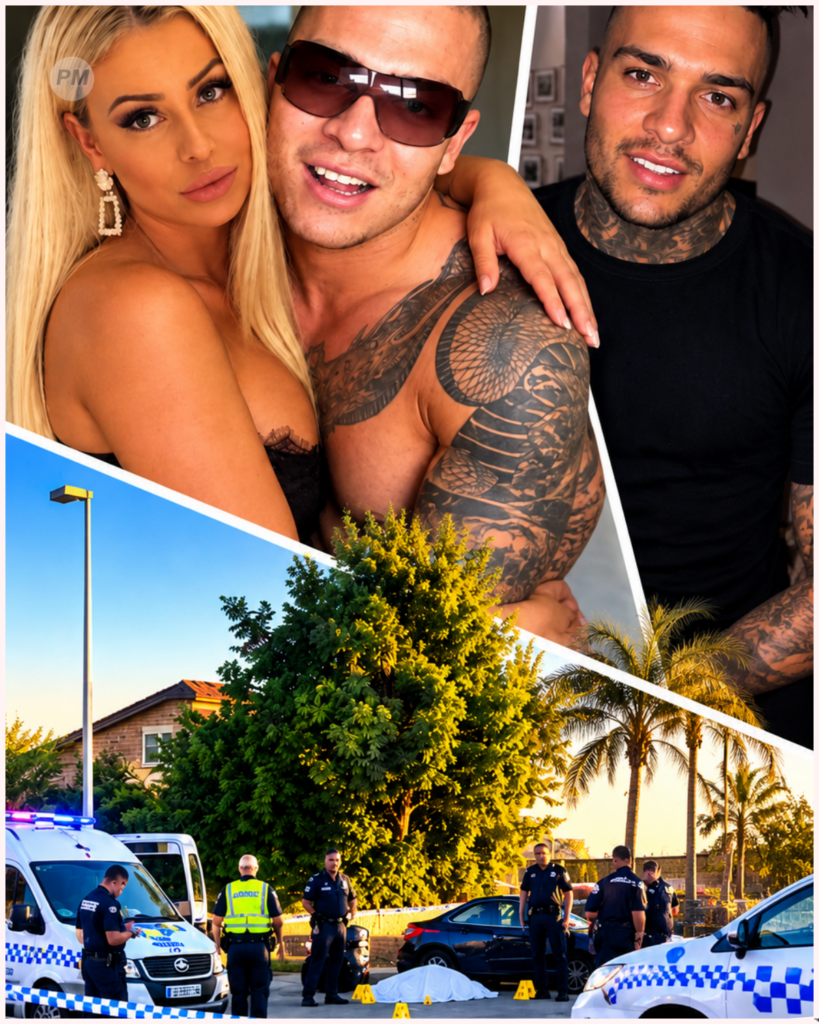
On the evening of Sunday, September 8th, 2019, a woman called Trip0 from a house in Highland Park on the Gold Coast.
She told the operator her son’s friend had been shot. Someone, she added, had been carrying a bag that had been dropped.
The woman who’d been shot was Ivona Yvanovich, 27. Paramedics found her critically injured and rushed her to Gold Coast University Hospital where she was declared dead that night.
The autopsy found a single gunshot wound to the left side of her chest which damaged her liver, collapsed her lung, and filled her chest cavity with blood.
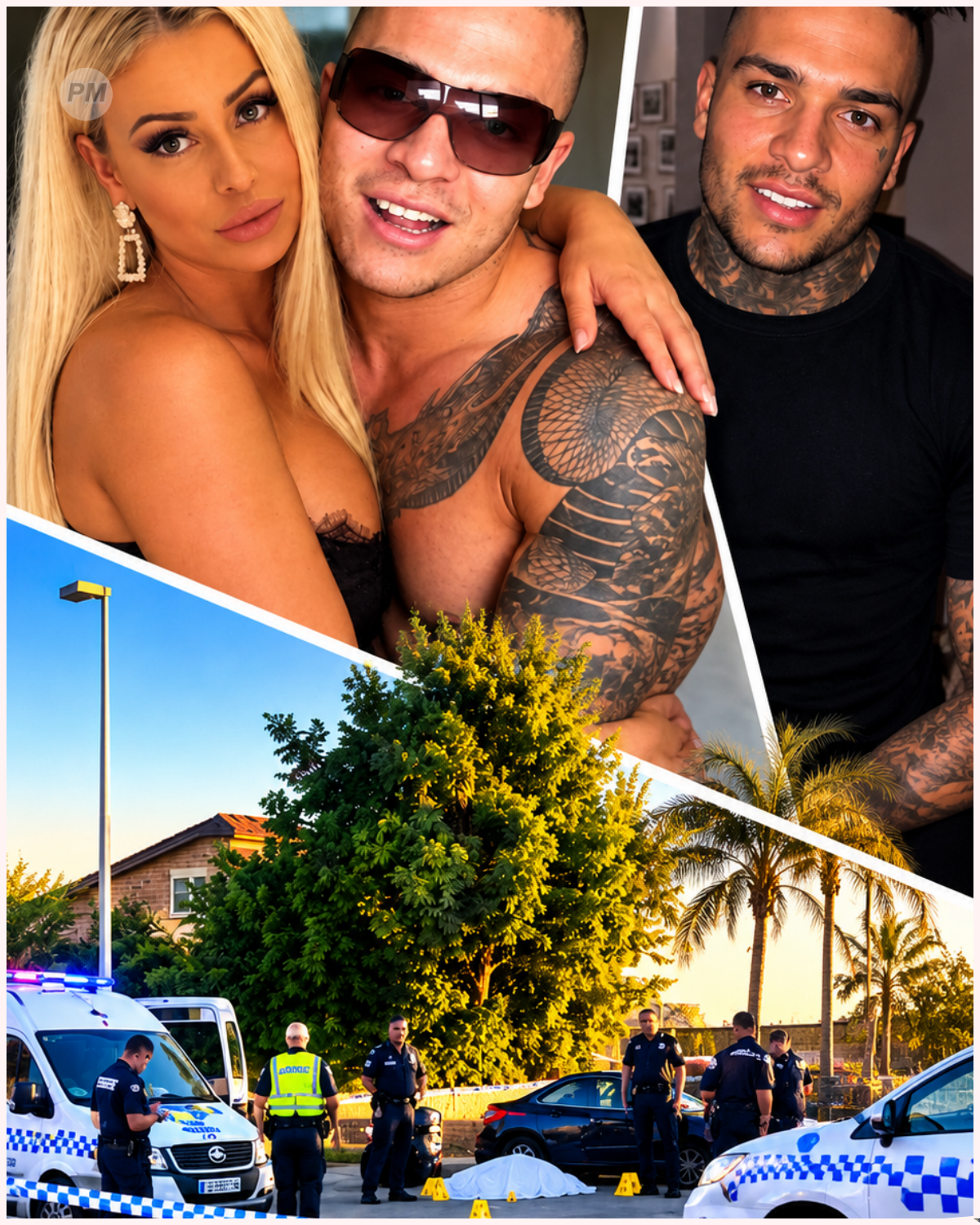
The caller was Michelle Panagakos, who owned the house. Her son, Christos, lived there. Christos was Ivona’s ex-boyfriend, a Gold Coast bodybuilder with a long criminal record.
Alleged links to outlaw motorcycle gangs, and at that moment, a man out on parole.
By the time police arrived, almost everyone who’d been in the house was gone. The gun has never been found.
Over the following 6 years, there would be a homicide investigation, secret coercive hearings, a manslaughter charge, a committal hearing, a prosecution quietly abandoned, and finally a coronial inquest.
We’re going to take you through all of it, and we’re going to tell you throughout exactly what was alleged, what was sworn under oath, and what a coroner ultimately found.
Because the accounts given by the people actually in that house rarely agree with each other.
The story of what happened to Ivona is also in a real sense the story of a house full of people who for years wouldn’t tell police what they’d seen.
We cover true crime from around the world using court records and verified reporting. No dramatizing, no glorifying.
Subscribe if you want the full account. We start with who Ivana Yvanovich actually was.
Ivona Yvanovich was from Labrador on the Gold Coast. Reports describe her as a waitress and as an influencer, someone with an active social media presence.
On the day she died, she posted pictures of herself with her dog Meatball up on Burley Hill looking like she was having a good day.
The coroner who later examined her death described her as a happy, kind, and caring person.
About a hundred family members and close friends, dressed in black, gathered at Integrity Funerals in Parkwood to farewell her.
One of her closest friends told mourners that everybody knew what a loving person she was and that every time you see a ladybug, it’s Ivonor.
Her younger sister, Annette, was too distraught to speak at the service. But in the days after the shooting, she wrote on Ivona’s Facebook page that she would do anything to have her back and that she was sorry nobody had been there to try and help her.
Ivana and Christos had been together. His own lawyer would later describe it as a long-term relationship.
One other account describes them as having first dated as teenagers. By 2019, they’d broken up, but police said they’d stayed good friends, and Christos told detectives he was still close with her.
Police said they didn’t believe the shooting was connected to domestic violence. That Sunday night, Ivana and a group of Christos’ friends were getting ready to go out for dinner together.
To understand who was in that house and why police later suspected some of the witnesses were holding back, it helps to know who Christos Panagakos actually was by that point.
He first came to wide attention in his early 20s when Queensland’s anti-bikey unit, Task Force Maxima, targeted him as a suspected ICE dealer and gang member.
Police had helicopter surveillance on his Highland Park home and were following his car. He’d been out of jail for just a month after serving time for dangerous driving.
On the night of June 27th, 2014, police detained him at a restaurant in Cooling Gata and alleged they found 28 gram of ice in his Hyandai.
He and his friend Rosario Don Barbaro were both charged with possessing a commercial quantity of a dangerous drug.
A detective swore an affidavit saying police suspected the pair were involved in a drug distribution network and in possession of firearms.
It’s worth including a detail that followed Christos in headlines for years. Though only ever as an association, never a membership.
Rosario Barbaro was the brother of Pasquali Barbaro, later shot dead in Western Sydney, and of Harley Baro, an alleged rebels gang member.
When police searched Christos’s bedroom, they seized two ecstasy tablets, three types of anabolic steroids, including the cattle drug Trenolone, 101 Viagra tablets, $16,650 in cash, and [snorts] a sornoff Winchester lever action rifle.
Under his bed was a so-called tick sheet, apparently recording alleged drug debts. The serious ICE charges collapsed when Supreme Court Justice Martin Dorny ruled the search of his car had been unlawful.
Christos pleaded guilty to the lesser drug and weapons charges and was sentenced to 18 months, but walked out of court in April 2016, having already served 7 months on remand.
He spoke at the time of starting a new life with his girlfriend in Thailand.
The trafficking he’d later plead guilty to, though, dated back to March and April 2015.
And in July 2017, it caught up with him in the Brisbane Supreme Court. Police phone taps had recorded him trying to buy between 4 and 8 o of ice from a man in Bean Lee, arranging a sale to a buyer prepared to pay up to $6,700 and selling about an ounce of ice and 500 ecstasy pills to a woman known to police.
The crown called his operation sophisticated and a considerable logistical exercise. Justice James Henry described him as well entrenched as a supplier, noting an appalling criminal history that by then ran to eight pages.
His barrista told the court he’d been in the grip of addiction since he was 17 or 18, had been clean for a year, had been studying fitness, and had launched a meal prep and delivery business.
He was sentenced to 3 and 1/2 years with parole eligibility after 10 months. Christos sobbed in his partner’s arms as the sentence was handed down.
Within hours, police alleged he’d been caught concealing ice and Valium on his body on the way to the watch house.
He later pleaded guilty to those possession charges and to a similar incident at Ipsswitch police station in 2015.
His lawyer said he’d done it to ease his anxiety about going to prison. Christos himself wrote a letter to the court saying he used drugs to self-medicate under stress and that he’d had a wake-up call.
That was the man who by September 2019 was out on parole and living in his mother’s house in Highland Park.
So what actually happened? For a long time, the honest answer is that nobody outside that house knew.
And the accounts that eventually emerged don’t all agree. Police said at the time that around five people were in the home.
Detective acting superintendent Brendan Smith told reporters the death may have been an accident. The weapon wasn’t believed to be licensed, he said, calling it a clear example of where things go wrong.
He said police didn’t believe the shooting was bikey related, though he acknowledged the people involved had links to clubs.
Some weren’t actual members of any gang, he said, but hung around the fringes of those circles.
What enraged both police and the public was what happened next. By the time officers arrived, the group had already left.
Smith called it disgraceful, saying that if one of them had been injured, they’d have expected help from everybody present.
There was a lot of first aid that could have been rendered. He said that may or may not have made a difference.
We’ll never know. Christos was among those who left. Police believe he hid in nearby bushland and later appealed to find the owner of a blanket they believed he’d taken from a neighboring property.
He returned to the house at around 1:00 in the morning and was taken into custody on a return to prison warrant.
His parole now revoked. He was questioned for most of the next day. No charge was laid.
Years later, a pre-inquest hearing was told what he’d said to detectives. According to council assisting the coroner, he gave only limited detail.
He said he’d been on the lower level of the house when he heard a loud bang, walked upstairs, and found Ivana lying on the ground unresponsive with a handgun with a long barrel lying next to her.
He said he left before police and paramedics arrived because he didn’t want to be blamed for what had happened.
He wouldn’t name the friends he’d planned to have dinner with. While he sat in custody, police executed a crime scene warrant at the house and found a butterfly knife, a taser, and a police cap in his bedroom.
In January 2020, he pleaded guilty to five unrelated charges, including unlawful possession of a weapon, failing to dispose of a syringe, and receiving tainted property.
His lawyer said he collected items like these, and that the police cap had belonged to a woman, and he hadn’t realized it was genuine.
The magistrate noted that when knives, tasers, and police hats are kept that way, they risk falling into the wrong hands.
He received another 3 months on top of the sentence, he was already serving. But on Iona’s death itself, 2020 was a year of silence.
Nobody was charged. Police said they’d spoken to everyone who’d been in the house, but that some of the versions given were missing detail.
Smith said he believed people were holding information back, possibly because of Christos’ alleged bikey links.
He asked them directly to consider what they’d expect from others if it had been their own mother or sister.
Ivona’s sister, Annette, went public. In a Facebook post, she wrote that four people knew what happened and were too gutless to speak.
Her family reportedly held a vigil on the first anniversary of Ivona’s death. Then police turned to the heaviest tool they had.
The Crime and Corruption Commission’s annual report revealed that uncooperative witnesses had been called into secret coercive hearings, the so-called Star Chamber, where people can be compelled to answer questions, even if the answers incriminate them.
The report said those hearings uncovered relevant witnesses, evidence about the circumstances of the shooting, and the identity of whoever had disposed of the firearm.
Police confirmed though that they still hadn’t found the gun itself. That’s where things stood at the end of 2020.
A young woman dead, a missing gun, a house full of people with very little to say.
Then in January 2021, detectives walked into a prison and charged Christos Panagakos with manslaughter.
On January 28th, 2021, detectives arrested Christos at Woodford Prison, where he was already in custody and charged him with Ivona’s manslaughter and unlawful possession of a firearm.
It came 16 months after her death. Detective Inspector Chris Hearn said police were charging manslaughter specifically because they didn’t believe there had been any intent.
The Gold Coast Bulletin reported an allegation that became central to the police case. A video was allegedly found on Christos’s phone, filmed in July 2019, less than 2 months before Ivona died, showing him shoving a firearm down the pants of an unconscious man in his garage.
Police alleged that on the night of the shooting, he’d been seen with a large revolver similar to the one in that video, and that it matched the description of the weapon found next to Ivona.
These remained allegations. The weapon itself was never recovered. At his first appearance in Brisbane, his lawyer, Michael Gatenby, said it wasn’t even clear who was alleged to have fired the gun.
Reading between the lines, he said the allegation seemed to be that Ivona had shot herself and that mere ownership of the firearm was what the case actually rested on.
The magistrate pointed out Christos had been charged with unlawfully killing her, so it was reasonable to assume police were saying he’d done it.
Gatenby said that wasn’t his own understanding. Through his lawyer, Christos said he intended to contest the charge and he has maintained his innocence throughout.
Christos was released on bail. Reports differ on exactly when with one source citing February 2021, another May.
The conditions included a curfew and drug testing and he kept running into trouble with them.
In July 2021, police on patrol spotted him at around4 to 10 at night, a street away from home, standing around a car with three men linked to outlaw motorcycle gangs.
His lawyer said the car had broken down and run out of oil. The magistrate fined him $500 and told him plainly, “Don’t leave home.”
That August, while still on bail for manslaughter, came an incident this account returns to later.
In December, he turned up late to report to police on Christmas Eve, having started a new job as a jeweler in Brisbane.
3 days later, he failed a drug test and admitted taking speed the night before.
At the station, police searched his bag and found a 20 cm hooked skinning knife in a sheath.
He said a friend had just given it to him and he’d forgotten it was there.
A magistrate fined him $1,400 recorded convictions and told him he had an appalling history of breaching bail and was treading a fine line.
Ivon’s sister saw the fine reported and wrote that the justice system was a joke.
The committal hearing ran through 2022 at Southport Magistrate’s Court, concluding in late August. This is where a magistrate decides whether prosecutors have enough evidence to send a case to a higher court.
And it’s also where the people who’d actually been in that house finally had to answer questions under oath.
Michelle Panagakos told the court she’d been talking with Ivona about their hair, then went to the laundry.
She heard a loud noise. When she came back, Ivona was pacing up and down.
Michelle said she assumed Ivona had hurt her nail. There was no blood, no obvious injury until Ivona told her she’d been shot.
Michelle said she then saw a gun spinning on the ground beside her. She said she saw her son walking up the stairs and the head of another man.
Ivona asked them to call an ambulance. Michelle said, and Christos held a towel to her.
He left, she told the court as the ambulance arrived. Other witnesses were far less helpful.
A friend of Christos’, Brendan Elliot, said he’d been hanging mirrors in a home gym and was on a cocktail of drugs.
Everything, he said, was a blur. Another friend, Thomas Findlator, said he’d spent the day shopping with Christos, but left before the shooting.
He was on ice and GHB, he said, and remembered little and had never seen a gun in the house.
A third witness failed to turn up at all. The witness who mattered most was a man named Dne Walker.
The crown’s case was that Christos had been in unlawful possession of a gun, tripped on his way up the stairs, and that it discharged.
The defense said the whole case rose or fell on Walker’s own account. Walker told the court he’d been so intoxicated on Xanax, ICE, and GHB that he couldn’t recall that night or even whether he’d actually been there.
The court heard police believed he’d bundled up guns and taken them outside the property.
Defense lawyer Michael Gatenby told the magistrate no properly instructed jury could convict on that evidence alone.
He said he didn’t accept that simply walking with a loaded gun that happens to discharge automatically makes someone guilty.
On August 23rd, 2022, Magistrate Zenita Belgic found there was a case to answer and committed Christos to stand trial in the Brisbane Supreme Court on manslaughter and unlawful possession of a category H weapon, meaning a handgun.
Even his own lawyer called Ivona’s death a tragedy. Then came a long wait. In late January 2023, Christos was arrested again, accused of driving with an illegal drug in his system at Willowvale and of possessing around 50 g of methamphetamine, breaching a bail condition requiring him to stay off illegal drugs entirely.
His lawyer said there was a strong case the drugs were intended to be shared among friends, called it a tragic relapse, and told the courts suffered from anxiety and depression.
Police opposed bail, but he was released on February 9th under strict conditions. Live at a rehabilitation facility.
Report weekly. Don’t drive. Then in March 2023, Queensland’s Office of the Director of Public Prosecutions announced it would not present an indictment.
After careful consideration of the admissible evidence from the committ, it concluded the Crown didn’t have a reasonable prospect of actually securing a conviction.
Gatenby said Christos was pleased the DPP had accepted that position and hoped now the serious allegations had been discontinued, he’d finally be able to grieve for Ivona himself.
For the Javanovic family, it meant more than 3 years of waiting and no trial at all.
By the time the charge was dropped, Christos had already spent 118 days in custody over an allegation that would never actually be tested before a jury.
Dropping the manslaughter charge didn’t mean Christos stayed out of court. That August 2021 incident, the one that happened while he was on bail, involved a woman he’d been seeing for just 3 weeks.
She was staying at his Highland Park home when he saw texts from a male friend on her phone.
The court heard he yelled at her to leave, shoved her against a bedside table, put a hand around her neck, and squeezed, telling her that if she were a man, he’d slit her throat from one side to the other.
She photographed the red marks left on her neck. He pinned her arms, deleted the photos, and snapped her phone in half.
Christos pleaded guilty to two counts of assault, occasioning bodily harm, plus common assault and willful damage.
He was sentenced to 6 months in jail with immediate parole, 2 years probation, and ordered to pay $4,000 in compensation.
His barrista said he had no prior history of violence against women and had shown genuine remorse.
Separately, he was given a 9-month probation order for 13 further offenses, including drug possession, stealing items from a car park, and a bail breach.
The prosecutor noted his criminal history now ran to 10 pages. By then, he was 31, a former bodybuilder living with his mother after 4 months in rehabilitation.
In October 2024, with Ivona’s death more than 5 years behind them, Coroner Donald McKenzie held a pre-inquest hearing.
He said the inquest’s purpose was to establish the cause of death, not to fix up a prosecution that had already been discontinued.
He didn’t want it seen as targeting Christos specifically and raised concerns about natural justice given a lawyer expected to act for him hadn’t yet been in contact.
16 witnesses would be called including Christos and his mother and the evidence already gathered during the abandoned criminal case would be formally admitted.
When the findings finally arrived, they offered the most complete account anyone involved had ever given.
The coroner found the most reliable account of that night actually came from Dne Walker, the same man who’ told the committal hearing he couldn’t remember anything at all.
Walker had separately given a statement to police while in custody in New South Wales.
He said he’d been outside when he heard a thud, then a bang, like a gun going off.
He said Christos was standing at the top of the stairs saying, “I tripped. It just went off.”
Walker recalled him saying, “What did I do? I didn’t mean it. I was coming up the stairs.
When Michelle went to call an ambulance, Walker said her son told her, “No, don’t call yet.
Wait.” On Walker’s later claim that he couldn’t actually remember any of this. The coroner was blunt.
Walker had clearly received sound legal advice on how to avoid his own statement being used against Christos in a criminal trial.
Then the coroner added something that helps explain why the original prosecution had struggled so badly.
The statement, he noted, curiously doesn’t establish criminal negligence at all. There’s no direct evidence Christos knew the firearm was loaded or even that it was inside the bag, and a number of people with serious criminal records had been in a position to have placed it there without his knowledge.
Of Christos’s own evidence. The coroner said his version could easily be rejected outright. Christos had claimed that coincidentally, right as the gun discharged, he’d been pulling a jumper over his own head, a claim the coroner found genuinely inconsistent with his separate assertion that he remembered very little due to methamphetamine intoxication.
Christos denied ever being in charge of the handgun. The coroner was equally critical of Michelle Panagakos.
He said one could understand a mother’s motive in trying to protect her son, but that her attempt to suggest Ivona herself had brought the handgun inside her own handbag and her placing Christos at the bottom of the staircase when it actually discharged was, in his words, reprehensible.
She was not, he found, a witness of credit. Many of the witnesses at the inquest, he added, weren’t telling the truth.
His conclusion, Christos had caused Ivona’s death. But on the evidence before him, it was essentially an accident.
Criminal negligence, he found, couldn’t be established to a standard that would warrant prosecution for involuntary manslaughter.
He added that if further relevant information ever came to light, there would always remain an opportunity to reopen the inquest.
It’s worth separating clearly what’s actually established from what isn’t. What’s established? On September 8th, 2019, Ivana Yvanovich was fatally shot inside a Highland Park home with several people present.
And several of those people left before help arrived. A coroner has found the handgun carried inside a bag Christos Panagakos was holding, discharged when he tripped on the staircase, and that her death was on the available evidence essentially accidental.
Christos was charged with manslaughter, committed to stand trial, and then had the charge discontinued.
He carries a long record of drug and weapons offenses, and has since been convicted of assaulting a different woman entirely.
What isn’t established is nearly everything that would make this story feel genuinely finished. Where the gun actually came from.
Whether Christos truly knew it was inside the bag. Who else handled it that evening.
Who disposed of it afterwards? Something the Crime and Corruption Commission says it learned without ever recovering the weapon itself.
Who still has it today? And why so many people inside that house told investigators so little for so long.
It’s worth ending where the coroner himself did with Avona. He said her death had a devastating lasting impact on her family and everyone close to her and that the lack of clarity around how she died could only have deepened their grief.
She was 27. Whatever the final legal label ends up being, a young woman getting ready for a night out with friends never made it home.
Her family spent 5 years waiting for someone to tell them why. This channel covers true crime from around the world using court records and verified reporting rather than speculation.
Where the accounts in this case genuinely conflict, and they conflict more than almost any other case we’ve covered, we’ve held that uncertainty clearly throughout.
Subscribe if you want to see where this channel’s coverage goes next.


