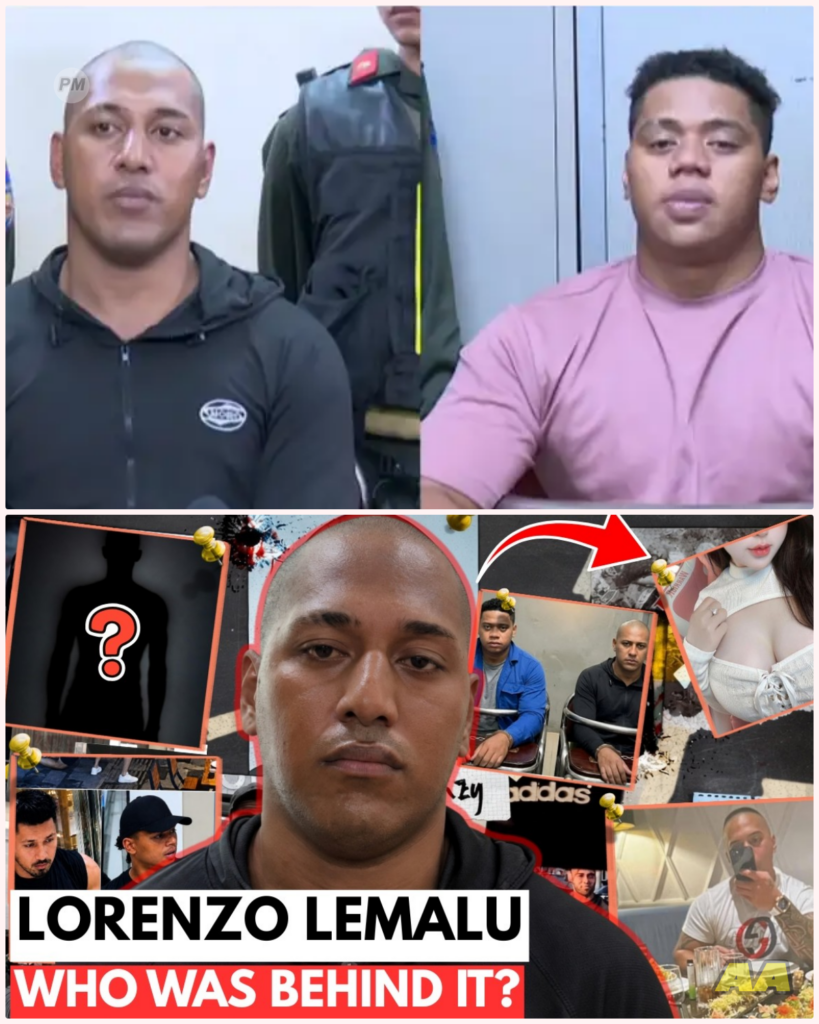
Me, together with Va Va, I was hired to come to Vietnam to look for two victims named Lemalu Lorenzo Tovia and Sauni Iosia.
In order for my friend to use a gun to kill him. I understand that this is a very serious violation of the law and negatively affected public security and order and order in Vietnam.
Although I had planned to flee Vietnam immediately after committing the crime, it is true that escaping from the Vietnamese police was impossible and I accept responsibility before the law.
I would like to advise anyone who intend intends to come to Vietnam to commit crimes to abandon that idea immediately cuz you will be arrested by the Vietnamese police.
>> When Vietnamese police caught two men near the Cambodia border, it looked like the end of a fast-moving manhunt.
But in this case, the arrest may only be the first visible answer. The harder question sits behind it.
If the two men in custody were sent to Vietnam, who sent them? Lorenzo Lemalu was fatally attacked outside a restaurant in Ho Chi Minh City on 21 May 2026.
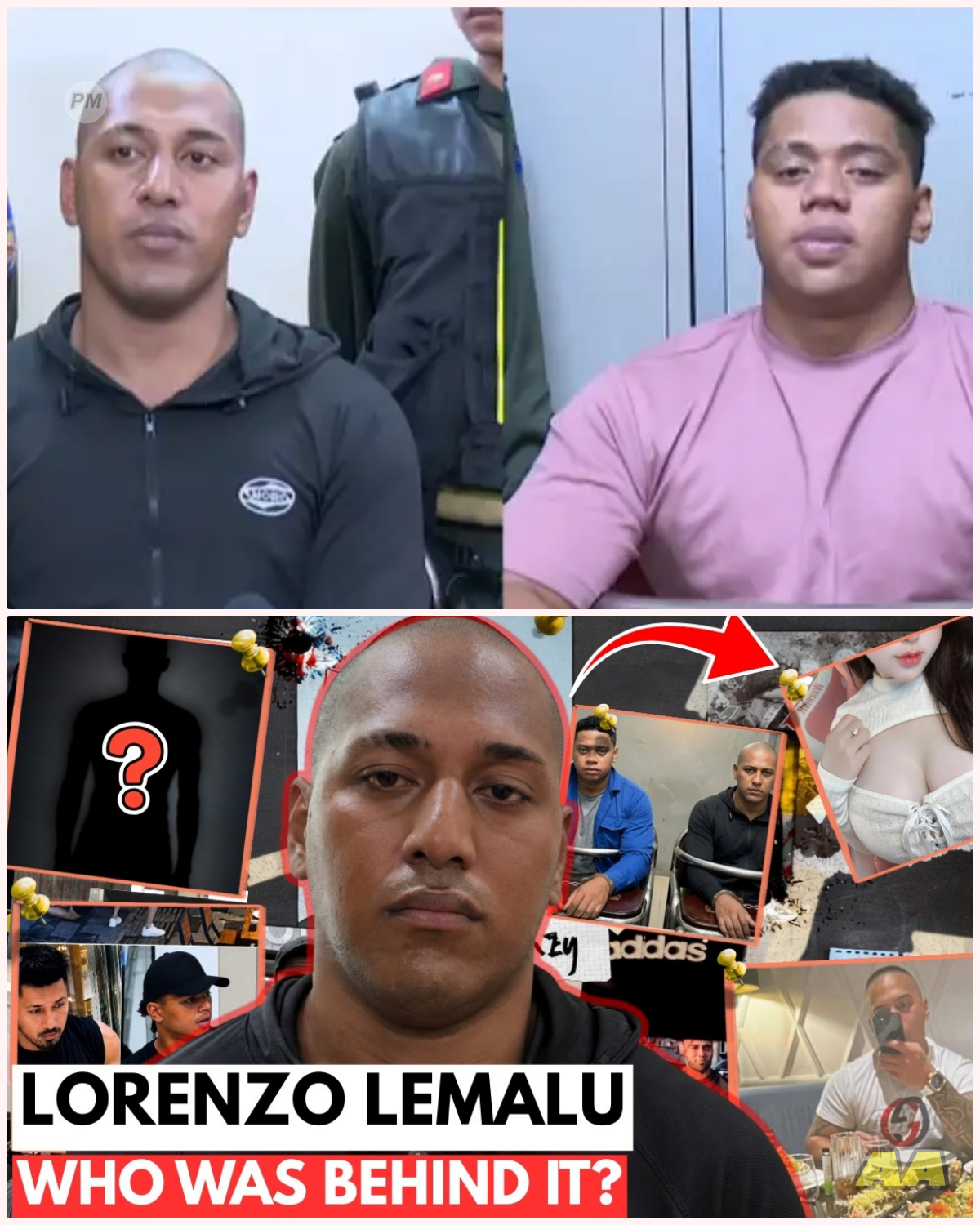
Vietnamese authorities later identified the two arrested suspects as Va Va, 27, and Tafia Steve, 23, both Samoan nationals.
Police said the men entered Vietnam on 14 May, spent several days monitoring the victim’s movements, and were captured near the Vietnam-Cambodia border less than 72 hours after the incident.
Vietnamese police also said initial testimony indicated the suspects acted under instructions from an overseas figure.
That one detail changes the whole story. Because if the order came from overseas, then the two men arrested in Vietnam may not be the center of the case.
They may be the final link in a chain that began somewhere else. For investigators, the issue is no longer only what happened outside the restaurant.
It is who knew Lemalu was in Vietnam. Who knew where he was eating. Who knew when he would leave, who arranged the travel, who gave the instructions, who provided support after the attack, and who expected the suspects to disappear before police could close in.
This is where the case becomes more than a violent incident in a foreign city.
It becomes a story about distance, planning, silence, and the hidden structure behind organized crime.
Public reporting has described Lamalo as a Sydney man linked to the Coconut Cartel and earlier tensions involving the Eluminati network.
Those links are part of why the case drew so much attention in Australia, but the safer way to look at this story is not to name a hidden organizer without proof.
It is to ask who had the motive, who had the reach, and who had the confidence to arrange something outside Australia.
The silence around the person behind the order may be the most important part of the case.
In organized crime investigations, the person who carries out an attack is not always the person who decides it should happen.
Sometimes the plan is split into pieces. One person gives the instruction. Another arranges travel.
Someone else watches the target. Another person helps with transport or escape. By the time police arrest the people closest to the scene, the person who gave the original order may already be several steps away.
That is why two arrests do not automatically close the file. Vietnamese authorities have also said they are investigating people accused of helping the suspects escape or failing to report the crime.
That means police are still looking at the support system around the two men, not just the two men themselves.
So, the real pressure in this case is not only on the suspects, it is on the network behind them.
If they talk, they may expose someone more powerful. If they stay silent, the person who sent them may remain outside the public record.
And if the overseas instruction is confirmed, this case may show how an Australian linked gang conflict can reach far beyond Sydney, ending in Vietnam with suspects from Samoa and a manhunt near the Cambodian border.
This report looks at the questions still hanging over the case. Who ordered the attack and why might the men arrested in Vietnam be afraid to say the name?
Before we go further, subscribe to True Crime Aussie for Australian crime stories told through police reporting, court records, and public sources without glorifying the people involved.
Vietnam was not where most people expected a Sydney linked gang case to surface. That is what made the Ho Chi Minh City incident so unsettling.
The story did not stay inside New South Wales and it did not unfold in a place usually connected to Australia’s organized crime reporting.
It moved offshore into a busy Asian city where the victim may have believed distance gave him room to breathe.
By the time Lam Malou was in Vietnam, the case had already shifted away from a local dispute.
It had become international. Someone had to know he was there. Someone had to know his movements.
Someone had to understand that a foreign city could create both opportunity and confusion. Unfamiliar streets, different police systems, borders nearby, and a short window to disappear.
That is why Vietnam matters in this story. Not because the country caused the conflict, but because it became the chosen location.
If police are right that the suspects entered Vietnam days earlier and monitored the victims, then the restaurant was not a random meeting point.
It was the end of a trail that had started before the public ever heard about it.
Ho Chi Minh City also added another layer of risk. This was not a hidden rural location.
It was a crowded urban center with cameras, witnesses, traffic, hotels, restaurants, and international travelers.
Whoever planned the movement had to believe the suspects could get in, find the target, act quickly, and leave before the net closed.
That did not happen. Their arrest near the Cambodia border changed the direction of the case.
It suggested police were not only reacting to one scene in the city. They were following movement, timing, and escape routes.
Vietnam became the place where the plan surfaced, but the real story may have started somewhere else.
The two men arrested near the Cambodia border gave investigators the first visible part of the case.
Vietnamese police identified them as Vava and Taffy Steve, both Samoan nationals. Their names became public after the manhunt, but the bigger issue was not only who they were, it was how they allegedly arrived, moved, watched, and tried to leave.
According to Vietnamese police reporting, the two men entered Vietnam on 14 May, several days before the incident in Ho Chi Minh City.
That timing changed the way the case was viewed. It suggested the journey was not casual travel that suddenly turned into violence.
Police said the suspects had monitored the victim’s movements before the attack. If that account is correct, then the plan was already in motion before the night outside the restaurant.
That is where the case begins to feel more organized than random. Someone had to know the target was in Vietnam.
Someone had to know where he was moving. Someone had to believe the men could find him in a city they did not call home, act within a small window, and get out before police closed in.
The arrest near the Cambodia border added another layer. After the incident, the suspects were not found quietly waiting in Ho Chi Minh City.
They were caught while allegedly trying to move towards another country. That detail gave the investigation a sense of urgency.
If they had crossed the border, the case could have become slower and more complicated.
But the most important detail is what Vietnamese authorities said about the order behind the attack.
Public reporting said initial testimony indicated the men acted under instructions from someone overseas. That does not prove who gave the order.
It does not name the person behind it, but it does shift attention away from the two men alone.
In organized crime cases, the people closest to the scene are not always the people who designed the plan.
They may only be the ones sent to carry it out. The organizer can remain far away, protected by distance, intermediaries, and silence.
That is why these arrests did not close the story. They showed who police caught near the border.
They did not yet answer who had the information, the motive, and the reach to send them into Vietnam.
The most important name in this case may not be the name police have already released.
Vo Van Tap Steve are the two men now in custody. They are the visible suspects.
They are the ones Vietnamese police say entered the country, watched the targets, and were later caught near the Cambodia border.
But if public reporting is correct that they acted under instructions from someone overseas, then the center of the case may still be somewhere else.
That is what gives this story its pressure. The person behind the order would have needed more than anger.
They would have needed information. They would have needed to know Lorenzo Lamalou was in Vietnam, not just somewhere overseas.
They would have needed to know his movements, his company, his routine, and the moment when he would be exposed outside a public venue.
That kind of detail rarely appears from nowhere. It points to someone with access, someone close enough to know where the target was, or connected enough to receive that information from someone else.
It may have come through direct surveillance in Vietnam. It may have come through people around him.
It may have come through a wider network watching from another country. Police have not publicly named the person who allegedly gave the order.
That silence matters, but it should not be filled with reckless guesses. Several reports have linked Lamalou’s name to Sydney’s gang conflict and the Coconut Cartel, while also referring to tensions involving the Alameddine network.
Those links explain why Australian authorities are watching the case closely, but they do not prove who ordered the attack.
They only show the environment around it. There is another possibility as well. The person who gave the instruction may not be the same person with the original motive.
In organized crime cases, the chain can be broken into layers. One person may want the target removed.
Another may arrange the job. Someone else may organize travel. Others may help with movement, documents, transport, or escape.
By the time police catch the people closest to the scene, the original decision-maker may be hidden behind several intermediaries.
That is why the question is not only who disliked Le Malu. The better question is who had the reach to arrange something in Vietnam?
Who could contact men from Samoa? Who could send them into another country? Who could help them understand where to go?
Who could expect them to leave through a border route before police caught up? Those answers have not been made public.
For now, the safest reading is this. The two arrests may explain how the attack was carried out, but they do not yet explain who wanted it done.
And in this case, that missing name may be the most dangerous part of the story.
Until police identify the organizer, the public is left with only the outline of a larger plan.
A Sydney-linked victim, two Samoan suspects, a Vietnamese crime scene, and an alleged order from overseas.
If the two men arrested in Vietnam really acted under instructions from overseas, then their silence becomes part of the story.
Not because silence proves guilt, not because it proves fear, but because in cases linked to organized crime, the person who carries out the act may be under pressure from more than one direction.
The first pressure is fear. If someone powerful arranged the plan, naming that person could create risk.
Not only for the men in custody, but potentially for people connected to them. In criminal networks, silence can be treated like loyalty.
Talking can be treated as betrayal. That kind of pressure does not need to be written down or spoken directly.
Sometimes the person already understands what is expected. The second pressure is uncertainty. The men arrested near the border may not know the full chain.
They may know who contacted them, who gave them instructions, or who helped them move.
But that does not always mean they know the final person who wanted Le Malu targeted.
In organized crime, information is often divided. One person handles travel, another provides money, another gives the location, another passes on the order.
The people closest to the scene may only see the part they are meant to see.
That structure protects organism. If police ask, “Who sent you?” The answer may not be simple.
It may be a nickname, a phone contact, a middleman, or someone who was never the real decision-maker.
That makes the investigation harder because detectives have to move backwards through each layer of contact.
The third pressure is legal. Once a person is arrested in a foreign country, every word can affect the case.
A statement may shape charges, sentencing, extradition questions, or future cooperation with police. Defense lawyers may advise silence until the evidence is clear.
In that situation, not speaking is not always fear. Sometimes it is strategy. The fourth pressure is survival inside the criminal world.
If the suspects were connected to a wider network, they may believe that staying silent gives them some protection.
They may think that naming the person behind the order brings more danger than the legal case itself.
That fear can be stronger when the alleged organizer is overseas, out of reach, and still unknown to the public.
This is why investigators cannot rely only on confession. They have to follow movement, messages, money, travel records, hotel bookings, border footage, phone data, and the people accused of helping after the attack.
The truth may not come from one man saying one name. It may come from small details that slowly close the space around the organizer.
The silence, if it continues, does not end the investigation. That silence may instead become one of the clues investigators use to decide where the investigation should move next.
By the time the arrests were made, the easiest part of the story was already public.
Two men had been caught. Police had a direction. Newsrooms had names. Viewers had a headline they could understand quickly.
But the part that sits underneath all of that is harder to explain because it is not just about the men who were caught.
It is about how a problem linked to Australia ended up in Vietnam in front of ordinary people who had no reason to be part of it.
That is the part that makes this case feel heavier than a normal crime report.
People in Ho Chi Minh City were not living inside Sydney’s gang disputes. The staff at the restaurant were not part of that world.
The people nearby were not part of it, either. They were just in a city going through an ordinary night until someone else’s conflict arrived there.
That is what these cases do. They do not stay neatly around the people who created them.
They spread into public places. They pull in workers, witnesses, police, families, and communities that were never involved in the original dispute.
For Lamalu’s family, the result is final. Whatever people say about his background, his links, or his place in Sydney crime reporting, someone still had to receive the news that he was not coming home.
A death overseas carries a different kind of weight. It is not only grief, it is distance, confusion, paperwork, police processes, and the pain of knowing the last moments happened far from home.
For the families of the suspects, the damage is also real. They now have relatives facing serious allegations in another country.
Their future may be decided far from Samoa under a system their families may not fully understand.
If the police account is correct, then someone else gave the instruction, then these men may have been sent into a situation where they were useful only until the plan went wrong.
That does not remove responsibility. It does show how little value these networks place on human life.
The people lower down are the ones who appear on cameras. They are the ones who cross borders, move through hotels, answer police questions, and sit in custody.
The person who arranged it, if there was one, stays further away. That person may never have had to leave their own room.
They may have only needed a phone, a contact, and enough distance to let other people carry the risk.
That is not strength. It is someone using distance as protection. This is why the case cannot feel finished just because two people were arrested.
The arrest may explain part of the movement. They do not explain who had the information.
Someone knew Lamalu was in Vietnam. Someone knew enough about his movements to make the timing possible.
That knowledge had to come from somewhere. Maybe it came from watching. Maybe it came from someone close enough to pass details.
Maybe it moved through people who did not even know the full plan. That is what investigators now have to untangle.
They will not solve that part with one dramatic answer. They will have to go through travel records, phone data, hotel bookings, messages, money, and anyone who may have helped before or after the incident.
The truth may come out slowly through details that look small at first, but start to point in the same direction.
The danger in public discussion is that people will try to fill the missing space with guesses.
In cases like this, names spread quickly online. Some people will choose the rumor that sounds most convincing.
Others will turn it into a gang story and move on. That is not enough.
If the person who gave the order is still hidden, guessing does not help. It can distract from the work police still have to do.
The only name that matters is the one evidence can support. There is a bigger warning here as well.
A person can leave Australia, but that does not always mean they have left their past behind.
Old conflicts can travel. Information can travel. People can travel. If the wrong network still has interest in someone, distance may only create the appearance of safety.
That is a terrible way to live. It means a flight is not really freedom.
A new country is not really distance. A public restaurant is not really ordinary anymore.
The past follows quietly until it does not. For anyone who thinks the criminal world brings power, this case shows the other side.
It brings fear, silence, broken families, police files, and people used by others who keep their own hands clean.
It can make young men believe they are important when they are really being placed closest to the danger.
The saddest part is that people outside the conflict still carry part of the cost.
A city in Vietnam is now attached to an Australian linked case. Families in different countries are waiting for answers.
Police on more than one side of the region have to work through the the The arrests answered who was caught.
They have not yet answered who sent them. And until that name is proven, the story remains unfinished in the place that matters most.
Thank you for watching this report until the end. Cases like this are not easy to follow, especially when the facts cross countries, police systems, and unfinished questions.
But understanding the full picture matters because organized crime does not only affect the people directly involved.
It reaches families, communities, and ordinary places that never asked to be part of it.
If you found this video useful, please subscribe to True Crime Aussie for more Australian crime stories told through public reporting, police updates, and court records without glorifying the people involved.
And let us know your thoughts in the comments. Do you think police will eventually uncover the person who gave the order?


