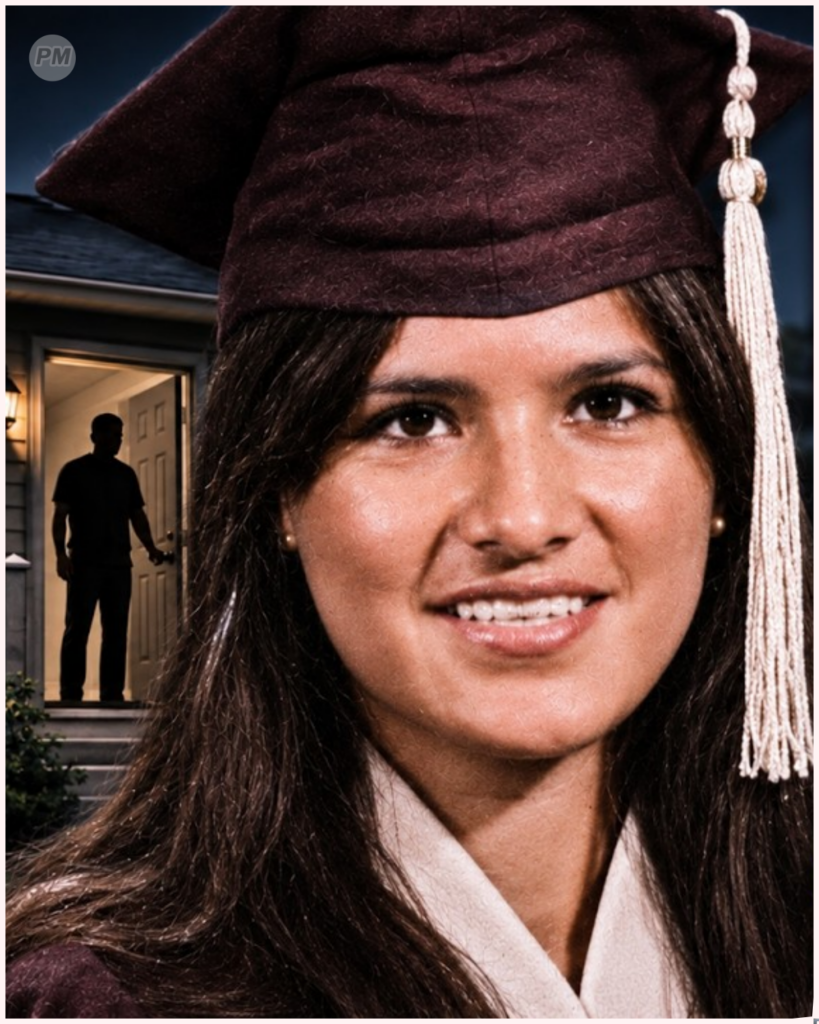
They stood at her graveside
They stood at her graveside. And they told her. They told her that the man accused of killing her had been caught.
That someone had answered for what was done to her in that field along Aviation Boulevard.
That 45 years of silence had finally been broken. Mary Gonzales, when she heard about the officers’ visit to the grave, said something that carried the full emotional weight of the family’s long ordeal.
She can rest. My grandma can rest. Yolanda’s grandmother. The woman who raised her. The woman who was waiting at home the night Yolanda started walking and never arrived.
>> [music] >> She had died without ever learning who killed her granddaughter. Without ever seeing anyone held accountable.
Without ever hearing the name Kelly Lee Brower. The family carried that loss on top of the original loss.
A grief compounded by the knowledge that the one person [music] who deserved answers most would never get them.
But standing at that grave, the officers who solved the case offered the only thing they could.
The news itself. [music] Delivered to a headstone on a patch of Texas ground in the hope that somehow, in some way that defies what we know about how the world works, the message reached her.
That she knows. That her grandmother knows. That the name Kelly Lee Brower has finally been spoken out loud next to hers.
Not as a mystery, but [music] as an answer. Whether you believe the dead can hear the living is a personal matter.
But the officers went anyway. And they told her. There is no satisfying way to end a story like this one.
Justice delayed 45 years is still justice, but it doesn’t return what was taken. It doesn’t give Yolanda Herrera the life she was supposed [music] to live.
She was 23 years old, tough and independent, full of life, a big heart. She had decades ahead of her.
Decades of possibilities that were erased in a single night by a stranger who lived 3/4 of a mile away.
She didn’t get those decades. [music] And the man who took them from her got 45 years of freedom.
He got to move to new cities, build a new life, wake up every morning without anyone knocking on his door.
He got to grow old while Yolanda stayed forever 23. Whatever he built in those four and a half decades in Seattle, in California, in Cottonwood, he built it on top of a crime that was waiting to catch up to him.
Every year that passed without a knock on his door probably made the next year feel safer.
Until eventually, the crime must have felt like something that happened to a different person in a different lifetime.
It wasn’t. And the evidence never forgot. What Yolanda got instead, 45 years later, was a refusal.
A collective, stubborn, unrelenting refusal to forget her. The detectives who inherited her case and treated a cold file like it was still warm.
The federal program that opened a door to retesting evidence that had been sitting in storage since before most of the lab technicians processing it were born.
The scientists at Bode who identified a surname and then had the discipline to say, “Wait, the technology will get better.
Protect what’s left.” The scientists at Authrum who pulled hundreds of thousands of genetic markers from a sample that was nearly gone and built a family tree from the fragments.
The Cottonwood officers who walked out to a trash can on a quiet morning and picked up a beer can that would close a 45-year-old case.
And the family, Mary Gonzales and Dwayne Scognamiglio, the cousins who kept Yolanda’s name alive, who kept asking questions even when every answer was the same, who carried the weight of not knowing for longer than Yolanda was alive.
The thing that lingers about this case isn’t the technology, as remarkable as it was.
It isn’t the confession, as dramatic as it was. It’s the geography, 3/4 of a mile, the bar, the field, and the killer’s house, all sitting inside a circle so tight you could see each location from the others on a clear day.
Kelly Lee Brower was 23 years old, the same age as the woman he killed, living close enough to watch police cars drive past his house on their way to the crime scene.
And then, he left quietly, without drama, moved to Seattle, then California, then Arizona, and lived a normal, unremarkable life for the next [music] 45 years while Yolanda’s family waited for a phone call that never came.
Until a Coors Light can changed everything. Yolanda Herrera was 23 years old. She was walking home on a warm Texas night in April.
The distance was less than a mile. She should have made it in 10 minutes.
She deserved to make it home. She deserved to grow old. She deserved the decades that were taken from her.
She didn’t get those things, but she got something else 4 and 1/2 decades later.
She got officers standing at her grave telling her it was over. She got a cousin saying she can rest now.
She got a name attached to the person who did this, and she got the knowledge, if such things travel, that she was never forgotten.
As of today, Kelly Lee Brower awaits trial in Bexar County, Texas on capital murder charges.
He is 68 years old. He is being held on a $1 million bond. The case is an active prosecution.
The walk home was 10 minutes. The wait for justice was 45 years. >> [music] >> And it ended with a knock on a door in Arizona and six words from a man who had been carrying them since 1981.
I’m sorry for what I did. Every case on Cold Case Redemption was supposed to stay unsolved.
If you want to be here when the next one gets cracked open, subscribe to the channel.
Yolanda’s story didn’t end in that field in 1981. It ended here.