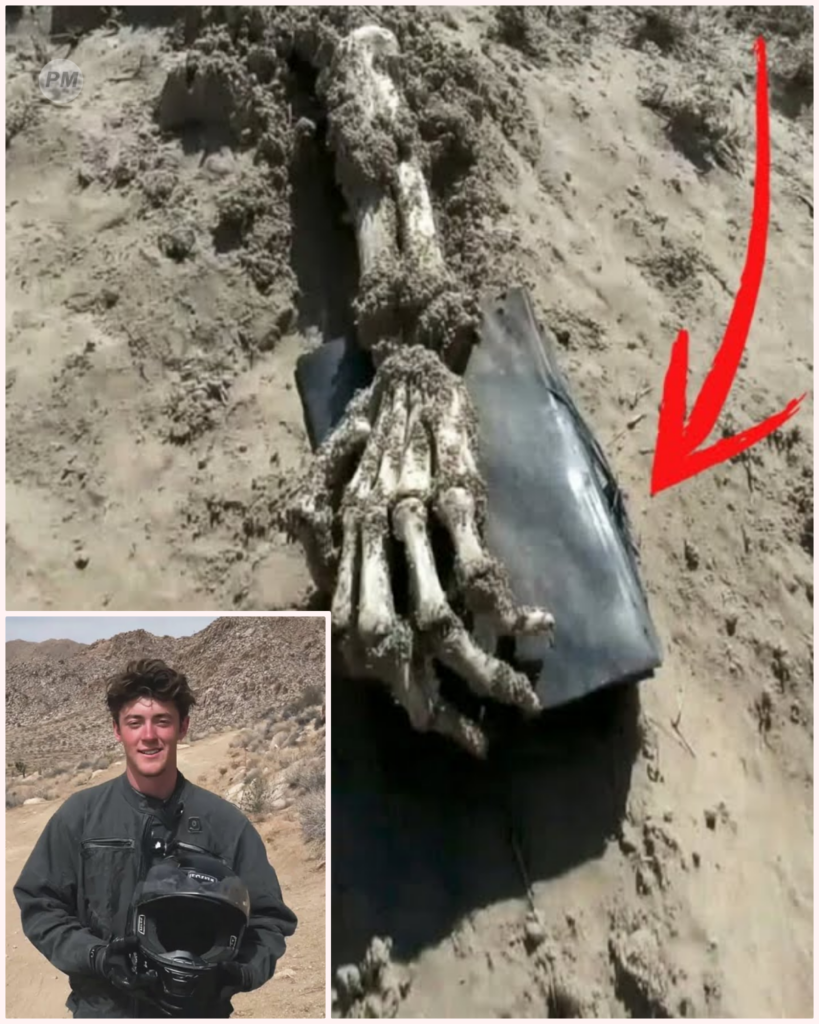
In 2017, Eric Woods, a 21-year-old student from Sa…
In 2017, Eric Woods, a 21-year-old student from Salt Lake City, disappeared in the Utah desert.
His motorcycle was found near the start of a trail, but the young man himself was nowhere to be found.
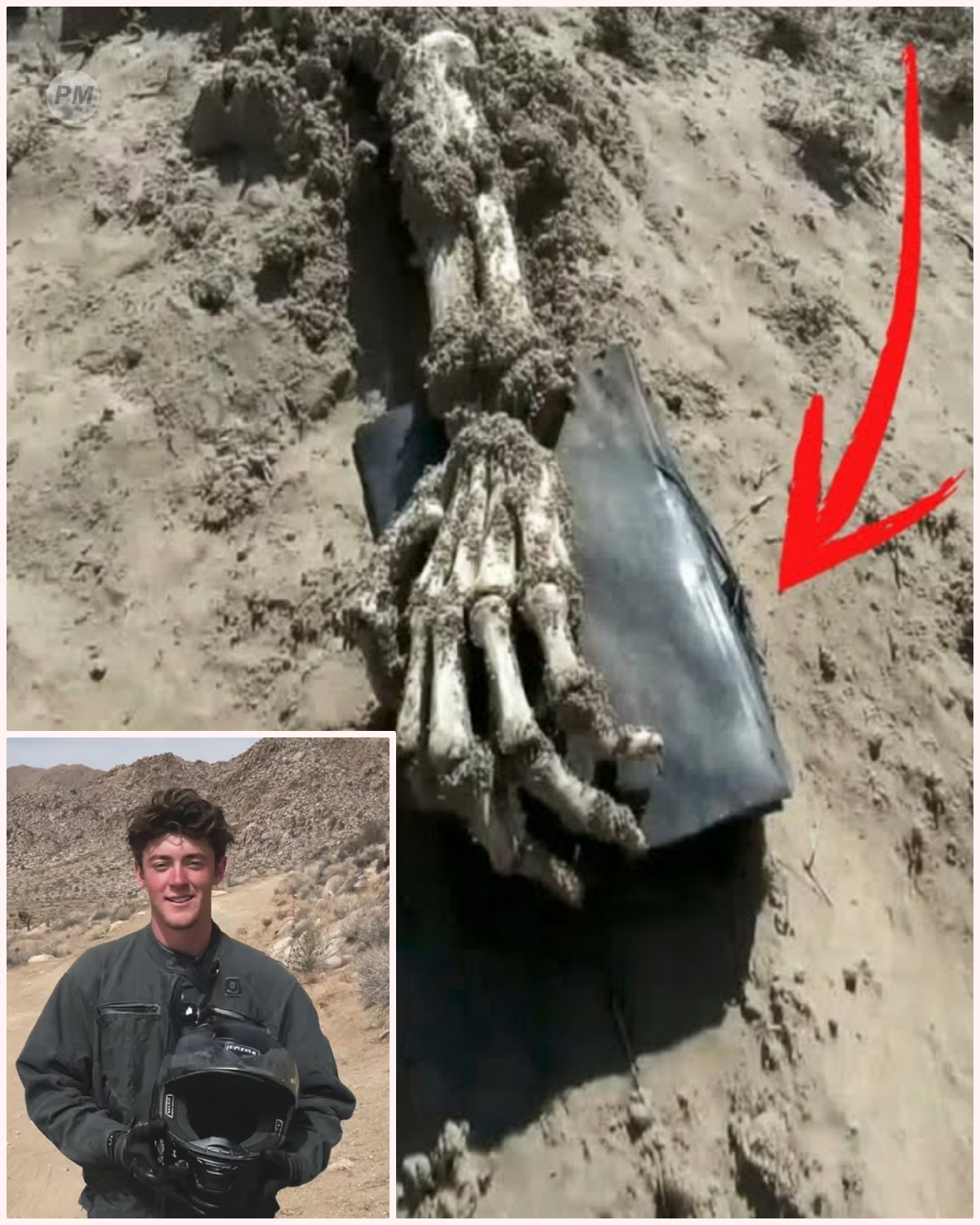
6 years passed. In a remote canyon, searchers stumbled upon a human skeleton. Nearby lay a metal container with a diary whose pages contained shocking entries that immediately became part of a criminal investigation.
August 12th, 2017, Saturday, at 8:30 a.m., 21-year-old University of Utah student Eric Woods left his dormatory in Salt Lake City.
He was studying geology with a focus on cgraphy and field observation. Teachers described him as attentive and methodical while students described him as reserved but passionate about research.
It came as no surprise to many that he decided to spend the weekend in a remote desert as such trips were common practice for him.
The vehicle Eric used was a black 2014 Enduro motorcycle. It was equipped with a luggage rack where the young man had secured his backpack in advance.
According to his relatives, it contained standard items. A sleeping bag, a first aid kit, several bottles of water, a notebook for notes and maps, a compass, a pocketk knife, and food supplies for one or two days.
Woods did not plan a multi-day expedition. His route was more like a short trip to explore the area.
At 9:17 a.m., his mother received a message from him on Messenger. Everything’s fine. I’m on my way.
I’ll be back tomorrow after lunch. This was the last confirmed contact from Eric. The rest of his route has only been partially reconstructed.
A surveillance camera at a gas station in Emory County recorded him at 11:46 a.m.
He bought two bottles of water and a can of gasoline. He paid with a bank card.
The video shows Eric in motorcycle gear holding a helmet in his hands. His behavior was normal and no strangers were seen nearby.
At around 1 p.m., other visitors to Goblin Valley State Park noticed a motorcycle parked in the official parking lot at the trail head.
The bike was standing upright, the kickstand was down, and there was no key in the ignition.
This was not unusual for tourists. Dozens of people leave their vehicles there every day to continue on foot.
The next day, Sunday, the motorcycle was still there. In the morning, a group of park visitors returning from the parking lot noticed that the vehicle was still there.
This meant that the owner had not returned. On Monday, August 14th, Eric’s mother filed an official report with the Emory County Sheriff’s Office.
The document stated that her son had not returned home, was not answering his phone, and had not shown up for classes at the university.
His mother reported that this was unusual, as Eric always kept in touch, even during short trips.
On August 15th at 8hourorn a.m., officers went to the parking lot near the trail.
They confirmed that the motorcycle belonged to Woods. The vehicle had been there for 3 days.
The license plates matched the registration information. The motorcycle was in good working order. The tank was almost full and there were no signs of damage.
There was no key in the ignition. After examining the surrounding area, officers found only a few faint footprints leading from the parking lot toward the trail, but after a few meters, they disappeared on the rocky terrain.
There were no signs of a struggle, blood, or outside interference. There were also no items of equipment, food remains, or signs of overnight stay.
An official missing person case was opened that same day. The sheriff’s internal report states, “21-year-old student left on a motorcycle for the desert.
Vehicle found. Whereabouts unknown. Possible causes, disorientation, injury, criminal interference. Information about the missing person was entered into the federal database.
Notifications were sent to neighboring counties. The university confirmed that the student was absent from classes.
At this stage, the case had only a few confirmed facts. Departure from Salt Lake City on the morning of August 12th.
Refueling in Emory County around noon. Motorcycle in a parking lot near the trail. Absence of the owner for at least two days.
No other evidence or items that could indicate Eric’s route after leaving the motorcycle were found.
On August 16th, 2017, the Emory County Sheriff’s Office officially launched a search operation for missing student Eric Woods.
Given his age, lack of chronic medical conditions, and good physical condition, his chances of survival in the desert were considered fairly high if he had water and equipment with him.
Time, however, was working against him, scaling up the operation. On the first day, five service vehicles and 18 personnel were involved in the search.
By the end of the week, the number had grown to more than 60. Local police, rangers, rescuers from surrounding counties, and volunteers.
A mobile headquarters was set up in a parking lot near the trail to coordinate the effort.
Two quadcopters with highresolution cameras belonging to the park were brought in from the air, as well as a helicopter from a neighboring county for short flights.
On the ground, dog handlers worked with three dogs trained to search for people by scent.
Search areas. The perimeter was divided into three sectors. The first sector was the trail itself, starting from the place where the motorcycle was parked.
The second was the surrounding canyons, including narrow gorges where it was easy to lose your bearings.
The third was the more remote plateaus, which according to experienced rangers, could only be reached by people with training.
Finds on the trail. During the first two days, the main focus was on the trail, where blurred footprints had already been found in the ground near the parking lot.
The searchers traced them several dozen meters deep, but then they disappeared on a rocky area.
The report states, “The footprints correspond to a man’s size, and it is possible that they belong to the missing person.
Further tracking is impossible due to the terrain. No traces were found on other sections of the trail.
There were also no signs that the student had tried to pitch a tent or left any marks.
Canyon search groups of volunteers and rangers combed the nearby canyons. The reports describe how each group moved slowly, examining the ground and rock ledges.
Paint on rocks and GPS tracks were used to mark the areas that had been searched.
