Today, we know polygraphs are far from reliable
Today, we know polygraphs are far from reliable. They’re not admissible as evidence in most courtrooms for a reason.
But in 1974, long before DNA testing, a lie detector carried a lot of weight in an investigation.
Bruce passed. And as far as police were concerned, that was enough. He was no longer a suspect.
Only then did they tell him his wife had been murdered. That same Sunday morning at 11:00, the regular service at Stanford Memorial Church went on as scheduled.
But it couldn’t happen inside. The sanctuary was now a crime scene. So the congregation gathered on the front lawn instead.
Grieving students, faculty, worshippers, and a crowd of reporters standing outside the very building where Arlus had been found just hours earlier.
The man leading that service was the dean of the chapel, Reverend Robert Hamilton Kelly.
He had seen the scene inside, and what he said about it would echo for decades.
To him, it looked symbolic, almost ritualistic. But he told the congregation he would not let evil win.
Services would go on. Meanwhile, investigators started building a picture of that night, one person at a time.
They talked to Bruce again. He told them nothing had felt off during their walk.
No one following them, no one watching, nothing that made him uneasy. Then a passerby came forward.
He’d been outside the church at around midnight, and he remembered seeing a man walk inside.
Sandy blonde hair parted to the side, maybe 25 years old, a medium, stocky build.
The FBI put together a profile of the person they were looking for, most likely a loner, possibly someone with a military background.
They guess between 17 and 22 years old, someone who might keep a diary and hold on to personal items as keepsakes.
But it was the timeline that troubled investigators most. They believed Arus was killed at around midnight and they believed whoever was responsible stayed inside the church with her for some time afterward.
Think about what that means. At 10 minutes 12, when the night watchman stood at the doorway and called out into the sanctuary, Arlus may not have been alone.
The person responsible may have been right there in the dark with her, silent, waiting for him to leave.
And one witness seemed to back that up. Sometime between 12:15 and 12:30, that person had walked past the church and heard a strange sound coming from inside.
They stopped. They listened, but there was nothing more, so they figured they’d imagined it and kept walking.
Then the timeline gets even stranger. Steven Crawford said that at around 2:00 in the morning, he did another sweep of the church.
And we know police checked the outside of the building at around 3 after Bruce called them.
Both times, every single door was reported locked. So, that left investigators with two possibilities.
Either someone stayed inside that church for hours, somehow staying hidden through a security sweep and a police check before forcing a side door open from the inside and slipping away before dawn.
Or that 2:00 a.m. Sweep didn’t happen quite the way it was described. Neither explanation sat right because Crawford had keys and easy access to the church.
Investigators looked at him closely, but he passed a polygraph and his palm print did not match the one on the altar candle.
Reverend Kelly also had access to the building, so he was looked at, too. He also passed a polygraph.
His print didn’t match either. Over time, detectives compared that palm print to more than a hundred people.
Not one of them matched. Eventually, investigators were able to piece together who had been inside Stanford Memorial Church that night.
Seven people in total, including Arus herself. One by one, they ruled people out. Six of them were identified and cleared, but the seventh was never identified.
The sandy blonde man seen walking into the church around midnight. Nobody knew who he was.
Nobody knew where he’d gone. And in just a few days, when Arles’s family and friends came together to say goodbye to her, someone would realize they might have seen that man before.
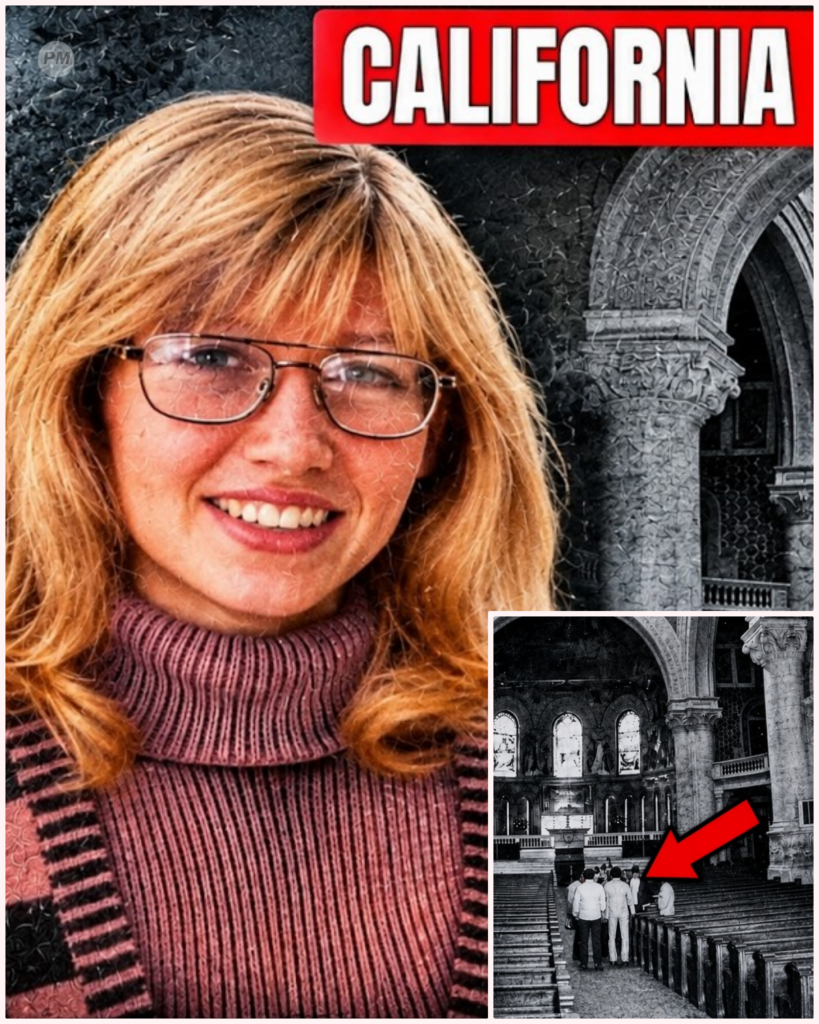
On October 15th, 3 days after her death, a memorial service was held for Arlus Perry.
It was held at Stanford Memorial Church. Bruce and his family sat in the pews of that sanctuary, just a few yards from the spot where she had been found.
The same church she’d walked into to pray. The same church where her life had ended.
Among the mourners was one of Arlus’ co-workers from the law firm. He’d come to pay his respects to the quiet young receptionist who had only just joined the office.
And when he saw Bruce Perry for the first time, something didn’t add up. He had never seen this man before.
Arus had only been working at the firm for about 2 weeks. She was new and she wanted to make a good impression.
She wanted to prove herself as a hard worker before bringing any part of her personal life into the office.
So, she’d asked Bruce not to stop by, and he never had. But the day before she died, a man did come to see her at work.
He looked to be in his early 20s, sandy blonde hair, about 5’10”, an athletic build.
The co-worker had simply assumed it was her husband. He remembered that the two of them talked for about 15 minutes, and whatever they were discussing, it looked serious.
When Arles came back to her desk, she seemed upset. He didn’t ask about it.
It didn’t seem like his place. As far as he knew, it was just a young married couple working something out.
It wasn’t until he sat in that memorial service staring at the real Bruce Perry that he realized the man at the office had been someone else entirely.
Now, that description wasn’t much to go on, a sandyhaired, athletic young man in his 20s on a college campus in the Bay Area in the 1970s.