She acknowledged knowing, in general terms, that M…
She acknowledged knowing, in general terms, that Marcus was controlling Odessa’s movements and contact with the outside world.
She maintained, throughout multiple interviews, that she believed this control to be excessive and troubling rather than criminal.
That she had convinced herself, across two years, of a version of events in which her daughter was going through through period, and had chosen, however unhappily, to lean on her brother’s help rather than being actively confined against her will.
She denied any knowledge of the sedation. Investigators found this specific denial difficult to fully credit, given the volume of medication that had passed through the household, but were unable to establish beyond a reasonable doubt that she had known the true extent of what was happening in that garage apartment.
Odessa’s father offered a similar account, differing mainly in degree of involvement. He had, on two documented occasions, personally delivered food to the garage apartment during periods Marcus described as Odessa needing space, without, according to his own testimony, ever fully allowing himself to ask why an adult daughter would need her food delivered to a locked door, rather than simply walking to the main house herself.
Odessa’s younger brother, the fourth sibling, had moved out of state 5 years earlier, and investigators determined had genuinely limited knowledge of the situation, communicating primarily through the same family group chat that had, unbeknownst to him, been curated for years to prevent exactly this kind of outside scrutiny.
In the end, prosecutors secured a conviction against Marcus on charges including kidnapping, unlawful imprisonment, and administration of a controlled substance without consent, among other counts, resulting in a lengthy prison sentence.
Odessa’s mother and father were charged separately with lesser counts related to failure to report and obstruction, reflecting the difficulty of proving the higher standard of knowing participation required for more serious charges.
Despite what many observers of the case, including several of Odessa’s former co-workers who followed the proceedings closely, felt was a degree of accountability that did not fully match the scale of what had been allowed to happen under that family’s roof for 4 years.
Odessa is alive. She has spent the period since her rescue in a combination of medical care, addressing the physical effects of prolonged sedation and malnutrition, and psychological care addressing something that her treatment team has described in general terms during public case commentary as a uniquely difficult form of trauma.
One complicated not simply by what her brother did to her, but by the slow cumulative realization of exactly how many people who were supposed to protect her had chosen instead to help him.
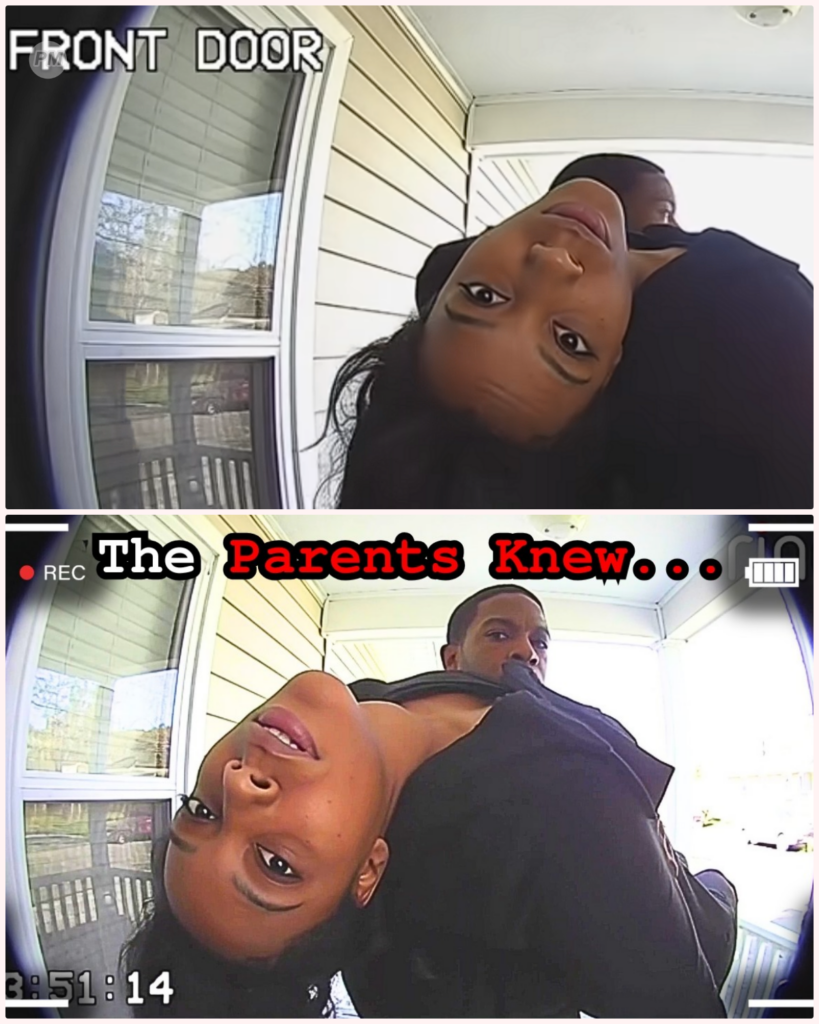
Renn, the sister whose accidental viewing of 12 seconds of doorbell footage ended 4 years of captivity, has become Odessa’s primary support system during her recovery.
The two have spoken publicly in limited terms about rebuilding a relationship that exists now entirely outside the architecture of the family that raised them both.
A family that, as of this recording, no longer functions as anything resembling the unit that photographed so well for over a decade of holiday cards.
The cousin whose death, 11 years earlier, set this entire pattern into motion, is rarely mentioned in public discussion of this case, and Odessa herself, according to people close to her, has said very little about him directly.
But investigators who worked the case have noted more than once that understanding what happened to her requires understanding that the earliest damage in this story was not done to her at all.
It was done more than a decade before she was ever locked behind that door to a family that decided quietly and gradually, that protecting one grieving son was worth whatever it eventually cost the daughter standing beside him.
There is a particular kind of family loyalty that gets described inside the family itself as strength.
The willingness to carry someone through a tragedy for years without asking them to fully account for what that carrying eventually requires of everyone else.
From the outside, once the full shape of it is visible, it looks like something else entirely.
It looks like a slow, collective agreement to sacrifice one person’s freedom to manage another person’s unresolved grief, made in small increments over more than a decade, none of which, on its own, would have looked to any single family member like the thing it was actually building toward.
Nobody in that family, if you had asked them individually at almost any point across those four years, would likely have described themselves as capable of what they ultimately allowed to happen.
That is, perhaps, the most unsettling part of this entire case. Not that a family covered for a dangerous man, which is a story this format has told many times, but that they did it one small, defensible-sounding decision at a time, each one just reasonable enough on its own that nobody ever had to confront until Wren’s 12 seconds of accidental footage forced the issue, what all of those decisions had actually added up to.
If there is a lesson in this case that extends beyond the specifics of one family in Virginia, it is this.
The explanations that keep a person invisible rarely arrive all at once in a form dramatic enough to trigger alarm.
They arrive one at a time, spaced out, each individually plausible, delivered by people who have every reason to be believed.
A A missed trivia night. A job that changed. A brother helping his sister get back on her feet.
None of it, taken piece by piece, looks like anything. It is only in the accumulation, in the pattern that only becomes visible when someone finally sees more than one piece at once, that the true shape of what has been happening finally comes into focus.