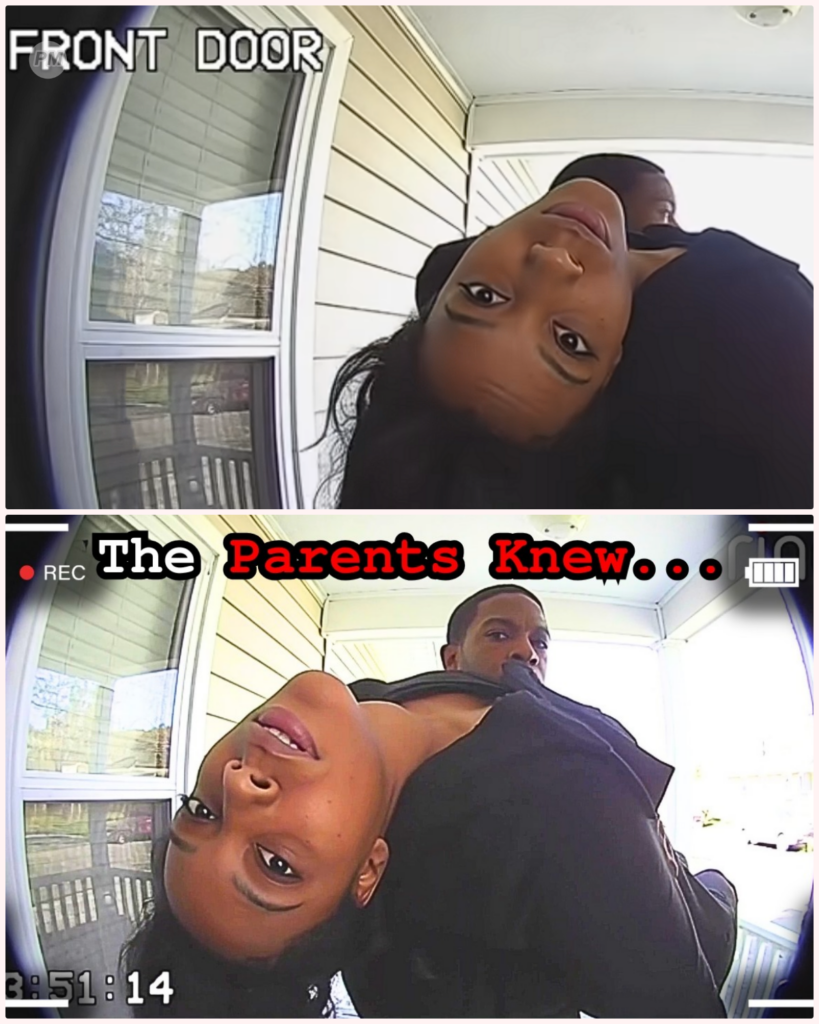
She said her mother had asked her not to, that the…
She said her mother had asked her not to, that the family needed her close, that leaving would break something that couldn’t be put back together.
That’s the first thread. Hold on to it. 1 year before the footage, Odessa stopped showing up to a recurring trivia night with three close friends from the veterinary clinic.
A standing Thursday tradition she had rarely missed in 4 years. She texted that she was busy with family stuff.
The friends, respecting what seemed like a reasonable and private explanation, didn’t push. When one of them ran into Odessa’s mother at a grocery store around this time and mentioned missing her trivia, Odessa’s mother said, smoothly and without hesitation, that Odessa had picked up extra shifts to save for a car.
That’s the second thread. Here’s the detail that, once investigators pieced it together, made this case stop looking like a straightforward story about one dangerous man and start looking like something considerably harder to prosecute cleanly.
Every single explanation given for Odessa’s gradual disappearance from her own life, the missed trivia nights, the cancelled plans, the eventual full withdrawal from every friendship she’d built outside the family, had been supplied not by Marcus, but by other members of the family.
Her mother. Her younger sister. On two occasions, her father. They were not being deceived by Marcus.
They knew. I want to sit with that for a moment because it is the single hardest thing about this entire case to explain to someone hearing it for the first time.
This was not one predator isolating a victim while an oblivious family looked on from the outside, the way most stories like this one unfold.
This was a family that had, gradually, collectively, and for reasons investigators are still working to fully untangle, decided that whatever Marcus was doing to Odessa was something they were willing to protect rather than confront.
Understanding why requires understanding what had happened to this family 11 years earlier, long before any of this began.
Because the root of what you’re about to see did not start with Odessa at all.
11 years before the footage, when Odessa was 18 and Marcus was 23, a younger member of the family, a cousin who had lived with the Brights for 2 years during a difficult stretch in his own immediate family, died in a car accident that Marcus was driving during.
Marcus was not legally at fault. The investigation at the time cleared him of any impairment or reckless driving, attributing the crash to a mechanical failure in the aging vehicle.
But the family’s grief in the years that followed calcified around Marcus in a way that never resolved into blame exactly, but never resolved into forgiveness, either.
He became, within the family’s private mythology, someone who was owed an enormous, unspoken debt of patience and accommodation.
Someone whose behavior, however concerning, was filtered permanently through the lens of a tragedy that had broken something in him that the family collectively agreed, without ever saying so explicitly, they were responsible for helping him carry.
This is not an explanation that excuses what Marcus did. It is, according to the family therapist eventually engaged during the legal proceedings, the psychological architecture that made it possible.
A family primed for over a decade to treat Marcus’s escalating behavior as evidence of unhealed trauma, rather than evidence of danger, and to treat protecting him from consequences as a form of loyalty, rather than a form of harm being done to someone else in the family.
That someone else was Odessa. What began, roughly 4 years before the footage as Marcus’s outsized involvement in her romantic choices gradually, invisibly, became something else entirely.
Investigators would later determine through financial records, medical documentation, and the eventual statements of two family members that by 2 years before the footage, Odessa was no longer fully living an independent life at all despite maintaining for the outside world the appearance of one for as long as her job and her remaining social obligations required it.
She had moved, ostensibly to save money, into a converted space above the detached garage of her parents’ property.
A space Marcus had begun renovating himself with what he described to the rest of the family as a genuine desire to give his sister a stable, low-cost living situation while she got back on her feet after the breakup.
The space had one door, one small window, and investigators would later confirm a lock mechanism that could be operated from the outside.
For the following 2 years, Odessa’s contact with the outside world narrowed steadily, managed through a rotating set of family-supplied explanations that grew more elaborate as the isolation deepened.
Her clinic employment ended 14 months before the footage. Her mother called the practice manager to say Odessa had accepted a position at a larger animal hospital across the state, a story confirmed by no reference check that clinic ever thought to run because Odessa had been a beloved employee whose family seemed genuinely supportive of her career move.
Odessa’s own phone, investigators later determined, had been in Marcus’s possession for the final 18 months, used periodically to send brief, believable messages to the handful of people still checking in.
Messages composed, according to Odessa’s account when she was able to give one, under direct instruction.
Reviewed by Marcus before sending. Designed specifically to sound enough like her that nobody would feel the need to escalate their concern into an actual welfare check.
