Tell me yes or no
Tell me yes or no. Nobody in Conway knew what had happened at 307. For 9 months, only two people knew.
Years later, Abby told ABC News she had new boots that day. They had given her blisters and walking was hard.
A man pulled up and offered her a ride. He seemed, she has said, like an average person.
So, she got in. After a short drive, he pulled a gun. He said, “If you try to scream or try to escape or make any effort to escape, there will be consequences.”
He handcuffed her. He took her phone and broke it with his bare hands. That was 307.
Then he drove her north into a rural wooded area. And somewhere in that car, a 14-year-old girl made a decision that may have saved her life.
I remember thinking to myself, “Okay, I got to work with this guy.” I said, “I don’t judge you for this.”
She told him she would not tell anybody if he let her go. She told him he seemed really smart.
She was trying, the interviewer said, to stroke his ego. Exactly. Abby said he did not let her go.
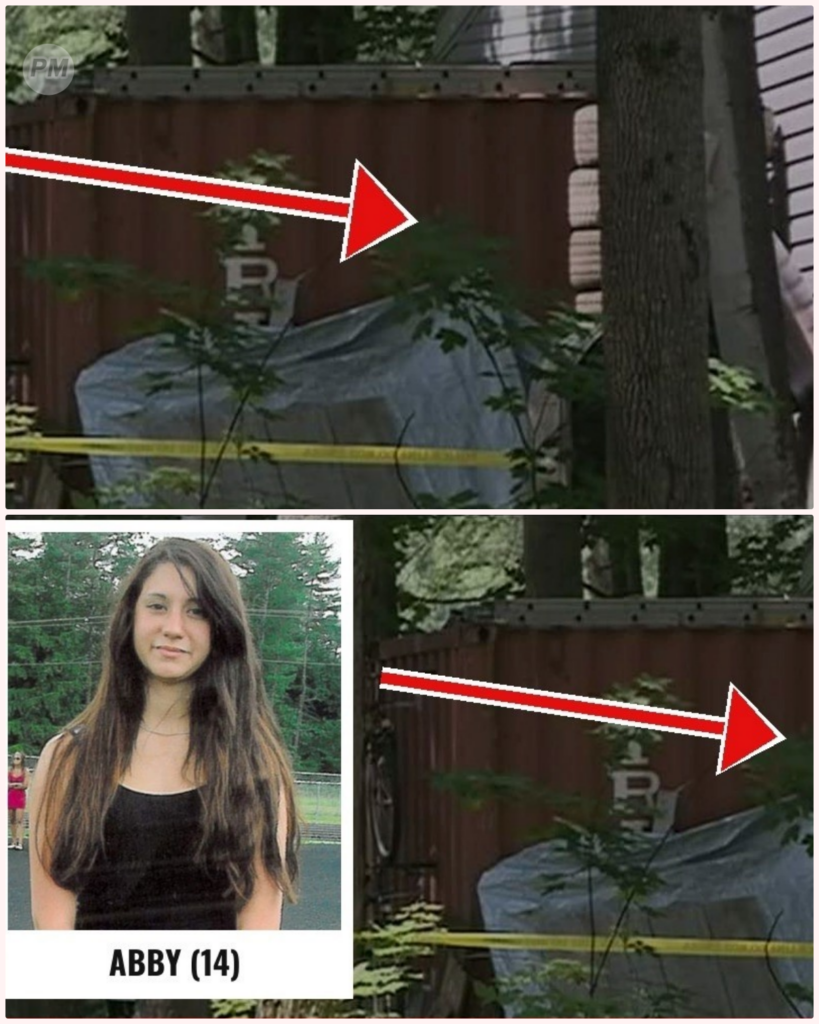
He drove her about 30 mi north to the town of Gorum to a mobile home park on Brookside Drive where he lived in a trailer.
Behind the trailer, through the trees, stood a steel shipping container. His name was Nathaniel Kibby.
He was 34 years old. He worked with metal. What happened inside that container is in court documents.
Some of it is so graphic that prosecutors refuse to release it to protect the girl.
I’m not going to describe it either, but you need to know enough to understand what she survived.
The container had been made soundproof. He kept her there on and off for 9 months.
He taped her eyes shut. He bound her with zip ties. He used a taser on her again and again, dozens of times.
He abused her sexually repeatedly. He made her call him master. He told her he had rigged the door so that if anyone ever forced it open, the room would catch fire.
And when he decided that keeping her quiet needed something more, he came up with an idea.
He told her he was thinking of something, as he put it, a little more humane.
A shock collar, the kind people put on dogs. I remember he put it on me and he told me, “Okay, try and scream.”
She tried to raise her voice and it shocked her. Now you know what it feels like.
He told her at times, according to the charging documents, he tied her to a bed.
Her only water came through a tube from an aquarium. He made her scrub the walls to wipe away her fingerprints.
She was 14 years old. How do you survive that? Abby said she did two things.
The first was to never fight him. She never disagreed, never argued, never angered him.
She went along with whatever he wanted. Slowly over the months, that bought her something.
He began to talk to her. He began to trust her a little. He even had her help with a side business he ran in that trailer.
He was making counterfeit money. The second thing was prayer. I did not want to die.
And I remember praying to God. And I remember I never said, you know, like amen in my mind.
I never wanted to end my prayers because I didn’t want God to leave me.
She said she just wanted to live. She did not want to die. He gave her books to read.
And in one of them, a cookbook, she saw a name written inside. She told ABC what happened when she asked him about it.
She said, “Who’s Nate Kibby?” He took a breath and he asked her how she knew his name.
From then on, he made her promise never to reveal who he was. She also believed she was never alone.
In the container, there was a camera, a small light that was always blinking, like a security camera.
She thought he was watching her all the time. And she had one more thing.
Her hometown paper, the Conway Daily Sun, ran a small box every single day counting the number of days Abby Hernandez had been missing.
Somehow in that trailer, she saw it. Her mother later told the paper that Abby saw it now and then while she was held, and that it gave her hope.
Every day, the number went up. Every day. It meant her town was still counting.
Her town was still looking, but it was about to start doubting her. A month after Abby vanished, the front pages had moved on.
There were no credible leads, no sightings. Zena has said she was not holding it together.
She had fallen into despair. She had stopped doing the ordinary things a person does in a day.
She had not even picked up her mail in weeks. So she didn’t know that the biggest break in the case was already sitting in her mailbox.