By the time Preston and Courtney arrived at St
By the time Preston and Courtney arrived at St. Francis, Walter had already been admitted for 6 days.
Preston came first. He spoke to the attending physician for 20 minutes, asking questions that were precise and financial in their framing.
Treatment costs, insurance coverage, projected length of stay. Then he went to his father’s room.
Courtney arrived 2 hours later. They were polite to the nursing staff in the way that people are polite when they want something from the nursing staff.
They asked about visiting hours extensions. They asked, within the first week, about the protocol for patient decision making in cases of cognitive decline.
Walter was not in cognitive decline. His mind was entirely intact. 3 weeks into the admission, he asked his night nurse for a notebook.
Not a hospital notepad, a proper hardback journal, he specified. The kind with a sewn binding.
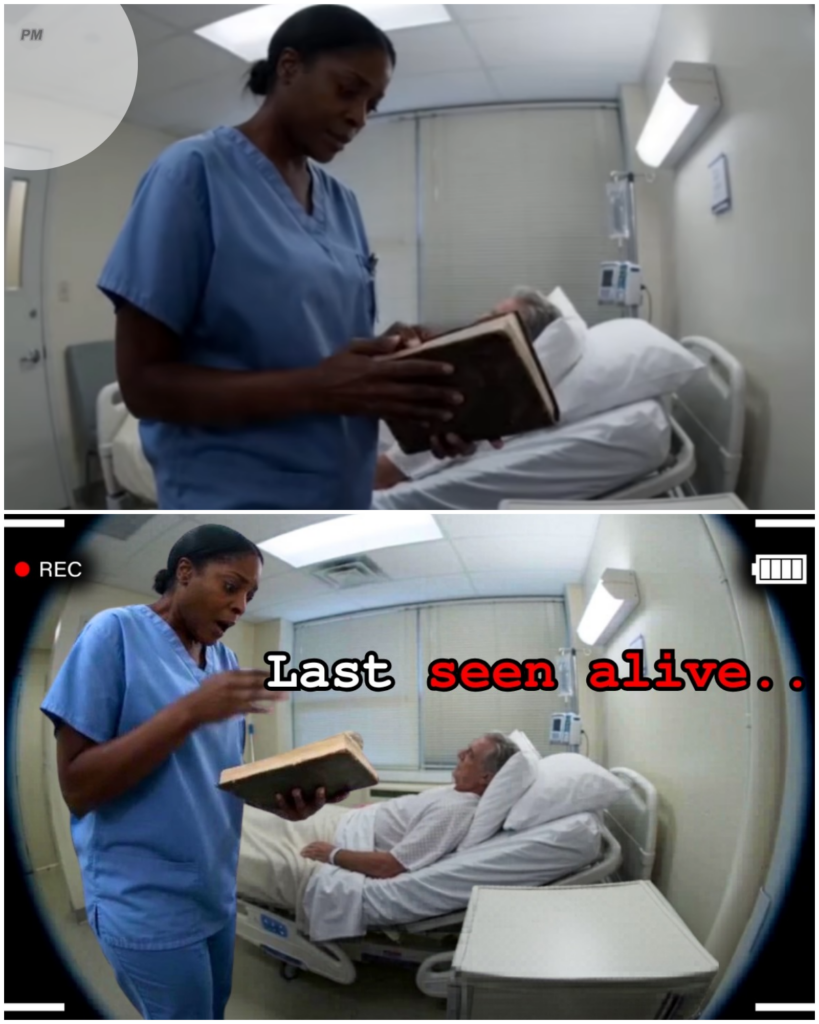
His night nurse was Deja Holloway. Deja Holloway had worked the night shift at St.
Francis Medical Center for 4 years when Walter Gaines was admitted to the oncology ward.
She was 34 years old, originally from Muskogee, about 45 minutes southeast of Tulsa. Her colleagues described her consistently in the same terms.
Steady, quiet, thorough. The kind of nurse who remembered which patients had trouble sleeping and checked on them without being asked.
Night shift oncology is not a posting that many nurses choose voluntarily. The hours are difficult and the emotional weight is cumulative.
Patients in terminal decline have a particular quality of awareness at 2:00 and 3:00 in the morning.
The hospital quiets, the visitors are gone, the daytime pretenses drop, and what remains is often a clarity that does not appear during rounds.
Deja had learned to be present for that clarity without being consumed by it. She brought Walter the journal on her next shift.
He thanked her with a formality that felt deliberate. She did not ask what it was for.
Among Deja’s colleagues on the oncology ward was a nurse named Craig Elmore. He had worked at St.
Francis for 6 years, 2 years longer than Deja. He and Preston Gaines had known each other since college, the University of Tulsa class of 2012, the kind of friendship that had survived distance and diverging lives through occasional dinners and a group chat that was still active 15 years later.
Craig had mentioned the connection to Deja early in Walter’s admission, the way colleagues mention these things, casually, without significance.
He had said that it was a strange coincidence, being assigned to the father of someone he knew.
He had said that Preston was worried about his dad. Deja had noted it and moved on.
What she did not know, what she had no reason to know, was that Craig had been passing information to Preston since the second week of Walter’s admission.
Nothing clinical, nothing that crossed a formal line, or nothing that Craig would have described that way.
He told Preston that his father was sleeping poorly, that he had asked for a journal, that he seemed, in Craig’s words, more comfortable with Deja than with any other staff member, that he seemed to look forward to the night shift in a way that was unusual for a patient in his condition.
Preston had listened to all of it. What the nursing staff observed over the following months was not dramatic.
It registered at the edges of awareness, small things that individually meant nothing and collectively meant something difficult to name.
Preston and Courtney visited regularly. They brought food Walter did not eat and magazines he did not read.
They asked about visiting hours extensions. Each visit followed the same pattern. They arrived, they sat with their father, documents appeared at some point in the visit, Walter signed, they left.
After they left, the night staff noted that Walter was quieter. Not sad, precisely. Something closer to resigned.
The documents were legal in nature. Procuras, account transfer authorizations, financial delegations. Walter signed each one.
He signed them without apparent resistance in the presence of his children in a room with no witnesses other than whoever happened to be passing in the corridor.
Deja observed one of these signings from the doorway. Preston was standing over his father’s bed, a document extended, a pen already uncapped.
Walter’s hand was reaching for it. His face was turned away from the door. She kept walking.