But talent alone doesn't make you great
But talent alone doesn’t make you great. It makes you good. Maybe very good. But not legendary.
And what makes someone legendary, sir? The right teacher, years of dedication, and the willingness to push past every limit you think you have.
He pulled out a card, simple, just a name and a phone number. I can make you legendary, Miss Ashford, if you’re interested in being more than just another championship winner.
If you want to be the best shooter of your generation. Kira looked at the card, looked at the man who’d handed it to her.
Saw something in his eyes, not arrogance, not manipulation, just certainty. The kind of certainty that came from knowing exactly what you were capable of achieving.
Who are you really? She asked. Someone who set the sniper kill record in Desert Storm.
1,200 m. Saved an entire battalion with one shot. Someone who spent 30 years in uniform learning how to make the impossible routine.
Someone who’s looking for one last student to pass it all on to. Why me?
Because in 15 years of watching these competitions, you are the first person I’ve seen who has the gift.
The ability to make time slow down, to feel the wind without instruments, to know where the bullet will go before you pull the trigger.
That can’t be taught. But everything else I can teach you, everything else. Kira tucked the card into her pocket.
I’ll call you, Colonel Blackwood. He smiled, not warm, not cold, just satisfied. I know you will, Miss Ashford.
I know you will. That phone call changed everything. For the next 13 years, Blackwood trained her.
Not in military schools, not in official programs, private instruction, one-on-one, the kind of mentorship that happens outside bureaucracy and regulations.
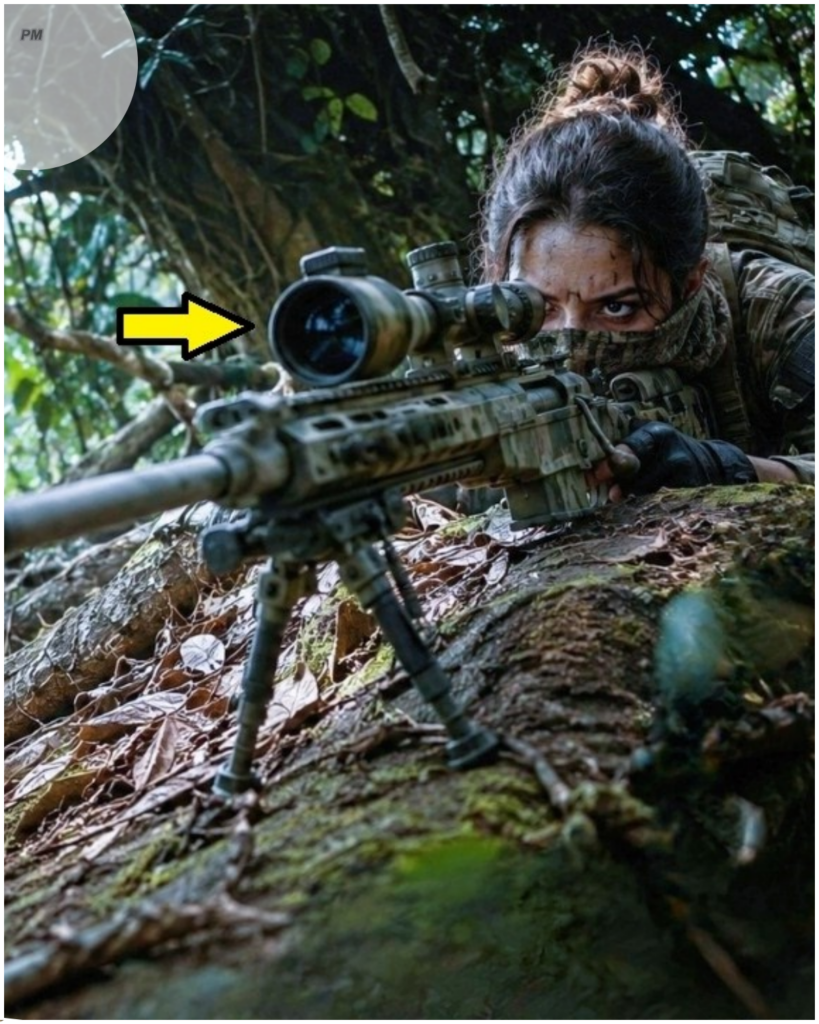
He taught her how to read terrain, how to calculate windage by watching vegetation, how to estimate range without instruments by using memory and pattern recognition, how to control her breathing so precisely that her heart rate dropped to 40 beats per minute while shooting, how to make a ghillie suit from local materials, how to move through hostile territory without leaving traces.
But more than that, he taught her patience. “Everyone thinks sniping is about shooting,” he told her once during a training session in the Montana wilderness.
She was 19 then, already better than most professional military snipers. “But shooting is the easiest part.
Any decent marksman can hit a target at 1,000 m with the right equipment. What separates good from legendary is everything that happens before you pull that trigger.”
He made her wait, hours, days, lying in the same position without moving, learning to ignore discomfort, learning to become part of the landscape, learning that the shooter who wins isn’t the one with the fastest reflexes, but the one with the most discipline.
By the time she was 22, she was competing at the international level, winning, dominating, setting records that still stand.
But Blackwood wasn’t satisfied with the competition success. “Competition shooting is practice,” he said, “but there’s a difference between hitting paper targets and operating in real-world conditions where the targets shoot back.
That’s when the real training began. He introduced her to people who officially didn’t exist.
Contractors who operated in denied territories. Intelligence officers who needed assets capable of independent operations.
People who understood that sometimes the best solution to a complex problem was a single well-placed bullet from someone who knew how to disappear before anyone even knew they’d been there.
At 25, Kira took her first real contract, intelligence gathering in a hostile region, observation and reporting.
But the mission went wrong as they often do. Enemy fighters discovered her position. She had two choices, be captured or fight her way out.
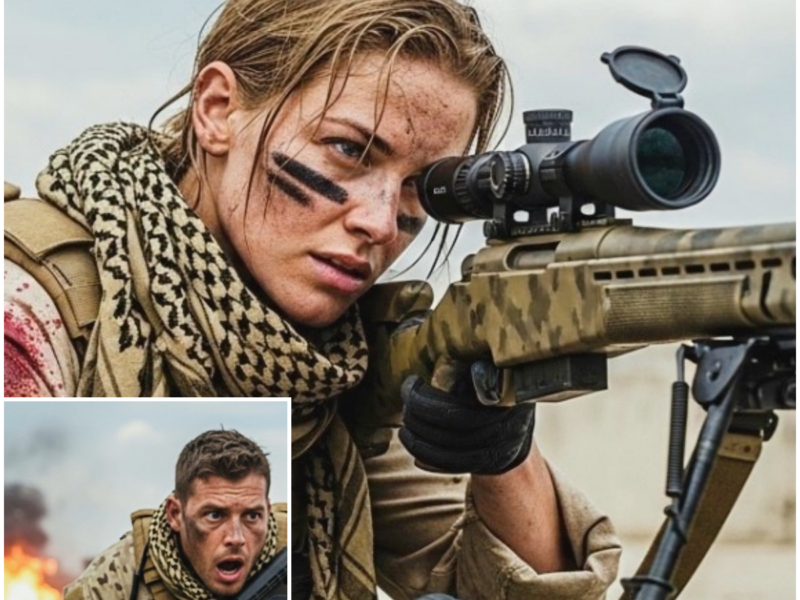
She fought. Three kills, all necessary, you’d all claim, all from positions of disadvantage that she turned into advantages through superior skill and tactical thinking.
That’s when intelligence agencies started taking her seriously. Not as a competitor, not as a trainee, but as an operator.
The nickname came later. Phantom. Given by someone who’d watched her work, who’d seen her appear from nowhere, eliminate targets, and vanish again without trace.
A ghost who left only bodies behind. Blackwood was proud in his quiet, understated way.
He never said much. But she could see it in how he looked at her during training sessions.
How he introduced her to other veterans. How he talked about her potential. “You’re better than I ever was,” he told her once.
She was 26 then, already operating at a level that few in the special operations community could match.
“You have my fundamentals, my doctrine, but you’ve taken it further, refined it, made it your own.
That’s what legacy is supposed to look like.” She’d never forgotten those words because 2 years later everything changed.
Kandahar Province, Afghanistan. 2022. The operation was supposed to be simple. High-value target, confirmed intelligence, quick strike, extract, standard operating procedure for someone of Kira’s capabilities.
The target was in a compound, second floor. Intelligence said he’d be alone with maybe two guards.
Easy shot, clean shot, righteous shot against someone who’d killed Americans. Kira set up her position 800 m away.
Perfect sightlines, cover and concealment. Escape routes planned. Everything by the book. Blackwood’s book. The book they’d written together through 13 years of training.
She watched through her scope as the target appeared in the window. Male, military age, wearing what intelligence said he’d be wearing, doing what intelligence said he’d be doing.
She calculated the shot. Wind, distance, temperature, humidity, glass deflection, every variable accounted for, every factor considered.
She took the shot. Perfect execution. The target dropped. Mission complete. Except it wasn’t complete.
Because as she watched through her scope maintaining overwatch as protocol demanded, she saw a movement in the room.
Someone else. Someone intelligence hadn’t mentioned. Someone who’d been hidden behind the target. A child.
A boy. Maybe 14 years old. Thin, scared, and now covered in the blood of the man who’d been standing in front of him.
The man who’d been shielding him. The man who’d been his father. Kira’s world stopped.
The scope showed her everything. The boy’s face, his shock, his realization. His transformation from someone with a father to someone without one in the space of a single bullet.
Later, when the intelligence was reviewed, the truth came out. Wrong target, bad intelligence, miscommunication.
The high-value target had left the compound hours earlier. The man in the window had been a shopkeeper.