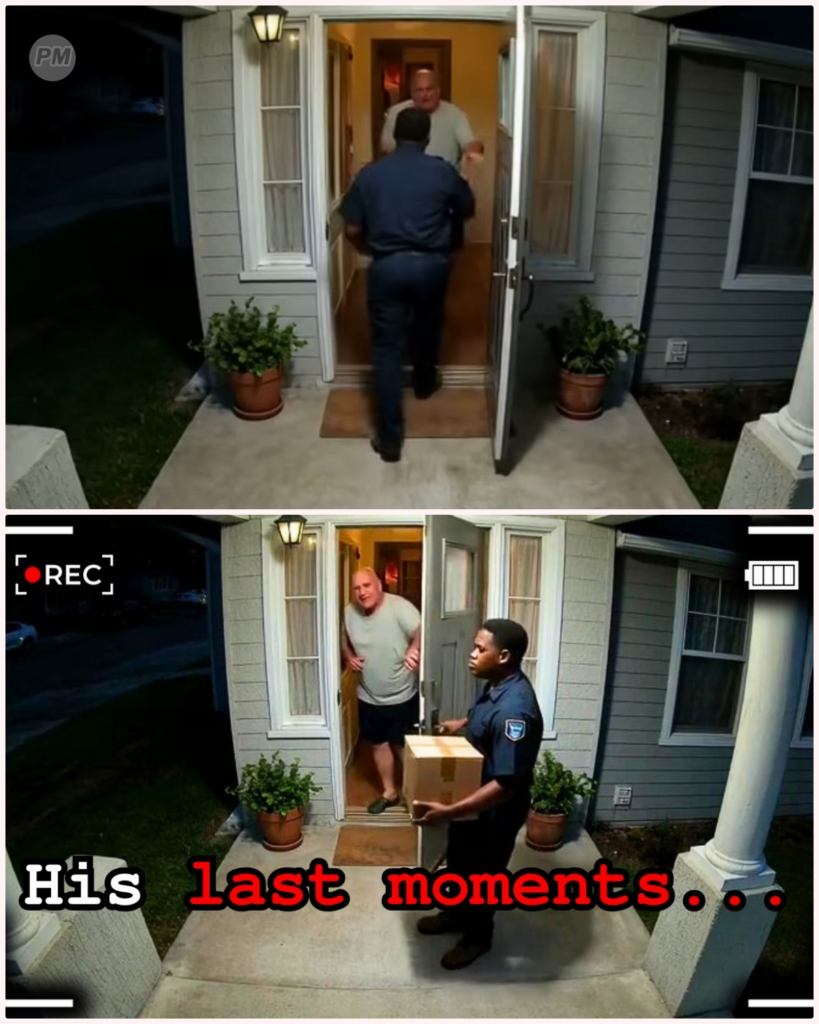
He never came home
He never came home. Caretta does not look at Arthur Sterling once during her statement.
When she finishes, the courtroom is silent for a long time before the judge speaks.
The courier company is named in a separate civil lawsuit filed by Coretta Washington in January 2025.
The lawsuit alleges that the company’s failure to secure its employee directory enabled Arthur Sterling to target and murder Otis Washington.
The lawsuit seeks damages for wrongful death and negligence. The courier company settles the case out of court in July 2025 for an undisclosed amount.
As part of the settlement, the company agrees to conduct a full security audit of all customer-facing and internal systems.
The unsecured employee directory subdomain is taken offline on December 15th, 2024. One day after Arthur Sterling’s arrest.
It had been publicly accessible for 4 years and 8 months. In that time, no one at the company noticed.
The flaw was not hidden. It was not the result of a sophisticated hack. It was simply an oversight.
A subdomain left open during a routine server migration in 2020. And Otis Washington, on stop 41 of a Tuesday evening route in December, paid for that oversight with his life.
Otis Washington was 37 years old when he died. He had been married to Coretta for 8 years.
He had three daughters who will grow up without him. He coached youth basketball on Saturdays.
He went to church on Sundays. He was never late for work. He never missed a shift.
He remembered his customers by name. Every person who knew him said the same thing.
Otis was steady, reliable, kind. On December 3rd, 2024, he left for work at 6:15 in the morning.
He kissed his wife goodbye. He told her he would be home by 7:30. He He 41 stops that day.
He made 40 of them. The 41st stop was 1814 Elm Grove Lane. Arthur Sterling had been waiting for him for 11 months.
And when Otis walked through that door, he was walking into a trap that had been carefully, methodically, patiently constructed over the course of almost a year.
He did not know that. He could not have known that. He was doing his job, delivering a package, going home to his family.
But Arthur Sterling had decided 11 months earlier that Otis Washington was not going to go home.
And because a corporate database was left unsecured, because a subdomain was accidentally made public, because no one at the courier company noticed the flaw for over 4 years, Arthur Sterling had the tool he needed to find Otis, to select him, to wait for him, and to kill him.
This case is a reminder that violence does not always announce itself, that hatred can be patient, that the gap between ordinary life and tragedy can be as small as a single step through a doorway.
Otis Washington took that step because he trusted that the world worked a certain way, that a delivery was just a delivery, that a porch light coming on was just a motion sensor, that a man opening a door with a smile was just a customer.
He had no reason to think otherwise. And Arthur Sterling knew that. He counted on it.
The footage from Elm Grove Lane shows 67 seconds, 1 minute and 7 seconds. That is how long it took for Arthur Sterling’s 11-month plan to reach its conclusion.
Otis parks. He gets out. He walks to the house. The light comes on. The door opens.
He steps inside. The door closes and Otis Washington, father of three, husband, basketball coach, courier driver with a perfect 9-year record, is gone.
His daughters are growing up without him. His wife still keeps his jacket in the closet.
His father still drives to the paper mill some mornings because the house is too quiet.
And a security camera on a utility pole on a quiet Virginia road holds the last 67 seconds of his life.