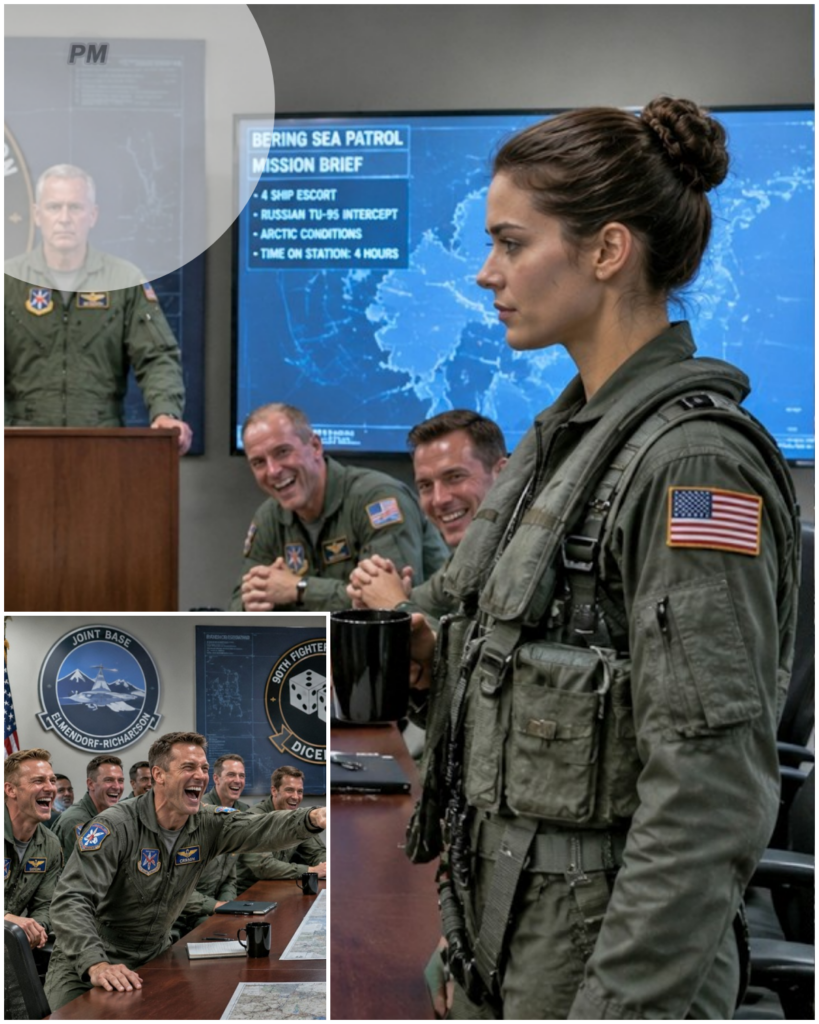
Her heart rate barely elevated
Her heart rate barely elevated. She didn’t see fire. She saw a physics problem that required immediate aggressive correction.
This was why she was a test pilot. This was why DARPA had chosen her.
She had spent years deliberately putting experimental aircraft into uncontrollable spins just to see if she could rip them back from the edge of the abyss.
Her hands moved in a blur. She stomped the left rudder pedal to the floor to counteract the violent rightward yaw.
She simultaneously jammed the control stick forward and left, fighting the heavy, unresponsive aerodynamics. Her left hand snapped the right engine throttle completely off, severing the fuel flow to the burning inferno behind her.
She reached forward and punched the fire suppression button, discharging halon gas into the flaming engine bay.
The jet was still violently vibrating, shuddering as the aerodynamics of the damaged fuselage fought against the surrounding air.
She was losing altitude rapidly plummeting toward the cloud deck at a terrifying angle. “Falcon!
Eject! Eject!” Higgins screamed, his voice cracking with sheer terror as he watched her jet begin to spiral downward.
“You’re going into a spin.” The radio frequency clicked. A burst of static hissed in the ears of Higgins, Weaver, and the entire Awax crew.
Then, cutting through the panic, the alarms, and the chaos, came a voice so unnervingly calm, so devoid of fear, it sounded like it belonged to a machine rather than a human being staring death in the face.
Negative bulldog one. Samantha’s voice crackled through the comms, slow and deliberate. I have the aircraft.
Clear the airspace below me. I’m bringing her down. The silence on the encrypted tactical frequency was absolute, heavy, and suffocating.
For five agonizing seconds, neither Major Romano Higgins nor Captain Thomas Weaver could process what they were witnessing.
40,000 ft above the beering sea, the F-22 Raptor, a $60 million apex predator of the skies, was behaving like a wounded, dying bird.
Inside the cockpit of Bulldog 3, Captain Samantha Hayes was entirely consumed by the brutal physics of survival.
When a fighter jet loses an engine at Mach 0.8, it doesn’t simply glide. The immense gaping hole where the engine used to be becomes an aerodynamic parachute, creating massive asymmetrical drag.
The Raptor’s nose violently sliced to the right, forcing the aircraft into a terrifying uncommanded roll.
Gravity clawed at the heavy airframe, pulling it toward the impenetrable layer of gray storm clouds churning violently below.
Samantha fought the control stick with every ounce of physical strength she possessed. The F-22’s flybywire system was fighting her.
The flight control computers overwhelmed by the sudden influx of conflicting telemetry data. “Override! Give me direct surface control,” she muttered through gritted teeth.
Her right hand squeezed the paddle switch on the base of the control stick, instantly disabling the computer’s flight envelope protections.
“She was flying raw now. No computer assistance, just cables, hydraulic actuators, and pure muscle memory.
She stomped the left rudder pedal to the floorboard and held it there. Her leg muscles burning under the intense strain, she shoved the stick forward and aggressively to the left, forcing the left aileron up to counteract the violent roll.
Slowly, agonizingly, the horizon line on her heads up display, HUD, stopped spinning. The jet leveled out, but the air speed was bleeding off at a catastrophic rate.
200 knots, 180 knots. Warning, stall, warning, stall. The automated voice of the aircraft, affectionately known by pilots as and Betty, echoed in her helmet with chilling indifference.
Falcon status. Talk to me. Higgins shouted over the radio, his F-22 diving aggressively to form up off her left wing.
The bravado he had displayed in the briefing room was entirely gone, replaced by the frantic, high-pitched urgency of a man watching a colleague plummet toward a watery grave.
“Engine fire is extinguished,” Samantha replied. Her voice remained eerily flat, practically robotic. She didn’t sound like a pilot in distress.
She sounded like a mechanic reading a grocery list. Right engine is a total loss.
I have severe structural damage to the right impenage. Flight controls are sluggish but responding.
Weaver flying high cover above them let out a breathless curse. Holy hell, she caught it.
She actually pulled it out of the spin aboard the E3 Century Awax circling 30 mi away.
The mood was one of highly orchestrated panic. The mission commander, Colonel Gregory Papy Mitchell, stood behind the radar consoles, his eyes locked on the rapidly descending altitude numbers attached to Bulldog 3’s transponder ping.
Bulldog flight, this is Argus 1. Colonel Mitchell’s voice broke over the comms. We have a visual on your telemetry.
You are dropping like a stone. Recommend immediate ejection. I repeat, immediate ejection. The water temperature below you is 32°, but we have Coast Guard rotary assets scrambling out of Dutch Harbor.
Negative Argus 1. Samantha responded instantly. If I punch out into that cloud deck, I’ll freeze to death before the chute hits the water.
I’m staying with the ship. Give me a vector to the nearest emergency divert strip.
Mitchell hesitated. Diverting a critically damaged stealth fighter in the middle of a brutal Alaskan winter storm was a fool’s errand.
Falcon, you are 200 m from the nearest mainland runway. Elmenorf is out of the question.
You won’t make it. I am not asking for Elmenorf. Colonel, Samantha snapped back, the first hint of command authority bleeding into her tone.
Pull up your diversion charts. Give me a heading to Erexan Air Station, Shemia Island.
Higgins’s head snapped toward his navigational display. Shemia Falcon, that’s a black sight rock in the middle of the illusion chain.
It’s practically abandoned and it’s right in the middle of that storm cell. The cross winds down there will rip you apart.