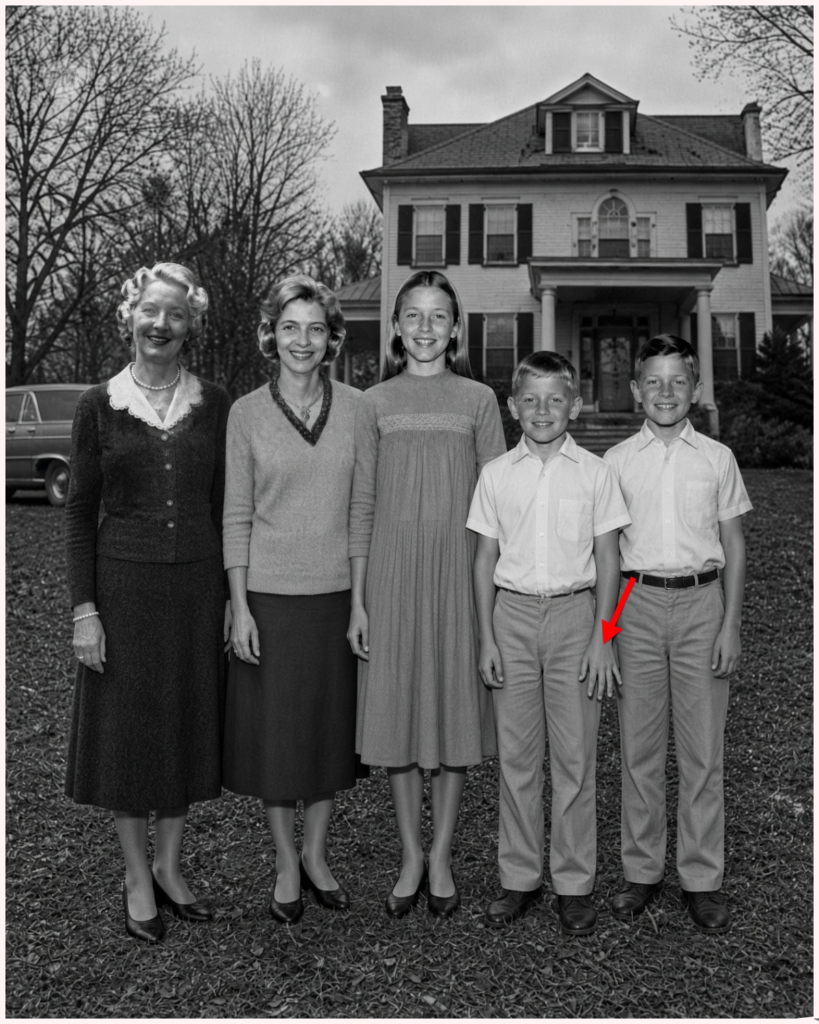
Those were the five people John Liss decided had t…
Those were the five people John Liss decided had to die because he truly believed he was saving their souls.
In logic twisted by dogma and an obsession with control, he looked at his family and saw five souls sliding toward damnation.
Helen drank fallen. Patricia pursued the stage. Fallen. The 1970s with the anti-war movement, [music] drugs, sexual freedom.
The whole world was falling. And if his family kept living in that world, they would [music] lose their souls forever.
The solution in his head was simple, to the point of horror. Kill them now while they were still Christians to make sure they went to heaven.
Later in the letter to Pastor Rewinkle, he wrote that if he let the family keep living, he was not sure they would keep the faith.
But if he killed them now, he knew they would be saved. He did not see it as murder.
He saw it as an act of love. And why did he not kill himself?
Because according to the Lutheran doctrine as he interpreted it, suicide was an unforgivable sin.
Suicide would send him to hell, and then he would never be reunited with his family in heaven.
So he had to live. He had to kill the whole household, send them to heaven, then keep existing so that someday after enough prayer, after God forgave him, he would meet them again on the other side.
That was the plan. That was the logic and it was completely serious in John List’s mind.
In the days before November 9, he began carrying out each step with a meticulousness that [music] if you did not know the context, you would think was a business plan rather than a murder plan.
He contacted delivery services, canceled the newspaper, canceled the milk, canceled the mail. He called the children’s school and said the family would be going to North Carolina for a few weeks to visit a seriously ill relative.
Every small detail served one purpose. Buy time stretched the gap between the murders and the moment someone started asking questions.
He calculated everything. The temperature in the house, the lights, the music. He even thought about smell.
If he dropped the temperature low enough, decomposition would slow and no one would smell anything from [music] outside.
And on the morning of November 9, 1971, John List woke up, [music] put on a suit as he did every day, ate breakfast with his family, then took his three children [music] to school.
Patricia, John Jr., Frederick. Three children stepped out of their father’s car, walked through the school gate with no idea that this was the last morning of their lives.
On the way back to Breeze Null, John Liss stopped and took two guns from the garage, a 9mm Styer and a 222 Colt.
[music] He walked into the house where Helen was in the kitchen. She did not hear him coming from behind.
Helen List was standing in the kitchen when John List shot her once in the back of the head with a 9mm sty.
She died on the spot. No last words, no warning, no chance to understand what was happening.
After 20 years of marriage, John [music] List ended his wife’s life with one bullet from behind in her own kitchen.
He dragged Helen’s body [music] out of the kitchen, set it aside, then took a cloth and wiped the blood off the floor.
Then he took the gun and went up the stairs. Three flights, 84 steps. Almist 84, was in her apartment on the third floor where she lived almost cut off from the rest of the house.
She rarely came downstairs. She trusted her son completely. When John List walked into the room, she was not afraid.
She did not run. She may have had her back turned or been sitting in a chair.
He shot her once above the left eye. Alma died without ever knowing that her daughter-in-law lay dead on the first floor below and that the person who pulled the trigger was the only son she had loved and trusted all her life.
John List left Elma’s body where it was on the third floor. [music] He did not drag her down as he had done with Helen.
Later in the letter, he explained why Alma was too heavy and the stairs were too steep.
Even in the act of murder, he still calculated effort like a logistics problem. Two women were dead.
[music] Now it was noon. And John Liss did something that if you did not know the context, you would think was the most ordinary day on earth.
He made himself lunch. He sat down and ate in a house with two bodies.
After lunch, he drove to the bank to close his account and what was left of his mother’s savings.
He withdrew everything he could withdraw. [music] Then he drove to Westfield High School. His oldest son, John Frederick Jr., 15, was playing in an afternoon football game.
John Liss stood there in the stands or on the sideline watching his son run, fight for the ball, sweat under a New Jersey autumn sun.
He watched the whole game. He knew it was his son’s last game. The boy [music] did not know.
After the game, Lis drove him home. John Jr. Walked in to Breeze null and his father shot him, but unlike Helen and Elma, John Jr.
Did not die immediately. Forensic evidence showed the boy had tried to fight back. There were signs the shots missed, [music] signs he moved, that he may have tried to run or grab the gun.
John List had to shoot his son multiple times in the chest and face before the boy stopped breathing.
That was the only moment in the day when his perfect plan met resistance. A 15-year-old [music] boy just finished with a football game, saw the gun in his father hands, and tried to live.
He did not live. Patricia, 16, came home after school. The girl who [music] loved the stage, the girl who wore a peace symbol shirt, the girl teachers believed would have a future in the arts.
She walked through the door and was shot dead. Frederick, 13, the youngest, the [music] child who had not yet become anyone.
He walked through the door and was shot dead. List left no specific details about Patricia’s and Frederick’s last moments in the [music] letter.
