On the morning of November 9, 1971, John Liss took…
On the morning of November 9, 1971, John Liss took his three children to school in Westfield, New Jersey.
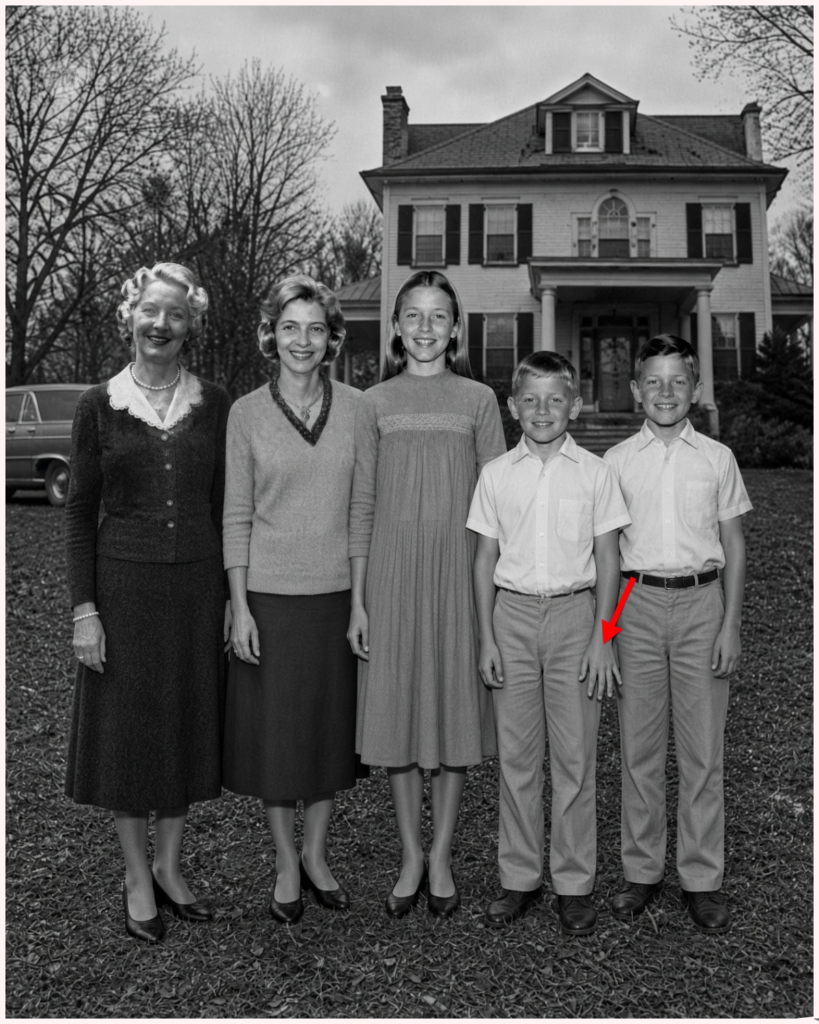
He was an accountant, a Sunday school teacher, the model father in a 19 room mansion called Breeze Null.
That morning, there was nothing unusual except that on the way home, he picked up two guns.
His wife was shot in the kitchen. His mother, 84, was shot on the third floor.
That afternoon, he watched his son play football, drove the boy home, then shot him dead.
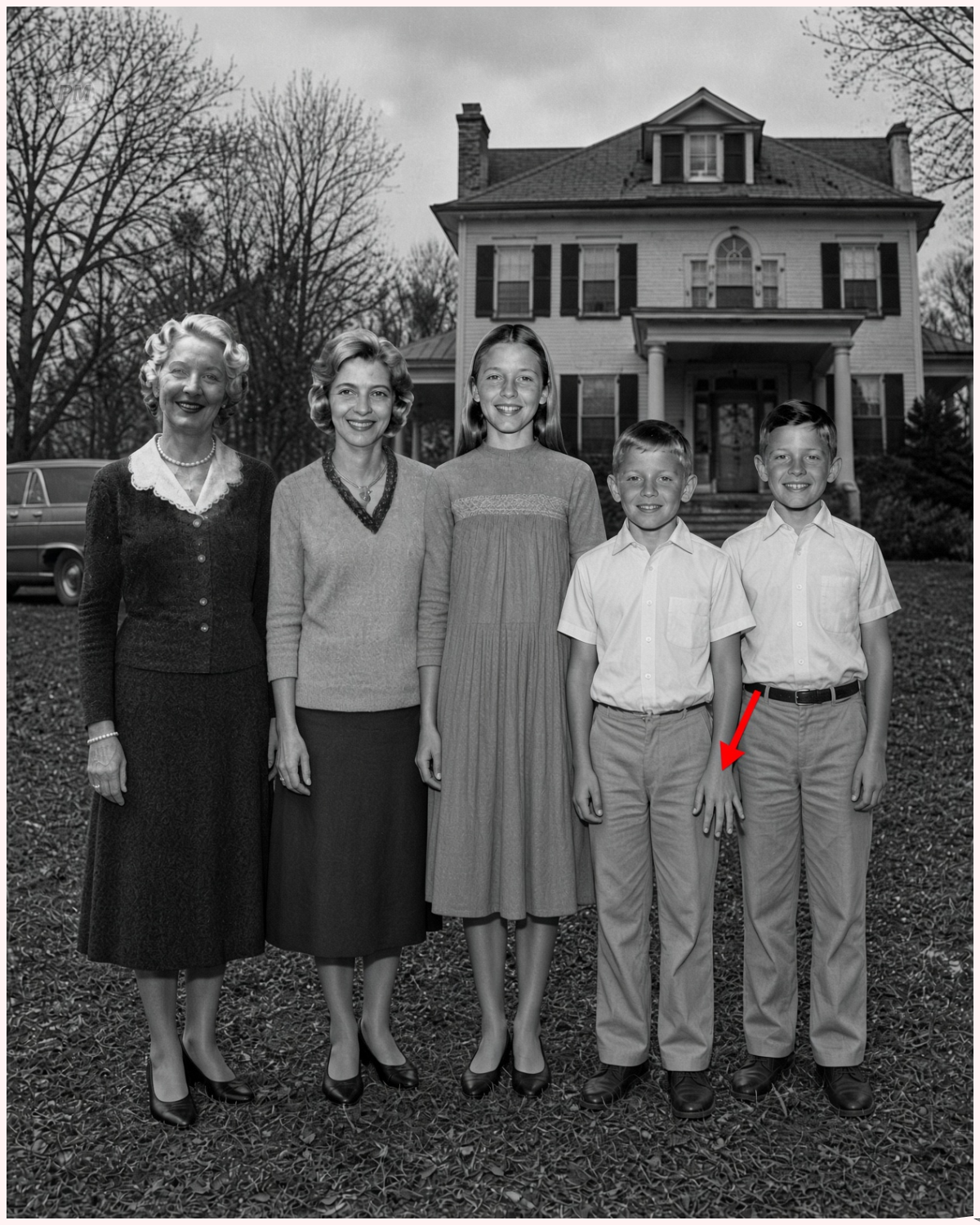
The other two children were killed as they walked through the door. Five people. One day, he dragged the bodies down to the ballroom, laid them on sleeping bags, cut his own face out of every family photograph, turned on him music, wrote a five-page letter to the pastor explaining [music] that he had sent his family to heaven, then locked the door and vanished.
No trace. This was 1971. No internet, no national database. List had planned so meticulously that it was nearly a month before police found the bodies.
When they walked in, the lights were off. The music was still playing. Five bodies lay in the dark.
By then, he was already on the other side of the country under a new name, living a new life.
It took [music] 18 years. A forensic sculptor molding a clay bust from old photographs.
A television program airing at the right moment and a call from a former neighbor before the case was solved.
This is the story of the family massacre that haunted America and 18 years of frozen justice.
If you want to know not only what happened, but why it took nearly two decades to catch him, you have come to the right place.
Subscribe to Cold Case Reopened. We go deep into the cases everyone else has forgotten.
To understand why John List killed his entire family, you have to understand who he was before he became a murderer.
John Emile List was born on September 17, 1925 in Bay City, Michigan. The [music] only son in a German Lutheran family of strict faith.
His father taught him two things above all, discipline and appearance. Failure was not an option.
Taking welfare was a humiliation. And no matter what happened inside the four walls, the outside world always had to see perfection.
Those values sank into John List like a foundation, unseen but deciding everything above them.
In 1943, at 18, List enlisted [music] and served in the United States Army in World War II.
He fought on the European front, lived through some of the fiercest battles the continent had ever seen, and was honorably discharged as a sergeant in 1945.
He came home as a decorated veteran, a survivor of the largest war in [music] human history.
But the war in his head never ended. After the war, List used the GI Bill [music] to attend the University of Michigan in Ann Arbor, one of the most prestigious universities in [music] America.
He earned a bachelor’s degree in business administration, then a master’s in accounting. On paper, this was the perfect postwar American dream.
A veteran, educated, [music] with a stable profession, ready to build a family. In 1951, he married Helen Morris Taylor.
Helen was a beautiful, intelligent woman, the widow of a serviceman killed in the Korean War.
She brought with her a daughter named Brenda from her first marriage. The wedding happened quickly, and in the early years, everything seemed on track.
List worked as an accountant at a company in Detroit, then moved to Kalamazoo, Michigan, where he became an audit supervisor at a paper company.
Three children of their own were born in Kalamazoo. Patricia in 1955, John Frederick Jr.
In 1956, and Frederick Michael in 1958. A perfect American family by every standard of the 1950s.
But behind closed doors, nothing was as perfect as it looked. Helen began drinking heavily.
She grew more and more mentally unstable. Years later, medical records revealed that Helen had tertiary syphilis, [music] a disease that had affected her brain and behavior.
List knew, but he told no one. Appearance was everything. In 1959, List was promoted to chief accounting supervisor.
That same year, Brenda, Helen’s daughter from her first marriage, married and left the family.
In 1960, List moved the family to Rochester, New [music] York to take a new job at Xerox.
He quickly rose to director of accounting services. From the outside, this was a man on the way up.
But List was not a man who knew how to stop. He always needed more.
Not ambition in the ordinary [music] sense, but an obsession that the world had to see him succeed.
In 1965, he took a job as vice president and controller at a bank in Jersey City, New Jersey.
And [music] he did one thing that, looking back, was the first step toward the tragedy.
He bought Breeze Null. Breeze Null was a 19 room Victorian mansion at 431 Hillside Avenue, Westfield, New Jersey.
The house had a wide ballroom with a stained glass ceiling said to be signed Tiffany work worth at least $100,000 at the time, about $560,000 today.
There were wide grounds, rooms for help, and a third floor large enough to convert into a private apartment for his mother, Elma, then 78, who moved in.
The house was too big for one family. The cost of running it, heating it, maintaining 19 rooms through a New Jersey winter swallowed money like a black hole.


