Naval Air Station Harlow Point sat on a long flat…
Naval Air Station Harlow Point sat on a long flat stretch of coast where the wind never really stopped.
On a cold Monday morning in October, the base looked the way it always looked.
Gray hangars stood in rows. Fuel trucks crawled along yellow painted lines. Rows of F/A-18 Super Hornets waited on the ramp, their noses pointed toward the sea, and the sound of engines rolled across the water like distant thunder.
Inside hangar 3, the home of Strike Fighter Squadron 41, the Fighting Condors, the mood was loud and relaxed.
Pilots stood around a coffee machine arguing about a football game, a box of donuts sat open on a counter.
Someone had left a flight helmet on a chair, and someone else had drawn a mustache on a poster of the squadron mascot.
This was a squadron that felt very good about itself, and it had reasons. The Condors had the best bombing scores on the coast.
They had the cleanest landing grades in the wing. Their commanding officer, Commander Dale Brennan, liked to tell visitors that his squadron ran itself.
The evidence was on the walls. A framed photograph near the door showed the whole squadron in front of twelve jets, arms folded, grinning into the sun.
Below it, a row of plaques listed bombing competition results going back six years, and the Condors’ name appeared so often that the older plaques had begun to look like a family tree.
A glass case held a bent piece of target steel from a range in Nevada, signed by pilots in silver marker.
None of it was false. The squadron really was that good, and everyone in the building knew the numbers by heart.
What nobody said out loud was that scores had quietly become the squadron’s conscience. As long as the numbers stayed high, every other question felt unnecessary, almost rude, like asking a winning team why it bothered to practice.
Elena had seen that arithmetic before, on another coast, in another hangar, and she knew where it ended if nobody interrupted it.
He said it often, and he said it proudly. That was the first problem, although nobody inside the squadron could see it yet.
At ten minutes to eight, the side door opened and a woman walked in. She looked to be in her early 40s, slim with brown hair, pulled back tight.
She wore a plain green flight suit with no squadron patch on the shoulder and no ribbons on the chest.
In one hand, she carried a worn flight bag. In the other, she held a single sheet of paper folded in half.
She stopped just inside the door and let her eyes move around the room. She did it slowly, the way a person studies a map before a long drive.
She looked at the pilots. She looked at the whiteboard covered with schedules. She looked at a thick maintenance log book lying open on a table by the wall.
Then she stepped forward. Lieutenant Cole Matthews saw her first. Cole was 29 years old with a sharp jaw and an easy grin.
His call sign was Hammer and he had earned it. He was one of the best stick and rudder pilots in the squadron and he knew it.
He leaned against the coffee counter and crossed his arms. “Can I help you ma’am?”
He asked. His voice was polite. His smile was not. I am looking for a commander Brennan.
The woman said he is in his office. Are you a contractor supply? No. Cole glanced at his best friend.
Lieutenant Jake Rivera, call sign Trip, who was holding a donut halfway to his mouth.
Jake raised one eyebrow. Then you might be lost. Cole said the admin building is across the base.
Everybody gets turned around in their first week. A few of the pilots laughed. The woman looked at him for a moment.
Her face did not change. She held out the folded paper. “Transfer orders,” she said.
“Lieutenant Commander Elena Ward, I am reporting in as your new flight leader.” For half a second, the room went quiet.
Then the laughing came back louder than before. “Flight leader,” someone said. “Ma’am, are you sure you are on the right building?”
Said another. A pilot near the back leaned toward his neighbor and whispered, not quietly enough, “Who is the new girl?”
The words traveled around the room like a spark running along a wire. “Who is the new girl?
Who is the new girl?” Cole took the paper, glanced at it, and handed it back with shrug.
“Well, welcome to the condors, commander,” he said. “Try to keep up.” He said it lightly, but everybody heard what he really meant.
Nobody knew where she came from. Nobody had heard her name. She had no medals, no patches, nothing to prove she belonged in a squadron that lived on reputation.
That made her nobody at all. “Elena” only nodded. “Thank you, Lieutenant,” she said. “I will do my best.”
She walked past them toward the commander’s office. Behind her, Cole said something under his breath, and the room laughed again.
Elena did not turn around because the pilots of Strike Fighter Squadron 41 had no idea who they had just laughed at.
They did not know that the woman in the plain flight suit had flown combat missions over three different regions.
They did not know she had once commanded an entire carrier airwing. And they did not know that the name on her transfer orders and the name on the sign outside the main gate of the base were the same name.
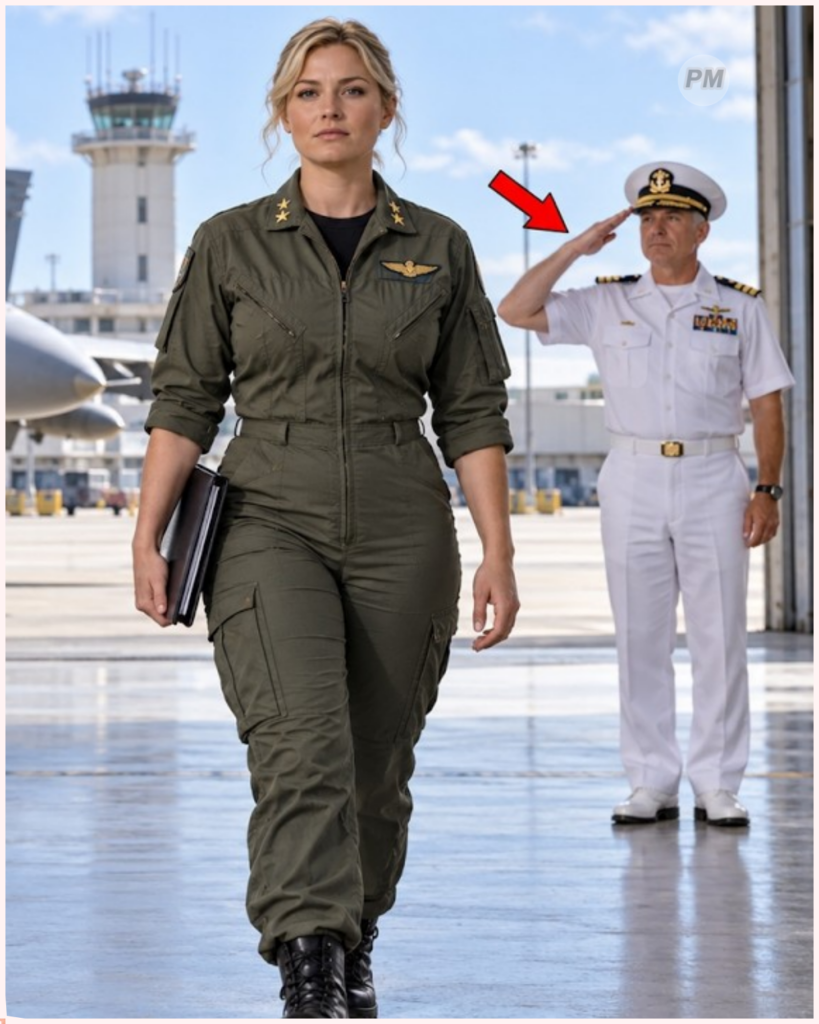
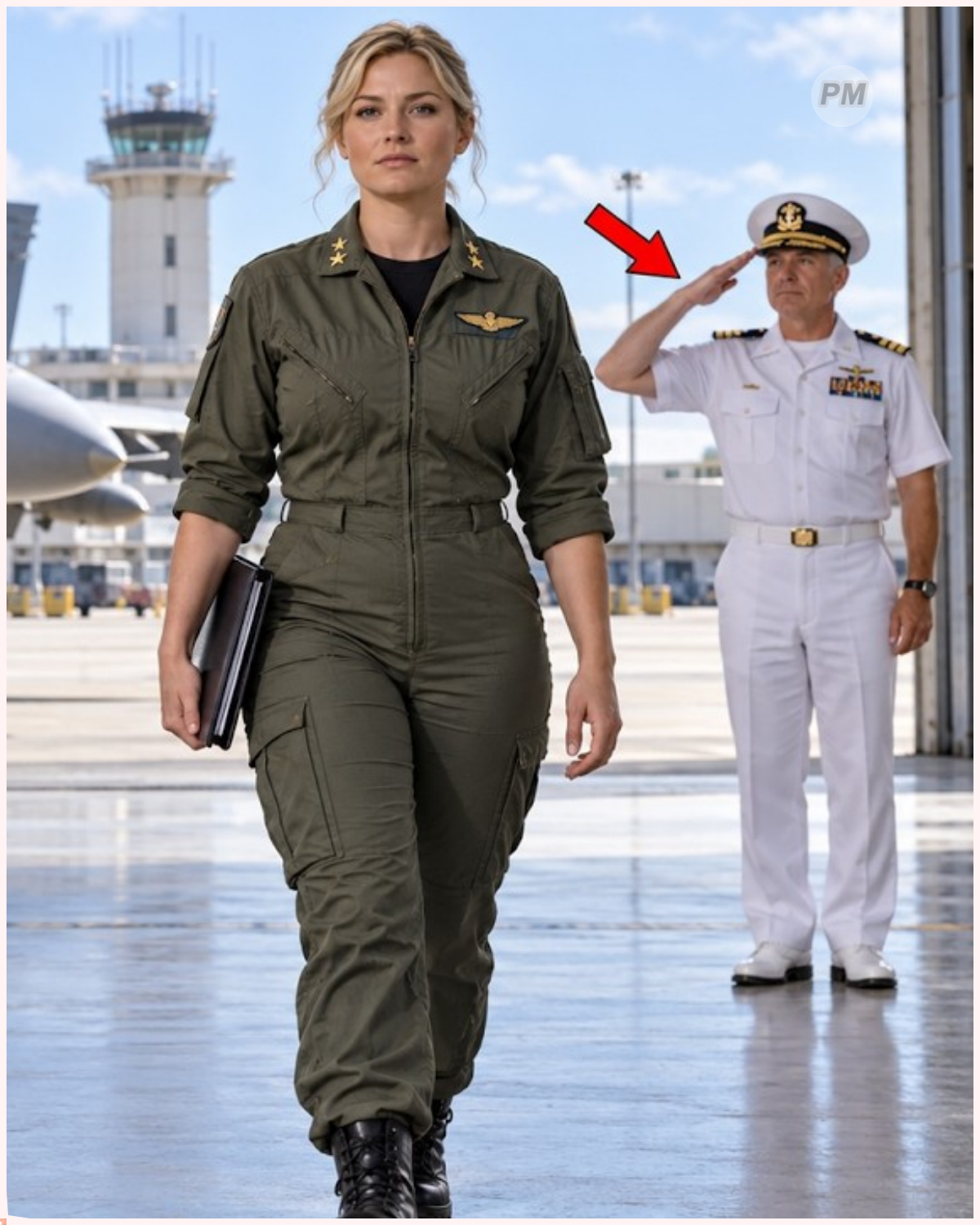
Rear Admiral Elena Ward was the commander of Naval Air Station Harlow Point. Every hangar, every runway, every squadron, and every person on the base answered to her.
And she had walked into Hangar 3 with no stars on her shoulders on purpose.
To understand why, you have to go back 3 weeks. 3 weeks earlier, a maintenance chief named Tom Alvarez had mailed a letter.
