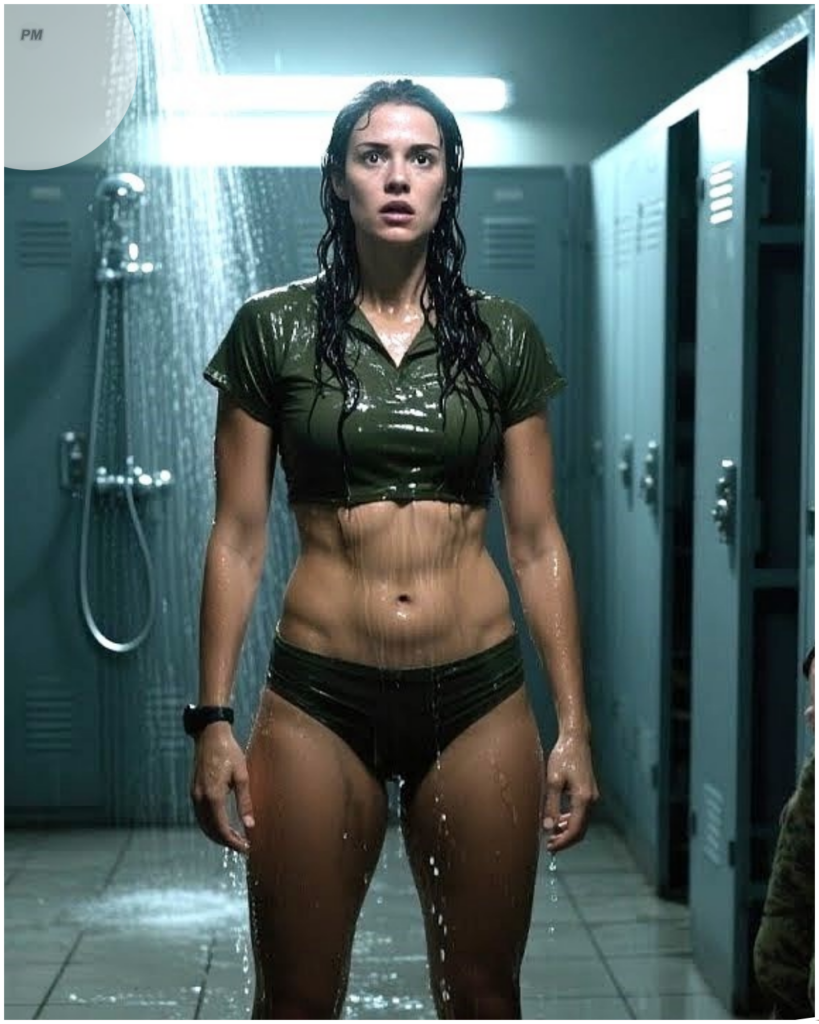
Chang avoided eye contact entirely, clearly uncomf…
Chang avoided eye contact entirely, clearly uncomfortable about the previous evening’s events. During the lunch break, Sarah positioned herself where she could observe the instructors’ interactions with each other and with the candidates.
She watched Webb conduct a leadership exercise that was supposed to test decision making under pressure.
Instead of creating realistic scenarios that would develop actual leadership skills, Webb simply shouted contradictory orders and criticized candidates for any response they gave.
No, no, no, Webb barked at a young candidate who was trying to organize his team for a simulated rescue mission.
You’re thinking too much. In combat, you don’t have time to consider every option. You make a decision and execute it.
Sarah watched as the candidate, clearly frustrated by the impossible situation, attempted a different approach.
Webb immediately shut him down again, this time criticizing him for not sticking with his original plan.
The exercise continued for 20 minutes with Webb ensuring that every possible response was wrong and every decision was criticized.
The candidate left the exercise visibly demoralized while his teammates looked confused about what they were supposed to have learned.
Sarah made detailed notes about the interaction, recognizing it as a perfect example of destructive rather than constructive training.
The exercise wasn’t teaching leadership, it was teaching learned helplessness. During the afternoon, Sarah observed Torres conducting weapons training with a different group of candidates.
Here, the problems were more subtle but equally concerning. Torres was technically competent with the weapon systems, but his teaching methods focused on rote memorization rather than understanding principles.
Candidates were learning to follow procedures without understanding why those procedures worked or how to adapt them to different situations.
When one candidate asked about the reasoning behind a particular safety protocol, Torres dismissed the question with visible irritation.
You need to understand why, he said sharply. You just need to follow the procedures exactly as taught.
Questioning the methods is how people get hurt. Sarah recognized the fundamental flaw in this approach.
Military personnel who couldn’t think critically about their tools and methods were less effective in unpredictable situations.
The goal should be to create warriors who understood their equipment so thoroughly that they could adapt and improvise when circumstances demanded it.
As the day progressed, Sarah found herself increasingly frustrated by the missed opportunities she was witnessing.
The candidates were motivated and capable, but they were being held back by training methods that prioritized compliance over competence.
Many of the instructors were well-intentioned, but they had developed habits and attitudes that were counterproductive to their stated goals.
Chang approached her during the evening equipment maintenance period, clearly having worked up the courage to address the previous night’s events.
Listen, about last night in the showers, she began awkwardly. I hope you don’t think I mean, we weren’t necessarily talking about you specifically.
Sarah looked up from her notes with a neutral expression. I wasn’t paying attention to your conversation.
She lied smoothly. I was focused on getting cleaned up and getting back to my work.
Chang seemed relieved, but also slightly skeptical. Right. Well, just so you know, the guys can sometimes get a bit vocal about changes to their routines.
It’s not personal. They just care a lot about the program and want to make sure it stays effective.
I understand, Sarah replied. Change can be challenging, especially when people are passionate about their work.
The diplomatic response seemed to surprise Chang, who had apparently expected either defensiveness or confrontation.
She lingered for a moment as if waiting for more reaction, then nodded and walked away.
That evening, Sarah spent extra time reviewing her notes and cross-referencing her observations with current military training research.
She had access to classified databases that contained the latest information on training effectiveness and combat readiness studies.
What she found confirmed her observations. Many of the methods being used at the base were not just outdated, but actively counterproductive according to recent data.
The research showed that the most effective military training combined high standards with adaptive teaching methods.
The best warriors weren’t created by breaking people down and building them back up according to a rigid template.
They were developed by identifying individual strengths and weaknesses, then providing targeted training that maximized each person’s potential while ensuring they could work effectively as part of a team.
Sarah also reviewed personnel files for the instructors, which her security clearance allowed her to access.
The pattern that emerged was telling. Most of the problematic instructors had never seen combat themselves.
They were implementing training methods based on tradition and assumption rather than experience and evidence.
Webb, for instance, had spent his entire career in training roles, never deploying with an actual SEAL team.