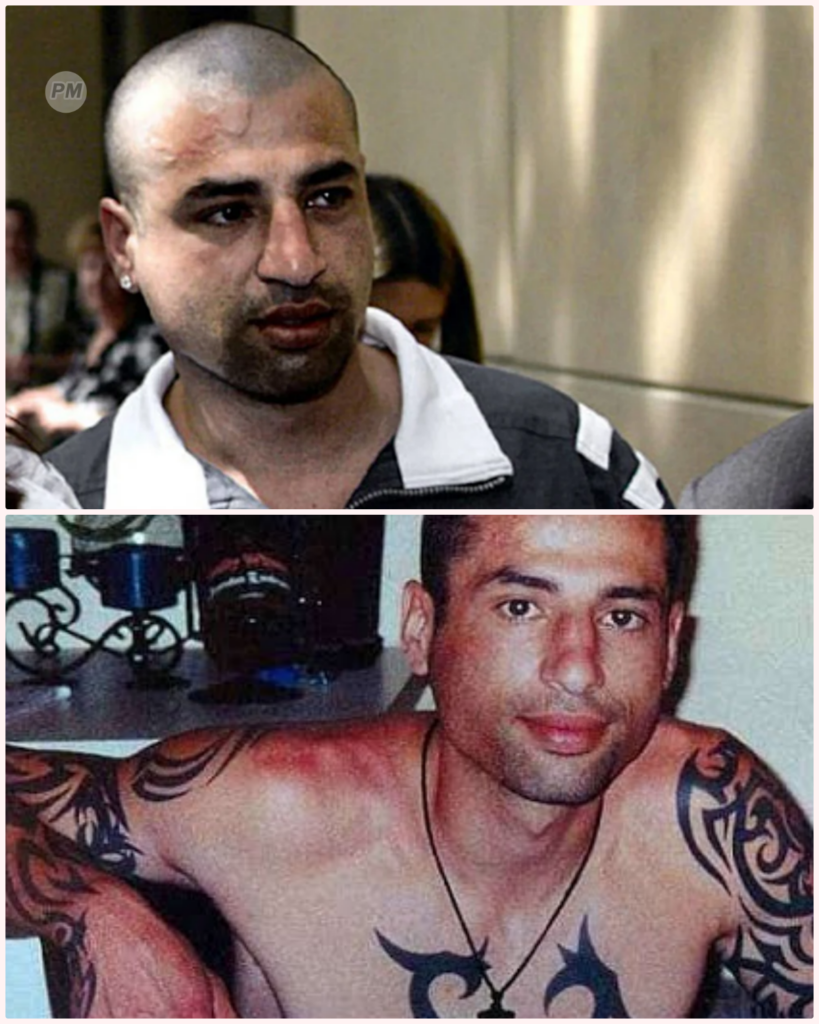
Tonight, one of Australia’s most ruthless killers: Andrew “Benji” Benjamin, a hitman who shot dead seven people as he murdered his way to the top of the Melbourne underworld.
“He was absolutely fearless, would never take a backward step.”
To those closest to him, gentle and charming.
“Andrew was my soul mate. Yeah, he was everything to me.”
In truth, a cold-blooded assassin.
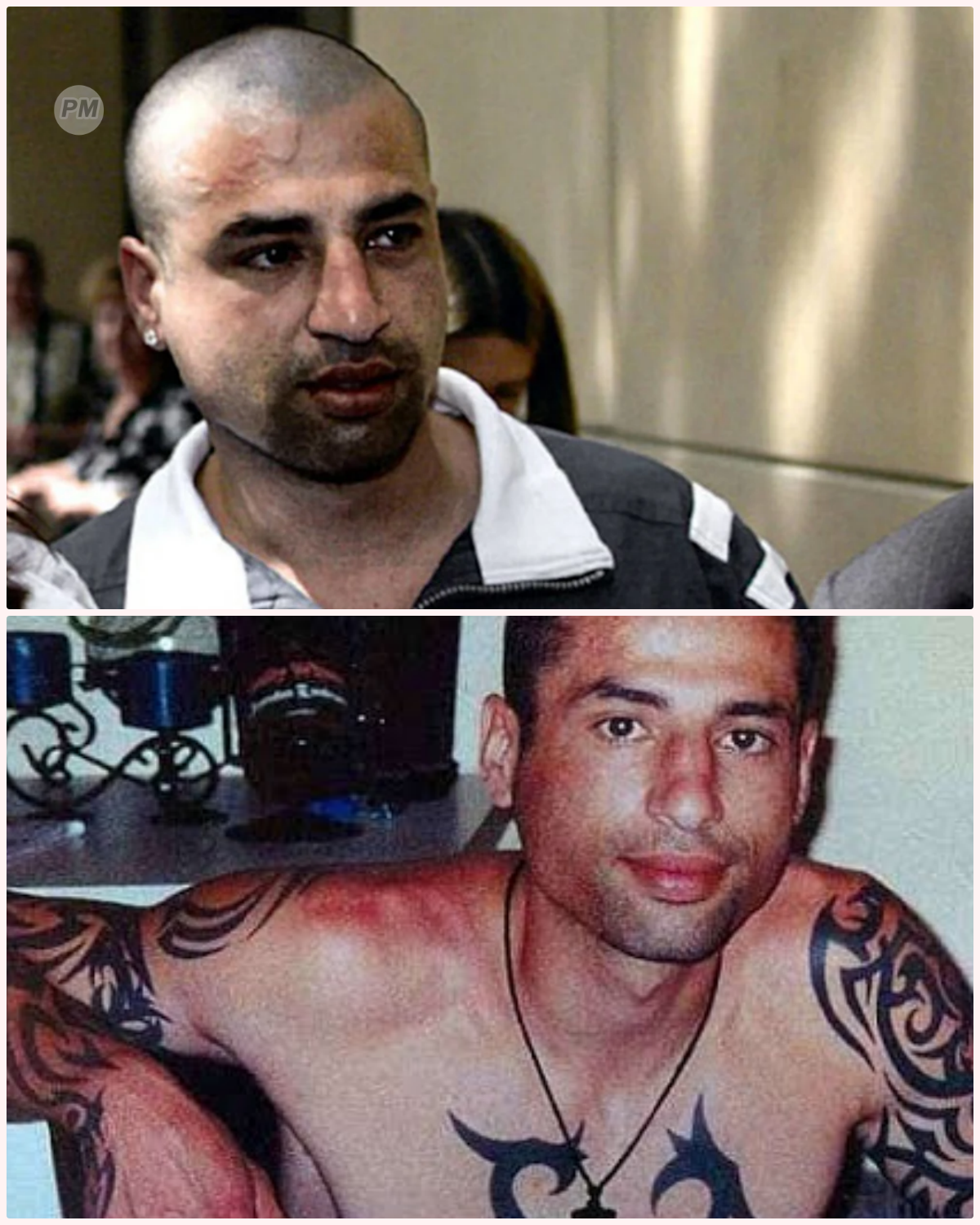
“He didn’t even get a chance to get out of the driver’s seat before being shot in the head.”
“I would have never picked Andrew as a contract killer.”
“Beyond belief that Victoria Police Force didn’t know what he was doing.”
Few who knew Andrew Benjamin ever thought he’d enjoy a long life. Nobody doubted he’d make his mark on the world.
“Andrew was always going to—one way or the other—he was going to be somebody.”
Tonight, clinical psychologist Dr. Leah Geritano tells us why, of all the paths he could have taken, did he choose to go beyond the darkness?
Andrew “Benji” Benjamin killed people for money. He chose to commit acts of evil, and he reveled in the notoriety he’d earned him. But how does a man like Venumen get to the point where he finds it easy to murder? Was he a psychopath? Was he a natural-born killer? The truth about who and what Andrew Venomen really was can be found in his past.
Andrew Benjamin was the third child of Greek Cypriot parents, Apollo and Mariana. They arrived in Melbourne in 1970, just ahead of the wave of migrants escaping ethnic tension in Cyprus. Many Greg Cypriots, the Venomen settled in the busy industrial suburb of Sunshine, in the city’s west. But Australia’s economic problems—rising unemployment and inflation—hit their chosen suburb harder than most. And by the time Andrew was born, on the 16th of November, 1975, Sunshine was changing. It became renowned for street gangs, drugs, and violence.
“Police were told that, you know, if you’re going to go and work in Sunshine, you’re really going to earn your, your straps, you know. It’s a… And the thing is that you’ve got to treat all kids like they’re scumbags.”
“Sunshine was a tough place because you had to deal with such a variety of crime, and you had to deal with people that were getting into crime at an early age.”
“It was a tough, working-class suburb. Had a lot of immigrant families that had moved to Australia, and the second generation was now coming through.”
“Everyone knew everyone in the Sunshine area. There was the ethnic side and the, um, Aussie side. Andrew was from the ethnic side, obviously.”
He was a scrawny kid, but he worked out how to dominate the bigger and smarter children. A boy desperate for attention, he was driven by a realization that, if he wanted something, he’d have to fight for it.
“He had to struggle because he was smaller, so he had to do more than what the bigger guy would, who’s got a stature about himself.”
Andrew’s father, Apollo, worked as a welder at the nearby Sunshine Harvester Factory. He was regarded as a hard man and someone to be reckoned with. At home, Andrew’s mother, Mariana, insisted on a strict Greek Cypriot upbringing for her children.
“In Andrew, looks a lot like his mum, but he was both of them combined.”
Andrew was made an altar boy at their local Greek Orthodox Church.
“Very religious family. Andrew’s mum goes to church. Family was very important to him, and they were everything to him. He had a really, really soft side when it come to his family.”
“Andrew’s house was your normal—it was nothing flesh—it was your normal three-bedroom house. It didn’t have anything attached to wealth.”
Andrew Benjamin followed his sister, Helen, and brother, Stephen, to Sunshine Heights Primary School, close to their home. Because he used the anglicized version of his name, Andrew Benjamin, the other kids nicknamed him Benji.
“Benji Benjamin’s growing up in a tough suburb, so we can be pretty sure that, from an early age, he’s seen violence or he’s been the victim of it. And we know that violence breeds violence. Benji wants status. He wants recognition. And the lawbreakers in Sunshine have both. The criminals are the ones with power and money, and so they become Benji’s role models in life.”
Benji’s next school was the rough, multicultural Rd High. He began mixing with older troublemakers and was soon breaking the law himself.
“A lot of the offending was a street crime: assault police, indecent language, perhaps car theft.”
“The western suburbs, it’s a pretty tough end of town. And, you know, you’ve got to be pretty tough to survive out that way. And he wasn’t a big kid. And I remember I said—did sodium one stage—I said, ‘Mate, doesn’t matter that it’s not the size of the dog in the fight; it’s the size of the fight in the dog.’”
Centimeters tall, just five foot five, but with a king-sized violent streak running through him, he started bodybuilding and learning how to fight properly.
“Andrew came down the gym at a 14-year-old boy, and he said, ‘I want to learn boxing.’ The only little black, you know, about 48 kilos. And I think he wanted to be able to look after himself. That’s what I think.”
Benji’s best made at Idea High was a boy called Dino Debra, who had a reputation for aggressive behavior. Two, she had an appetite for crime. By the age of 15, they were dealing marijuana and stealing cars.
“They’re very close. Dino would have brought Andrew into what Dino was doing. Car rebirthing was the main thing that they were into at that age, and that was sort of their apprenticeship of getting into crime. They were knocking off a lot of cars and dropping it to rebirthing places, which were a lot of the panel beaters, the tow truck drivers. They’ve been with the tow truck drivers as well out there. And Dino introduced Andrew into it, so he was like, um, you know, the Master’s Apprentice.”
Benji and Dino hated authority. They were expelled from school in Year 12 because of their standover tactics and intimidation of both students and teaching staff. But for Benji, there was one source of discipline he was prepared to accept.
“He was a good boy. I, I couldn’t knock him through anything wrong in the gym. When he’s in the gym, he did exactly what I asked him to do. If I asked him to skip 10 minutes, he’d skip 10 minutes, you know. Ask him to shatterbox, he’d shadow box. There was no Smarties or anything in him.”
By 1993, he was stacking on muscle, using steroids and human growth hormones. He was training hard, aiming for the Commonwealth Games. The year before, he’d made the Victorian team.
“Email State team. He went to Darwin and fought in the 1992 Australian titles. He got beat his first fight, but competing, making a team, was a big thing. Now, good fighters in those days, too.”
But his first major criminal conviction would blow his chances of making it to the Commonwealth Games. In early 1993, he took part in a violent heist of a cigarette delivery van. Umen abducted the driver and kept him prisoner for hours.
“The case involving the cigarette salesman was, was terrible. He thought he was going to get killed, that fella. He thought he would die.”
“This is a critical stage in Benji’s criminal progression. Nothing will be the same again. He’s still only a teenager, and yet he’s just abducted and robbed an adult male, threatening to kill him. Benji’s just realized how far violence can take him, and there’s no stepping back now. The power feels great. He’s out to make easy money, and he couldn’t care less about the terror of his victims.”
“The police came down, and he said, ‘Well, he stole a cigarette truck, and we’re trying to find him.’ So that’s the first indication I got of Andrew doing a sort of thing.”
“I think he was caught because the police found all of the cigarettes under his bed at home. He wasn’t terribly clever in those days.”
In August 1993, Benjamin was convicted of rubbery and false imprisonment and sentenced to three years in Melbourne’s notorious Tarana Detention Center. Bernie Geary was working in the juvenile justice system at the time.
“Toronto was a pretty rugged place for young people, and young people who were—weren’t tough didn’t survive very well.”
Venuemen had grown up in Sunshine. He’d have no problem surviving in Tirana.
“The tough kids did it okay and got tougher. He was always very popular with his peer group, and I would say a leader amongst them. King of the kids. Ten years ago, a young person going in Torana, the capacity or the chances of that young person coming out a better person were minimal.”
“Energy Management’s meeting all the criteria for a diagnosis of conduct disorder. That’s where the rights of others and the rules of society are persistently violated. Almost impossible for a 17-year-old with Benji’s type of conduct disorder to be steered away from a life of crime. So, even at this early stage of his life, Benji looks like he’s going to grow into a very dangerous man.”
Juvenile detention would do nothing to reform Benji Venomen. It would harden him physically and mentally. He was leaving his boyhood behind. Awaiting him was a career as a brutal underworld killer.
Thank you.
By 1994, Benji Benjamin was 17 and had graduated from stealing cars and dealing cannabis to violent robbery. He was now serving a three-year sentence at a tough detention center called Tarana.
“It was easier than a prison, there’s no doubt about that. There were aspects of leave—home leave—if young people cooperated.”
When Benjamin got a week’s home leave, he and his mate Dino Debra decided it was payback time for the cops. Benji was serving the maximum possible sentence for a juvenile, and he knew any crimes he committed during that home-leave week wouldn’t add to his jail time.
“They followed a police officer when he was off duty in his private car to a nightclub or something like that. And whilst he was inside, they stole the car. They then drove the car out into the back blocks of the western suburbs and torched it. And they also found in, I think, the glove box, a diary. And that diary contained the phone numbers of the Sunshine CIB. And at about 3:00 a.m., Andrew rang the police officer who charged him with the cigarette robbery and gave him a hell of a spray over the phone. The only problem with that was that the police officer recognized his voice immediately and sent the troops around, and Andrew was feeling promptly arrested for, for that effort.”
Two years later, Benji was out of detention and running with a gang of local youths called the Sunshine Boys. At 21, he was still living at home with his parents, as did many in the gang.
“At home, they can be themselves, and that’s why they—and they’re the people they feel comfortable and relaxed with. So they can actually be themselves in the presence of those people. Everything else is a pretense. When they’re out the street, and they’re out their other mates, and they’re out in other areas, it’s a pretense. It’s a facade, you know. They’re acting out a character, uh, a TV character or someone they’ve picked out of a book or out of a movie or something.”
“I’m home, and never get the—what you get from home—from anywhere else. And he really, really loved his family, and I don’t think that’s something that he would have let go permanently.”
Benjamin was making serious money stealing cars and dealing marijuana, ecstasy, steroids, and speed. He was also taking drugs, which fueled his aggression.
“He’d just spiral and keep going like a little spring. He had a madness, uh, sort of any, you know. A lot of people say he didn’t take drugs, but I know for a fact he did, you know. And because sometimes he was, you know, completely off his face and, and, uh, incoherent.”
“He struck me as someone who could get very angry. I, I understood that about him, particularly in his dealings with the police.”
“Give them a lot of [ __ ], because he wouldn’t sit there and say, ‘Yes, sir. No, sir.’ Yeah, it just wasn’t Andrew.”
“If you’re dealing with a schizophrenic, the same sort of thing as having another personality, and a word could set him off.”
“We can now make a new diagnosis. This impulsive behavior and violence confirms that Benji has antisocial personality disorder. He’s behaving aggressively, and he’s taking huge risks without even considering that there could be negative consequences. Many reckless individuals like Benji have lower resting heart rates and lower levels of arousal, which can leave them with a constant feeling of boredom. So, to increase their stimulation and arousal levels, they’ll often abuse drugs or alcohol, or they’ll take extreme risks, just like Benji’s doing.”
By now, the Sunshine police knew Benji well. Whenever a car was stolen locally, he’d automatically be a suspect. So, at any hour of the day or night, his parents, Apollo and Mariana, could have police at their door.
“You found yourself, you know, turning around to the parents and say, ‘Look, sorry, we’re not here for you. We’re here because this is what Andrew’s been up to.’ And then you got to that point that you were doing it a number of times, and they just said, ‘Look, how much has he been doing? How much has he been up to? Why are you coming around here?’”
Apollo was fiercely defensive of Andrew.
“Apollo seemed to me to take the view that Andrew couldn’t do much wrong, and that really it was all the police who were doing the wrong thing. He seemed to me to, um, yeah, he was fiercely defensive of his son. Police telling them that he is…”
“Our parents help to establish our attitudes towards authority. Behavior teaches him that he doesn’t have to trust or respect the police. He’s learning again that the normal rules of society don’t apply to him.”
By mid-1996, his boxing career had stalled, and Benji had himself to blame.
“He lacked the discipline of the training all the time. He also liked to have a good time with his mates and get out and, and party a little bit and what have you. But, uh, um, you know, to make it in the top level, you’ve got to have immense discipline. I don’t think it would have been anything more than a primary fighter.”
He turned instead to kickboxing, the perfect outlet for his aggression.
“He was absolutely passionate about kickboxing. He almost lived and breathed it. He always had a bit of a strut about him. I know that he was a popular figure amongst, uh, you know, the main-event fighters, um, but he was on the undercut. He was an undercard fighter, but never took a backward step, you know. Would look his opponent in the eye, would stare him down. He has a fair amount of intimidation, I suppose, associated with that, um, but was she asked a very popular figure and had a reputation of just being a very fearsome, ‘Let’s take anybody on,’ type situation.”
“Just lived life to the fullest. He would have loved to have been a champion kickboxer.”
But in 1997, when he failed in his bid for a Flyway title, Benji knew his kickboxing career was over. He no longer needed it. In his criminal life, things were moving. He was operating beyond Sunshine, making connections with the major players in the underworld. Benji marked this by getting heavily tattooed. He made sure the ink on his arms was distinctive and always highly visible.
“Tattoos are a funny thing. I think a lot of people get them in the early stage because they want to be noticed, and Andrew desperately wanted to be noticed.”
“Those sort of trademarks, that’s part of him actually moving up the ranks. It was the thrill of being noticed, being recognized, being seen, being feared.”
“About a third of people who get tattooed do, do so when they’re at a major turning point in their lives. And this is true for Benji, who’s crossing to the dark side. He’s physically displaying this transition in the most visible way he can. He wants the world to know he’s someone to watch out for, someone to be feared.”
Benjamin had stayed close to Dino Debra over the years, despite Dino’s increasingly erratic behavior and heavy drug use.
“They were great mates. They, they were full of cheek, full of life, and inseparable. Yeah.”
They’d often team up for drug dealing and car theft, but Benji suspected that Dino had secretly helped the police. Paranoid and looking for revenge, Benji decided to act. He abducted his mate and shot him twice in the leg.
“He was absolutely fearless, would never take a backward step. That in itself was something that other people ultimately regarded as, as some sort of a qualification for the criminal that he later became.”
Benjamin had crossed a line. He’d used a gun and shot a man. He was now on the road to becoming one of Australia’s most notorious killers.
Foreign.
Would become a cold-blooded killer, a man feared by even the toughest in the Melbourne ganglands. He was well on his way by the time he’d reached his early twenties. With money flooding in from his drug dealing and car rebirthing, life had never tasted so good, and Benji wanted the world to know it.
“The more that I make, the better time that I’ll have. And yes, I’ll impress all my mates, the six mates that I’ve just taken out, because then they’ll see that I’m a man, big fella, and that I can spend all this money.”
“He loved his dressy sort of stuff, like flurry arm shirts. And he liked all see-through-type stuff because he had his really nice tattoos, and you could really see them.”
“Regarded himself as a bit of a lothario, I think. He was always very friendly with my female staff. Would often bring flowers in.”
“He liked girls. Girls liked him. And he felt confident with the girls. He didn’t feel threatened, and they’d already known about him. They already knew of him, so he felt they didn’t have to prove anything to them.”
“It’s addicted to the law, filled with fantasies of unlimited power and success, and he craved the admiration. And there are plenty of people who’ll be drawn to him and want to be like him, because, for them, Benji’s now the antihero. He’s just like the guys in the gangster movies. Benji’s living his dreams. He’s becoming one of the criminals he used to look up to.”
At the age of 23, Benji had latched onto a formidable underworld figure, McGatto, who was linked to the Carlton Crew, an Italian gang fighting for control of Melbourne’s drug trade. The former heavyweight boxer, now in the arbitration and mediation business, was said to have loved Benji like a son. But soon, Venomen started forging links with another power player: the young drug dealer Carl Williams.
“Carl and Andrew were friends, like great friends, um, more brother friendship. And they just treated each other equal. They knew where they stood with each other. They had a great bond, and nothing was below or above that.”
Carl Williams may have looked naive, but he was calculating, vicious, and making millions stealing ecstasy and Spade. His success would lead to a war with the Carlton Crew.
“Benji has no respect for the law, but he doesn’t disregard all authority. It depends where it comes from. The underworld has its own rules and its own authority figures. He looks up to these powerful, strong men who can instruct him in violence and guide his criminal career.”
At the age of 24, driven by ambition and the need to increase his status in the underworld, Benji was about to commit the ultimate crime: to kill.
“He had to escalate. You couldn’t just stay as a person that knocked off cars, a person that produced drugs or traded in drugs. So the ultimate would be to end up as a contract killer, in his mind.”
In May 1999, bankrupt greengrocer Joseph Cadara was shot dead in a Tourak supermarket car park.
“Fifty-seven-year-old Joe Quadara was killed Mafia-style, shot several times at close range with a heavy-caliber handgun.”
This was Benjamin’s first victim, a cold-blothed assassination.
“One thing that I, I did hear, which was a bit frightening, was that when he was asked by one of my colleagues how things were going, he said, ‘Oh, things are going great. I’ve got a new job where I wear gloves.’”
“People who have taken lives often speak about their first kill as though they’ve crossed a threshold. They say killing again is never as difficult. With his first murder, any of Benji’s doubts about whether or not he could kill have been swept away. He’s found what, in his world, is the ultimate problem-solving tool. From now on, Benji will be able to murder anyone who gets in his way.”
Had murdered, and he’d got away with it. The police didn’t connect the small-time criminal from Sunshine with this big lake contract killing. And 12 months later, in May 2000, Venomen killed again. He shot dead underworld figure Frank Benvenuto outside his home.
“Police believe Frank Benvenuto was flagged down only blocks away on Del Getty Road by the contract killer he probably knew.”
“It was highly well known, certainly in some circles, as to who was killing these people in Melbourne.”
“If other people knew what Andrew was doing, it’s beyond belief that Victoria Police Force didn’t know what he was doing.”
A violent power struggle over Melbourne’s drug trade was about to explode, and Benji was spending more and more time with Carl Williams.
“We were always together. All of us were always together. It was like a little family. He was just beautiful with the kids. He used to, um, pick my girls up every Tuesday and take them to religious education, and then he’d take them home, bath them, put them in their dramas, give them their dinner, and put them to bed. He used to lay with my little girl—and one of my little girls—and, um, she just idolized him. And he’d put her to sleep, and we’d come home, and he was really proud of himself every Tuesday that, um, that was his little task with the girls.”
“When Roberta talks about Benji this way, you have to wonder: is this relationship real? Are his friendships sincere, or is he merely using his charm to get what he wants? Well, unlike the true psychopath, people with impulsive antisocial personality like Benji are capable of feeling for others, and they can form meaningful relationships. But Benji will also be able to switch off his emotions whenever he chooses to.”
Benjamin had killed twice, but the next time would be different. He’d be pulling the trigger on a man who’d been his best mate.
Benji Benjamin could kill a friend just as easily as he could an enemy. He’d stayed mates with drug dealer and car thief Dino Debra since their school days in Sunshine, but that would count for nothing. In October 2000, they fell out over a drug deal.
“A notorious drug dealer and standover man, Deborah was shot several times.”
It was gunned down outside his home by Venuemen and a local thug called Paul Kalapalitis. Dino, the master, had finally been killed by his apprentice.
“Fired extraordinary that there’s the allegation against Andrew that not only did he become a contract killer, but he—that, that he, in fact, killed Dino. They were the best of mates, inseparable.”
“It’s almost impossible to understand how anyone could kill a man who’s been a close friend, like Dino was to Benji. But Benji is different. He can completely disconnect his feelings when the situation calls for it, and his motives for killing Dino are classic: they’re revenge and power.”
In May 2002, a bloody war was raging between Carl Williams and the Carlton Crew when Benjamin made his fourth head.
“Rapid gunfire, and one of Melbourne’s career criminals, Victor Pierce, is left for dead. It was 9:30 p.m., still plenty of people on Bay Street.”
The police turned up the heat.
“There were telephone intercepts on him. He was followed. He would have been—that he would have been the first target in Victoria to have virtually a squad worked on him full term, having him under surveillance 24 hours a day.”
The police raided the Benjamin family home in Sunshine and found a handgun. A few days later, Benji was talking to his girlfriend, a 19-year-old university student. A phone intercept caught her incriminating remark about the weapon.
“But he did have it in the kitchen.”
“What, you [ __ ]? What did you [ __ ] say? What the [ __ ] did you just say?”
“Oh, honey, I’m sorry. It just came out.”
“Well, find the [ __ ] tap. [ __ ] talk like that, huh?”
“Oh my God, I’m really sorry.”
“You know what I mean?”
“Yeah, yeah.”
“[ __ ] like that, ’cause [ __ ] purple timing jokes.”
“I would not have liked to have been on the wrong side of him. You only have to listen to some of the thousands of hours of telephone intercepts that the police guarded in relation to Andrew to realize how quickly he can change, even with people he liked.”
In October 2002, Venomen’s fifth victim was another former maid, the drug-dealing killer Paul Color Politis, who, two years earlier, had helped murder Dino Debra. Benji could turn on anyone.
“Couldn’t look an angel like a violent killer. No, not the soft, caring, loving family person that we lived with and loved every day. I think because he never would cop any [ __ ] from anybody, so therefore people give the impression that you are violent when you don’t take [ __ ] from people, or you answer back when somebody’s having a go at you, or, um, to sit there and not say anything, he would have been called a goose or an idiot.”
The Melbourne drug trade was booming, and Carl Williams was raking in millions of dollars. Benji, now 26, was finally in the thick of the action.
“He was never without a gun, which he carried down the back of his pants, and did so to great effect. I mean, people would not be aware. They couldn’t see that he had a garden, and on occasions, people were seduced into thinking that he was unarmed.”
2002, Benji quietly switched his allegiance from Gato and the Carlton Crew over to Williams, becoming his unofficial bodyguard. He grew even closer to the wife of his mate and new boss.
“I would say, yeah, Andrew was my soul mate. Yeah, um, yeah, yeah. We were really close, and I loved him to death.”
Death was now Benji’s trade. In April 2003, he killed for the sixth time. Nick “the Russian” Radev, a drug-dealing rival of Carl Williams, was shot dead outside a cafe in Coburg.
In June 2003, facing increasing pressure to stop the mayhem in the underworld, the Victorian police established a special task force called Piranha. The police were watching Venomen, but had no idea he was a multiple murderer. Two months after Piranha was set up, there was another killing.
“He’s just one of 28 underworld victims, but Mark Marley’s death stands out as one of the most gruesome. His body dumped in a willy bin, then a drain, and set alight.”
In August 2003, Benjamin and Carl Williams were part of a team that tortured and killed Mark Malia over a drug debt. Malia was attacked with a soldering iron before being strangled.
“Until this point, torture hasn’t been a feature of Benji’s criminal career. But when a group of aggressive individuals gets together, such violence becomes much more likely, especially if drugs are involved. And in this world, when death is intended to send a warning to others, torturing the victim rather than killing them quickly delivers a stronger message.”
Say that enough was enough, and when peace talks were caused, Benji would be a central player.
By the end of 2003, Benji Benjamin had killed seven times. The boy from Sunshine was now the notorious man he’d always wanted to be. But the hard men of the Melbourne underworld were increasingly wary of him.
“I think a lot of people were a little bit concerned about him, that he started to attract too much attention to himself. And that was thought by other people more senior than Andrew to be, to be not a good thing.”
At Melbourne’s Crown Casino on December the 22nd, Benji was center stage. McGetto had arranged a meeting to try to end the gangland war between the Carlton Crew and Carl Williams. But these peace talks would file, leaving Venuemen walking a dangerous tide rope. Though he’d maintained strong links with Ghetto, he was now living in a luxury apartment with Carl and Roberta Williams and their children. He’d also just become a father himself, the result of a casual relationship.
“The girl didn’t even really know who Andrew was, um, she didn’t even know his surname. So, one Saturday morning, I think it was, he—I made him come and pick me up, and we went to the hospital. And he was holding the baby, and, um, she was crying. When he had her and down, she stopped crying. And he said to me, ‘Look, but look, she knows who her daddy is. She’s, um, she’s not crying anymore.’”
Benji stayed in touch with his daughter but kept her out of the way of the media, who followed the leading underworld players like they were celebrities. In January 2004, photographers captured Benji and the Williams family entourage when they went on holiday to the Gold Coast, where he lived the high life.
“Then she’s proud job as a hip. He sees himself as a rock star, and he loves being treated like one. In some ways, he’s living the male adolescent fantasy: to be feared and adored wherever he goes. But Benji’s need to be special has become unbalanced in the extreme, and it leads him to commit acts most of us would consider evil.”
Benji may have looked fit, but his health was failing.
“He was in constant pain, 24 hours a day, as a result of a series of quite serious car accidents that he’d had.”
“Andrew was really sick with pancreatitis. About a week and a half before he was killed, he was admitted to hospital. He stayed in hospital about four days, and then he was released on medication. And he come home, and, and, yeah, he was just, um, not really well from that time. Yeah.”
Benji’s relationship with Roberta was also suffering.
“We had lots of ups and downs, Andrew and I, um. Just a week before Andrew was actually killed, we’d had a big dispute, and I was sitting downstairs of our apartment block in the city, and I was eating on my own. And I see him walk up and put his face up against the window, and then he was doing silly faces. And he come inside and sat down, and I said to him, ‘I’m really happy that you come in, Andrew,’ I said, ‘because if anything was to happen to you and we weren’t talking, I’d never forgive myself. It’d just kill me, and I just couldn’t live with that.’
“And we sat there, and I said, ‘You can go upstairs if you want.’ And he said, ‘No, sit. You’re not eating by yourself.’ And, um, we shared a soup, and my food come, and I ate, and we went upstairs and, um, restarted our friendship from then.”
Their renewed friendship was to be cut short. A phone call from the media would be the first she’d hear about it.
“The first thought was Andrew shot somebody or something.”
By March 2004, Benji Benjamin was viewed by everyone in the Melbourne underworld, including his friends, as the stick of dynamite with a lit fuse. He was now playing both sides of the war between Carl Williams and the Calvin Crew. No one could be sure where his loyalties lie. A police phone intercept showed even his associates, like Mick Gatto, wanted to know where he stood.
“What’s going on, buddy?”
“Hey, what’s happened there?”
“Oh, man, that is for a month. I managed to drop in at the restaurant. Were you there, mate?”
“I’m there every day, buddy. Every day with it.”
“I promise you, mate, I swear to you, I’m gonna come. I want to come, mate.”
“Anytime you want it. But do you know who we are? You’re welcome anytime.”
Benji would agree to meet Gatto a few days later, on March the 23rd. That morning, he and Carl Williams were at Melbourne Magistrates Court, where a mate’s case was being heard. Just after two o’clock, Ghetto phoned Benji, inviting him to a private meeting at a restaurant in Carlton called La Porcella.
“He was very sick and on a lot of medication, and, um, yes, um, if he was probably himself, he probably wouldn’t have attended there.”
Benji arrived at La Porcella and, in his usual style, Lefty’s Mercedes double-parked outside. He and Ghetto began their conversation in the restaurant’s main room. A few minutes later, they moved to a corridor at the rear of the building. There was an argument, a violent struggle, and then gunshots. Venomen was hit by three bullets.
“Snack, that was somebody from the media time, ‘There’s been a shooting, and Andrew is involved.’ Well, my first thought was Andrew shot somebody or something. I didn’t—you know, you don’t want to believe that something’s happened to him, so I just thought the best out of a worse situation. And, um, I was screaming at Carl, saying, ‘We’ve got to go there and help him.’
“There was police everywhere that, um, it was blocked off everywhere. And I’m saying that, ‘What’s going on? Is Andrew okay? What’s happened?’ And one of the Broner Task Force members sat me down in the car and went down and said, ‘Look, Roberta, we live in two separate worlds,’ he said, ‘but you’ve lost one of your own, and, um, I’m really sorry.’
“And, um, I said, ‘What do you mean? Um, what’s going on?’ And he said, um, ‘Andrew has been killed.’ And, um, I just went crazy. I couldn’t believe it. Yeah, um, the media was frantic, and Carl was trying to get away from them because it was just insane.”
“I don’t know nothing about it.”
“This is a restaurant. Why are you running, mate? If you don’t have to decide, you’ve got nothing to do with it. Don’t run away.”
“So, honestly, usually like [ __ ] vultures. Get out of here. Somebody’s just been shot.”
“I just kept thinking, um, they’re gonna bring him out, and he’ll be okay. Um, yeah, it wasn’t okay.”
“The day Andrew died was my birthday. It was just a really bad day, a birthday that I’ll never celebrate again. Um, just a really horrible day.”
Roberta joined the Venomen family for a vigil at their home.
“We just sat with him, and every day and night leading up to his funeral, we just used to go and sit in there with him and spend as much time as we could until he actually was buried, because we knew we’d never see him again after that. So, yeah, we just worked out, um, how we would cover the gunshot wounds for, um, his parents’ sake and, um, for my children’s sake.”
Andrew “Benji” Benjamin, the boy from Sunshine, was dead at 28.
In just four years, he’d sent seven men to the grave, but police had never been able to charge him with murder. His own funeral was at the church where he had once been an altar boy.
“Padded jacket that he used to sit on the couch with, um, yeah, I put that in with him, um, and just special photos and stuff like that. I, um, put a bottle of Maui in there, um, and a couple of champagne glasses.”
“I’ve always loved Andrew. Andrew will always be in her heart, memory. Nobody should lose their life in that way.”
“I think you’ve done—he had some feeling—not lived to a rope old age.”
“Andrew was always going to, one way or the other, he was going to be somebody. And he wanted to be somebody, and I think that’s what he lived for, basically. And I think that took control towards the finish of things and, and spiraled out of control. And there was, you know, he was an accident waiting to happen. There’s no ifs or buts about that.”
“So, exactly what—why did Benji Benjamin become a killer, and could it have been avoided? Well, he was born an impulsive, stimulation-seeking child who grew up in an environment where violence equaled power. Maybe if he’d succeeded as a boxer, that might have been enough. Benji knew his crimes were wrong, but he just didn’t care. And with each murder, he grew more brazen, more unpredictable. Fueled by drug abuse and an unquenchable need for power and money, Benji Benjamin became one of Australia’s most ruthless killers.”


