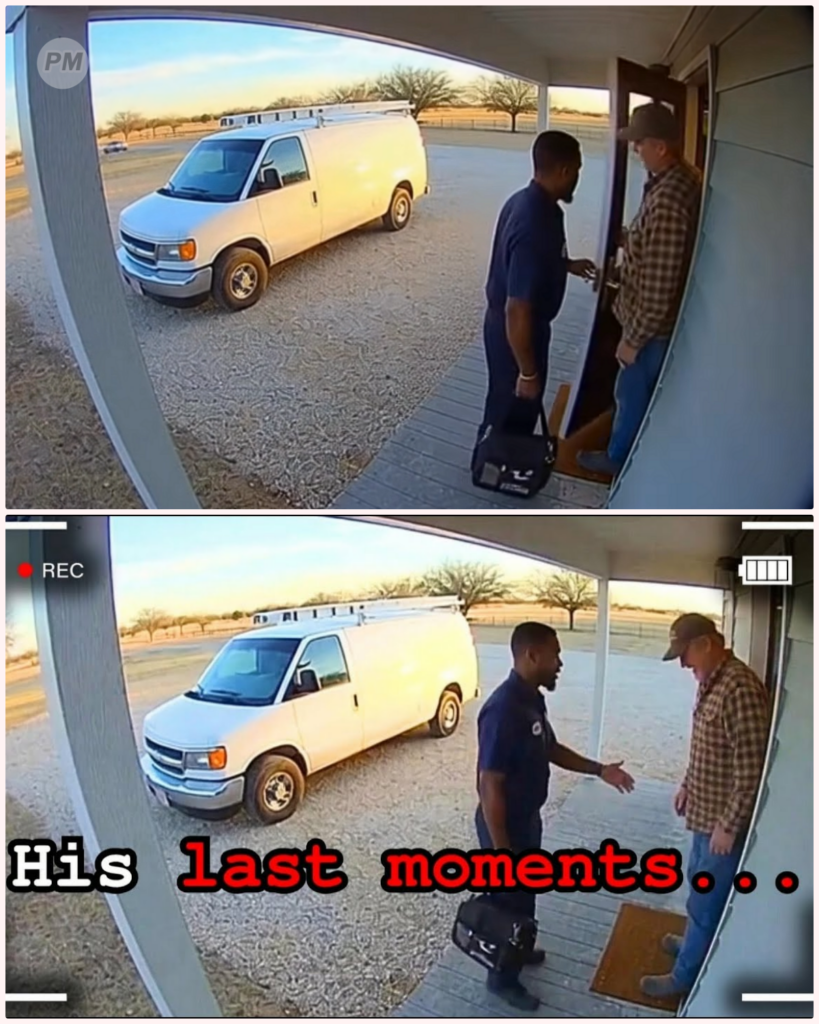
She filed a complaint with the sheriff, said she b…
She filed a complaint with the sheriff, said she believed Earl Hutchkins had done something to her husband.
Deputy visited Earl again. Earl was cooperative, offered coffee, showed the deputy around the ground floor.
Nothing suspicious. Just a lonely widowerower in a big empty farmhouse. Deputy left. Told Kesha there was nothing more they could do without evidence.
The break came on day 16. Not from the sheriff, not from the FBI, from a journalist, Carla Reeves, investigative reporter from Houston.
She had been working on a story about missing persons cases in rural Texas, specifically missing black men, specifically cases that were closed quickly or never investigated properly.
Terren’s case caught her attention. She started digging. She found something the sheriff had missed.
Earl Hutchkins had requested the service call specifically. Had asked for an afternoon appointment. Had asked for a technician who could handle complex wiring issues.
The company’s system showed that three technicians were available that day. Two white, one black.
Earl’s service request was assigned to Terrence. Random assignment according to the company. But Carla kept digging.
She found four other service requests from Earl’s address over the past 11 months. Each one assigned to a different technician.
Each one cancelled at the last minute. Each one had been assigned to a white technician.
The only appointment Earl kept was the one with Terrence. Carla published her story on day 17.
By day 18, the FBI was involved, not because of local pressure, because Earl Hutchinson’s name appeared in a federal database.
A database of individuals connected to domestic extremist organizations. Earl had been flagged two years earlier based on his online activity.
Flagged but not investigated. Flagged but not interviewed. Flagged but not watched. One of 47,000 names in that database.
Not enough resources to monitor them all. Not enough agents to knock on every door.
Earl had slipped through the cracks the way so many of them do until someone disappears.
On day 19, FBI agents obtained a warrant. They arrived at Earl’s property at 6:00 a.m.
Earl was sitting on his porch, coffee in hand, waiting like he knew they were coming.
He did not resist. He did not run. He smiled. The same smile from the CCTV footage.
The same smile he gave Terrence before he closed the door. Agents searched the house.
They found the basement. They found what was in the basement. And they found Terrence.
I cannot describe everything investigators found in that basement. What I can tell you is this.
Earl had not acted alone. On the night of June 3rd, two other men had come to that farmhouse.
Cell tower records proved it. DNA evidence confirmed it. Three men, three believers, three participants in what Earl later described as a cleansing.

