Pay attention to this CCTV footage
Pay attention to this CCTV footage. March 19th, 2:38 p.m. A delivery truck pulls into the driveway of a white two-story house on the outskirts of Lton, Oklahoma.
The driver steps out, brown uniform, package under his arm, scanner in his hand. His name is Darnell Simmons.
He is 35 years old, father of three, 9 years with the same delivery company.
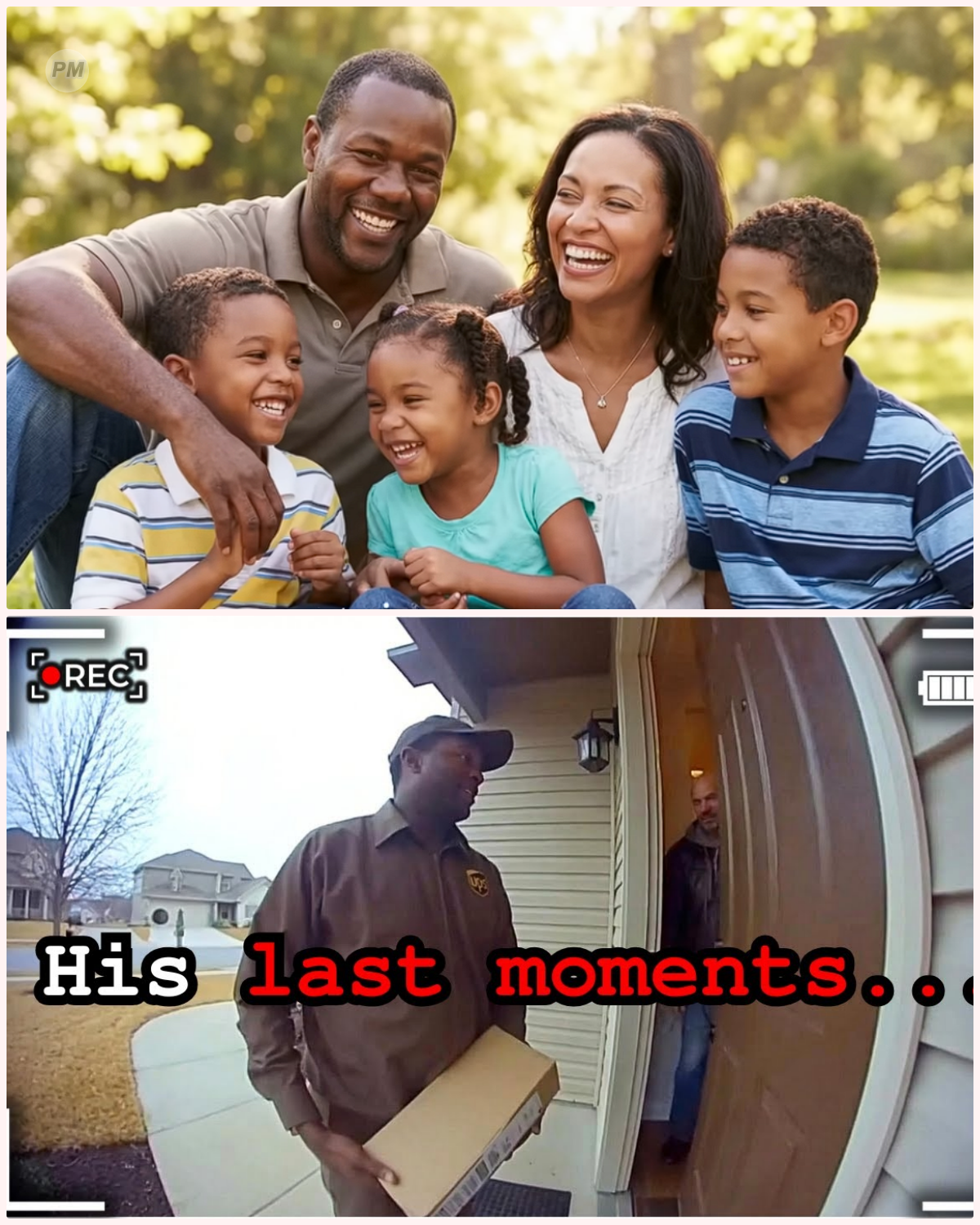
This is stop number 41 of his Tuesday route. He walks up the front path, steps onto the porch, rings the doorbell.
The door opens. A white male, early 40s, stands in the doorway. He is smiling.
Watch carefully. He gestures inside. Darnell hesitates for exactly two seconds. Then he nods. Then he steps through that doorway.
The door closes behind him. That is the last time anyone sees Darnell Simmons alive.
What you are looking at is 14 seconds of footage from a neighbor’s security camera positioned across the street.
14 seconds. That is all we have. In the next few minutes, I’m going to show you what happened after that door closed.
The question is not what happened to Darnell. The question is, how many times had this man done this before?
And when you see what investigators found in that abandoned warehouse 11 days later, you will understand why this case changed protocol for every delivery driver in the state of Oklahoma.
Here is what everyone assumed at first. Darnell Simmons, experienced driver, makes a routine stop, accepts an invitation inside.
Robbery gone wrong. Maybe he saw something he should not have. Maybe the homeowner panicked.
Wrong place, wrong time, random. The kind of tragedy that happens in a country this size.
That is what local police believed for the first 72 hours. That is what the news reported.
That is what everyone assumed. Wrong. This was not random. This was not a robbery.
And it had nothing to do with what Darnell saw or did not see. Because the man who opened that door, the man with the smile, the man who offered Darnell a cup of coffee on a Tuesday afternoon in March, had been waiting for exactly this moment.
His name was Wayne Prescott. 43 years old, never married, no children, worked as a freelance accountant from home.
To his neighbors, he was quiet, polite, [music] kept to himself. The kind of man you would never look twice at.
The kind of man who waves from his driveway when you jog past. The kind of man who said four words that ended a life.
Come in for coffee. Let me tell you about Darnell first, because he deserves that.
He deserves to be more than a victim in a statistic. Darnell grew up in Tulsa, graduated from Memorial High School, worked construction for 6 years before getting the delivery job.
At 24, he married his girlfriend, Tamika. [music] At 26, they had their first son, Elijah.
Then came twins, Amara and Isaiah, 2 years later. When Darnell got the delivery route, he told Tamika it was perfect.
Monday through Friday, home by 6:00 p.m. Weekends with his kids. He knew every street in southwest Oklahoma.
He memorized the names of customers who ordered regularly. Mrs. Gutierrez on Maple always had lemonade waiting for him in summer.
Mr. Hensley on Pine needed help carrying heavy packages because of his arthritis. Darnell never rushed.
He took time. 9 years, 55 stops a day, 5 days a week. This was not just a job.
This was how Darnell built connection, community, trust. And on March 19th at 2:38 p.m., that trust killed him.
Now, let me tell you about Wayne Prescott. But not everything. Not yet. [music] Because what you need to understand first is how someone like Wayne becomes invisible.
He bought that house in Lton 4 years ago. Cash purchase, no mortgage. The previous owners were a young couple who relocated to Texas.
Wayne kept the house exactly as they left it. Same exterior paint, same garden, same American flag on the porch.
He attended community events. Not everyone, just enough to be seen. He nodded at neighbors.
[music] He brought in his trash cans on time. He even donated to the local fire department fundraiser twice.
Nice guy, the neighbors said. Quiet but nice. But here is what none of them knew.
Wayne had a room in his basement. Behind a false wall built to look like storage space.
And inside that room, there were things that would later make an FBI agent with 22 years experience stop the interview and walk outside.
We will get to that room. But first, remember this. Wayne had been a member of an online group for 7 years.
The name of that group does not matter. What matters is [music] what they believed.
And what they believed was that certain people did not deserve to exist based on the color of their skin.
Wayne did not just believe this. He discussed it. He planned for it. He prepared.
The house in Lton was not random. The cash purchase was not convenience. The location was chosen because the nearest neighbor was 200 ft away and delivery trucks came through three times per week.
The footage from across the street is grainy, low resolution, shot from a Ring doorbell positioned on a house 180 ft away, but it shows enough.
Darnell’s truck enters the frame. He parks in the driveway, gets out, package underarm, scanner in hand, standard procedure.
He has done this 41 times today. [music] He walks up to the front door, rings the bell, waits.
7 seconds pass. The door opens. Wayne appears. Even at this distance, you can see him smile.
You can see him gesture inward, casual, friendly. Darnell does not move for a moment.
That moment [music] lasts exactly 2 seconds. Then he shifts his weight. He nods. He steps forward.