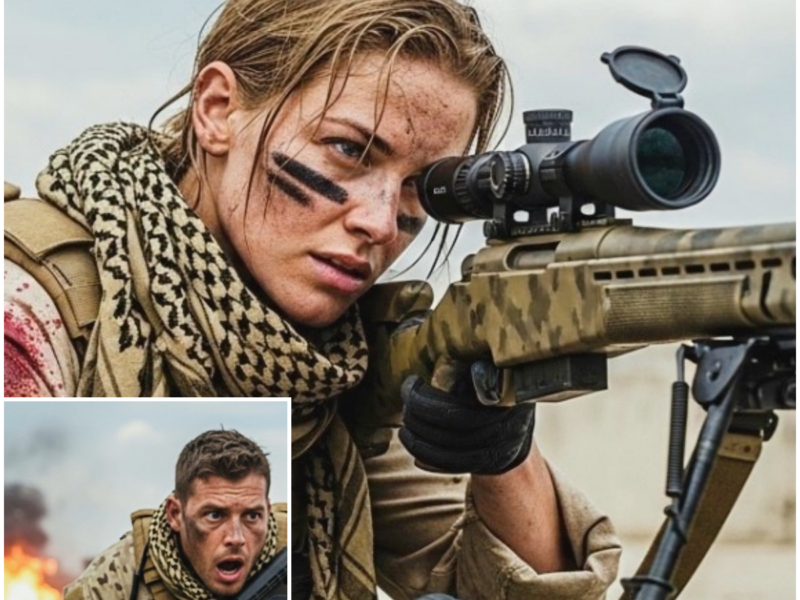
The night air in Helman Province carried the acrid smell of gunpowder and blood. Emma Clark stood in the center of what had once been a medical facility now transformed into a hellscape of screaming wounded and incoming fire.
At 28 years old, she looked barely old enough to order a drink in a civilian bar.
Her small frame, babyfaced features, and wide dark eyes made her appear closer to 19 than her actual age.
Blood soaked through her combat uniform. Not all of it belonged to the soldiers she was treating.
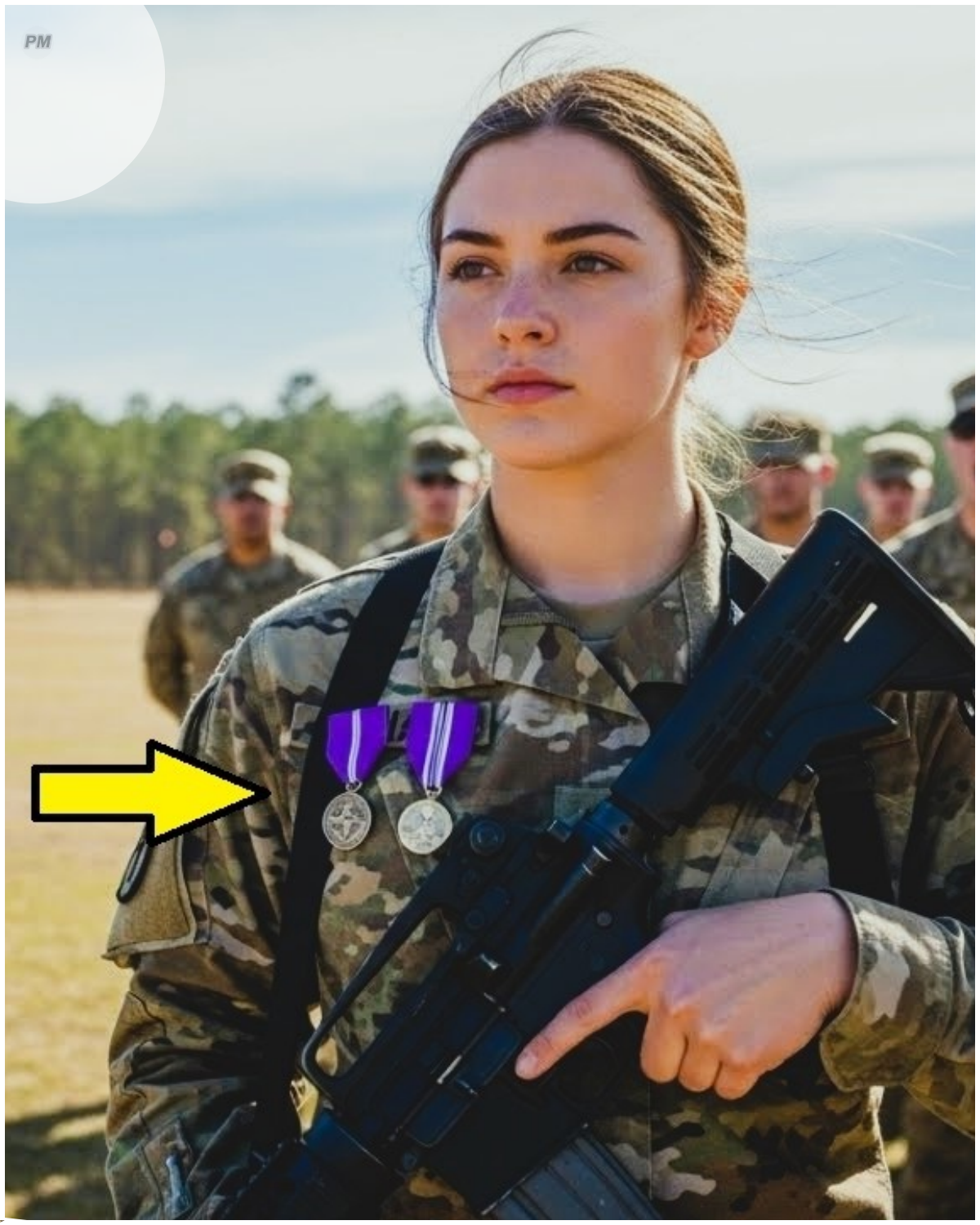
A Taliban round had punched through her chest 40 minutes earlier, missing her heart by less than 2 in.
She’d stuffed the wound with quick clot gauze, wrapped it tight, and continued working. There were 43 soldiers depending on her to keep them alive through this endless night.
43 lives hanging by threads she was desperately trying to hold together with hands that wouldn’t stop shaking.
“Clark, you need to evacuate,” Major Collins shouted over the chaos. Blood splattered across his face.
“You’re hit bad.” Emma didn’t look up from the soldier beneath her hands. “Private First Class Martinez, 19 years old, with an abdominal wound that was bleeding faster than she could control it.
I’m the only one with surgical training, sir. I stay until everyone else is stable or dead.
The words came out flat. Matter of fact, this was her 58th combat casualty event.
She’d learned long ago that emotion was a luxury she couldn’t afford when people were dying.
That’s an order, Clark. With respect, sir, court marshall me later. Right now, Martinez dies if I leave.
She didn’t wait for his response. Her hands moved with practiced efficiency, exploring the wound, identifying the bleeding source, applying pressure exactly where it needed to be.
The world narrowed to this moment, this soldier, this choice between life and death that only she could make.
Somewhere in the darkness, an RPG screamed overhead. This was the night that would break Emma Clark.
The night that would earn her fifth Purple Heart. The night that would haunt her for the next 18 months until she found herself stepping off a bus at Fort Campbell, Kentucky, desperately hoping nobody would recognize what she was, what she’d been, what she’d survived.
But that night was still 12 hours away from its bloody conclusion. And 18 months away from Emma’s arrival at a place that would either destroy her completely or teach her how to live with the weight of all those names she carried, she would remember every single one.
18 months earlier, Fort Campbell, Kentucky, the morning sun hit Emma’s face as she stepped off the Greyhound bus, and for a moment, she had to close her eyes against the brightness.
Kentucky sunshine felt obscenely cheerful compared to the perpetual dust and danger of Afghanistan. Her worn duffel bag hung from one shoulder.
Everything she owned in the world fit in that single bag. She traveled light for the last 10 years.
It made running easier. Fort Campbell sprawled before her. A massive installation that had trained some of America’s finest soldiers.
The 101st Airborne Division called this place home. Screaming eagles. Warriors with a reputation for being the toughest, hardest, most uncompromising soldiers in the US Army.
Emma kept her head down and tried to look smaller than she already was. Other soldiers waited near the intake building, their postures radiating the easy confidence of people who belonged.
They stood in small groups swapping stories, their voices carrying that particular brand of military humor that came from shared hardship in mutual respect.
Combat veterans, most of them. You could tell by the way they held themselves, the thousand-y stare that occasionally flickered behind their eyes.
Emma had that stare, too. She’d learned to hide it. Another fresh recruit. Staff Sergeant Marcus Rodriguez muttered to the soldier beside him, watching Emma struggle slightly as she adjusted her bag.
At 38, Rodriguez was a 20-year veteran with scars running down his left arm and the weathered face of someone who’d seen real combat.
Gulf War, according to the ribbons on his uniform, he’d earned his place here the hard way.
Looks like she’s never seen the inside of a barracks, let alone a battlefield. Corporal Tyler Stevens agreed, smirking.
At 32, Stevens carried himself with the same alpha energy that defined career soldiers. Command must be getting desperate.
Neither of them noticed the man watching from the second floor window of the administration building.
Colonel Richard Hayes stood with his arms crossed, his steel gray eyes tracking Emma’s progress toward the intake office.
At 55, Hayes had the kind of presence that made junior officers straighten their spines and check their uniform buttons.
30 years of service, starting with two tours in Vietnam that had left him with a limp he never acknowledged and nightmares he’d learned to manage.
In his right hand, he held a file folder marked classified in red letters. The folder was 3 in thick.
Hayes had spent the last 6 hours reading every page, cross-referencing details, checking credentials, verifying the impossible.
He’d called in favors from people at SOCOM, pulled strings with contacts at the Pentagon, and personally spoken to three different commanding officers who’d served with a woman now walking across his base, looking like a lost college student.
[clears throat] Everything checked out. Every impossible detail was true. And now he was going to find out if the legend matched the reality.
Dr. Walsh, Hayes said without turning from the window. Come look at this. Dr. Jennifer Walsh, the base’s chief medical officer, joined him at the window.
At 48, she’d seen enough wounded soldiers to recognize trauma when it walked through her door.
She studied Emma’s careful movements, the way she scanned her surroundings, the unconscious tactical awareness in how she positioned herself.
That’s her. That’s her. She looks impossibly young. That’s the point. Hayes opened the file and pulled out a photograph.
It showed Emma in full combat gear, covered in dust and blood, standing beside a helicopter in what appeared to be a forward operating base in Afghanistan.
Her face was harder in the photo, her eyes carrying a weight that seemed impossible for someone so young.
This was taken 6 months ago in Kandahar Province. She just completed a 9-hour emergency surgery marathon.
17 casualties, all critical. She saved 15 of them. Dr. Walsh took the photo, studying it closely.
How old is she? 28. That’s impossible. The experience level required for she enlisted at 17 with parental consent, first deployment at 18.
She’s been in combat zones for 10 consecutive years with only minimal breaks stateside for retraining and reertification.
Doctor Walsh looked back out the window. Emma had reached the intake building and disappeared inside.
10 years. That’s not survivable. Not psychologically. No, Hayes agreed quietly. It’s not, which is why she’s here.
The intake officer was a stern-faced woman named Captain Morrison with steel gray hair pulled back in a tight bun.
She’d been processing new arrivals at Fort Campbell for 12 years and prided herself on being able to assess a soldier in the first 30 seconds.
She barely glanced up as Emma approached her desk. Name: Emma Clark. Ma’am. The voice was soft but clear.
Captain Morrison’s first assessment. Uncertain, probably nervous, definitely inexperienced. She made a note on her clipboard.
Specialty combat medic, ma’am. Morrison’s eyebrows raised slightly. Combat medics were respected positions, but looking at Emma’s delicate appearance and nervous posture, she seemed better suited for administrative work.
Still, stranger things had happened. Previous deployments. Emma hesitated for just a moment. It was a hesitation born not from uncertainty, but from knowing exactly what was about to happen.
She’d played this scene dozens of times at different bases, different assignments, different moments in her career.
Nobody ever believed her the first time. Multiple, ma’am. How many is multiple, soldier? Five tours, ma’am.
Three in Afghanistan, two in Iraq. The clipboard nearly slipped from Captain Morrison’s hands. She looked up sharply, studying Emma’s face with new interest.
Five tours was exceptional, even for career soldiers. Most people didn’t survive that many deployments, especially in the kind of combat zones where the United States had been operating for the past two decades.
Kandahar, Helman Province, Fallujah, Ramani. Those weren’t places where babyfaced medics went for five tours and came back looking unblenmished.
Age? The question wasn’t on Morrison’s standard intake form, but she needed to know. 28, ma’am.
The math didn’t add up. Emma would have had to enlist straight out of high school and deploy almost immediately, then spend the next decade in nearly continuous combat rotation.
That kind of deployment schedule broke even the toughest soldiers. The military had strict limits on consecutive deployments precisely because the human mind could only take so much before it shattered.
Captain Morrison made a note on Emma’s file, marking it for supervisor review, and tried to keep the skepticism out of her voice.
You’ll be assigned to temporary quarters in barracks 7. Report for morning formation at 0500 hours.
Dismissed. Emma gathered her duffel and headed for the door. Her shoulders tight with tension she couldn’t quite release.
She’d seen that look on Captain Morrison’s face, the disbelief. The certainty that Emma was either lying or delusional, padding her service record with deployments that never happened.
It was always the same. By the time Emma found barracks 7 and claimed an empty bunk, word had already spread through the base like wildfire.
The new medic claimed five deployments, but looked like she’d never held anything heavier than a textbook.
Soldiers gathered in small groups during lunch break, whispering and placing bets on how long she’d last in training exercises.
“Five tours, my ass,” Rodriguez told his squad as they watched Emma walk past the messaul.
She probably got those stories from watching more movies. Command must be getting desperate if they’re sending us kids who lie about their service records.
Corporal Stevens laughed. I give her one week before she washes out. Maybe less if she actually has to do any real work.
But not everyone shared their dismissiveness. In the medical facility’s main office, Dr. Walsh sat at her desk with Emma’s file spread before her.
She’d requested the full personnel record, and what she was reading didn’t match the uncertain young woman she’d seen from Hayes’s window.
The medical certifications were legitimate and extensive. Advanced trauma life support, tactical combat casualty care, forward surgical team certification, wilderness medicine, high alitude rescue medicine, [clears throat] chemical, biological, and radiological casualty care.
The list went on for three pages. These weren’t certifications you got from a classroom.
They required hundreds of hours of hands-on experience under the most extreme conditions imaginable. Dr.
Walsh turned to the psychological evaluations. Standard procedure required psych assessments after every deployment, and Emma had 10 years worth of them.
The early evaluations were normal, showing the expected stress responses of a young medic dealing with her first exposure to combat trauma.
But as the deployments continued, the evaluations began showing patterns that Walsh recognized immediately. Post-traumatic stress disorder, survivors guilt, dissociative episodes, emotional numbing, hypervigilance.
Every single marker for severe combat related psychological trauma was present in Emma’s file. Yet somehow she’d been cleared for continuous duty.
Walsh knew why. The military was desperate for experienced combat medics, especially ones with Emma’s skill level.
They’d bent the rules, pushed her through the cracks, kept deploying her because she was too valuable to lose.
They’d used her up, and now she was here, probably broken beyond repair. “There’s more to this one than meets the eye,” Dr.
Walsh said to her assistant. A young lieutenant named Carter. “Her trauma response scores are higher than soldiers I’ve seen with diagnosed PTSD requiring hospitalization.
Look at these medical procedure certifications. You don’t get training in battlefield amputation in emergency thoricottomy from sitting in a classroom.
Lieutenant Carter leaned over to look at the file. Maybe she’s exaggerating her experience. No.
Dr. Walsh pointed to a specific section. These certifications require verification from commanding officers. Everything here is documented and authenticated.
If anything, I suspect this file is incomplete. There’s probably a classified section we don’t have access to.
She was right. In his office, one floor above, Colonel Hayes sat with that classified section open before him.
The pages detailed operations that would remain secret for decades, missions in places the United States officially denied having any presence, and casualty events that would make a horror film look tame by comparison.
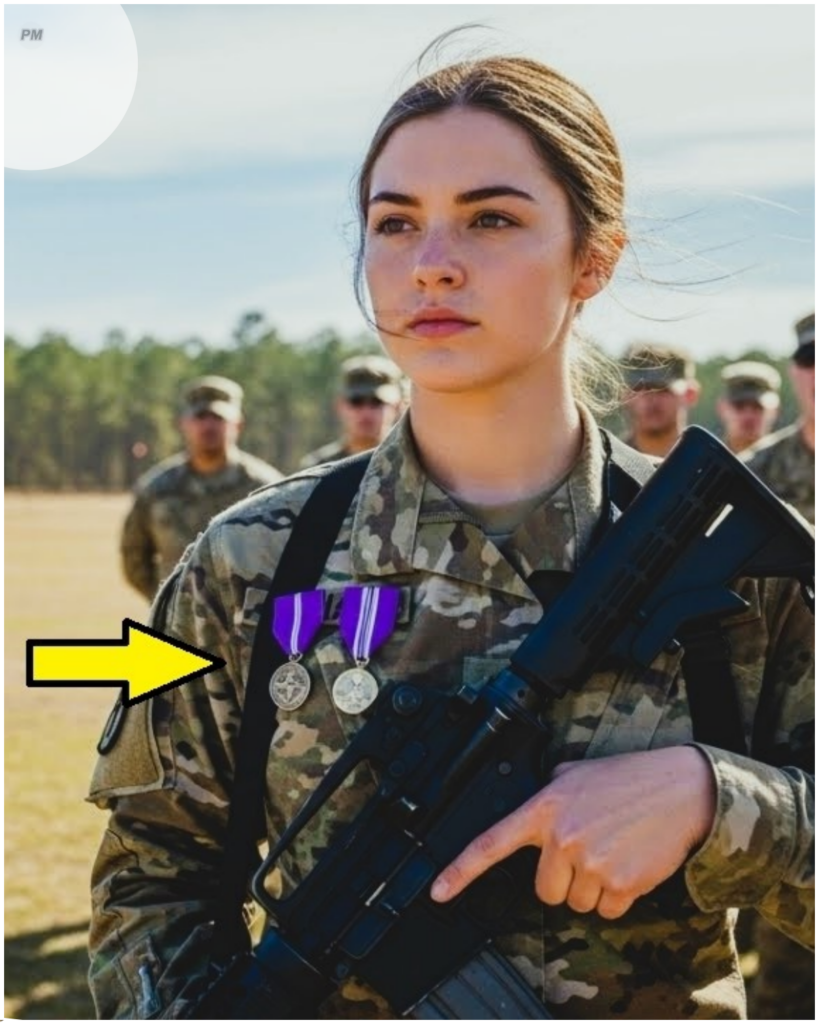
Three silver stars for valor, five purple hearts, 62 confirmed saves under direct enemy fire, and a recommendation for the Distinguished Service Cross, the second highest military decoration for valor that Emma had declined.
Hayes had seen a lot in his 30 years of service. But Emma Clark’s record was something else entirely.
She’d been tested in ways that would have destroyed most soldiers. And somehow she was still standing, still functioning, still trying to serve.
But Hayes knew the truth that Emma probably didn’t want to admit. She wasn’t functioning.
She was surviving. And there was a vast difference between the two. That’s why he’d requested her transfer to Fort Campbell, not to use her skills, but to give her something he’d spent 20 years learning to do himself.
He was going to teach Emma Clark how to heal. That evening, Emma sat alone in the mess hall, picking at food she couldn’t taste.
Conversations buzzed around her. The familiar sounds of soldiers bonding over shared experiences and mutual understanding.
She’d been part of groups like this once back in her early deployments when she still believed she could maintain normal human connections.
She’d learned better. Every friend she made ended up in a body bag. Every bond she formed became another source of grief when the mortars started falling.
So, she’d stopped trying, stopped letting people in, stop being anything other than the medic who showed up, did her job, and disappeared back into whatever shadow was most convenient.
It was safer that way for everyone. A young private approached her table, his face flushed with embarrassment.
He couldn’t have been more than 19, fresh out of basic training, still carrying that idealistic shine that combat hadn’t worn away yet.
“Ma’am, I know this might sound rude, but some of the guys are wondering,” he paused, clearly struggling with how to phrase his question.
“They’re saying you might be exaggerating about your deployments.” “Not that I believe them,” he added quickly.
“It’s just that you look so young.” Emma set down her fork and looked directly at the private.
For just a moment, her carefully maintained facade slipped. The protective shield she’d built around herself cracked just enough for him to glimpse what lay beneath.
The private took an unconscious step backward. Emma’s eyes held the kind of darkness that came from watching too many people die, from making impossible choices, from carrying weights that should have crushed her years ago.
It was a darkness so deep and cold that for a split second, the young private understood exactly why Emma looked the way she did.
She’d learned to hide it. Had to hide it. Because if people saw what was really behind her eyes, they’d never let her near a patient again.
I’ve seen things too, private, Emma said quietly. I just choose not to wear them on my face.
The private mumbled an apology and retreated quickly. Emma returned to her meal, but her hands were shaking slightly.
She gripped her fork tighter, willing them to steady. 10 years, 10 years of hiding, 10 years of pretending, 10 years of being invisible.
She didn’t know if she had it in her to keep pretending anymore. That night, unable to sleep, Emma walked the perimeter of Fort Campbell.
The Kentucky night was peaceful. Crickets chirping in the grass, a cool breeze carrying the scent of honeysuckle.
It was such a stark contrast to the sleepless nights she’d spent in far more dangerous places, where every sound could mean incoming fire, and sleep came in 30inut increments, if it came at all.
Her phone buzzed with a message. She pulled it out, already knowing what it was.
The message was 3 months old. Emma had read it hundreds of times. Clark, heard your state side again.
[clears throat] Try not to scare the new recruits with your baby face. Remember, they don’t know what you’re made of yet.
Give them time to figure it out. Stay safe, little warrior. Captain David Morgan had been her commanding officer during her third deployment to Afghanistan.
He’d taken Emma under his wing, recognized her potential, pushed her to become better than she thought she could be.
He’d also saved her life twice and taught her that being a good medic meant being willing to make the choices nobody else wanted to make.
Captain Morgan had been killed by an IED 3 months after sending that message. Emma had been on leave when it happened stateside for required reertification training.
She gotten the notification while sitting in a classroom learning advanced trauma techniques she already knew by heart.
She hadn’t cried, hadn’t allowed herself to feel anything at all. She just added his name to the list and kept moving forward because that’s what you did.
You survived. You moved forward. You didn’t think about the people you’d lost because thinking about them meant acknowledging the pain.
And pain was a luxury she couldn’t afford. As she turned to head back to her barracks, Emma caught her reflection in a darkened window.
The face that stared back at her looked impossibly young, unmarked by the horrors she’d witnessed and the lives she’d fought to save.
It was a face that had fooled enemies and allies alike. A perfect disguise that had served her well in the field, but made her journey in the military a constant battle for credibility.
Tomorrow would bring training exercises with soldiers who doubted her abilities. They’d test her, push her, waiting for her to crack and reveal herself as the fraud they believed her to be.
Emma had been through this routine dozens of times before at different bases, different assignments, different moments in her career.
She knew exactly how it would play out. The skepticism, the challenges, the moment when she’d have to reveal just enough of her real capabilities to earn respect without revealing so much that people started asking questions she didn’t want to answer.
What they didn’t know yet was that beneath her youthful appearance and quiet demeanor lay something forged in fires that would have consumed most soldiers.
Five purple hearts didn’t lie, even if the person wearing them looked too innocent to have earned them.
The barracks were quiet when she finally returned. Other soldiers slept peacefully, their breathing steady and undisturbed.
Emma lay on her bunk, staring at the ceiling, waiting for the nightmares she knew would come.
They always came. She closed her eyes and began her ritual. She counted backward from 100, focusing on each number, trying to quiet her mind enough to find even a few hours of rest.
She made it to 73 before the first image hit. Corporal Jake Henderson’s face. The moment the light left his eyes.
Afghanistan, February 2023. The night that earned her fifth Purple Heart. The night that broke something inside her that she didn’t think could be fixed.
Emma’s own voice, begging him to hold on just a little longer. The weight of his hand going slack in hers.
She opened her eyes and stared at the ceiling until dawn. Tomorrow, Fort Campbell would begin testing her.
Tomorrow, Colonel Hayes would begin implementing his plan. Tomorrow, Emma Clark would take the first steps toward either healing or complete destruction.
But tonight, she was just another soldier lying in the dark, carrying ghosts nobody else could see, fighting battles nobody else knew existed.
Five purple hearts and a heart that kept beating, even though sometimes she wished it wouldn’t.
The alarm shrieked through the barracks at 0500 hours, but Emma Clark was already awake.
She’d been staring at the ceiling for the past hour. Her internal clock still locked to combat zone rhythms where sleep came in stolen minutes and waking meant immediate threat assessment.
Around her, soldiers groaned and stumbled out of their bunks. But Emma moved with quiet efficiency, making her bed with the kind of precision that came from muscle memory rather than thought.
“Rise and shine, Clark,” Corpal Stevens called from across the room. Hope you’re ready for some real training today.
Not whatever they taught you in that imagination of yours. Emma didn’t respond. She’d learned long ago that words were wasted on people who’d already made up their minds.
Actions spoke louder, and today would provide plenty of opportunities for action. The morning briefing was standard [clears throat] military efficiency.
Captain Morrison outlined the day’s training schedule. A 15-mi march with full pack, followed by weapons qualification at the range, then tactical drills.
Basic stuff for experienced soldiers, potentially brutal for anyone unprepared. Emma shouldered her gear without complaint, though the 40 lb pack seemed to dwarf her small frame.
Rodriguez watched with barely concealed amusement, nudging Stevens. 20 bucks says she doesn’t make it past mile 5.
I’ll take that bet, Stevens replied. But I’m saying mile three. Look at her. She’s practically buckling already.
What they didn’t see was how Emma adjusted the pack’s weight distribution, shifting the load to her hips and shoulders in a way that came from years of humping gear through Afghanistan’s mountains.
What they didn’t notice was how she checked her boots, her water supply, her medical kit with the practiced efficiency of someone who’d learned these rituals in places where mistakes got you killed.
And they definitely didn’t see Colonel Hayes watching from the command building’s second floor window, a slight smile on his weathered face.
“She’s going to surprise them,” Dr. Walsh said, standing beside Hayes with her own coffee.
That’s the point, Hayes replied. Let them underestimate her. Let them think they know who she is.
The revelation will be more effective that way. The march began at dawn, winding through Kucky’s rolling hills in dense forests.
Within the first mile, the soldiers had naturally spread out according to their fitness levels and experience.
The strongest and most seasoned took the lead, their pace steady and sustainable. Emma positioned herself deliberately in the middle of the pack, maintaining a pace that looked effortless despite the weight on her back.
Her breathing was controlled, her steps measured. She’d done marches twice this distance in Afghanistan’s mountains while carrying wounded soldiers on improvised stretchers.
Kucky’s gentle hills felt like a walk through a park by comparison, but she kept that knowledge to herself.
Private Dylan Jackson, 19 years old with an eager face that hadn’t yet learned the hard edges of real combat, fell in to step beside her around mile two.
“How are you holding up?” He asked, genuinely curious rather than condescending. “Fine, thank you.”
“You’ve really done five deployments?” Emma glanced at him, reading the honest question in his expression rather than the skepticism she’d heard from others.
Yes. What was it like? The question was simple, but the answer was anything but.
What was it like? How did you explain the weight of responsibility when you were the only thing standing between a wounded soldier and death?
How did you describe the smell of blood and burned flesh that never quite left your nostrils?
How did you convey the sound of someone calling for their mother as the life drained out of them?
You didn’t. Not to someone who hadn’t been [clears throat] there. It was what it needed to be, Emma said finally.
Just focus on your own march, private, one foot in front of the other. By mile 5, the complaining had started in earnest.
Blisters were forming, shoulders aching under heavy packs, legs burning from the constant uphill climbs.
The temperature was rising with the sun, and even Kucky’s moderate climate felt oppressive under full gear.
Emma remained silent. She developed a technique during her first deployment. Don’t think about the distance.
Think about the next step. Then the step after that. Break impossible tasks into manageable pieces.
And suddenly they became possible. It was a philosophy that had kept her alive for 10 years.
Private Noah Johnson, a muscular 19-year-old who looked like he should be playing college football, started showing signs of trouble around mile 8.
His face was flushed deep red despite the relatively cool morning air. Sweat poured down his cheeks and sheets.
His breathing became labored, ragged. Emma noticed immediately. She’d seen heat exhaustion and heat stroke too many times to miss the signs.
Johnson’s skin was too flushed, his movements becoming uncoordinated. He stumbled slightly over terrain that shouldn’t have caused problems.
Johnson, Emma called quietly. Drink water. “I’m fine,” he insisted, his words slightly slurred. “No, he wasn’t.”
Emma moved closer, watching his gate, his posture, the way he was starting to weave slightly.
Classic progression toward heat stroke. In the desert, she’d seen soldiers go from walking to collapsed in less than 10 minutes once the symptoms reached this stage.
By mile 10, Johnson was in serious trouble. His face had gone from flushed to pale and clammy.
His eyes weren’t quite focusing right. He stumbled again, catching himself on a tree. Emma grabbed his arm, feeling the heat radiating from his skin, the rapid flutter of his pulse under her fingers.
“Sergeant Rodriguez,” she called ahead. “Mical situation.” Rodriguez joged back, irritation clear on his face.
“What now, Clark?” Private Johnson is experiencing heat exhaustion, progressing toward heat stroke. He needs immediate intervention or he’ll collapse within the next 10 minutes.
Rodriguez looked skeptical. Johnson was standing upright, still conscious, even insisting he was fine. He looks okay to me.
Emma’s voice became sharper, carrying an authority that seemed to come from nowhere. Sergeant, his pulse is 140 and thready.
His skin is hot and dry despite the temperature. He’s showing early signs of altered mental status.
In approximately 10 minutes, he’ll collapse. In 20 minutes, his core temperature will reach dangerous levels.
I strongly recommend we treat him now rather than waiting for a full medical emergency.
Something in her tone made Rodriguez pause. This wasn’t the uncertain voice of a new recruit making a guess.
This was the clinical assessment of someone who knew exactly what they were talking about, who’d seen this scenario play out enough times to predict its progression with disturbing accuracy.
How do you know his pulse without checking? I did check while you were walking back.
Radial pulse, corateed pulse, respiratory rate, skin signs, all consistent with class 2 heat exhaustion about to progress to class 3.
Rodriguez stared at her for a long moment, then looked at Johnson more carefully. The kid did look worse than he had a few minutes ago.
And if Clark was right about the timeline, they had maybe 10 minutes before this became a serious problem requiring helicopter evacuation.
What do you need? Emma was already pulling supplies from her medical kit. Johnson, sit down.
That’s not a request. Johnson sat heavily and within moments, exactly as Emma had predicted, his condition deteriorated.
His skin became clammy and pale. Confusion set in. He tried to stand and nearly fell.
Emma worked with smooth efficiency that seemed at odds with her appearance. She established I5 access with practiced ease.
Despite Johnson’s poor circulation, making his veins difficult to find, she initiated rapid fluid resuscitation, monitored his vital signs, began core cooling procedures with wet cloths applied to pulse points.
Her movements were economical, precise, betraying years of experience performing these exact interventions under far worse conditions than a Kentucky forest.
“Where did you learn to do that?” Rodriguez asked, watching her work with growing respect.
Combat medicine training, Emma replied without looking up from her patient. Hyperothermia is common in desert deployments.
You treat it aggressively or people die. Within 15 minutes, Johnson’s condition had stabilized. Color returned to his cheeks.
His confusion cleared. His vital signs improved to acceptable ranges. Emma helped him to his feet, ensuring he could walk steadily before allowing the march to continue.
Rodriguez pulled her aside as the group reorganized. Clark, I owe you an apology. That was exceptional work.
We all did our job, Sergeant. That’s what matters. But Rodriguez shook his head. No, that wasn’t just doing your job.
That was the work of someone who’s seen more medical emergencies than most of us will see in a lifetime.
How old are you really? Emma met his gaze steadily. 28, Sergeant. And yes, I’ve really done five deployments.
Word of the incident spread through the formation like wildfire. The small woman who looked like fresh training had just diagnosed and treated a medical emergency with the skill of a seasoned combat medic.
Her predictions had been accurate to the minute. Her intervention had likely prevented a serious evacuation and possibly saved Johnson’s life.
Suddenly, her claims about multiple deployments didn’t seem so far-fetched. The afternoon brought weapons training at the firing range.
Emma approached with the same quiet confidence she’d shown during the medical emergency. Master Sergeant Williams, a grizzled range instructor with 30 years of service, handed her an M4 carbine.
Let’s see what you got, Clark. Take your time getting comfortable with the weapon. Emma accepted the rifle and examined it briefly.
Her hands moved with automatic precision, checking the action, testing the sights, confirming the weapon was safe and functional.
These were movements so ingrained she could have done them blindfolded. She loaded a magazine, assumed a prone position with textbook form, and fired 10 rounds in rapid succession at targets 200 meters downrange.
Williams retrieved the target and stared at it for a long moment before showing it to the assembled soldiers.
Every single round had hit within the bullseye. The grouping was tight enough to be covered by a man’s palm.
“Lucky shots,” Stevens muttered, though his voice carried less conviction than before. Williams raised an eyebrow.
Let’s try 500 m then. Wind’s picking up, too. Should make it interesting. Emma adjusted her sights, compensated for wind and distance with the kind of mental calculations that came from extensive training and fired another 10 rounds.
This grouping was even tighter than the first. Williams checked the target twice, certain there must be some mistake.
Where exactly did you train, Clark? Sniper school, Camp Pendleton, Advanced Marksmanship at Fort Benning, Desert Warfare Training in 29 Palms.
Each location she named represented months of intensive training, the kind of specialized education reserved for soldiers being groomed for special operations or reconnaissance roles.
Combat medics didn’t typically receive sniper training unless they were attached to units that operated in particularly dangerous environments.
What’s your longest confirmed kill? The question came from Stevens, who no longer wore his earlier smirk.
Emma paused, her expression growing distant. I’m a medic, Corporal. My job is to save lives, not take them.
But when someone threatens my patients or my team, I do what’s necessary. The evasive answer only heightened the mystery surrounding her.
Williams made a note in his training log, marking Emma’s marksmanship scores at expert level.
Then added a personal comment. Recommend evaluation for instructor position. That evening, several soldiers approached Dr.
Walsh with questions about the new medic. The stories they told painted a picture of someone far different from the uncertain young woman who’d arrived just days earlier.
Doctor Walsh pulled Emma’s complete military file, requiring special security clearance to access the classified sections.
What she found made her sit back in her chair and whistle softly. Emma Clark wasn’t just any combat medic.
According to her full record, she was a legend whose exploits have been carefully sanitized for security reasons.
The classified sections detailed operations in places the United States officially denied having any presence.
Casualty events that would remain secret for decades. Citations for valor that couldn’t be made public without compromising ongoing operations.
Three silver stars, five purple hearts, 62 confirmed saves under direct enemy fire, and a recommendation for the distinguished service cross that Emma had declined.
Dr. Walsh picked up her phone and called Colonel Hayes. Sir, I’ve reviewed Clark’s complete file.
We need to talk about her psychological state. My office. 20 minutes when Dr. Walsh arrived.
Hayes was standing at his window looking out over Fort Campbell’s training grounds. The sun was setting, painting the sky in shades of orange and red that reminded him uncomfortably of tracer fire.
She’s a walking miracle and a ticking time bomb, Dr. Walsh said without preamble. Her psychological evaluations show severe PTSD, survivors guilt, dissociative episodes.
By rights, she should have been medically retired years ago. But she wasn’t, Hayes said quietly.
Because the military needed her. We used her up deployment after deployment because she was too good at what she did, too valuable to lose.
And now she’s here, probably irreparably damaged. And we’re going to what? Train her to be an instructor.
Sir, she needs intensive therapy, not more responsibility. Hayes turned from the window. Dr. Walsh, how long have you been at Fort Campbell?
12 years. Then you weren’t here when I arrived. You don’t know my story. He moved to his desk and pulled out a different file.
This one from the 1960s. The pages yellowed with age. Vietnam, 1968. [clears throat] I was 23 years old, fresh out of West Point, leading a platoon through the jungle near the Cambodian border.
We walked into an ambush. 32 men under my command. 32 soldiers I was responsible for keeping alive.
Hayes’s voice remained steady, but his hands tightened on the file folder. I was the only survivor.
Spent three days in that jungle, hiding among the bodies of my men, waiting for rescue.
When they finally pulled me out, I was covered in their blood and carrying 32 names I couldn’t forget.
Dr. Walsh remained silent, understanding dawning in her eyes. I spent the next 20 years drowning in guilt and alcohol, barely functioning, going through the motions of a military career because I didn’t know how to do anything else.
I was exactly where Emma Clark is now, broken, barely holding it together. One bad day away from eating my service pistol.
“What changed?” Dr. Walsh asked quietly. “A mentor, a colonel who’d been through his own version of hell in Korea.
He saw what I was doing to myself and offered me a choice. Keep drowning or learn to swim.”
He taught me that survival wasn’t the same as living. That carrying those 32 names didn’t mean I had to carry them as burdens.
They could be lessons, teachers, guides for how to help others avoid the same mistakes.
Hayes closed the old file and picked up Emma’s. That colonel saved my life by giving me purpose by showing me that my pain could serve a greater good.
Now I’m going to do the same for Emma Clark. What if she’s too damaged?
What if the therapy doesn’t work? Then she’ll fail and we’ll get her the medical help she needs.
But I’ve read her file, Dr. Walsh. I’ve talked to her commanding officers. I’ve seen what she’s capable of.
Emma Clark isn’t broken beyond repair. She’s a warrior who’s never been taught how to put down her weapons.
She’s been fighting for 10 straight years without rest, without support, without anyone telling her it’s okay to stop surviving and start living.
He tapped Emma’s file. Tomorrow morning, there’s going to be an emergency drill. Mass casualty scenario at the mountain training facility.
Real enough to trigger her combat instincts controlled enough to keep everyone safe. I need to see how she performs under pressure.
And I need her to see that she still has value beyond just surviving. Dr.
Walsh studied Hayes for a long moment. This is risky, sir. If it triggers a full PTSD episode, then we’ll be there to help her through it.
But I don’t think it will. I think Emma Clark has been waiting for someone to give her permission to be who she really is.
Not the broken soldier hiding from her past, but the exceptional medic who saved hundreds of lives.
At 2300 hours that night, the emergency alarm screamed across Fort Campbell. Emma jolted awake from a nightmare about Henderson.
Her hand instinctively reaching for the sidearm she no longer carried in garrison. Her heart hammered in her chest.
Adrenaline flooding her system. Combat instincts taking over before her conscious mind fully engaged. A training exercise had gone catastrophically wrong 20 m away at the mountain training facility.
A live fire exercise had resulted in multiple casualties when a mortar round misfired. The base’s rapid response team was being deployed immediately and every qualified medic was needed.
Emma was pulling on her boots when Sergeant Rodriguez burst into the barracks. Clark, you’re with the emergency medical team.
We’ve got multiple wounded and need every qualified medic we can get. Move. The helicopter ride to the mountain facility was tense and silent.
Emma sat among four other medics, all of whom had significantly more official experience than they believed she possessed.
“Dr. Walsh sat across from her, studying Emma’s face in the dim cabin lighting.” “Clark,” Dr.
Walsh said over the rotor noise. “This is going to be intense. Mass casualty situations are different from anything you might have trained for.
Stay close to the senior medics and follow their lead.” Emma nodded respectfully. Though she treated mass casualty events that would have broken most of these experienced medics, she kept her thoughts to herself and checked her medical kit for the third time, running [snorts] through mental checklists that had kept her alive and effective through countless emergencies.
The landing zone was controlled chaos. Emergency flood lights illuminated a scene of organized panic as soldiers and medical personnel rushed between casualties scattered across rocky terrain.
The acrid smell of gunpowder and blood filled the air, triggering memories Emma had worked hard to suppress.
For a moment, she was back in Helman Province. Back in that endless night with soldiers depending on her to keep them alive, she closed her eyes, counted to three, and forced herself back into the present Kentucky training facility.
Controlled exercise, not Afghanistan, not real combat. She could do this. We’ve got 12 wounded, Major Collins shouted the senior medical officer on scene.
Three critical, four serious, five walking wounded. Triage protocols in effect immediately. Emma followed the team toward the casualties.
Her trained eyes already assessing the scene, the distribution of wounded, the nature of their injuries, the available resources.
Her mind processed the information automatically, pattern recognition from years of similar scenarios, painting a clear picture of what needed to happen next.
The first critical patient was Corporal James Adams, 22 years old with severe abdominal trauma and significant blood loss.
Staff Sergeant Aaron Pierce, the senior medic on their team, knelt beside him with [clears throat] shaking hands.
Jesus,” Pierce muttered, staring at the massive wound. “I’ve never seen anything this bad. Where do we even start?”
Emma moved closer, observing Pierce’s hesitation. Adams was bleeding internally, his blood pressure dropping rapidly.
“In a civilian hospital, he’d need immediate surgery. Here in the field, he needed damage control that could keep him alive until evacuation.
Pierce had maybe 5 minutes before Adams went into irreversible shock. Pierce, his pressures dropping, Emma said quietly, her voice cutting through the chaos with unexpected clarity.
I can see that. Pierce snapped, stress evident in his voice. I’m thinking. Thinking was a luxury Adams didn’t have.
Emma could see his skin growing pale and clammy, classic signs of hypoalmic shock. His body was shutting down, diverting blood from extremities to vital organs in a desperate attempt to survive.
In less than 5 minutes, he’d be beyond help. Sir, may I suggest starting two large bore IVs and initiating rapid fluid resuscitation while we prepare for emergency surgery?
Emma’s voice carried the same clinical authority Rodriguez had heard during the march. PICE looked up at her with irritation.
Clark, I told you to observe and learn. This isn’t a classroom. But Dr. Walsh had moved close enough to overhear the exchange.
She looked at Adams, then at Emma, recognizing something in the younger woman’s demeanor that Pierce was missing.
Emma wasn’t guessing or offering textbook suggestions. She was speaking from experience, identifying a clear treatment path based on pattern recognition from having seen this exact scenario before.
What would you do, Clark? Dr. Walsh asked. Emma glanced at Pierce, who was struggling with basic IV placement due to Adams’s poor circulation and the stress of the situation.
Permission to speak freely, ma’am? Granted. Corporal Adams has a penetrating abdominal wound with probable internal bleeding.
His blood pressure is dropping, heart rate increasing, skin signs indicate class 3 hypoalmic shock.
He needs immediate surgical intervention, but we need to stabilize his circulation first. Emma’s voice carried a clinical authority that seemed to come from years of experience rather than theoretical training.
How would you stabilize him? Doctor Walsh pressed, watching Pierce continue to struggle. Emma looked directly at Pierce.
Sir, with your permission. Pierce, overwhelmed by the severity of the situation and his own limitations, stepped aside.
Go ahead. Emma moved with sudden decisive action. Her hands were absolutely steady as she established two IV lines with practiced efficiency, finding veins that Pice had missed.
Working with the kind of speed that came from having performed this procedure hundreds of times under far worse conditions, she started rapid fluid resuscitation, prepared emergency medications, and began laying out surgical instruments with military precision.
“Pice, I need you to maintain pressure on the wound while I prep for emergency surgery,” Emma instructed, her voice calm and authoritative.
The shy, uncertain recruit had disappeared, replaced by a confident trauma surgeon whose hands moved with the assurance of extensive experience.
Emergency surgery here. Pierce stared at her in disbelief. It’s called damage control surgery. We’re not trying to fix everything.
Just stop the bleeding and get him stable for transport. Emma was already making a controlled incision.
Her movements sure and practiced. Dr. Walsh, I need better light. Pierce, prepare two units of blood for rapid transfusion.
Rodriguez, monitor his vitals and call out any changes. Dr. Walsh watched in fascination as Emma transformed before her eyes.
The timid young woman who’d arrived at Fort Campbell had been replaced by a confident combat surgeon whose hands worked inside Adams’s abdomen with practice skill.
This wasn’t textbook medicine. This was battlefield trauma care performed by someone who’d done it so many times the movements had become automatic.
Clark, where exactly did you learn damage control surgery? Dr. Walsh asked while Emma worked.
Forward operating bases in Afghanistan, ma’am. When helicopters can’t fly due to weather or enemy fire, you do what’s necessary to keep people alive.
Emma’s hands moved with careful precision, locating the source of bleeding, controlling it, stabilizing Adams enough for evacuation.
She talked as she worked, explaining her actions in clinical detail, demonstrating the kind of tactical medical knowledge that took years of combat experience to develop.
Primary hemorrhage control achieved. Starting mass closure. Pierce, how are his vitals? Blood pressure coming up, heart rate stabilizing.
Jesus, Clark, I’ve never seen anything like this. 30 minutes later, Adams was stabilized and ready for helicopter evacuation.
His blood pressure had improved, bleeding was controlled, and his chances of survival had increased dramatically from nearly zero to somewhere around 85%.
As the helicopter lifted off with Adams and two other critical patients, Dr. Walsh approached Emma.
The young woman was cleaning blood from her hands, her face pale but composed. Only the slight tremor in her fingers betrayed the emotional cost of what she’d just done.
That was exceptional work, Clark. Where did you really train? Emma looked up and for the first time, Dr.
Walsh saw the weight of experience in her dark eyes. The carefully maintained facade had cracked just enough to reveal what lay beneath.
Bram air base ma’am combat support hospital in Kandahar field hospitals throughout Helman province Emma’s voice carried a slight tremor now the adrenaline of the surgery wearing off leaving exhaustion in its wake.
You learn quickly when there’s no other choice. When soldiers lives depend on you being good enough, fast enough, smart enough.
How many times have you performed damage control surgery in the field? 47 times, ma’am.
That I can remember clearly. Emma paused, her expression distant. Sometimes the days blur together.
Doctor Walsh studied her carefully, seeing past the youthful appearance to the seasoned combat veteran underneath.
And you’ve been doing this since you were how old? I enlisted at 17 with parental consent.
First deployment at 18. Emma’s hands had stopped trembling now. Clinical detachment reasserting itself. You adapt or you don’t come home.
The return flight to Fort Campbell was quiet, but Emma could feel the eyes of the other medics on her.
Pierce sat directly across from her, studying her face as if seeing her for the first time.
“Clark,” Pierce said finally, his earlier skepticism completely gone. “I owe you an apology, and Adams owes you his life.
We all did our job, Sergeant. That’s what matters. But Pierce shook his head. No, that wasn’t just doing your job.
That was the work of someone who’s seen more trauma than most of us will see in a lifetime.
You’re really 28? Yes, sir. And you’ve really done five deployments? Emma met his gaze steadily.
Yes, sir. The helicopter touched down at Fort Campbell as dawn was breaking over Kucky’s hills.
Word of the night’s events spread quickly through the base. By morning formation, every soldier knew that the small, quiet medic they dismissed as inexperienced had performed emergency surgery in the field and saved a man’s life.
But for Emma, the night had revealed more than she’d intended. The careful facade she’d maintained was beginning to crack, and the real story of her service was starting to emerge.
She’d managed to keep her secrets for just a few days, but last night had changed everything.
As she walked to her quarters, exhausted but satisfied that Adams would survive, Emma realized her time of anonymity was coming to an end.
Soon, people would start asking harder questions about her past, and she’d have to decide how much of the truth she was willing to reveal.
She didn’t know yet that Colonel Hayes had been watching everything unfold exactly according to his plan, that he’d orchestrated the entire scenario to force Emma to reveal her capabilities, to show her that she still had value beyond just surviving.
She didn’t know that in his office, Hayes was already scheduling a meeting with her for 800 hours.
A meeting where he would lay out the complete truth about why she was really at Fort Campbell.
All Emma knew was that she was tired. So desperately, completely tired of hiding what she was.
Tired of pretending to be less capable than she knew herself to be. Tired of carrying names alone with no one to help share the weight.
She lay on her bunk without bothering to change out of her bloodstained uniform. Around her.
Other soldiers were waking up, preparing for morning formation. But Emma just stared at the ceiling, replaying the surgery in her mind, checking for mistakes, second-guessing decisions, wondering if there was anything she could have done differently.
It was the same mental routine she’d performed after every casualty event for 10 years.
The endless loop of analysis and self-criticism that kept her sharp in the field, but tortured her afterward.
Somewhere in the medical facility, Adams was being stabilized for transport to a trauma center.
He would live. He would go home to his family. He would have a life beyond this moment.
Emma had given him that gift. But she couldn’t give the same gift to Henderson or Wilson or Thomas or Morgan or any of the others.
They were gone. And no amount of skill or determination or sacrifice could bring them back.
That was the weight Emma Clark carried. Not just the memory of those she’d lost, but the knowledge that no matter how good she became, no matter how hard she tried, she couldn’t save everyone.
Some people died despite your best efforts. And learning to live with that truth was the hardest lesson combat had ever taught her.
Colonel Hayes stood at his window watching the sunrise paint Fort Campbell in shades of gold and amber.
In a few hours, he would call Emma into his office and begin the real work of teaching her how to transform pain into purpose.
But for now, he let her rest. She’d earned it. Emma Clark stood outside Colonel Hayes’s office at 0755 hours.
Her dress uniform crisp despite having only 2 hours of sleep. The morning sun streamed through the hallway windows, casting long shadows that seemed to reach toward the closed door like fingers grasping for secrets she’d kept hidden for too long.
She knew what was coming, had known from the moment Rodriguez appeared in the barracks with orders for her to report.
The mountain rescue operation had torn away her carefully constructed disguise, and now she would face the consequences of being seen.
The door opened before she could knock. “Come in, Clark. Sit down.” Colonel Hayes’s voice carried the weight of authority earned through decades of service.
But there was something else beneath it. Understanding maybe, or recognition, Emma entered and took the chair across from his desk, her posture rigidly military, her hands folded in her lap.
Hayes studied her for a long moment before speaking, his steel gray eyes missing nothing.
The dark circles under her eyes, the tension in her shoulders, the way her fingers trembled slightly before she consciously stilled them.
“I’ve been reading your file,” Hayes began, tapping a thick folder on his desk. “The complete file, not the sanitized version they give to commanding officers.”
Emma’s jaw tightened, but she said nothing. Hayes opened the folder and began reading. Five deployments across three countries.
62 confirmed saves under direct enemy fire. Three silver stars for Valor. Five purple hearts.
He looked up at her. The purple hearts are what interest me most, Clark. Five separate occasions where you were wounded in combat but continued to perform your duties.
Would you like to tell me about them? Sir, if it’s all the same to you, I’d rather not discuss the details.
I’m afraid it’s not all the same to me, soldier. Hayes’s voice remained gentle but firm.
Your record shows extraordinary service, but your behavior here suggests someone trying very hard to hide that service.
I need to understand why. He opened to a specific page. Let’s start with the first one.
Kandahar Province, March 2019. You were attached to forward operating base Chapman when it came under sustained attack.
According to the report, you treated 14 wounded soldiers for 6 hours while under direct fire despite taking shrapnel to your left shoulder.
The citation says you refused evacuation until all wounded were stabilized. Emma’s hands clenched in her lap.
The memory came flooding back whether she wanted it or not. The sound of incoming mortars, the screams of wounded soldiers, the feeling of warm blood running down her arm as she worked to save others.
Captain Morgan’s voice cutting through the chaos, telling her to hold on, to stay focused, to keep working.
It was my job, sir. Your job was to treat the wounded, not to refuse medical evacuation for yourself.
Hayes turned another page. Yet you did it again in Iraq 6 months later. RPG attack on your convoy.
You sustained blast injuries and a concussion, but continued treating casualties for 3 hours. Again, you refused evacuation.
Each citation brought back Emma had worked desperately to suppress. The smell of burned flesh.
The weight of responsibility for keeping soldiers alive when every instinct screamed at her to run, to hide, to save herself.
The constant fear that she wouldn’t be fast enough or skilled enough to save them all.
“Sir, may I ask why you’re reviewing my record?” Hayes leaned back in his chair.
“Because last night you performed emergency surgery in the field with a level of skill that surprised my chief medical officer.”
“Dr. Walsh tells me your hands were steadier than surgeons with 20 years of experience.
That kind of competence doesn’t develop overnight.” He turned to another page. Your third Purple Heart, Helman Province, January 2020.
IED explosion threw you 15 ft. You suffered a concussion and multiple lacerations, but immediately began treating other casualties.
The report says you worked for 4 hours before anyone realized you were injured. Emma’s breathing became shallow.
Helmond. That was where she’d saved Rodriguez, his brother, where she’d learned that being good at your job sometimes meant ignoring your own pain until everyone else was taken care of.
The fourth one is particularly impressive. Hayes continued, “Bram Air Base, June 2021. Mortar attack on your base.
You took shrapnel in your leg and back, but continued running between casualties under active bombardment.”
Witnesses say you saved at least eight soldiers that day, including a critically wounded captain, Captain Morgan.
Emma closed her eyes briefly, seeing his face, hearing his voice as he told her to keep teaching, to not let his death be meaningless.
He died 3 months later, and she’d added his name to a list that was already too long.
Sir, I’d really prefer not to discuss this. Hayes studied her carefully. Why, Clark? These are commendations for extraordinary heroism.
Most soldiers would be proud of this record. Emma was quiet for a long moment, staring at her hands.
When she finally spoke, her voice was barely above a whisper. Because every purple heart represents a day when I couldn’t save everyone.
Sir, each one reminds me of the soldiers who didn’t make it home because I wasn’t good enough or fast enough or smart enough to keep them alive.
The admission hung in the air between them. Hayes had expected many answers, but not this level of survivor’s guilt.
Not this degree of self-lame for circumstances far beyond any medic’s control. How many soldiers have you lost, Clark?
43, sir. The number came out immediately. Precisely. 43 soldiers died while under my care across five deployments.
I remember all their names. And how many did you save? Emma looked up, confusion in her eyes.
Sir, your record shows over 300 confirmed saves. Soldiers who are alive today because of your actions.
Why don’t you remember those numbers as clearly? Emma had no answer. She’d never thought about it that way.
The faces of the dead haunted her dreams, but she rarely considered the hundreds of soldiers who’d gone home to their families because of her skills.
Hayes closed the file and leaned forward. Clark, I’m going to tell you something that might surprise you.
Your record doesn’t just show exceptional medical skills. It shows exceptional leadership under the worst possible conditions.
Five separate commanding officers recommended you for battlefield commission to officer rank. You declined all of them.
Why? Because officers make decisions that get people killed. Sir, I wanted to save lives, not risk them.
I understand that sentiment. Hayes said quietly. But I think you’re selling yourself short. Leadership isn’t about making perfect decisions.
It’s about making the best decisions possible with incomplete information under extreme pressure. You’ve been doing that for 10 years.
He opened the file to the last page. Your fifth Purple Heart. Afghanistan, February 2023.
Your base was overrun by enemy forces. You spent 12 hours treating wounded while the perimeter collapsed around you.
According to witnesses, you organized the defense of the medical facility, coordinated evacuations and kept wounded soldiers alive until reinforcements arrived.
You took a bullet to the chest and kept working. Emma’s breathing became ragged that night, the night that had finally broken something inside her that she didn’t think could be fixed.
The citation recommends you for the distinguished service cross, Hayes continued. The second highest decoration for valor.
You declined that, too. Why? I didn’t deserve it, sir. Why not? Emma’s composure finally cracked.
Tears began running down her cheeks as 10 years of suppressed trauma came to the surface.
Because I couldn’t save them all, sir. Lieutenant Morrison bled out in my hands because I couldn’t get to him fast enough.
Sergeant Williams died because I ran out of blood products. Corporal Jackson died because I couldn’t perform surgery while taking enemy fire.
43 names, sir. I carry them all. Hayes came around his desk and sat in the chair next to her.
His voice was gentler now, that of a father rather than a commanding officer. Clark, you’ve carried this burden alone for too long.
Those soldiers didn’t die because you failed them. They died because war is hell. And sometimes good people don’t come home despite everyone’s best efforts.
It doesn’t feel that way, sir. I know it doesn’t. Hayes paused and spoke with careful deliberation.
Vietnam, 1968. I was 23 years old, leading a platoon through the jungle near the Cambodian border.
We walked into an ambush, 32 men under my command. I was the only survivor.
Emma looked up, seeing the pain in Hayes’s eyes that mirrored her own. I spent the next 20 years drowning in guilt and alcohol, barely functioning, going through the motions because I didn’t know how to do anything else.
I was exactly where you are now, Clark. Broken, barely holding it together. One bad day away from eating my service pistol.
What changed, sir? A mentor, a colonel who’d been through his own version of hell in Korea.
He saw what I was doing to myself and offered me a choice. Keep drowning or learn to swim.
He taught me that survival wasn’t the same as living. That carrying those 32 names didn’t mean I had to carry them as burdens.
They could be lessons, teachers, guides for how to help others avoid the same mistakes.
Hayes pulled out another folder. This one containing Emma’s psychological evaluations and a detailed proposal.
I’m offering you what saved me, Clark. Purpose. I’m recommending you for promotion to warrant officer and assignment to our special operations medical team.
As an instructor, you’ll train other medics in combat trauma care. Share your experience with soldiers heading into deployment.
Emma shook her head. Sir, I don’t think I’m ready for that kind of responsibility.
Clark, you’ve been ready for that responsibility for years. You just haven’t realized it yet.
Hayes stood and extended his hand. Think about it, but understand this. Hiding your experience and skills doesn’t honor the soldiers you’ve saved or the ones you’ve lost.
Sharing what you know might prevent other medics from losing soldiers the way you have.
Emma left Hayes’s office in a days. The conversation had cracked something open inside her that she’d kept locked away for years.
For the first time, someone had seen past her carefully constructed walls and offered not judgment, but understanding.
The next morning, Emma was walking to the training facility when Rodriguez intercepted her in the hallway.
His usual confident swagger was gone. He looked uncertain, almost vulnerable. Clark, I need to talk to you about Helmond.
January 2020. Emma stopped. Helmond, the E. 8 casualties. She remembered them all. What about it, Sergeant?
Rodriguez pulled out his phone, showed her a photo. A young soldier, early 20s, with Rodriguez’s eyes in jawline.
Corporal Miguel Rodriguez, my little brother. He was there. The IED attack. Emma’s breath caught.
She remembered the kid with a severed femoral artery. She’d had maybe 90 seconds before he bled out.
She’d clamped the artery with her bare hands, held pressure for 40 minutes until the medevac arrived.
I remember him, Emma said quietly. He’s alive because of you. Lives in Texas now.
Wife, two kids, coaches little league. Rodriguez’s voice cracked. I didn’t know it was you.
When you arrived here looking like I didn’t connect it, but last night I called Miguel, described you.
He remembered the small medic who wouldn’t let go, who kept telling him to stay awake, to think about home.
He straightened to attention and saluted her. I owe you an apology, ma’am, and a debt I can never repay.
My brother’s alive because you were good enough, fast enough, and brave enough. Thank you.
Emma returned the salute, throat tight. This was why she did it. Not for the medals or the recognition.
For moments like this, for Miguel Rodriguez coaching little league in Texas. Your brother earned his survival, Sergeant.
He fought hard. So did you. Rodriguez dropped the salute. If you ever need anything, anything at all, you call me.
Understood? Understood, Sergeant? As Rodriguez walked away, Emma felt something shift inside her. Maybe Hayes was right.
Maybe she needed to remember the 300 as clearly as she remembered the 43. Miguel Rodriguez was one of 300 reasons why her pain had purpose.
Two weeks later, Emma stood before a classroom of 20 combat medics, her hands trembling slightly as she faced the group.
The promotion to warrant officer had come through faster than expected, along with orders to develop and lead a new advanced trauma training program.
The students before her were a mix of experienced medics heading for their second or third deployments and newer soldiers preparing for their first taste of combat medicine.
All of them looked older and more confident than Emma appeared, and she could see skepticism written plainly on their faces.
Sergeant Kyle Baker, a burly 29-year-old with multiple deployment patches on his uniform, didn’t wait for her to begin.
Ma’am, with respect, what qualifies you to teach advanced trauma care? You look like you just finished basic training.
The comment drew snickers from several students. Emma had expected this reaction, had prepared for it, but preparation didn’t make it easier to stand before them and reveal truths she’d spent years hiding.
She took a deep breath and made a decision that would have been impossible weeks earlier.
That’s a fair question, Sergeant Baker. Let me show you my qualifications. Emma walked to the whiteboard and began writing.
Not just words, but a detailed timeline of violence and survival that had defined her adult life.
Kandahar Province, March 2019. Forward operating base Chapman, [clears throat] 6-hour firefight, 14 casualties treated under direct enemy fire.
While I had shrapnel in my shoulder, she turned to face the class. The room had gone completely silent.
Iraq, September 2019. Convoy ambush. RPG blast gave me a concussion and internal injuries. Continued treating casualties for three hours because the evacuation helicopter couldn’t land under fire.
Emma continued writing, her voice growing stronger with each entry. Helman Province, January 2020. IED explosion thrown 15 ft by the blast.
Treated eight wounded soldiers with a concussion and multiple lacerations. Didn’t realize I was bleeding until someone pointed it out 4 hours later.
She filled the entire whiteboard with locations, dates, and casualty counts. Each entry represented a day when she’d pushed beyond normal human limits to keep soldiers alive.
Bram Air Base, June 2021. [clears throat] Mortar attack during medical evacuation. Took shrapnel in my leg and back.
Continued running between casualties because they needed help more than I needed treatment. When she finished writing, Emma turned back to the class.
Every face was now focused intently on her, skepticism replaced by growing respect and amazement.
Afghanistan, February [clears throat] 2023. Taliban overran our position. 12 hours of continuous combat while treating wounded.
Organized the defense of our medical facility, coordinated evacuations, performed surgery while taking enemy fire, took a bullet in the chest, and kept working until reinforcements arrived.
The silence in the classroom was absolute. Several students were staring at the whiteboard with expressions of disbelief.
Five deployments, five purple hearts, three silver stars, over 300 confirmed saves. Emma’s voice carried across the room with quiet authority.
I look young because I started this job when I was 18 years old. I’ve been saving lives in combat zones for 10 years.
Sergeant Baker cleared his throat, his earlier skepticism completely gone. Ma’am, I apologize. I had no idea.
Emma nodded and moved to stand directly in front of the class. The reason I’m telling you this isn’t to impress you.
It’s to establish that everything I’m about to teach you comes from real experience, not textbooks.
When I show you how to treat a sucking chest wound, it’s because I’ve done it under fire.
When I teach you damage control surgery, it’s because I’ve performed it in conditions you can’t imagine.
She picked up a medical mannequin and placed it on the front table. But more importantly, I’m going to teach you things that aren’t in any manual.
I’m going to teach you how to make life or death decisions when you’re scared, exhausted, and running out of supplies.
I’m going to teach you how to keep working when you’re wounded. And I’m going to teach you how to live with the choices you make.
Private Chen, a young medic scheduled for her first deployment, raised her hand hesitantly. Ma’am, how do you deal with losing patients?
How do you keep going when someone dies? Emma paused. The question hit closer to home than Chen could possibly know.
That’s the hardest part of this job, Chen. You will lose patience. Good soldiers will die despite your best efforts.
The key is learning to focus on the ones you can save rather than dwelling on the ones you can’t.
She moved closer to the class, her voice becoming more personal. For years, I carried the guilt of every soldier I couldn’t save.
43 names that haunted my dreams. It nearly destroyed me. But recently, someone pointed out that I was forgetting about the 300 soldiers who went home to their families because of the work I did.
Emma walked back to the whiteboard and wrote a large number. 300 plus. This is why we do this job.
Not for the ones we lose, but for the ones we save. Every technique I teach you, every procedure we practice, every scenario we run through could be the difference between someone’s child coming home or not.
The first practical exercise involved treating multiple casualties under simulated combat conditions. Emma had arranged for speakers to play recorded gunfire and explosions while smoke machines created realistic battlefield conditions.
It was as close to real combat as training could provide without actual danger. Remember, Emma called out as the simulation began.
[snorts] Wounded soldiers will be screaming, bleeding, and scared. You need to stay calm and think clearly.
Triage quickly, but accurately. The most dramatic injuries aren’t always the most life-threatening. She watched as the students worked through the scenario, offering guidance and corrections.
When Sergeant Baker struggled with a particularly complex chest wound, Emma knelt beside him. Baker, what do you see?
Penetrating trauma to the left chest. Possible pneumathorax. Baker’s hands shook slightly from the adrenaline of the simulation.
Good. What’s your priority? Seal the wound and decompress the chest. Exactly. But watch your patient’s face.
See how his color is changing? That tells you more than any textbook description. Emma demonstrated the proper technique while explaining the subtle signs that indicated the patients condition was deteriorating.
Her movements were practiced in confident, the product of having performed this exact procedure dozens of times in actual combat.
After the exercise, the students gathered around Emma with questions and comments. The transformation in their attitude was complete.
Word of her real background had spread throughout Fort Campbell, and soldiers who had dismissed her weeks earlier now sought her guidance with genuine respect.
That evening, Dr. Walsh visited Emma in her new office. A space equipped with the latest medical training equipment and anatomical models.
“How was your first day as an instructor?” Dr. Walsh asked, settling into a chair across from Emma’s desk.
Harder than I expected, Emma admitted. Talking about those experiences brings back a lot of memories I’d rather keep buried.
But necessary memories for training the next generation of medics. Emma nodded slowly. I never thought about it that way before.
For years, I saw my experiences as failures, as proof that I wasn’t good enough.
Now, I’m starting to see them as lessons that could help others. Dr. Walsh leaned forward.
Emma, can I ask you something personal? What made you finally decide to accept this assignment?
Emma was quiet for a moment, considering the question. I realized that hiding from my past wasn’t honoring the soldiers who died or the ones who lived.
If my experience can help one medic save one more life, then maybe all the pain and guilt I’ve carried will mean something.
And how are you sleeping? Better, actually. The nightmares are still there, but they’re different now.
Instead of just seeing the faces of soldiers I couldn’t save, I’m starting to remember the ones I did save.
It’s a start. Dr. Walsh smiled. It’s more than a start, Emma. It’s healing. 6 months passed in a blur of training sessions, curriculum development, and slowly learning to live with ghosts that would never fully leave.
Emma threw herself into teaching with the same intensity she’d once reserved for saving lives under fire.
Each student became a personal mission. Each lesson a chance to prevent future tragedies. The advanced combat trauma response protocol she developed became standard training across all military medical units.
Casualty survival rates began improving almost immediately. Commanding officers from across the country requested her presence at their bases to train their medics.
Emma Clark, who had spent years hiding her capabilities, became the face of modern combat medicine.
The invitation to present at the National Defense University in Washington, DC came as a surprise.
Colonel Hayes insisted she accept, overriding her protests about not being ready for such a prominent state.
Now she stood in a packed auditorium at the National Defense University. Military medical professionals from across the country filling every seat.
The moderator’s introduction echoed through the space. Ladies and gentlemen, I present warrant officer Emma Clark, developer of the advanced combat trauma response protocol, now standard training across all military medical units.
Emma approached the podium, catching sight of her reflection in the darkened windows overlooking the Ptoac River.
The uncertain posture of someone trying to hide was gone, replaced by the confident stance of a professional who had found her calling.
“Good morning,” Emma began, [clears throat] her voice carrying clearly through the auditorium. “A year ago, I was a medic trying very hard to blend into the background, hoping no one would ask too many questions about my experience.
Today I stand before you as someone who has learned that our experiences, both good and bad, are meant to be shared.
She clicked to her first slide, showing casualty statistics from recent deployments. The survival rate for wounded soldiers has improved dramatically over the past decade, but we can do better.
The techniques I’m going to share with you today were developed in the field under the worst possible conditions because sometimes textbook medicine isn’t enough.
The presentation included video footage from training exercises, realworld case studies carefully sanitized for security, and innovative techniques that Emma had developed during her deployments.
But what set it apart was Emma’s willingness to discuss failures alongside successes. This next case study represents one of my most difficult experiences, Emma said, clicking to a slide that simply read, “Learning from loss.
Afghanistan 2022. Multiple casualties from an IED attack. I made a decision to prioritize one patient over another based on limited information.
The soldier I chose not to treat initially, Staff Sergeant Wilson, died before I could return to him.
The auditorium was silent. Everyone recognizing the courage it took to publicly discuss such a painful memory.
For 2 years, I believed that decision made me a failure as a medic. I carried Staff Sergeant Wilson’s name as a burden, proof that I wasn’t good enough.
But I’ve learned that dwelling on our failures without extracting lessons from them dishonors both the dead and the living.
Emma advanced to the next slide, showing revised triage protocols based on that experience. Staff Sergeant Wilson’s death taught me to look for subtler signs of internal bleeding, to trust certain instincts over others, and to never assume that the most obvious injury is the most life-threatening.
That knowledge has helped me save lives since then. His sacrifice wasn’t meaningless if it prevents future losses.
During the break, people approached Emma with questions and comments. A Navy medic thanked her for techniques that had helped him during a recent deployment.
An Army surgeon wanted to discuss implementing her protocols in field hospitals. Most memorably, a young Air Force medic, barely 19 years old, approached with obvious nervousness.
Ma’am, I’m about to deploy for the first time. I’m scared I won’t be good enough, that I’ll freeze up when someone needs help.
Emma studied the young woman’s face, seeing herself at 18. What’s your name? Airman Peterson.
Ma’am. Peterson, can I tell you something that might help? Being scared means you understand the responsibility.
The medics who worry about being good enough usually are. The ones who think they know everything are the [clears throat] dangerous ones.
She handed Peterson her business card. When you get back from deployment, come find me.
We’ll talk about whatever you experienced. Deal? Yes, ma’am. Thank you. After the conference, Emma found herself walking along the Ptoac River with Dr.
Walsh. The early evening air was crisp and the lights of Washington reflected off the dark water.
You’ve come a long way from the scared young woman who arrived at Fort Campbell, Dr.
Walsh observed. I wasn’t scared of the job, Emma replied. I was scared of people knowing who I really was.
I thought if they knew about my failures, they’d lose faith in me. And now, Emma smiled, the expression reaching her eyes for the first time in years.
Now I know that hiding our experiences doesn’t protect anyone. Those 43 soldiers I lost taught me lessons that have helped me save dozens more.
Their deaths mean something if I use what I learned to help others. Before calling her parents, Emma knocked on Colonel Hayes’s hotel room door.
He answered, still in uniform, though his tie was loosened. Clark, or should I say, warrant officer Clark.
Permission to speak freely, sir. Hayes gestured her inside. The room was identical to hers, but on his desk lay that yellowed file from Vietnam, the one with 32 names.
“I wanted to thank you, sir,” Emma said. “For seeing what I couldn’t see in myself,” Hayes picked up the old file, running his fingers over the faded paper.
“You know what that colonel told me? The one who saved my life.” Emma shook her head.
He said, “Hayes, you can’t bring back the dead, but you can honor them by making sure fewer people join them.
Took me 20 years to understand what he meant, and now you’ve passed it on to someone who’ll do it better than I ever did.”
Hayes extended his hand. “It’s been an honor watching you transform, Emma. From that scared young woman hiding on a bus to this, you’re 43 would be proud.
Hell, I’m proud. Emma’s throat tightened. I couldn’t have done it without you, sir. You would have eventually.
I just helped you get there faster. He smiled. And for the first time, Emma saw not the stern colonel, but the young lieutenant who’d survived Vietnam.
Now go call your parents. They’ve waited long enough. As Emma left, Hayes returned to his window, looking out over Washington’s lights.
32 names he carried. And now through Emma, those names would help save thousands more.
His mentor had been right all along. Some missions took decades to complete. That night, back in her hotel room, Emma video called her parents for the first time in months.
Her father answered, his weathered face breaking into a smile when he saw her. “There’s my little soldier,” he said, using the nickname he’d given her as a child.
“Dad, I’m 29 years old and a warrant officer. I think we can drop the little part.
Her mother appeared on screen, tears in her eyes. Emma, we watched your presentation online.
We’re so proud of you. We always knew you were special, her father added. Even when you were trying to convince everyone you weren’t, Emma felt her throat tighten with emotion.
I’m sorry I stayed away so long. I didn’t know how to talk about what I’d experienced.
You don’t have to apologize, sweetheart. Her mother said. We knew you’d find your way eventually.
You always were our strongest child, even when you didn’t feel strong. After ending the call, Emma sat by the window, looking out at the nation’s capital.
Somewhere in this city, politicians made decisions that would send young soldiers into harm’s way.
Her job was to make sure those soldiers had the best possible chance of coming home alive.
She picked up her phone and sent a text to Colonel Hayes. Sir, I accept the promotion to captain and chief instructor assignment.
When do I start? His response came within minutes. Congratulations, Captain Clark. You start Monday.
The Army is lucky to have you. Emma set down her phone and pulled out a small wooden box she’d carried with her for 10 years.
Inside were five purple hearts, each one representing a moment when she’d chosen to put others before herself, even when wounded and scared.
She laid them out on the hotel room desk, looking at each one with new understanding.
Purple heart number one, Kandahar, 2019, taught me courage under fire. Purple heart number two, Iraq 2019 taught me resilience when everything seems impossible.
Purple heart number three, Helmond 2020 taught me awareness even in chaos. Purple heart number four, Bram 2021 taught me selflessness when it matters most.
Purple Heart number five, Afghanistan 2023 taught me that surviving isn’t enough. You have to use what you learn to help others survive, too.
Emma closed the box gently and placed it back in her bag. Tomorrow, she would return to Fort Campbell and begin preparing for her new role.
In the months that followed, she would train hundreds of medics, developing programs that would save thousands of lives across multiple theaters of operation.
Sergeant Baker would become an instructor himself, using Emma’s techniques to train the next generation.
Private Chen would return from her deployment, having saved 12 soldiers using protocols Emma had taught her.
Airman Peterson would write Emma a letter describing how the conversation they’d had at the conference had given her the confidence to perform emergency surgery under fire.
And Corporal James Adams, the soldier Emma had saved during the mountain rescue operation, would complete his recovery and request assignment to medical training command, specifically so he could work alongside the woman who’d given him a second chance at life.
But Emma didn’t know any of that yet. As she prepared for bed in a Washington hotel room, all she knew was that for the first time in 10 years, the weight felt different.
Not lighter exactly, but transformed. Staff Sergeant Wilson, Lieutenant Morrison, Corporal Jackson, Specialist Thomas, Captain Morgan, and 38 others whose names Emma would never forget.
They had not died meaninglessly. Their sacrifices had forged Emma Clark into someone who could prevent future deaths, who could teach others to be better than she’d been, who could transform pain into purpose.
That was the real meaning behind five purple hearts. Not failure, but growth. Not weakness, but strength earned through suffering.
Not the end of service, but the beginning of a new kind of mission. Emma closed her eyes, and for the first time in years, she didn’t count backward from 100.
She didn’t brace herself for nightmares. She didn’t prepare for the parade of faces that usually haunted her sleep.
Instead, she thought about Monday, about the classroom of medics waiting to learn, about the lives that would be saved because of lessons learned in blood and fire.
About the future she was building from the wreckage of her past. Captain Emma Clark, 29 years old, five purple hearts, 43 names she would never forget, 300 lives saved, and countless more to come through the medics she would train.
She looked like she belonged in a college classroom, not a combat zone. Her baby face and small frame had fooled enemies and allies alike for a decade.
But appearances had always been deceiving when it came to Emma Clark. True warriors didn’t need to look the part.
True courage didn’t require visible scars. True strength came from surviving the unservivable and choosing to use that survival to help others.
Emma drifted off to sleep with a small smile on her face. And for the first time in 10 years, her dreams were not filled with the faces of the dead.
Instead, she dreamed of classrooms full of eager students, of protocols being implemented across combat zones, of casualty rates dropping because medics were better prepared.
She dreamed of a future where fewer families received devastating news, where more soldiers came home, where the lessons learned in her darkest hours prevented others from experiencing similar darkness.
She dreamed of purpose, of redemption, of peace earned through service that would extend far beyond her own deployments.
And when she woke the next morning to Washington sunshine streaming through her window, Emma Clark understood something she’d never quite grasped before.
Survival was just the beginning. Living meant transforming that survival into something greater than yourself.
Her war wasn’t over. It had simply changed form. And this new battle fought in classrooms and training facilities rather than deserts and mountains might be the most important one she’d ever fight.
Because this time she wasn’t just trying to save the soldiers in front of her.
She was trying to save all the soldiers she’d never meet through the medics she’d train through the protocols she’d develop, through the legacy she’d build from ashes and blood.
And 43 names that would forever guide her forward. Captain Emma Clark reported for duty at Fort Campbell the following Monday, ready to begin the next chapter of her service.
The small woman with a baby face in the impossible record was finally home. Not because she’d found a place, but because she’d found her purpose.
And that made all the difference.