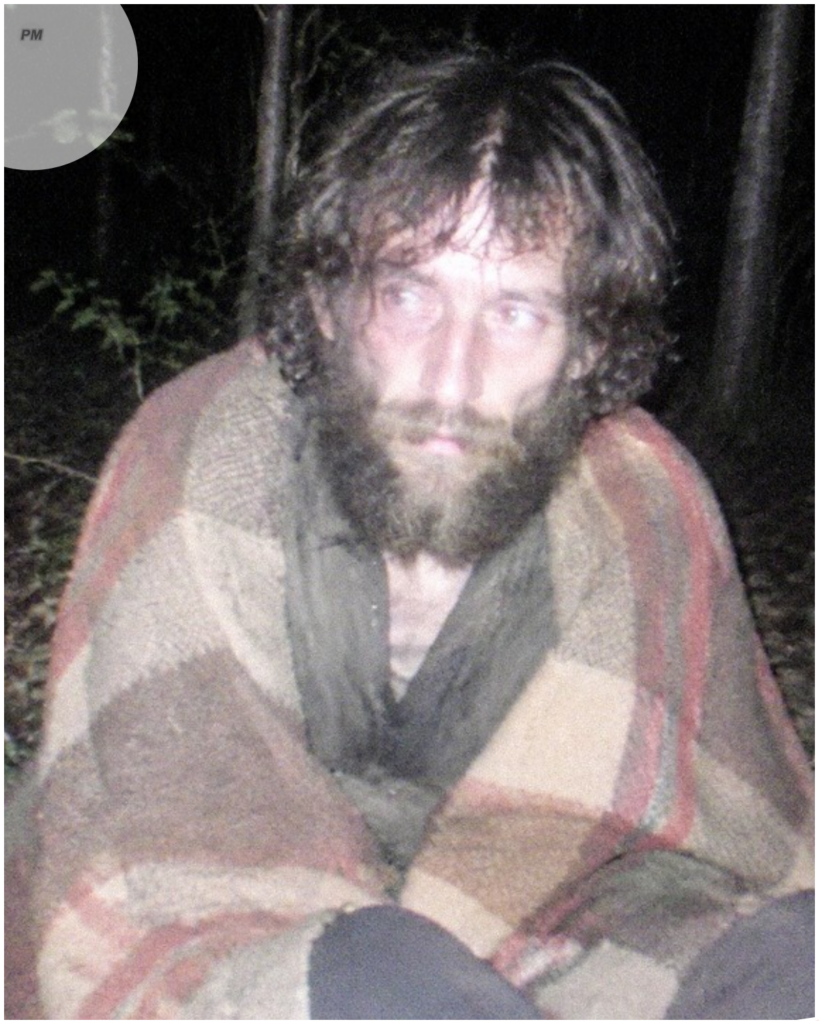
At the hospital, doctors treated dehydration, seve…
At the hospital, doctors treated dehydration, severe exhaustion, and damaged feet. He had lost weight, but his condition also reflected the effort of the final journey.
Abrasions on his hands suggested repeated work with rough wood, and there were small [music] burns around one cuff.
He had no fracture or other injury that would explain being unable to leave camp for more than 2 weeks.
During his first interviews, he said he had become uncertain about the route and decided to remain where he had shelter.
He would not explain why, after waiting so long, he abandoned his rifle and supplies before walking almost a full day.
Investigators considered several possibilities. Michael might have accidentally shot someone and fled, encountered another hunter, >> [music] >> or become involved in illegal hunting he was he was reluctant to disclose.
[music] His refusal to identify the camp made it difficult to separate those concerns from the effects of exhaustion.
A conservation officer asked whether he had taken an animal and left the carcass behind.
Michael said he had not. When asked whether anyone else had been with him, he denied that, too.
He agreed to discuss his original route, but stopped cooperating whenever the conversation turned toward taking officers to the tent.
Karen initially believed he was embarrassed about getting lost. She knew that accepting rescue would have been difficult for someone who took pride in his outdoor experience.
That explanation weakened when he asked her to close the hospital curtains before dark, even though his room was above ground level.
He slept in short stretches and woke listening. On the third evening after his rescue, he told her that something had been coming around the tent.
He described it as large and said he usually heard it before he noticed any movement between the trees.
When Karen asked whether he meant a bear, he said he had tried to convince himself of that while he was still there.
Michael agreed to another interview once Karen understood enough to sit with him. His account began on the second night of the trip.
He had chosen a campsite on a low bench above a creek with open ground for cooking and several trees that gave the tent protection from wind.
After dark, he heard movement beyond the edge of the firelight. He expected an animal to pass through and remained near the fire until the sound stopped.
Later, while lying inside the tent, he heard several slow steps followed by a pause.
The movement continued along the uphill side, close enough that he could distinguish weight settling on the ground between the branches breaking.
The following morning, he checked the area and found disturbed needles without a clear track.
Nothing had damaged the food he stored away from the tent. He hunted for part of the day, then returned early [music] because he felt uneasy about leaving his equipment unattended.
That evening, the movement resumed before he went to sleep. He shone his flashlight between the trunks and briefly saw a dark shape move out of the beam.
He could not describe its outline with confidence. He believed it was larger than a person, but he had little more than a moment’s view and no reliable way to judge how far beyond the nearest tree it stood.
On the fourth morning, Michael packed most of his equipment and started toward his truck.
He had walked less than an hour when he heard movement on the slope ahead.
At first, he [music] assumed an animal had noticed him and was moving away. He stopped, waited, and continued along a lower line.
The noise came again from the direction he intended to take. He remembered a sapling bending beyond a fallen trunk, although he never saw what touched it.
The route back to camp remained clear behind him. After several attempts to continue, he returned to the tent site because he expected to be able to defend himself there more easily than among the trees.
