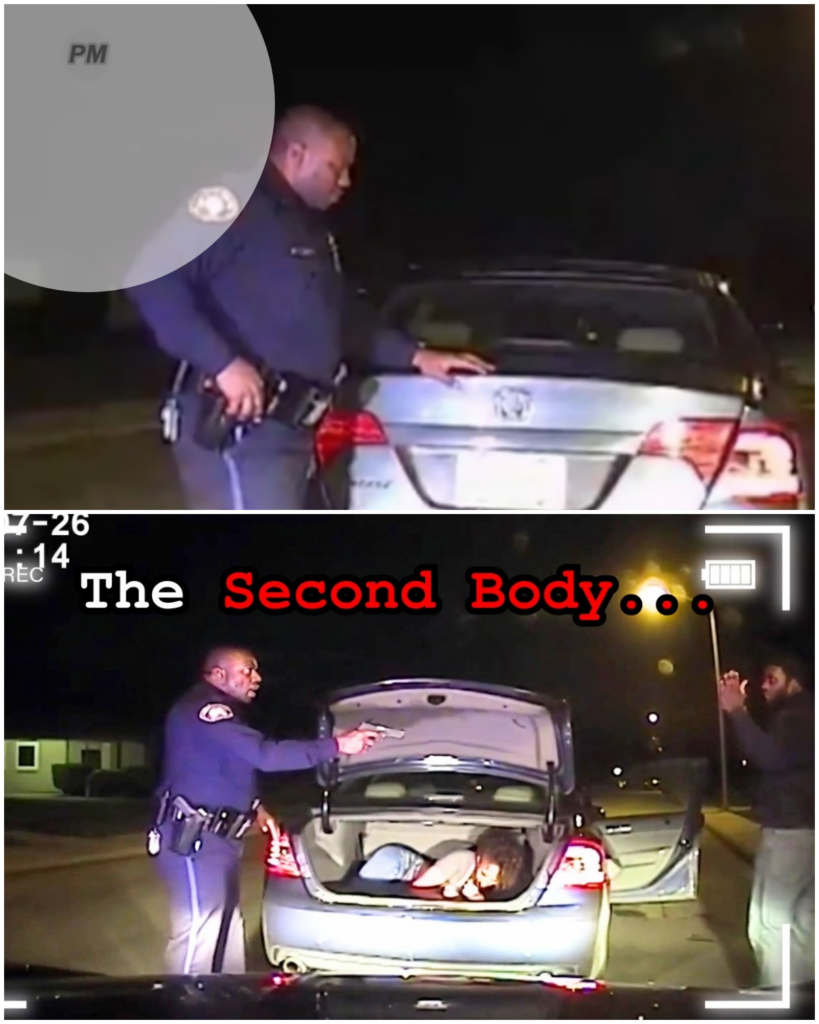
The absence of visual footage of the shot itself,…
The absence of visual footage of the shot itself, which fueled significant public speculation and scrutiny in the weeks after the incident became public, was ultimately explained by the reflexive camera movement documented in the department’s own technical review.
A detail some community members have said complicated public trust in the process, regardless of what the footage technically proved.
That gap in the footage became, for a period of several weeks after the shooting became public, the center of considerable local and eventually national attention, with some commentators questioning why the one moment that mattered most legally was the one moment, no camera fully captured.
The department released all three angles publicly alongside a detailed technical breakdown from an independent use of force analyst in an effort to address the speculation directly rather than allow it to compound.
The analyst’s report concluded that the body camera’s angle at the moment of the shot was consistent with known physiological responses officers exhibit when simultaneously monitoring a threat and a victim in close proximity.
A scenario use of force researchers have documented in prior cases involving hostage recovery, though rarely under this level of public scrutiny.
Community reaction to the case remained divided even after the grand jury’s decision. A vigil held for Angela Marchetti drew a large crowd from both her home county and Caldwell County, and several attendees used the occasion to publicly voice support for Reyes, specifically crediting his instinct to investigate an unexplained sound as the reason Diane Castellano survived at all.
Others in the community, while not disputing the grand jury’s findings, expressed continued discomfort with the fatal outcome in a case where the full sequence of events could not be independently verified through footage.
Attention that the department’s public information officer acknowledged directly in a statement, saying that the case illustrated both what body cameras can and cannot guarantee, and that policy discussions around backup camera redundancy had already begun internally.
As a direct result, officer Reyes returned to active duty four months after the incident following a standard administrative leave and psychological evaluation.
In a statement given after the grand jury’s decision, he said the hardest part of the entire case for him personally was not the moment he fired his weapon.
It was the four seconds before it. Standing at that trunk, understanding all at once that the woman in front of him was alive, that the shape beside her almost certainly was not, and that whatever decision he made next was going to be the only thing standing between Diane Castellano going home and her becoming a case file like Angela Marchettes.
Diane Castellano has spoken publicly on a limited number of occasions since her recovery, most often to advocate for expanded funding for cold case units in rural counties, arguing that Angela Marchett’s disappearance and at least one other case connected to Kesler might have been identified far sooner had different jurisdictions communicated more effectively with each other.
She has said in her own words that she does not consider herself lucky. She considers herself the person who happened to kick loud enough at the right moment for someone outside that car to hear it.
In the years since, Diane has worked with two separate state task forces reviewing how missing persons cases involving adult women are initially classified and prioritized.
Drawing directly on her own experience of knowing from the moment she was first approached at that gas pump that something was wrong.
While investigators in the earliest days of her case were still working through more conventional explanations first, she has said publicly that she does not fault the detectives who worked her case for following standard procedure, but that her experience convinced her the standard procedure itself needs revisiting, particularly around how quickly stranger abduction scenarios are considered when an adult goes missing under circumstances that don’t immediately fit a domestic or relationshipbased explanation.
Ation. She has also spoken carefully and only in general terms about the process of returning to ordinary life afterward, describing it as slower and less linear than she expected and crediting long-term trauma counseling with helping her rebuild a sense of safety in day-to-day routines that once felt unremarkable and now for a long time did not.
She has said that officer Reyes reached out to check on her twice in the year following her recovery and that both times she found herself reassuring him rather than the other way around.
A dynamic she has described as strange, but one she understands given what she now knows he carries from those 4 seconds at the trunk.
If this story affected you or if you’re currently in a situation that doesn’t feel safe, please know that help is available and that reaching out is never a failure.
In the United States, you can contact the National Human Trafficking Hotline at 1888-373788, available 247 and the 988 Suicide and Crisis Lifeline by calling or texting 988 for any mental health crisis or emotional distress.