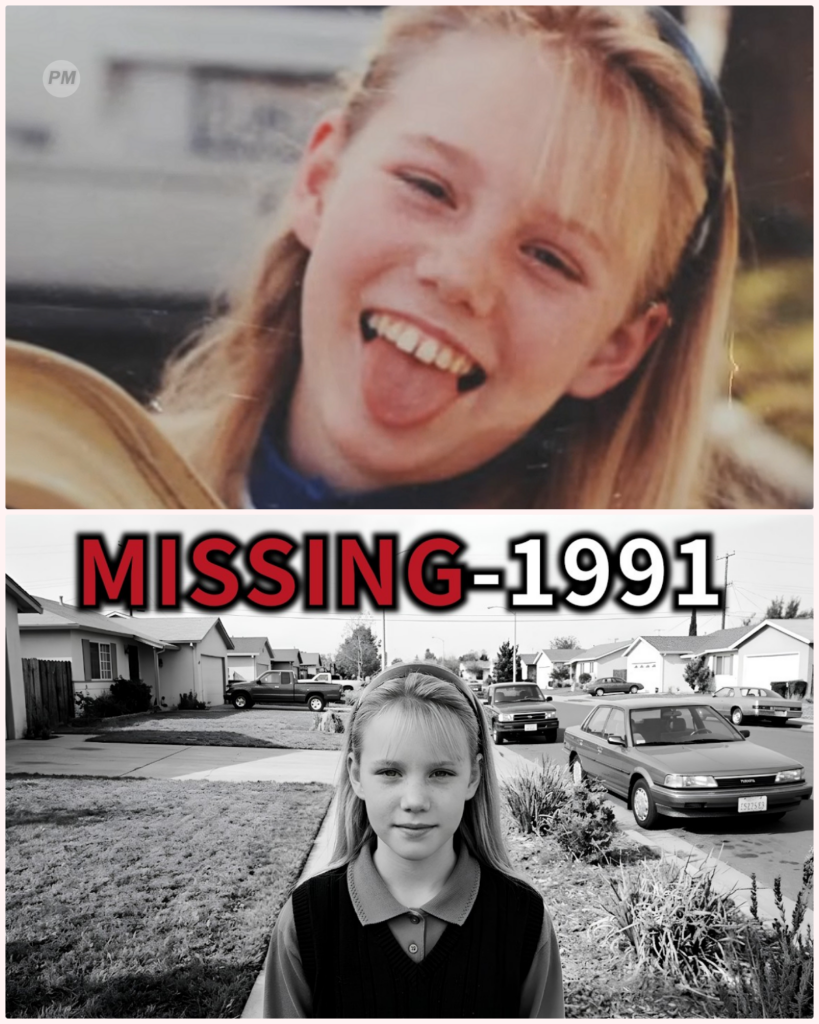
Jaycee was not present in the courtroom
Jaycee was not present in the courtroom. She wrote in her statement, “I choose not to be here today because I refuse to waste one more second of my life in your presence.
Everything you did to me was wrong, and I hope one day you realize that.”
“I hated every single second of every single day for 18 years. You stole my life and the life of my family.”
She also wrote about Nancy Garrido, “There is no god in this universe who accepts what you did.
I hope both of you have as many sleepless nights as I have had.” Jaycee’s statement was read aloud in the courtroom by her mother, Terry Probyn, the woman who had lost her daughter 18 years earlier and now stood in court reading the words her daughter had written.
Judge Douglas C. Kimister called Phillip Garrido the poster child for a sex offender and sentenced Phillip Garrido to 431 years to life in prison and Nancy Garrido to 36 years to life.
Nancy Garrido received the maximum sentence possible under the criminal laws in effect in 1991 when the crimes were committed.
Phillip Garrido, 60 years old at the time of sentencing, would not be eligible for parole for many decades.
The 431 year sentence ensured he would die in a California prison. After the sentences were handed down, the remaining question was not about the two Garridos, but about the system that had allowed it to happen.
Phillip Garrido was a registered sex offender on federal parole for kidnapping and rape since 1976 when he kidnapped Jaycee in 1991, meaning the parole system knew exactly who he was and what he was capable of and still failed to stop him.
In the following 18 years, dozens of investigators came to his house to check parole conditions, and none of them entered the hidden compound behind the house where Jaycee was being held with her two daughters.
A neighbor reported suspicious activity at the Garrido house to police in 2006 with no meaningful action taken.
Investigators came to the house in 2008, still no check of the compound. Jaycee sued the state of California over those systemic failures, and California settled the lawsuit for $20 million, the largest settlement in the state’s history for parole system failures, and an acknowledgement that what happened to Jaycee Dugard over those 18 years was not only the crime of Phillip and Nancy Garrido, but also a systemic failure by those tasked with preventing exactly that.
In the years after her rescue, she not only survived, but recovered in a way her former therapist described to the press as living remarkably well.
Someone proud of what she has accomplished in the years since leaving the backyard compound in Antioch.
In 2011, Jaycee published A Stolen Life, a memoir recounting her 18 years in captivity.
The book became a best seller and was widely regarded as one of the most honest and courageous survivor memoirs ever written.
Not because it dwelled on horrific details, but because it told the truth about the psychology of someone living in unimaginable circumstances, a truth that only someone who lived through it could tell accurately.
Jaycee founded the JAYC Foundation, an organization supporting families and victims of abduction, with a special focus on helping families reintegrate and recover from traumas that ordinary medical and legal systems are not designed to fully handle.
Jaycee turned the 18 years that were taken from her into something that could help others, a choice no one had the right to demand of her, and no one could make for her, but one she chose to make.
The Jaycee Dugard case leaves three lessons that anyone concerned with child safety and the integrity of the justice system needs to know.
The first lesson is about the decision to release Garrido after 11 years and not listening to the victim’s warning.
Phillip Garrido was sentenced to 50 years in federal prison in 1976 for kidnapping and raping Katherine Hall, released after 11 years.
And when victim Hall warned his parole agent that Garrido was continuing dangerous behavior, the agent noted in the file that electronic monitoring would be too complicated based on the victim’s hysteria.
Three years later, Garrido kidnapped Jaycee. The parole system and courts need to take the risk of reoffending by sex offenders far more seriously before release, and must listen to victims instead of dismissing their warnings as hysteria.
The second lesson is about the 60 parole checks where no one went into the backyard.
This was not the failure of any single individual, but a systemic flaw. Parole check procedures for sex offenders with a history of kidnapping and holding victims must require a full property inspection, not just a conversation at the front door.
The $20 million California paid Jaycee is an acknowledgement that this was a systemic error, not money that can compensate for 18 years, but a legal admission that the system failed in a way that could have been prevented.
The third lesson is about officers Ally Jacobs and Lisa Campbell, the two UC Berkeley campus officers who had no special warrant, no DNA, and no forensic technology.
They only had the intuition that something was wrong when they looked at Garrido and the two young girls with him, and they acted on that intuition instead of letting the man walk away like dozens of parole officers and police had done in the previous 18 years.
If you see something wrong, a child who looks afraid, an adult exerting excessive control over those around them, a situation where your intuition says something is not normal, report it.
You don’t need to be 100% sure, just report it and let the authorities check.
If you’ve watched this far, leave a comment and let us know where you’re watching from, and hit subscribe so you don’t miss the next videos.
