And he credited every investigator who had worked…
And he credited every investigator who had worked the case since 1956. Patricia’s sister Darlene has said that she prefers to remember the happy times.
It’s a moving thing to say, and it reminds us that these cases are never really about the technology.
They are about people. Let’s step back and consider what this case really tells us.
First, it tells us about the quiet power of preservation. Everything hinged on a routine decision made by people in 1956 who had no way of knowing what their work would one day mean.
A swab was taken. A slide was made. A file was kept. Phil Madison said it himself that this case shows how important the initial evidence gathering is.
The investigators of 1956 couldn’t have imagined DNA. But they did the careful thing, and 63 years later, it was everything.
Second, it tells us about persistence across generations. The detectives who first worked this case in 1956 never saw it solved.
Neither did the ones who worked it in the 1980s and 1990s. Each investigator picked up the file and carried it forward a little.
Cadner has said that investigators on a case like this leave a little bit of themselves behind.
In a way, the case was solved by a chain of people who never met each other.
Third, it tells us that a clean record doesn’t mean a clean conscience. For 65 years, no one had any reason to look at Kenneth Gould.
He wasn’t a known criminal. He wasn’t on anyone’s list. He lived a quiet life, moved away, raised his family, and died.
The database of convicted offenders would never have found him. Only the new science of genetic genealogy, which looks not at the person, but at the family, was able to see him.
And fourth, it raises questions that society is still working through. Genetic genealogy has now helped solve cases all over the country, but it also raises real concerns about privacy and about who gets access to genetic information.
In this case, it was used to identify a man who had died and to give answers to families who had waited for generations.
But, the debate about its limits is far from over. Patricia Kalitzke was 16 years old.
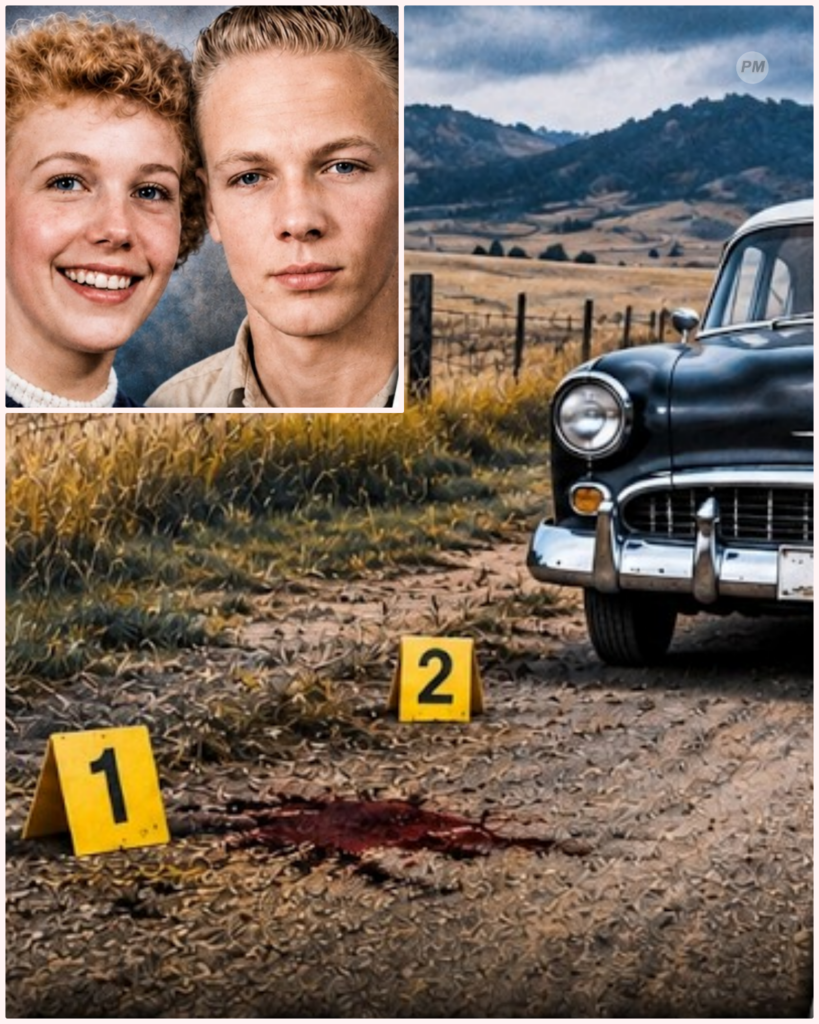
Dwayne Bogle was 18. They were two young people with their whole lives ahead of them who went out for an evening at a drive-in on the 2nd of January in 1956.
They were just starting to talk about marriage. They never came home. For 65 years, the person responsible lived and died without anyone knowing his name.
But, he left something behind on a slide in an evidence room, in a file in a cabinet, in the careful habits of a a people who didn’t throw things away.
And it waited. It outlasted him. It outlasted the detectives who first found it. It outlasted the technology that couldn’t read it.
And in the end, it told the story that no one had been able to tell.
Their story is a reminder that time doesn’t erase the truth. It only delays it.
If you want to hear more stories of victims who were never forgotten and the people who refused to give up on them, subscribe now.
New crime and cold case stories every week. The next case is already
