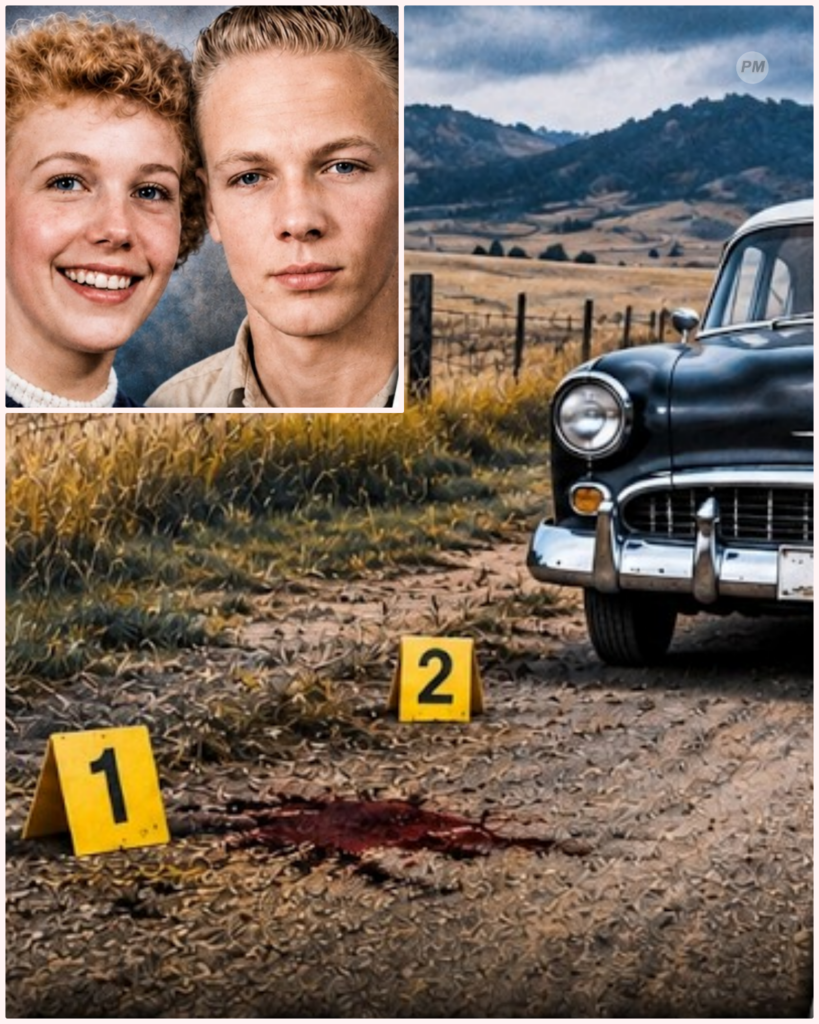
In 1988, a man named Phil Madison began working in…
In 1988, a man named Phil Madison began working in the Sheriff’s evidence room. As a young deputy, he came across the Kalitzke and Bogle evidence.
It had been sitting there for more than 30 years. Madison would later become a detective, and he never forgot that evidence.
In 1989, investigators did something new. They went back to the crime scene where Dwayne’s body had been found and removed bullets that had lodged in a cottonwood tree.
It was an effort to gather physical evidence that might one day be compared to a weapon.
It was thorough, careful police work from detectives who knew that the case was still alive, even if the trail was cold.
Then came 2001. DNA testing had become a real forensic tool, and Madison knew what he had.
Remember that glass slide from the autopsy? He sent it to the Montana State Crime Lab, and the lab found something.
A cell from a man who was not Dwayne Bogle. Think about what had to go right for this to happen?
In 1956, someone took a routine swab. They put it on a slide. They labeled it and filed it.
Then, for 45 years, it survived moves, budget cuts, changes of leadership, and the natural tendency of old evidence to be forgotten.
As John Cadner would later say, it was just the process. And luckily, it had been retained in evidence all those years.
But the DNA profile wasn’t enough on its own. Investigators entered it into CODIS, the national database of convicted offenders and arrestees.
If the killer had ever been arrested for a serious crime anywhere in the country, he would have shown up.
No match. It told investigators something critical. Whoever had killed Patricia and Dwayne had never been arrested for anything that put his DNA on file.
He had either lived a clean life afterward, or he had been very lucky. So, detectives did what they had always done.
They compared the DNA to people. For years, investigators tested suspects one after another and ruled them out.
Roughly 35 men were considered over the life of the case. Each time, the same result.
Not a match. The hope was fading. When Phil Madison eventually left the Sheriff’s Office, he had resigned himself to the idea that the case would never be solved.
He has said that a lot of people had a turn at this case, and they simply weren’t able to take it to a conclusion.
But in 2012, the case landed on the desk of a new investigator. Detective Sergeant John Cadner took over the file.
He wasn’t born when Patricia and Dwayne were killed. Neither were most of the detectives who had come before him.
But he took the case seriously, and he waited for a way forward. It came in April of 2018.
California authorities announced the arrest of Joseph James DeAngelo, the man known as the Golden State Killer.
He had eluded capture for decades, and he was found using a method no one had tried in a major case before.

