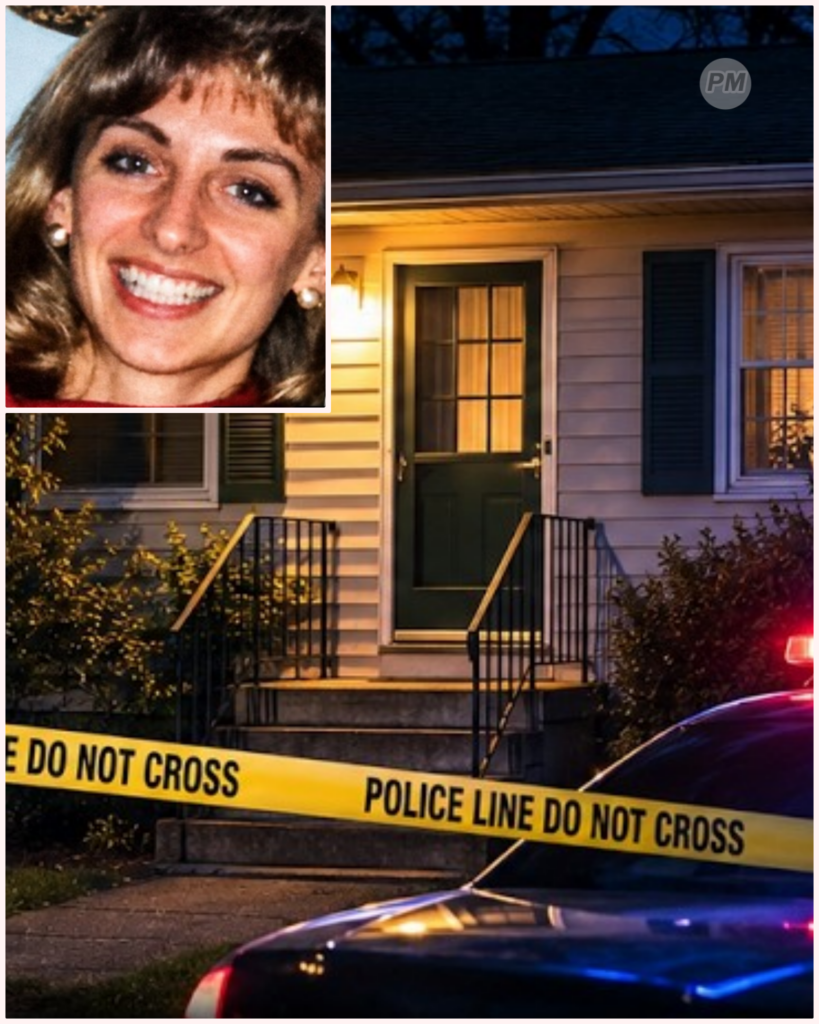
She was wearing her coat and gloves
She was wearing her coat and gloves. That detail matters. It tells investigators something about the timing.
Christy wasn’t relaxing. She wasn’t sleeping. She was dressed and ready to walk out the door when someone was there.
Near her body was a wooden cutting board, which police identified as one of the weapons used in the attack.
The next day, a forensic pathologist performed the autopsy. The findings were brutal. Severe blunt force trauma to her neck, back, upper chest, and face, a fractured jaw, evidence of strangulation, and evidence she had been sexually assaulted with multiple samples collected.
The death was ruled a homicide. The cause was strangulation. In the days that followed, East Lampeter Township Police, Pennsylvania State Police, and later the FBI worked the case.
Over the years, a number of agencies would touch it. Detectives did what detectives do.
They interviewed her her co-workers, acquaintances, people who’d known her, people who’d seen her, people who might have had a reason to hurt her.
And here’s where the case becomes strange. They found nothing, no stalker, no threatening ex, no enemy.
By every account, no one in Christy’s life had a motive. Friends described no bad relationships, no conflict, no warning signs.
Several people were looked at over the years. None matched the DNA, and that DNA was the one thing investigators had.
The state police lab generated a DNA profile from what was collected from Christy in the scene.
That profile was entered into the national DNA database, the system designed to connect crime scenes to known offenders.
It didn’t match anyone. Think about what that means. The killer’s DNA was sitting in a lab, but the man it belonged to had never been arrested for anything that put his DNA into a database.
He was a stranger to the system, and he was walking free. So the case went cold.
Years passed, then a decade, then two. The people who’d worked the case retired, changed jobs, moved on.
The district attorney’s office later said it never let go of the case, but the leads had dried up.
The suspect list had run out, a phrase you’ll hear in cold case work. A case doesn’t die, it waits.
Christy’s case waited. If you’re finding this story as compelling as I did, it’s a good time to subscribe.
We post new crime and cold case stories every week, and the next one is already in the works.
Now, back to Lancaster County. In 2016, jurisdiction over the case moved to the Lancaster County District Attorney’s detectives working under District Attorney Craig Stedman.
They looked at the file with a simple question. What hasn’t been tried? The answer was a technology that hadn’t existed in 1992 and barely existed even a few years earlier.
Detectives sent the crime scene DNA to a company called Parabon NanoLabs based in Virginia.
Parabon does two things that sound like science fiction. First is called DNA phenotyping. Of matching DNA to a person, it reads the DNA to predict what that person might look like.
