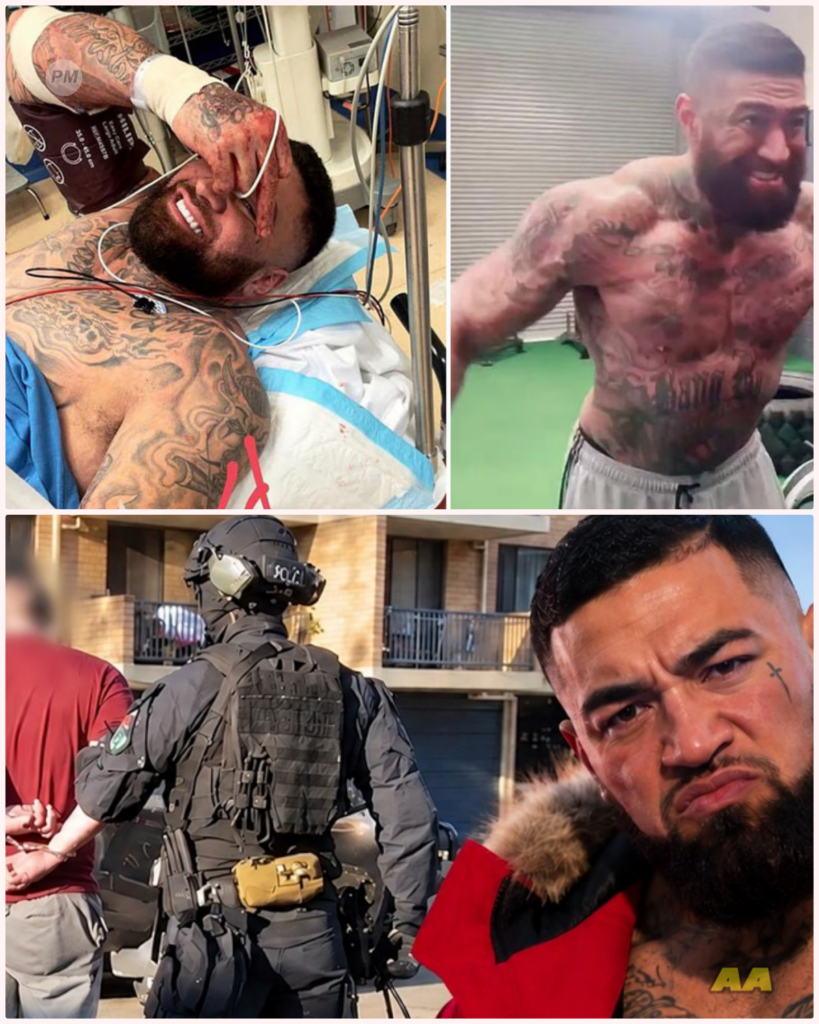
Two days before police kicked in his door, Thomas Vandermade dropped a new single. He performed as Massi Roe and by the time tactical officers actually found him, he had a music contract, a growing fan base and according to detectives, a bullet with someone else’s name on it.
This is the story of how an online rap rivalry spilled out of a comment section and into an underground car park and how one of the two men involved is still paying for it in a cell he won’t be leaving before 2030.
John Lavulo, who performs as Big Cash, grew up with what he since described publicly as a genuinely violent upbringing and spent years as a Hells Angels bikie before walking away from that world and building a following as a Western Sydney rapper instead, eventually amassing close to 200,000 YouTube subscribers.
Thomas Vandermade had his own considerably rougher path, a tough, violent childhood, roughly 7 years in custody starting as a drug addicted teenager and according to his own lawyer, no genuine support waiting for him once he actually got out.
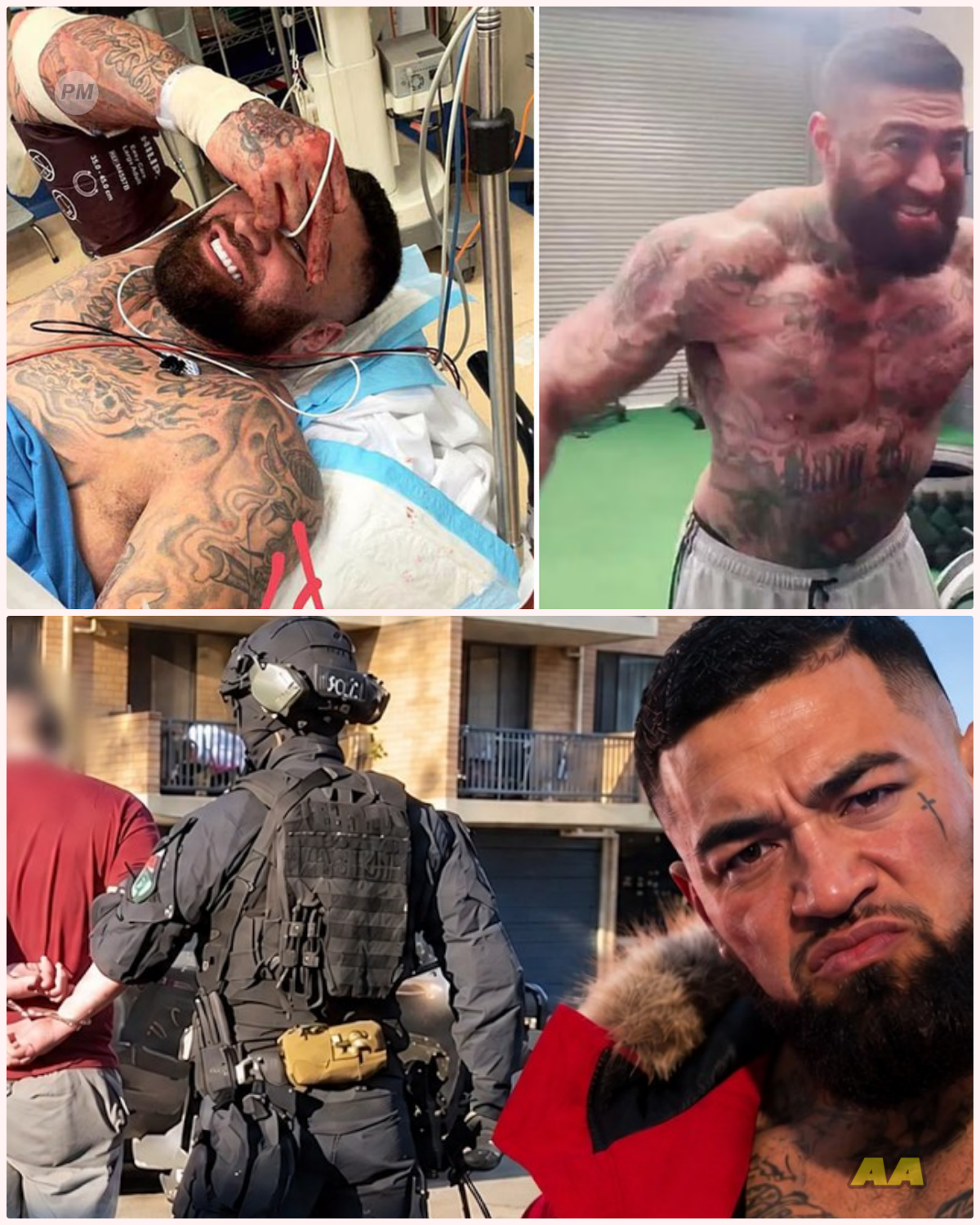
He started rapping about exactly that life under the name Massi Roe and by 2020, he’d signed his own music contract, too.
The two men had never actually met in person. According to Lavulo’s own account, what turned him against the younger rapper was a disagreement over the content of Vandermade’s own music.
He started trolling him online. What followed was months of public taunting played out entirely on social media where anyone could watch it unfold in real time.
On the night of 8 August 2020, that online rivalry turned violent. Lavulo was pulling his Mercedes into the underground car park of his own apartment block in Warwick Farm, his girlfriend beside him, when a car followed slowly in behind them.
A man got out, hooded, and started walking toward Lavulo’s car. Lavulo threw the car into reverse.
As he sped away, a shot came through the driver’s side window and hit him in the arm.
He drove himself to hospital, his girlfriend who ducked down in the passenger seat, escaped entirely unharmed.
Detectives would eventually allege this wasn’t some chaotic opportunistic confrontation that a second vehicle had been specifically positioned to block the couple’s exit from the car park, suggesting a genuinely planned ambush rather than a spontaneous act of road rage.
Thomas Vandermade was arrested weeks later. At the press conference announcing it, the detective leading the investigation didn’t mince words, calling it a targeted attempt at assassination.
What makes this case genuinely worth tracing in full isn’t simply the shooting itself. It’s everything that unfolded around it afterward, a shooting victim who refused to formally cooperate with the exact police investigating the attempt on his own life, an online pile-on accusing him of secretly being a police informant anyway.
A rival rapper publicly offering him $50,000 to settle the entire dispute inside a boxing ring, and a trial that revealed Vandermade himself hadn’t actually been the one who pulled the trigger at all.
A direct note on precision throughout this account, because this case involves genuinely contested claims from multiple separate parties played out largely in public online long before any of it reached a courtroom, we’re going to hold the distinction between what’s been formally proven in court and what remains allegation or public claim clearly throughout.
We cover true crime from around the world using court records and verified reporting. No dramatizing, no glorifying.
Subscribe if you want the full account. We start with the two men themselves because understanding how they each actually got here matters just as much as understanding what happened in that car park.
Jon Luvuyo grew up with what he since publicly described as a genuinely violent upbringing, carrying what he’s called a tumultuous relationship with his own father through much of his childhood.
He spoke in openly in later interviews about carrying serious rejection issues from that period and about how that specific unmet need for acceptance eventually pushed him toward outlaw motorcycle club culture.
It’s worth understanding what drew him specifically toward that world because it establishes a genuinely common pattern this channel has documented recurring across numerous comparable figures throughout its extensive broader research into outlaw motorcycle club culture.
A young person carrying genuine unresolved childhood trauma searching for exactly the kind of structure, belonging, and protection a formal club hierarchy can offer even when that same structure comes bundled with genuine serious danger.
Luvuyo spent years as a Hells Angels bikie, a world he since admitted in his own public statements he was genuinely lucky to walk away from alive.
He said attempts were made on his own life during this specific period. Well before his own later rap career or his own eventual conflict with Thomas Vandermade ever entered the picture.
It’s worth sitting with what this specific claim actually represents because it establishes a genuinely important piece of context for understanding Lavulo’s own later public persona and his own eventual response to the 2020 shooting this account traces in detail across its remaining coverage.
This wasn’t a man encountering serious targeted violence for the first time in a Warwick Farm car park.
It was, according to his own account, already a familiar, survived reality from his earlier adult life context that likely shaped how he chose to respond once a considerably more public, more scrutinized act of violence eventually found him again.
Somewhere along the way, Lavulo picked up the stage name Big Cash and began building a genuine following as a Western Sydney rapper.
He eventually amassed close to 200,000 YouTube subscribers alongside tens of thousands of further followers on Instagram, making him one of the more genuinely recognizable faces within the local drill music scene.
A genre this channel has already documented across its broader coverage of comparable Australian and international cases as frequently drawing direct, explicit inspiration from real street and gang culture.
Lavulo wasn’t simply a musician trading on borrowed credibility, though. He had his own genuine history with the courts, separate entirely from his eventual role as a shooting victim in 2018.
He was charged over an aggravated break and enter in Cabramatta West, a charge still formally pending by the time everything else this account traces across its remaining coverage first began unfolding.
On top of that, while already out on bail connected to this earlier charge, he was separately arrested on New Year’s Eve after telling a female police officer directly that he would kill her family and defecating in a unit block hallway during what’s been described as an alcohol-fueled rampage.
He eventually pleaded guilty to intimidating police, stalking, and behaving in an offensive manner in public, receiving a community corrections order connected specifically to this particular outburst.
It’s worth reflecting on what this specific parallel legal history actually reveals about Lavulo’s own broader public image at the time the Vandermade conflict first began because it complicates any simple narrative casting him purely as an innocent victim.
This was a man actively rebuilding a public persona away from his own earlier bikie life while simultaneously carrying genuine documented legal trouble of his own, a considerably more complicated figure than either side of his own later highly public feud with Vandermade would typically present him as.
What this account traces next is Thomas Vandermade’s own considerably rougher path into adulthood context essential for understanding exactly how a comparatively minor online disagreement between two rappers eventually escalated into an actual planned ambush.
Thomas Karas Vandermade, who performs as Masi Rooc, had a genuinely rougher road into adulthood than most people this channel has profiled throughout its extensive broader coverage of Australian organized crime.
According to his own barrister’s later characterization, offered during his eventual sentencing proceedings, he experienced a genuinely tough and violent childhood, including being picked on directly by his own father.
Vandermade ended up in prison as a drug-addicted 19-year-old. He served roughly 7 years behind bars, with the court later told of multiple violent clashes occurring throughout that extended period of incarceration.
He was eventually released in 2018 with, in his own lawyer’s specific characterization, no genuine support waiting for him on the outside.
It’s worth reflecting on what a trajectory of this specific kind actually represents. Because this channel has documented a genuinely consistent pattern recurring across numerous comparable figures throughout its extensive broader research into Australian organized crime.
A genuinely difficult childhood, early substance dependency, an extended custodial sentence served primarily during someone’s own formative young adult years, and release into a world offering genuinely limited legitimate support or opportunity.
This specific combination frequently produces exactly the kind of continued criminal trajectory this account traces across Vandermade’s own subsequent history.
Not because any single factor alone determines someone’s future, but because the accumulated weight of genuine disadvantage compounding across years leaves considerably fewer realistic alternative paths available.
While inside, Vandermade became associated with a group known as the OC, sometimes described as Outcast, whose own reach later extended into suburbs bordering Mount Druitt in Sydney’s greater west.
It’s worth understanding what an association of this kind actually represents within the broader prison environment.
This channel has documented across numerous comparable cases throughout its research. Genuine, practical protection and belonging built during exactly the kind of extended custodial period where formal, legitimate support structures frequently prove genuinely absent.
Not long after his own release, Vandermade started building a genuine music career, rapping specifically about the life he’d actually lived while incarcerated.
By the middle of 2020, he’d signed a formal music contract and was actively releasing new material.
It’s worth sitting with what this specific career path actually represents because it connects directly to a genuinely significant, broader pattern this channel has documented recurring across comparable drill and rap scenes throughout its extensive research into youth-connected organized crime more broadly.
Music built directly around genuine, lived criminal experience offers exactly the kind of authentic credibility this specific genre’s own audience frequently rewards, meaning the same history that might otherwise represent a genuine barrier to legitimate employment became, within this particular creative context, a genuine commercial asset instead.
That’s precisely where the two men’s own paths eventually crossed, not in person, but online through exactly the kind of public, highly visible platform this account traces in considerably more detail across its following section.
What this account establishes next is exactly how a disagreement that began, by Lavulo’s own account, over the specific content of Vandermade’s music escalated across months of sustained public conflict into the planned armed confrontation that would eventually define both men’s lives.
By John Lavulo’s own account, he’d never actually met Thomas Vandermade in person before the entire conflict between them escalated into actual violence.
He says he first heard of Vandermade through his own brother and that what specifically turned him against the younger rapper was Vandermade’s own music, which Lavulo characterized directly as glorifying jailing kids content he says he genuinely didn’t like.
In response, Lavulo started trolling Vandermade on Instagram. It’s worth sitting with what this specific origin point actually reveals because it establishes something genuinely important about how this entire conflict actually began.
This wasn’t a dispute rooted in any genuine pre-existing personal relationship, territorial conflict, or direct financial grievance, the kind of underlying motive this channel has documented driving the overwhelming majority of comparable organized crime violence throughout its extensive broader research.
It began instead as one established public figure’s genuine, if subjective, disapproval of another considerably younger figure’s own creative content expressed initially through nothing more than online commentary.
Whatever the exact specific trigger actually was, the two rappers ended up locked in months of sustained public taunting across social media.
Vandermade was reportedly called a coward and worse across Lavulo’s own accounts repeatedly throughout this period.
Police would later offer a specific characterization of this broader conflict worth including directly because it moves this accounts coverage beyond a simple isolated personal dispute between two individuals.
Investigators characterized this not as a personal one-on-one spat but as part of a considerably wider rivalry between rap groups and the broader circles of people who saw themselves as connected to those same groups, a conflict playing out entirely in public where genuinely anyone could watch it unfold in real-time.
It’s worth reflecting on what this specific characterization actually represents because this channel has documented a genuinely consistent pattern recurring across numerous comparable cases throughout its extensive broader research into drill and rap-connected violence both within Australia and internationally.
Online platforms don’t simply document existing rivalries, they actively, measurably accelerate them converting what might otherwise remain a comparatively contained private disagreement into a genuinely public spectacle with each successive exchange generating further audience engagement, further pressure on both parties to respond and further escalating stakes attached to whichever side is perceived to have genuinely backed down first.
This specific dynamic public humiliation sustained across months played out in front of a genuinely substantial combined audience across both men’s own platforms is worth holding on to directly as this account moves toward its following section.
Because it establishes the genuine accumulated pressure that had built by the specific night this entire online conflict finally turned violent.
>> [snorts] >> What this account traces next is exactly what happened on that night, the sequence of events inside and around a Warwick Farm underground car park that transformed months of online taunting into an actual planned act of armed violence.
On the night of the 8th August 2020, John Lavulo and his 22-year-old girlfriend were driving into the underground car park of his apartment block on Lockland Street in Warwick Farm at around 9:00 in the evening.
As Lavulo pulled his white Mercedes into the garage, a second vehicle followed slowly in behind them.
Reports at the time and the account later given to the court initially described this vehicle as red.
Fuller CCTV footage subsequently obtained independently identified it specifically as an orange sedan. The passenger in that vehicle wound down his window as if preparing to speak.
At the same moment, Thomas Vandermade, who was driving, got out of the car wearing a black hooded jumper and began moving directly toward Lavulo’s own vehicle.
Whether Lavulo recognized his specific rival instantly or simply registered through his own mirror that a hooded man was closing in on him down the driveway, he threw the Mercedes into reverse and hit the accelerator.
As he sped away, a shot came through the driver’s side window striking him. It’s worth being direct about the specific uncertainty surrounding exactly where that shot actually hit him because different reports describe the wound in slightly different terms, some indicating his shoulder, others his forearm and elbow specifically.
What’s consistent across every account this channel has independently verified is that his arm took the genuine brunt of the impact and that this specific detail may well have saved his own girlfriend who ducked down in the passenger seat the moment the confrontation actually began.
She escaped the entire incident physically unharmed. Lavulo somehow managed to drive himself all the way to Liverpool Hospital where he underwent surgery and remained for several days afterward.
It’s worth including a specific genuinely significant detail investigators later alleged because it fundamentally reshapes how this entire incident should actually be understood.
Detectives would eventually allege that a further second vehicle had been specifically positioned to block the couple’s own exit from the car park suggesting this wasn’t a chaotic opportunistic act of violence erupting spontaneously once Vandermade happened to encounter his rival by chance.
It represented, according to this specific allegation, a genuinely planned ambush with multiple people and vehicles coordinated in advance specifically to ensure Lavulo had no realistic means of escape once the confrontation actually began.
This channel thinks this specific detail deserves genuine careful attention because it transforms the entire incident’s own legal and moral character.
A spontaneous confrontation, however genuinely violent, reflects a fundamentally different kind of culpability than a deliberately planned ambush involving multiple coordinated participants and vehicles specifically designed to trap a target with no viable means of escape.
Investigators from Strike Force Raptor and local police spent several weeks working the case before actually making an arrest.
What this account traces next is exactly how that arrest unfolded. And the specific formal characterization police themselves offered at the resulting press conference language that would go on to define public understanding of this entire case for years afterwards.
29-year-old Thomas Vandermade was arrested at a unit in Blacktown, taken down by tactical police units following several weeks of sustained investigative work.
He was formally charged with shooting with intent to murder, discharging a firearm with intent to cause grievous bodily harm, and failing to disclose the identity of the driver or passenger of the vehicle he’d arrived in.
Detective Superintendent Robert Critchlow, the criminal group squad commander leading the investigation, didn’t mince words at the press conference announcing the arrest.
He called it a targeted attempt at assassination, making clear police believed months of public taunting between rival rap crews on social media had genuinely spilled over into real considered violence.
Critchlow also stated directly that it’s really unacceptable that people can’t sort their differences out without using firearms language worth including precisely because it captures something this channel has documented occurring across numerous comparable cases throughout its broader research.
Genuine sustained police frustration at watching online conflict repeatedly translate into actual physical danger with consequences extending well beyond whichever two individuals happen to be directly involved.
Critchlow made a specific point of stating that Vandermade wasn’t the only person police were genuinely interested in connection with this incident.
And that further arrests could reasonably follow. It’s worth holding this specific detail directly alongside everything this account has already traced because it establishes from the earliest possible stage of the formal investigation that police themselves understood this as a coordinated multi-person operation consistent with the alleged second vehicle positioned specifically to block Lavulo’s own escape.
Vandermade was refused bail and appeared via audio-visual link at Blacktown Local Court. It’s worth including a genuinely small but revealing detail from this specific appearance.
He was reportedly wearing a branded streetwear shirt. Despite not formally applying for release at that particular hearing, a detail this account thinks is worth sitting with briefly.
Because it illustrates something worth carrying through this account’s remaining coverage about how thoroughly Vandermade’s own music career and his own considerably more serious legal jeopardy had become genuinely intertwined by this specific point.
In a detail this account’s own opening coverage has already flagged directly. Vandermade had released a new single titled Stick and moved just two days before his own arrest.
A genuinely striking, if presumably unintentional, coincidence given everything that followed. While this entire process was unfolding, Lavulo himself was separately dealing with his own pre-existing legal troubles connected to the 2018 break and enter charge this account has already traced in detail.
Appearing at Campbelltown Court still wearing a sling, he explained to the presiding judge that he was managing his own gunshot wound with the painkiller Endone.
He was granted a reduction in his reporting conditions from daily to three times weekly and told reporters outside court that he’d left his own earlier bikie life behind long ago.
What this account traces next is a genuinely unexpected turn the broader case took. Months into the ongoing legal proceedings one that would complicate public understanding of this entire story considerably and expose La Voulo himself to a genuinely sustained campaign of online accusations built around his own specific refusal to formally cooperate with the very investigation into the attempt on his own life.
By early the following year when Vandermade’s bail application was reconsidered this time with his own lawyer offering a hundred thousand dollar surety, an ankle bracelet, and relocation to live with her alongside his partner, the court heard something that complicated the entire narrative considerably.
The magistrate was told that John La Voulo, the actual shooting victim, was refusing to make an official statement to police.
According to reporting on this specific proceeding, he’d reportedly told people within his own circles in life, you don’t do that, a direct blunt articulation of exactly the kind of code of silence this channel has documented recurring across virtually every organized crime case it’s covered throughout its extensive broader research.
Applying here not to a formal criminal organization, but to the specific informal code governing conduct within La Voulo’s own bikie adjacent background.
This refusal to cooperate became public knowledge and La Voulo’s own fans and followers converted it almost immediately into a genuine accusation, flooding his Instagram account with rat emojis, and accusing him, despite his own public silence on the matter, of secretly actually cooperating with police behind the scenes regardless.
It’s worth reflecting on what this specific, genuinely paradoxical online reaction actually reveals, because it illustrates something worth taking seriously about how reputational dynamic functions within exactly this kind of public, drill-adjacent music scenes.
Lavulo’s own refusal to formally assist the prosecution of the man who’d shot him the specific conduct code within his own community genuinely demanded, nonetheless, left him vulnerable to the opposite accusation entirely.
With his own silence somehow read by a considerable portion of his own audience as evidence of exactly the betrayal that silence was specifically designed to avoid.
Bail was ultimately refused again, with the magistrate specifically ruling the prosecution’s case against Vandermade remained genuinely strong.
But the online narrative connected to Lavulo himself had, by this point, already decisively shifted regardless of the court’s own formal ruling.
Lavulo responded directly, posting a 30-minute podcast specifically insisting he was not and had never been an informant, arguing the only genuine form of cooperation that actually counts is providing a formal statement in open court, and that anyone online speculating otherwise genuinely had no idea what they were actually talking about.
Around this same period, a fresh charge was added against Vandermade connected to possessing an unauthorized firearm, a further formal legal consequence, worth including because it illustrates how this entire case continued accumulating additional charges even as the broader public narrative around Lavulo himself remained genuinely contested.
It’s worth reflecting on what this specific episode actually reveals about the genuine, considerable pressure facing someone in Lavulo’s own particular position, a shooting victim, navigating genuine physical recovery while simultaneously managing both his own public image and a code of conduct from his earlier life that directly conflicted with the formal legal process theoretically meant to hold his own attacker accountable.
What this account traces next is how this specific tension escalated even further once a separate rival rapper inserted himself directly into the dispute, publicly challenging Lavulo’s own account of events.
The snitch allegations surrounding Lavulo didn’t end with his own direct public denial. A rival rapper performing under the name Huncho, real name Ali Unnis, waded into the dispute publicly, posting videos claiming Lavulo had actually given police a formal statement identifying the shooter, even sharing what appeared to be a genuine police document specifically intended to support that claim.
It’s worth sitting with what this specific intervention actually represents because it illustrates something worth taking seriously about how thoroughly this entire case had, by this stage, become embedded within a considerably broader web of public, competitive posturing extending well beyond the two original participants.
Unnis wasn’t a direct party to the actual shooting itself or to any of the formal legal proceedings this account has already traced in detail.
He was instead a separate rival rapper, choosing to insert himself directly into an already highly public dispute.
Apparently calculating that doing so offered genuine commercial and reputational value within the same broader drill scene.
Uninus went considerably further than simply making the specific allegation itself. He publicly challenged Lavulo to a $50,000 boxing match, specifically intended to settle the entire dispute offering him $10,000 simply for agreeing to step into the ring.
With the full 50,000 promised if Lavulo actually followed through. It’s worth reflecting on what a specific challenge of this kind actually represents within the broader context this account has already traced throughout its coverage.
This channel has documented across its extensive broader research into drill and rap connected violence.
A genuinely recurring pattern where formal sanctioned combat boxing matches specifically organized and promoted publicly functions as a considerably safer, more commercially viable alternative to the kind of actual uncontrolled violence this entire case had already produced.
A $50,000 boxing match, however theatrical its own specific framing, represents genuine commercial opportunity for everyone involved.
Converting an otherwise genuinely dangerous ongoing feud into content both participants could potentially profit from directly.
Lavulo brushed the entire challenge off denying directly he’d ever been an informant and dismissing the supposed police statement Uninus had shared as something easily fabricated joking in his own specific response about what people can genuinely do with computers these days.
It’s worth closing this specific section by reflecting on what this entire extended episode actually reveals about the genuine considerable commercial incentive structure surrounding this entire case.
Well beyond the original shooting itself, a man shot in an alleged assassination attempt found himself in the following months simultaneously defending his own reputation against accusations of informing on his attacker.
While fielding a public highly publicized $50,000 fight challenge from an entirely separate rival, each development generating genuine sustained public attention and engagement that within this specific music scene likely carried genuine commercial value for virtually everyone involved regardless of how the underlying criminal case itself actually concluded.
What this account traces next is exactly how that underlying criminal case finally did conclude a trial that would reveal a detail considerably more significant than anything this account has traced so far.
Fundamentally reshaping public understanding of what had actually happened inside that Warwick Farm car park.
The case against Thomas Vandermade eventually went to trial in the New South Wales District Court.
It’s worth being direct about what emerged during these proceedings because it represents a genuinely significant revelation considerably complicating the straightforward narrative this account has already traced across its earlier coverage.
A jury found Vandermade guilty of shooting with intent to murder. But the court was told something that hadn’t been obvious from the original charges themselves.
Vandermade wasn’t actually the person who’d pulled the trigger. It’s worth sitting with what this specific finding actually represents because it fundamentally reshapes how this entire case should genuinely be understood.
He was found to have been part of a joint criminal enterprise. Alongside others who’d rushed Lavulo’s car that specific night, meaning the law held him equally responsible for the shooting even though a different separate person had actually fired the shot that struck Lavulo’s arm.
This channel has documented across its extensive broader research into comparable organized crime cases throughout Australia and New Zealand exactly this specific legal principle recurring consistently.
Joint criminal enterprise doctrine holds that when multiple people participate together in a planned criminal act, each participant can be held formally legally responsible for the entire outcome regardless of which specific individual actually carried out the particular act that caused the final physical harm.
This explains directly why Vandermade faced the full weight of a shooting with intent to murder conviction despite apparently never having actually fired the weapon himself.
Vandermade was also found guilty of failing to disclose the identity of another person present in his own vehicle that night.
A separate charge worth including directly because it suggests he knew exactly who else had been involved and chose throughout the entire legal process not to formally identify them to investigators.
During the sentencing proceedings that followed, Vandermade’s own barrister attempted to argue for genuine leniency, telling the court there was no evidence Vandermade had actually known a firearm was involved until one of his own co-offenders produced it.
His defense also pointed directly to his own documented brutal upbringing, his years of incarceration spanning his own teenage years and into his 20s, and a formal psychological assessment that diagnosed him with antisocial personality disorder, while specifically stopping short of full psychopathy.
The Crown, meanwhile, argued that Lavulo had made a genuine full recovery from his own injuries, pointing directly to TikTok videos showing him boxing and lifting weights under the specific handle he used for his own workout content.
Though the prosecutor couldn’t resist noting he was genuinely surprised at how light the weights themselves actually appeared to be.
The presiding judge seemed to genuinely agree. Lavulo had clearly bounced back physically, remarking at one point that nobody would want to be on the receiving end of his own right hook.
Vandermade was ultimately sentenced to a maximum of 14 years and 6 months in prison, with a non-parole period of 9 years and 7 months, putting his own earliest possible release date at 2 and April 2030.
It’s worth reflecting on what this specific sentence actually represents. Set against everything this account has already traced across its coverage, a man who, by his own barrister’s account, never actually fired the weapon that struck Lavulo, received close to a decade and a half of formal imprisonment, specifically because he’d actively participated in a coordinated planned ambush carried out alongside others who remained even at the point of his own sentencing formally unidentified in open court.
What this account traces in its closing section is what’s happened to both men in the years since this specific sentencing because as this accounts own opening coverage already flags, Vander made himself hasn’t actually stopped generating headlines even from inside a maximum security facility.
In the years since his own sentencing, John Lavulo has continued genuinely rebuilding his public image.
He’s told reporters he’s done with the gangster life for good. That he hasn’t touched alcohol since walking away from his own earlier considerably more violent past and that he’s now focused specifically on mentoring at risk youth away from drill music’s own broader glorification of violence.
Through his own podcast, cash it out, it’s worth reflecting on what this specific pivot actually represents.
Because it illustrates something genuinely significant about how someone with Lavulo’s own particular background might actually attempt to build a genuinely different future following direct personal experience of exactly the kind of violence his own earlier bikie life and his own later rap career had both in different ways exposed him to repeatedly.
He’s used this same platform to speak publicly about his own near death experiences alongside broader conversations touching on figures like convicted former NRL player Jarryd Hayne and he’s weathered his own further share of controversy along the way including having his Instagram account by this point grown to around 80,000 followers deactivated over posts connected to COVID-19 before rebuilding a genuinely new following within days.
As for Thomas Vandermade, prison hasn’t slowed him down entirely, either. In September 2026, New South Wales Corrective Services intercepted a drone carrying a substantial cash of contraband dropped onto the roof of Goulburn Supermax in the early hours of the morning loaded with four smartphones, charging equipment, 14 SIM cards, high-capacity USB drives, memory cards and even a set of Allen and Torx keys.
Everything genuinely needed to set up multiple prisoners with untraceable phone lines entirely outside the normal supervision guards would ordinarily be able to maintain.
The plot was intercepted before the package ever actually reached its intended recipient. It’s been reported that Vandermade was the prisoner allegedly behind this specific smuggling attempt.
It’s worth closing this account by reflecting on what this entire extended saga genuinely represents, drawing together everything this coverage has traced across its full arc.
From a genuinely violent childhood and years spent inside some of the state’s toughest correctional facilities through a chart-chasing music career to an ambush in an underground car park that very nearly killed a man to a courtroom battle over exactly who’d actually pulled the trigger this case stands as a genuine cautionary illustration of how quickly an online feud between two men, both genuinely trying to build a name for themselves within in the same competitive music scene, can spiral into something neither of them could ever meaningfully walk back.
One of them is still out here rebuilding his own life genuinely, publicly, one podcast episode at a time.
The other is sitting in a cell he won’t be leaving before 2030 at the absolute earliest.
And if the 2026 drone incident is any genuine indication, he doesn’t seem finished making headlines just yet, even from inside maximum security custody.
This channel covers true crime from around the world using court records and verified reporting rather than speculation.
Where this account has traced claims drawn primarily from public social media conflicts, rather than formally tested court evidence, including several of the specific snitch allegations this coverage has traced in detail.
We’ve held that distinction clearly throughout. Subscribe if you want to see where this channel’s coverage goes next.


