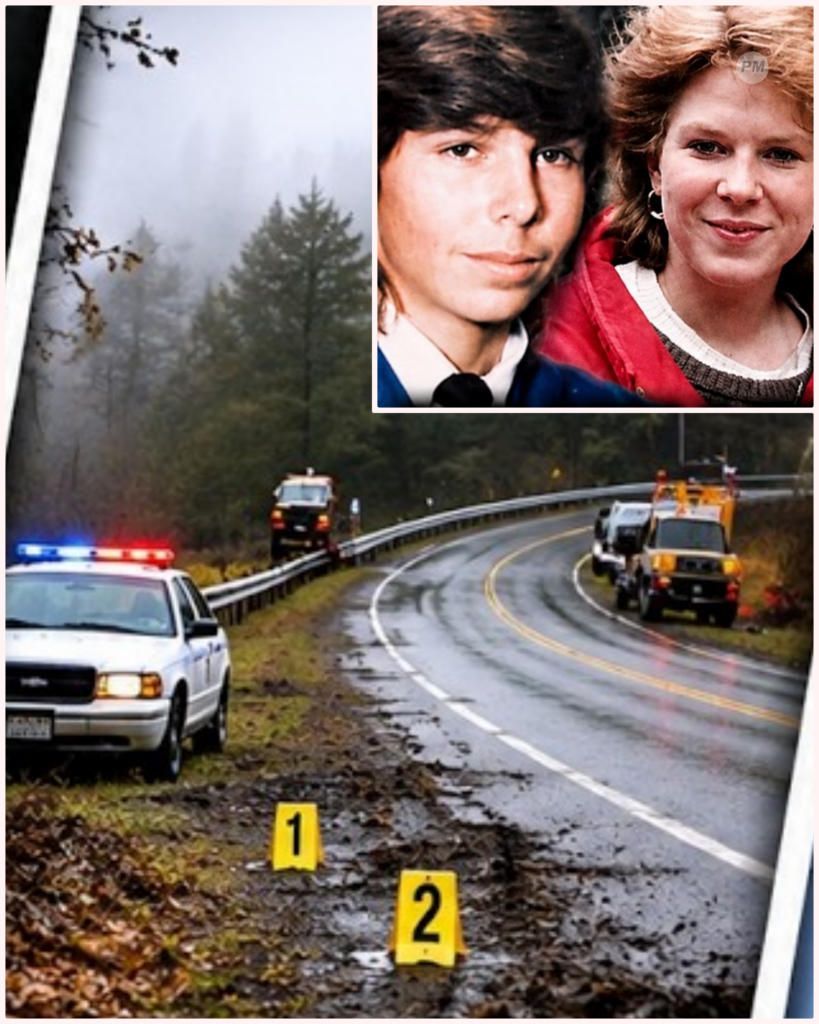
He invited Tanya along
He invited Tanya along. It was supposed to be an overnight trip. They’d sleep in Jay’s family’s bronze 1977 Ford Club Wagon and be home the next day.
The couple took the Coho ferry from Victoria to Port Angeles, Washington. They missed an exit near the Hood Canal Bridge, which forced them onto a detour through Allen.
They caught a ferry from Bremerton to Seattle that docked shortly before midnight. Their plan was to sleep in a parking lot outside an appliance supply store in the Sodo neighborhood south of downtown Seattle.
They never got there. When Jay and Tanya failed to come home or call, their families began to worry.
Then the worst news started to arrive. On November 24th, 1987, six days after the couple disappeared, a passerby found the body of a young woman off Parson Creek Road, a rural road near Alger in Skagit County, north of Seattle.
It was Tanya. She had been shot in the back of the head with a .380 caliber handgun.
Investigators believed she had been sexually assaulted, and they collected semen evidence. The next day in Bellingham, about 20 miles north, someone found Tanya’s ID, a box of .380 caliber ammunition, and a pair of gloves hidden under the porch of a bar.
Around the corner near a Greyhound bus station sat the cook’s Inside was the unused money order, a pair of stained pants and a blood-streaked comforter.
A Minolta camera, a ski jacket, and a backpack were missing. On Thanksgiving Day, November 26th, 1987, a pheasant hunter’s dog found Jay’s body beneath a blue blanket in tall grass near a bridge over the Snoqualmie River south of Monroe.
Jay had been beaten and strangled. Think about the geography. The couple disappeared in King County.
Tanya’s body was found in Skagit County. The van was abandoned in Whatcom County, and Jay’s body was left in Snohomish County.
Four counties, four sets of detectives, and one killer who seemed to know how to make that confusion work for him.
At all three scenes, investigators found white zip ties. A month after the murders, the Cook and Van Kylenborg families began receiving menacing letters.
The anonymous writer claimed to be the killer. Some cards were signed with the victims’ names.
He also wrote to the RCMP, a British Columbia newspaper, and the true crime author Ann Rule.
Detectives chased the letters for decades. Then, in 2010, they got a surprising answer. Investigators identified the author.
He was not the killer. His DNA didn’t match the evidence at the scene, and he told detectives that he had only read about the case in the news.
It was another dead end, and the families paid the price. At one point, investigators even considered whether Jay had been involved, a possibility both families have always vehemently rejected.
For 30 years, the case sat in the files. Detectives believed the killer was likely out there, perhaps still committing other crimes, but they had no name.
In the years after the murders, the Snohomish County Sheriff’s Office tried everything. They reviewed tips, they retested evidence, they ran DNA through national databases.
Nothing The sheriff’s office eventually included the couple’s case in a deck of playing cards for inmates with 52 unsolved cases on it.
