How to Talk to Your Guardian Angel: 5 Essential Catholic Teachings That Could Transform Your Prayer Life
What if one of the most comforting teachings of the Catholic faith is also among the most frequently misunderstood?
For centuries, Catholics have believed that God entrusts human beings to the protection and guidance of guardian angels.
These invisible spiritual companions occupy a remarkable place in Christian tradition, appearing throughout Scripture and in the teachings of saints and theologians.
Yet many believers remain uncertain about how to approach them.
Should Catholics speak directly to their guardian angels?
Can angels hear personal prayers?
And how can someone distinguish genuine spiritual guidance from imagination, coincidence, or ordinary intuition?
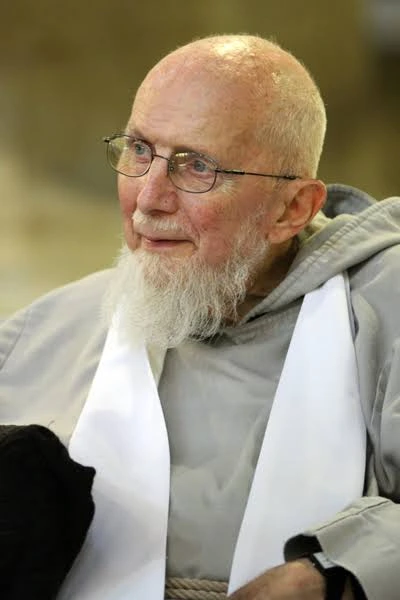
The late Franciscan priest Fr. Benedict Groeschel devoted much of his ministry to helping people develop a deeper understanding of Catholic spirituality.
Although the specific five-part method circulating under his name cannot be authenticated as his teaching, the questions it raises deserve serious examination.
The answers reveal five important principles rooted in Catholic doctrine, Scripture, and the Church’s longstanding understanding of the spiritual world.
The foundation of Catholic belief in guardian angels begins with a remarkable statement from Jesus.
In Matthew 18:10, Christ warns his listeners not to despise the little ones, explaining that their angels in heaven continually behold the face of the heavenly Father.
For generations, theologians have understood this passage as significant evidence of angelic guardianship.
The Catechism of the Catholic Church develops that teaching in paragraph 336, affirming that human life is surrounded by angelic care and intercession from its beginning until death.
Angels are not merely decorative figures appearing in Christmas paintings or church architecture.
Within Catholic theology, they are real spiritual beings created by God, possessing intelligence and will.
Their existence is understood as part of divine revelation rather than a conclusion established through scientific observation.
This distinction is essential.
Catholics believe angels participate in God’s providential care, but the Church does not teach that every unexpected event, unusual sensation, or fortunate coincidence must be attributed to angelic intervention.
Understanding that difference is the beginning of a mature spiritual relationship.
The first important practice is developing a personal habit of prayer.
Catholic tradition permits believers to ask their guardian angels for protection, assistance, and guidance.
One of the best-known examples is the traditional Guardian Angel Prayer, which generations of Catholic children have learned.
Its purpose is not to summon a supernatural force or command an invisible servant.
Instead, it expresses trust in God’s protection through the ministry of angels.
A believer might begin each morning by asking for help in making wise decisions, avoiding temptation, and treating others with charity.
At night, that prayer can become an opportunity to reflect on the day’s choices.
Where was patience needed?
When did fear interfere with good judgment?
Which moments called for greater courage or compassion?
Such questions connect devotion to practical moral responsibility.
Catholic teaching emphasizes that angels serve God rather than operate independently of divine authority.
Consequently, prayer involving guardian angels should remain directed toward a deeper relationship with God.
The second principle concerns silence and attentive reflection.
Modern life offers remarkably few opportunities for uninterrupted prayer.
Phones, responsibilities, and constant streams of information compete for attention from morning until night.
Within Catholic spirituality, silence creates room for examining one’s conscience and becoming more receptive to God’s guidance.
This does not mean that believers should expect to hear supernatural voices.
Nor does the Church promise that quiet reflection will produce visions, unusual physical sensations, or unmistakable messages from angels.
Instead, contemplative prayer encourages patience, humility, and careful discernment.
A person facing an important decision might spend several minutes in silence, asking God for wisdom and the assistance of their guardian angel.
They could then examine the situation honestly.
What responsibilities must be considered?
Which choices reflect justice, prudence, and charity?
Are fear or personal ambition distorting the decision?
These questions help prevent spiritual devotion from becoming an excuse to avoid ordinary judgment.
Fr. Benedict Groeschel, known for his work in pastoral counseling and spiritual formation, frequently addressed the importance of psychological and spiritual maturity.
His broader ministry reflected concern for the relationship between authentic religious experience and responsible discernment.
That perspective is especially relevant when discussing alleged angelic messages.
The third principle is understanding the difference between prayer and the pursuit of supernatural signs.
Popular spiritual media sometimes encourages people to interpret feathers, repeated numbers, butterflies, or flickering lights as messages from guardian angels.
Such experiences may feel personally meaningful.
But Catholic doctrine does not establish these objects or occurrences as reliable methods of angelic communication.
A feather found on a doorstep is not, by itself, evidence of supernatural intervention.
Neither is an unexpected telephone call or a coincidence involving a familiar phrase.
Human beings naturally recognize patterns and attach meaning to events, particularly during periods of uncertainty or emotional distress.
The Church therefore encourages discernment rather than automatic interpretation.
Catholic spirituality also warns against superstition, including attempts to obtain hidden knowledge through supposed supernatural signals.
The Catechism distinguishes legitimate trust in divine providence from practices that seek control over spiritual powers.
This distinction protects believers from becoming dependent on coincidences when making serious decisions.
A Catholic considering a new job, medical treatment, or major family responsibility should not rely on a requested butterfly or repeated number as decisive proof of God’s will.
Prayer can accompany such choices, but practical evidence, sound advice, and moral reasoning remain essential.
The fourth principle concerns the nature and limitations of angels themselves.
Some popular descriptions suggest that guardian angels are omnipresent, capable of being everywhere simultaneously, or able to operate without any limitations.
Traditional Catholic theology does not teach that angels possess divine omnipresence.
That attribute belongs to God alone.
Angels are spiritual creatures, not physical organisms, but they remain finite beings.
Their knowledge and abilities are understood to exceed ordinary human capacities in certain respects without becoming unlimited.
This matters because exaggerated claims about angelic powers can blur the distinction between Creator and creature.
Catholic theology also recognizes different angelic roles.
Scripture identifies Michael, Gabriel, and Raphael by name.
Michael appears prominently in biblical passages involving spiritual conflict and protection.
Gabriel announces important divine messages, including the Annunciation to Mary.
Raphael appears in the Book of Tobit as a companion and healer.
Their biblical roles have shaped centuries of Catholic devotion.
Nevertheless, Catholics are not encouraged to invent elaborate systems assigning particular angels to every imaginable personal need.
The Church has cautioned against speculative practices involving the naming of angels beyond those identified in Scripture.
The Directory on Popular Piety and the Liturgy specifically discourages assigning names to holy angels, except for Michael, Gabriel, and Raphael.
The underlying principle is straightforward.
Devotion should remain grounded in recognized Christian teaching rather than unsupported claims about hidden spiritual hierarchies.
The fifth principle is learning to recognize the relationship between angelic protection and human freedom.
A common misconception suggests that guardian angels cannot assist anyone unless they receive an explicit invitation.
Another claims that angels automatically prevent every danger when a person’s life is threatened.
Neither assertion accurately represents the full complexity of Catholic teaching.
The Church affirms God’s providential care and the ministry of angels, but it does not provide a mechanical explanation of when or how angelic assistance occurs.
Faithful people still experience accidents, illness, hardship, and tragedy.
The existence of suffering does not demonstrate that their guardian angels abandoned them.
Nor does surviving a dangerous situation prove that an angel directly altered the outcome.
Catholic theology understands divine providence as operating within a reality that includes human freedom, natural causes, and circumstances whose ultimate meaning may remain unknown.
This is particularly important when people describe dramatic experiences.
Someone who narrowly avoids a traffic accident may sincerely thank God for protection.
Such gratitude can be a meaningful expression of faith.
But declaring with certainty that a guardian angel physically intervened goes beyond what the event itself establishes.
The same caution applies to stories about mysterious warnings or unexplained voices.
Personal testimonies may offer comfort, yet they should not automatically be treated as verified supernatural occurrences.
A mature Catholic response combines gratitude with humility about what cannot be known.
This understanding also changes how believers approach intuition.
People sometimes experience strong impressions about a situation before they can explain their reasoning.
Such feelings may arise from memory, observation, emotional sensitivity, or subconscious recognition of patterns.
Catholic discernment does not require dismissing intuition.
But it also does not identify every intuitive impression as a message from heaven.
An important decision should be examined through prayer, conscience, reliable information, and, when appropriate, advice from trusted spiritual guides.
The more consequential the decision, the greater the need for careful judgment.
This approach reflects a central principle of Catholic spirituality: genuine spiritual guidance should encourage truth, charity, humility, and responsible action.
It should not foster fear, obsession, or dependence on mysterious signals.
For believers interested in deepening devotion to their guardian angels, the most meaningful practices may therefore be surprisingly ordinary.
Morning prayer can express trust in divine protection.
An examination of conscience can strengthen moral awareness.
Scripture reading can provide a foundation for discernment.
Participation in the sacraments can deepen communion with God and the Church.
And acts of kindness can turn spiritual conviction into practical love.
None of these practices requires extraordinary experiences.
That is precisely what makes them accessible.
The Catholic understanding of guardian angels is not ultimately about collecting supernatural signs or learning secret methods of communication.
It concerns the belief that human life unfolds within God’s continuing care.
The angels, according to Christian tradition, participate in that care as servants and messengers of divine providence.
Their significance does not depend on whether someone sees a feather, hears an unexplained sound, or experiences an unusual coincidence.
It rests on a much older theological conviction.
Human beings are not spiritually abandoned.
For those who embrace that teaching, devotion to a guardian angel can become a quiet source of encouragement during uncertainty.
But the Church’s deepest invitation is not to search endlessly for invisible messages.
It is to grow in prayer, wisdom, courage, and love.
Perhaps the most important question is therefore not whether an angel has sent a recognizable sign today.
It is whether the person seeking heavenly guidance is becoming more attentive to the responsibilities, relationships, and opportunities for goodness already present in everyday life.
And within Catholic spirituality, that may be where the meaning of angelic guardianship becomes most profound.