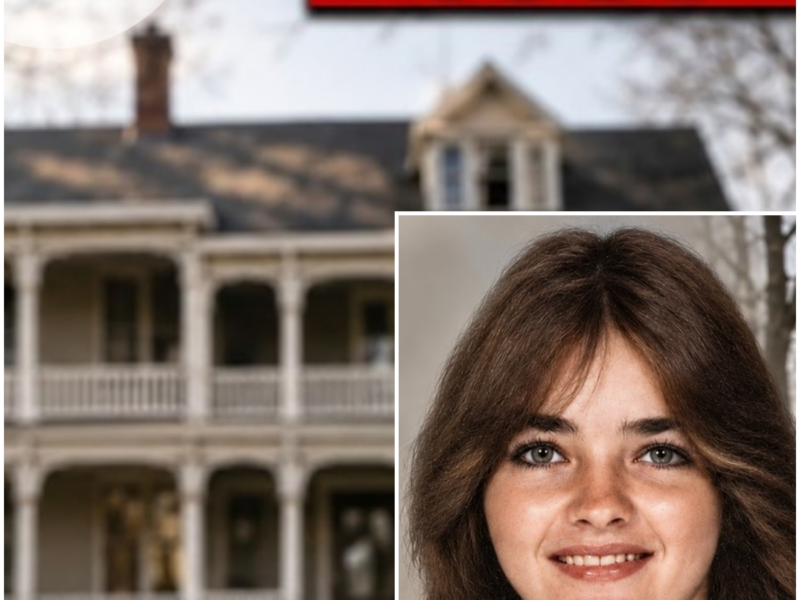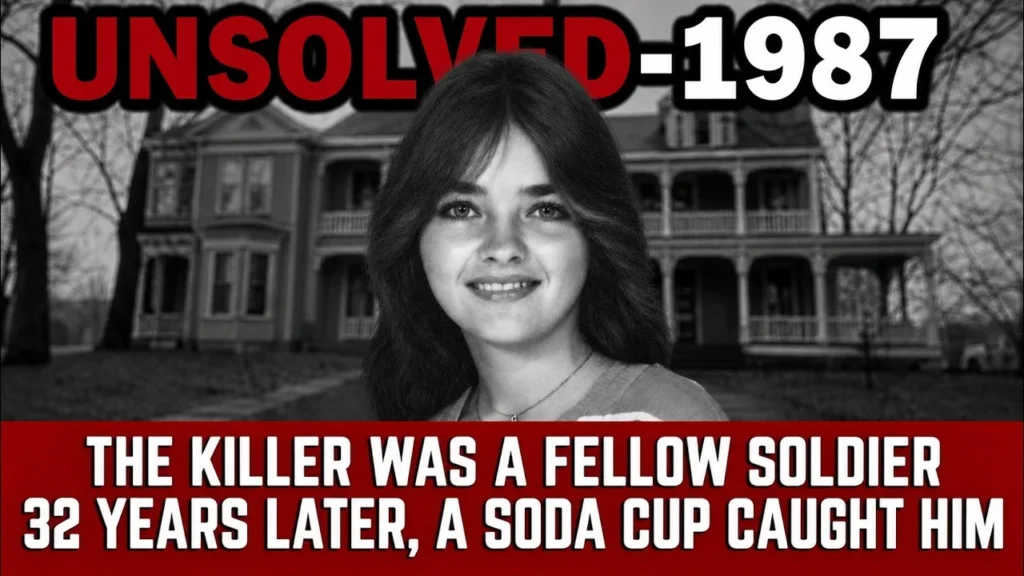
COLORADO 1987 Cold Case Solved — The Killer Was a Fellow Soldier
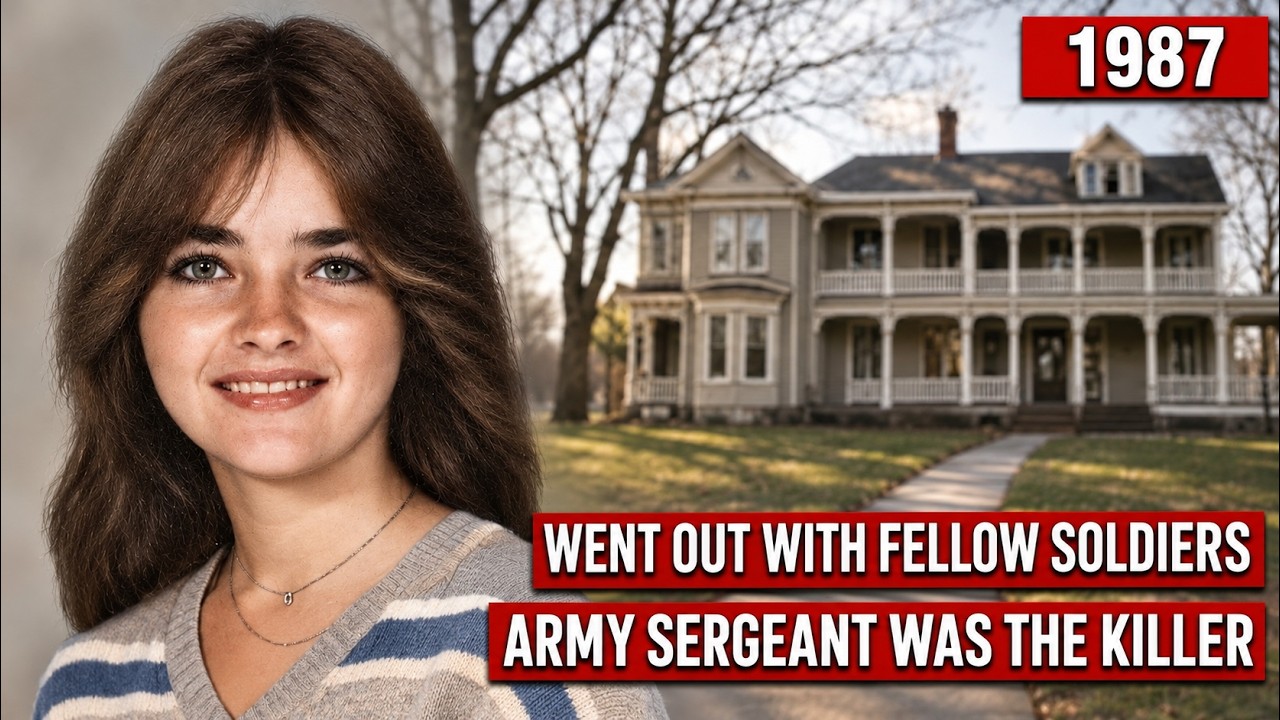
In one of her last phone calls home, Darlene Krashoc told her mother something strange.
She said there was something going on at Fort Carson, but she couldn’t talk about it yet.
Betty Lou Krashoc never found out what her daughter meant.
Days later, Darlene was dead.
For 32 years, Betty Lou and her husband Paul kept cardboard boxes full of newspaper clippings about unsolved murders.
They tracked cases from around the world looking for patterns, looking for anything that might connect to what happened to their daughter on a freezing night in Colorado Springs.
They called detectives who kept retiring.
They wrote letters to agencies that kept changing leadership.
And in 1996, they flew to Colorado and posted flyers around the city written in Darlene’s own voice.
One of those flyers read, “I was only 20 years old.
They took my dignity, my pride, and my life.
If you know something and think it’s insignificant, you’re mistaken.
It’s probably the missing link”.
The detectives changed.
The technology changed.
The parents never did.
And eventually, a soda cup in a fast-food trash can delivered the answer they had spent a lifetime waiting for.
This is the story of specialist Darlene Krashoc, the soldier who was murdered in the shadow of Fort Carson, and the 34-year fight to bring her killer to justice.
If you’re here for the first time, this channel tells the stories of the victims who were almost forgotten.
The cases that went cold for years, sometimes decades, until something finally broke them open.
If that’s the kind of story that matters to you, take a second and subscribe.
Every new subscriber helps us keep telling these stories.
This story doesn’t start with the night Darlene died.
It starts with the girl who refused to take no for an answer.
Darlene DePaula Krashoc was born on August 22nd, 1966 in Baltimore, Maryland.
Her father, Paul, was an Army veteran who had served during the Vietnam era and later worked as a deep sea diver.
Her mother, Betty Lou, raised Darlene and her sister, Rhonda, in a household that understood what military service meant, even if they weren’t eager to see another family member put on the uniform.
Darlene had other plans.
By the time she graduated from high school in 1984, she had already made up her mind.
She was joining the Army.
Both of her parents pushed back.
Paul knew what the military could do to a person.
Betty Lou just didn’t want her daughter that far from home.
Years later, Betty Lou would describe her daughter as real headstrong.
A young woman who was determined to go her own way, no matter what anybody said about it.
At 18 years old, Darlene enlisted and was assigned to the 73rd Maintenance Company at Fort Carson, Colorado, just outside Colorado Springs at the foot of the Rocky Mountains.
Her military occupational specialty was wheeled vehicle mechanic.
She worked on trucks, transports, and heavy equipment alongside the men in her unit, and by all accounts, she held her own.
The work was physical, dirty, and demanding, and Darlene didn’t flinch.
Her friends called her Crash.
At just 5’1″ and around 120 lb, she was small in stature, but impossible to overlook.
The people who knew her described her as generous, kind-hearted, lively, and popular.
She had the kind of personality that drew people in.
She was fiercely loyal to her friends.
She was the kind of person >> >> who would give you the shirt off her back and then find a way to make you laugh about it.
Fort Carson in the mid-1980s was a sprawling Army installation on the southern edge of Colorado Springs.
The base housed thousands of soldiers and the surrounding area was dense with the kind of businesses that cater to military personnel.
Bars, nightclubs, fast-food restaurants, pawn shops, and strip malls lined the main roads near the base.
Academy Boulevard, the commercial corridor that ran along the east side of the city, was the social backbone of off-duty military life in Colorado Springs.
Soldiers went there to eat, drink, and forget about tomorrow’s formation.
Darlene fit right in.
She was young, social, and fearless.
And she had the rare ability to be taken seriously as a mechanic and still be the life of the party on her nights off.
In early March 1987, Darlene told her mother she had decided to re-enlist.
She wanted to attend Army Airborne School.
She wanted to jump out of planes.
She was 5 months shy of her 21st birthday and everything felt like it was just getting started.
The future she saw for herself was bigger than Baltimore, bigger than a maintenance bay on a military base.
She wanted to push further.
That phone call was one of the last times Betty Lou heard her daughter’s voice.
If Darlene’s story means something to you and you want to make sure stories like hers keep being told, drop a like on this video.
It takes a second and it genuinely helps more people find this channel.
On the evening of Monday, March 16th, 1987, Darlene headed out with a group of fellow soldiers from the 73rd Maintenance Company.
Their destination was Shuffles, a nightclub at 1861 South Academy Boulevard in Colorado Springs.
Shuffles was one of the most popular off-post spots for Fort Carson soldiers.
The kind of place where the parking lot filled up with pickup trucks and Camaros.
Where the music was loud enough to feel in your chest and where soldiers who spent their days working on engines and running drills could spend a few hours pretending they were just regular 20-somethings at a bar.
This wasn’t a weekend though.
It was a Monday night.
A work night.
And that mattered because most of Darlene’s companions didn’t stay long.
The army doesn’t care if you’re hungover.
Formation still happens at the same time.
One by one the soldiers from her unit called it an early night and headed back to the base or to their off-post housing.
By one account, Darlene got into a minor disagreement when she couldn’t get a cigarette from someone.
And the exchange was uncomfortable enough that the remaining group decided to leave.
They left without her.
It’s worth pausing on that detail because it would haunt the people involved for decades.
Nobody forced Darlene to stay.
Nobody abandoned her in a dangerous situation.
It was a nightclub a few miles from a military base.
The same kind of night out that thousands of soldiers had every week without incident.
The group left.
Darlene stayed.
And in the logic of what happened next, that gap between their departure and hers became the most consequential few minutes of the entire story.
Darlene stayed.
At some point between midnight and 1:00 in the morning on March 17th, a witness reported seeing her leave Shuffles in the company of an unidentified man.
Nobody in the club thought it was unusual.
Nobody got a clear look at his face.
Nobody wrote down a license plate or a description of his vehicle.
In 1987, there were no security cameras at the door.
No cell phone GPS pinging towers.
No digital trail of any kind.
That was the last time anyone saw Darlene Krashoc alive.
The hours between 1:00 and dawn on March 17th remain largely a mystery to this day.
What happened to Darlene during those hours and where it happened has never been fully established.
What investigators would later determine is that she was not killed at the location where her body was found.
She was taken somewhere else.
Whatever happened to her in those missing hours happened away from any witness, any camera, any chance of rescue.
And then someone drove her body across town and left it in an alley.
At approximately 5:20 in the morning on St.
Patrick’s Day, 1987, two Colorado Springs patrol officers were conducting routine business checks along South Academy Boulevard.
The sun hadn’t come up yet.
The temperature in Colorado Springs had dropped below freezing overnight and patches of old snow still clung to the ground in the shadows between buildings.
The officers pulled behind the Korean Club restaurant at 2710 South Academy, roughly a mile south of Shuffles, and about 6 miles from Fort Carson.
That’s where they found her.
Darlene’s body was in a snow-spotted alley near a dumpster.
She had been strangled with a combination of leather straps and a wire coat hanger that had been twisted around her neck.
The violence inflicted upon her was extreme.
Her body showed evidence of a brutal physical assault.
The autopsy confirmed strangulation as the cause of death and documented extensive trauma consistent with being attacked with tremendous force.
Investigators noted bite marks on her body.
The medical examiner’s report suggested she may have even been thrown from a moving vehicle.
Three cigarette butts were found near the body.
She was 20 years old.
She had been alive and dancing in a nightclub 6 hours earlier.
The investigation began within hours.
And for the people who would spend the next three decades working this case, the scene behind the Korean Club restaurant would become an image they could never shake.
A young woman, barely 5 ft tall, discarded in the cold like she was nothing.
The investigators who saw what was done to Darlene Krashoc that night knew immediately that whoever did this was not going to stop on his own.
This was not a crime of passion that spiraled out of control.
The level of violence was deliberate, calculated, and deeply personal.
The Colorado Springs Police Department and the United States Army Criminal Investigation Command, known as CID, launched a joint investigation the moment Darlene’s body was identified.
Two agencies, two jurisdictions, one case.
And from the very first day, both understood they were dealing with something out of the ordinary.
One of the detectives assigned to the CSPD side of the investigation was Lieutenant Joe Kenda.
In 1987, Kenda was a seasoned Colorado Springs homicide investigator, years away from the television fame that would later make him a household name through Investigation Discovery’s Homicide Hunter series.
At the scene behind the Korean Club restaurant, Kenda took one look at the evidence and made a decision that would prove more important than anyone realized at the time.
He personally packaged and preserved the biological evidence.
In 1987, forensic DNA analysis was in its infancy.
The technology to extract a usable genetic profile from crime scene evidence barely existed, and the national DNA databases that would later become standard law enforcement tools were still years from being built.
Most investigators in 1987 would not have gone to the expense or trouble of meticulously preserving biological samples from a scene like this.
Kenda did it anyway.
Roughly 6 days into the investigation, Kenda suffered a medical emergency and was pulled off the case for weeks of recovery.
When he came back, the investigation had already begun to slow.
Hundreds of interviews were conducted.
Soldiers from Fort Carson, patrons of Shuffles, residents near Academy Boulevard, anyone who might have seen something or heard something in the early hours of that March morning.
The results were the same over and over.
Nobody saw anything.
Nobody heard anything.
Nobody could point detectives toward the man Darlene left the club with.
The nature of the killing was so unusual that Colorado Springs police reached out to the FBI’s Behavioral Science Unit.
The team that specialized in profiling violent offenders and serial killers.
If anyone could look at the evidence and construct a psychological profile of the person responsible, it was this group.
They had helped crack some of the most complex homicide cases in the country.
They studied patterns.
They understood the kind of person who commits violence like this.
The FBI reviewed the case and came back empty-handed.
A detective working the case told the Colorado Springs Gazette that the FBI had never encountered anyone killed in this specific manner before and was unable to provide assistance.
If the FBI’s own profilers couldn’t classify this killer, the Colorado Springs investigators were essentially working blind.
They had no motive, no profile, no suspect, and no useful witness.
Months passed, then a year.
The investigative team conducted more interviews, canvassed more neighborhoods, and chased more leads that led nowhere.
The soldiers who had been at Shuffles that night were questioned repeatedly.
Bartenders and bouncers were interviewed.
Residents and business owners along Academy Boulevard were asked whether they had seen or heard anything unusual in the early morning hours of March 17th.
The answers were always the same.
Nothing.
For Paul and Betty Lou Crashock, watching the investigation stall was its own kind of torture.
They had buried their daughter knowing nothing about who killed her or why.
And as the months stretched into years, the fear that they might never know began to settle in like a permanent weight.
They made a decision early on that reflected both their grief and their determination.
When they buried Darlene, they chose a civilian cemetery in Maryland instead of a military one.
The reason was practical and heartbreaking.
Military cemeteries have strict regulations about exhumation.
Civilian cemeteries do not.
Paul and Betty Lou wanted Darlene’s body to be accessible in case it ever needed to be exhumed for evidence.
They were burying their daughter and preparing for a decades-long investigation at the same time.
Over the following months and years, one name kept surfacing in the family’s conversations with investigators.
Jeffrey Newsome was a soldier who had been stationed at Fort Carson and was later convicted of murder in Alabama.
Two women had separately accused Newsome of strangling them with a coat hanger, a detail that immediately caught the attention of the Crashock family.
A coat hanger.
The same type of weapon used to kill Darlene.
The coincidence seemed too specific to ignore.
The Crashocks pressed investigators to look harder at Newsome.
Police did.
His DNA was eventually entered into CODIS, the FBI’s National Combined DNA Index System.
If Newsome’s genetic profile matched the biological evidence collected from Darlene’s crime scene, the case would be solved.
It did not match.
Newsom was definitively eliminated as a suspect, and with him went the last lead the investigation had.
With no viable suspects remaining and no new evidence surfacing, the investigation ground to a halt.
The case file was shelved.
The physical evidence was boxed and stored.
And Darlene Kreshock’s name slowly faded from the news, replaced by newer crimes and fresher tragedies, the way cold cases always are.
But back in that evidence storage room, the biological samples Joe Kenda had preserved on the first day of the investigation were still sealed, still intact, and still holding the answer inside their molecular structure.
That decision, a detective choosing to spend the time and money to properly preserve biological evidence in a case that might never be solved, seemed small at the time.
It wasn’t.
32 years later, those samples would be the only thing standing between Darlene’s killer and a lifetime of freedom.
The case was never officially closed.
Cold cases rarely are.
They sit in filing cabinets and evidence rooms, gathering dust while the world outside keeps moving.
New detectives cycle in and old ones retire.
Technology advances.
Memories fade.
And for the families waiting on the other side, every passing year is a reminder that the system has moved on without them.
Paul and Betty Lou Kreshock refused to accept that.
In the years after Darlene’s death, the couple began collecting newspaper clippings about unsolved murders from around the country and around the world.
They filled cardboard boxes with articles, looking for anything that might share a signature with what happened to their daughter.
A coat hanger, a strangling, a soldier.
Any thread that might connect back to that alley behind the Korean Club restaurant.
They called the Colorado Springs Police Department regularly.
At first, the detectives on the other end of the line were the same ones who had worked the original case.
Then those detectives retired one by one and the Crashocks found themselves explaining their daughter’s murder to strangers.
Telling the story over and over again.
Reliving the worst night of their lives for people who had never met Darlene and had no personal stake in the outcome.
Betty Lou later said she felt largely on her own since none of the original investigators were still assigned to the case.
In 1996, almost a decade after the murder, Paul and Betty Lou flew from the East Coast to Colorado Springs.
They walked the streets around Academy Boulevard posting flyers on telephone poles and bulletin boards >> >> and in the windows of businesses that would let them.
The flyers were written from Darlene’s perspective as if their daughter was speaking from beyond the grave.
I was only 20 years old.
They took my dignity, my pride, and my life.
If you know something and think it’s insignificant, you’re mistaken.
It’s probably the missing link.
Imagine being in your 60s walking a city where your daughter was murdered nearly 10 years earlier taping her photograph to lamp posts and telephone poles because the police have run out of leads.
Imagine writing a message in your dead daughter’s voice and pinning it to a bulletin board at a gas station hoping that a stranger will stop and read it.
Hoping that whoever knows something will feel enough guilt to pick up a phone.
That is what an unsolved murder looks like from the inside.
Not the clean drama of a television procedural, not a detective’s eureka moment in a dimly lit office, just two aging parents in a city that has already moved on.
Refusing to accept that their daughter’s life can end as a stack of paper in a cold case file.
The toll on the family extended well beyond grief.
Unresolved homicide doesn’t just haunt the people closest to the victim.
It corrodes every relationship around them.
The anger has nowhere to go.
The sadness doesn’t evolve into acceptance because there’s nothing to accept.
There’s no ending.
By 2017, Paul and Betty Lou acknowledged they were estranged from their surviving daughter, Rhonda, and from Darlene’s best friend and former roommate.
The unresolved weight of the case hadn’t just taken Darlene.
It had fractured everything around her absence.
The murder hadn’t ended in 1987.
It was still happening 30 years later.
In the spaces between the people who loved her.
Through all of it, the DNA evidence preserved by Joe Kenda in 1987 sat in an army lab, sealed in bags and boxes, waiting for technology to catch up to what it held.
In October 2003, 16 years after the murder, the case was reopened for advanced laboratory testing.
DNA analysis had come a long way since 1987.
Techniques that had been experimental or non-existent at the time of the murder were now standard.
Swabs taken from Darlene’s body and the cigarette butts recovered at the scene produced a partial DNA profile.
It was enough to rule out certain suspects who had been loosely associated with the case over the years.
It was not complete enough to identify the killer.
And the profile did not match anyone in CODIS, the FBI’s National Combined DNA Index System.
CODIS contains the genetic profiles of convicted offenders and arrestees from across the country.
If the killer had ever been arrested for a qualifying offense anywhere in the United States, his DNA would have been in the system.
It wasn’t.
Whoever killed Darlene Krashoc had never been arrested, never been convicted, never had his DNA entered into any law enforcement database.
He had lived a clean life, at least on paper.
He was a ghost.
The case returned to cold storage.
More years passed.
More detectives retired.
The Krashocs kept calling.
Then, in September 2014, an Army CID forensic science officer named Jessica Veltri was assigned to the cold case.
Veltri was stationed at Joint Base Lewis-McChord in Washington State, thousands of miles from Colorado Springs.
But the case landed on her desk, and she treated it like it had happened yesterday.
She read the original reports.
She reviewed the evidence logs.
She studied the lab results from 2003.
And she concluded that the science had advanced far enough to try again.
In 2016, Veltri submitted 27 pieces of evidence for advanced DNA testing.
27 items, each one carefully cataloged and preserved by investigators over the course of three decades.
Each one a potential key to unlocking the identity of unknown person number one.
The results were significant.
A stronger, more complete DNA profile emerged.
Unlike the partial profile from 2003, this one was robust enough to be used for advanced forensic techniques that were just beginning to transform cold case investigations across the country.
They finally had a clear genetic fingerprint.
They still had no name to attach it to.
If you’ve made it this far, you already know this is the kind of deep dive we do here at Cold Case Redemption.
We cover the cases that everyone else forgot.
Subscribe and turn on notifications so you never miss one.
In December 2016, Army CID made a decision that had never been made before in the history of the organization.
They sent unknown person number one’s DNA to Parabon NanoLabs, a forensic technology company based in Reston, Virginia.
The request was for something called DNA phenotyping, a process that uses genetic markers to predict what a person looks like based on their DNA.
It was the first time CID had ever used the technology.
In January 2017, Parabon Snapshot system delivered its analysis.
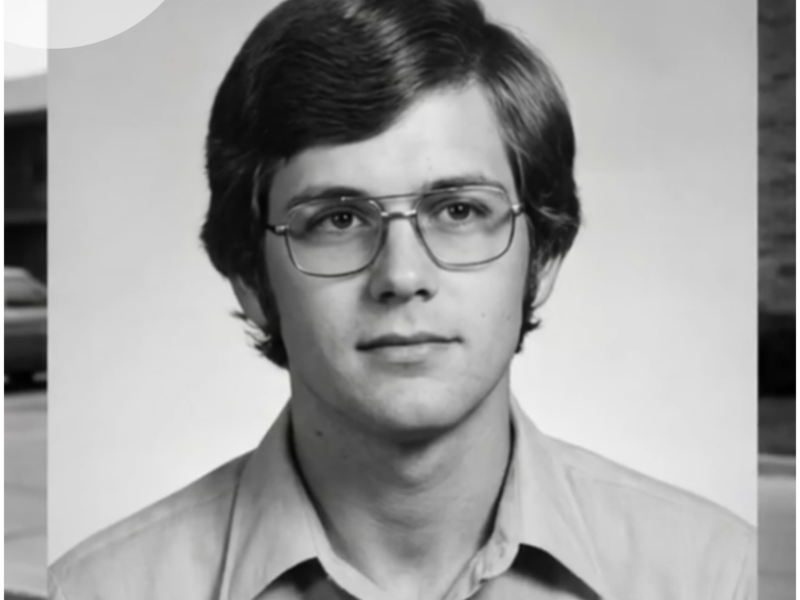
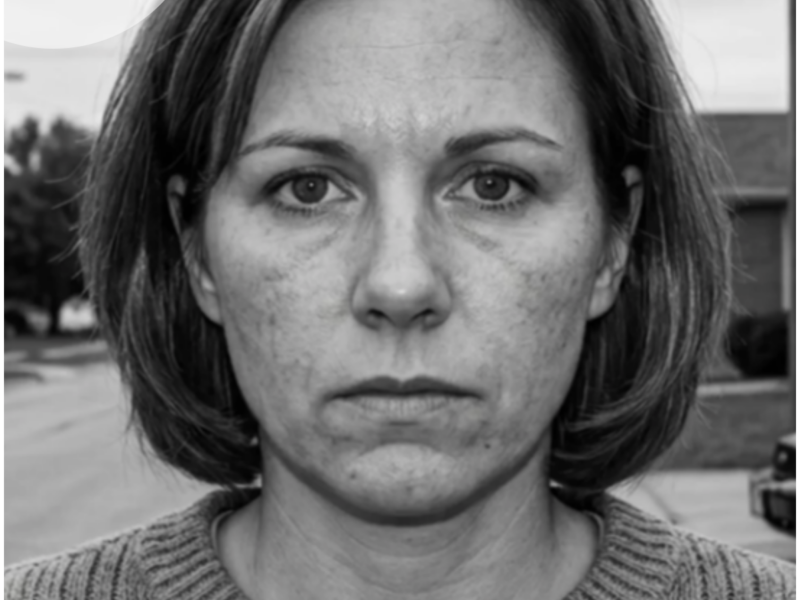
The results predicted that the unknown suspect was a white male of European descent with hazel to green eyes, brown to black hair, and a medium complexion.
The system generated two composite images.
One showed what the suspect likely looked like around age 25, close to the time of the murder in 1987.
The second was an age-progressed version, showing what he might look like in his 50s.
The Army publicized the composites alongside a $10,000 reward for information leading to an arrest.
>> >> The images appeared in newspapers, on television, and across social media.
For the first time in three decades, the Krashock case was back in the public eye.
The composites generated tips and leads.
Investigators followed up on everyone.
The scientific community, meanwhile, debated whether the technology was trustworthy.
A genetics researcher at the University of Colorado School of Medicine told reporters that while DNA could reliably predict eye color, hair color, and skin tone, predicting face shape from genetic data was far beyond current scientific capabilities.
A retired Denver homicide detective warned that the composites risked giving families false hope.
Parabon’s own scientists acknowledged the limitations.
The composites were investigative tools designed to narrow down a pool of suspects, not courtroom evidence.
They were meant to help, not to identify.
And in the end, they didn’t identify anyone.
The leads dried up.
The tips led nowhere.
The face in the composite remained a face without a name.
For Paul and Betty Lou Crashock, 2017 brought a brief flicker of hope followed by another long silence.
They had been through this cycle before.
A new technology, a burst of media attention, a wave of phone calls that gradually tapered off into nothing.
By now, they were in their 70s.
Time was not on their side.
What neither they nor the investigators knew was that the answer was already emerging.
Not from a witness, not from a confession, not from a fingerprint match, from something that didn’t even exist when Darlene was killed.
Consumer DNA testing, the kind of kit you order online, spit into a tube, and mail back to a lab so you can find out whether you’re 12% Scandinavian.
Somewhere in that sprawling web of family trees and shared genetic markers, Darlene’s killer was already visible.
The right person just hadn’t looked yet.
In January 2019, Colorado Springs detectives and Army CID went back to Parabon Nano Labs.
This time, they were not asking for a face.
They were asking for a name.
The technique they requested was investigative genetic genealogy, the same method that had stunned the world less than a year earlier when it identified Joseph James DeAngelo as the Golden State Killer.
DeAngelo had terrorized California for over a decade, committing murders and assaults across multiple counties, >> >> and had evaded law enforcement for more than 40 years.
In April 2018, investigators uploaded his crime scene DNA to GEDmatch, a public database where people voluntarily share the results of consumer DNA tests like 23 and me and AncestryDNA.
By matching the crime scene profile to distant relatives in the database and reverse-engineering family trees, they identified DeAngelo within days.
He was arrested at his home in Sacramento.
The Golden State Killer case proved that a murderer didn’t need to be in any law enforcement database to be found.
He just needed to have a third cousin who was curious about their ancestry.
Paul Holes, the investigator who had been central to the Golden State Killer identification, consulted with Colorado Springs police on the Crashock case.
The goal was the same.
Upload the unknown person number one profile to GEDmatch and trace the family tree backward until it produced a suspect.
The genetic search returned hits on three relatives, not the killer himself.
His relatives, people who shared enough of his DNA to be connected to him through a family tree, but who had no idea their spit-in-a-tube ancestry test was about to help solve a 32-year-old murder.
Two of the three matches were described as promising.
One was a second cousin once removed on the suspect’s maternal grandfather’s side.
Another was connected through the maternal grandmother’s line.
The genealogists at Parabon took these matches and did what they do best.
They built family trees.
They traced marriages, births, deaths, and migrations across decades.
They cross-referenced census records, public documents, and genealogical databases.
They worked backward through branches of families that had no idea they were connected to a cold case investigation in Colorado.
The mathematics of genetic genealogy are both elegant and relentless.
Every person shares approximately 50% of their DNA with their parents, 25% with their grandparents, and diminishing but still measurable percentages with more distant relatives.
A second cousin shares roughly 3 to 4% of your DNA.
A second cousin once removed shares even less.
The fact that investigators could start with those tiny shared fragments and work backward through generations of family trees to arrive at a single living person is one of the most remarkable developments in the history of criminal investigation.
And in this case, the math was especially clean.
A common ancestor appeared on both the maternal and paternal sides of the family tree, which narrowed the pool dramatically.
The person the tree pointed to was his parents’ only son.
There was no one else the DNA could belong to.
The identification was rated as high confidence.
In May 2019, Army CID received the investigative genetic genealogy report from Parabon.
The forensic science officer who opened it was Jennifer Caughlin, a supervisory biologist at the United States Army Criminal Investigation Laboratory, who had been working evidence from the Crash Out case since 2005.
She had spent 14 years analyzing and reanalyzing the same samples, waiting for the science to catch up to the crime.
14 years of working with evidence from a woman she had never met, trying to coax an identity out of molecules.
The report contained a single name, Michael David White.
Not a list of possibilities, not a ranked set of candidates, one name.
Costlin later described the moment.
She said she received the report, opened it, and saw just one name listed.
She called it a memorable moment.
She said she wasn’t sure they would ever get to that point.
After 14 years of work, the answer was on a single page.
Jessica Veltri, the CID agent who had driven the modern forensic effort since 2014, said she felt both excited and in disbelief.
After decades of dead ends, they finally had a name.
A real, living person with an address and a history.
Army CID immediately ran the name against military records.
The match sent a chill through the investigation.
Michael David White had been stationed at Fort Carson from September 1986 to August 1987.
He was assigned there the entire time Darlene Krashoc was alive and serving at the same base.
At the time of the murder, White lived off base with his then wife, just miles from where Darlene’s body was found behind the Korean Club Restaurant on Academy Boulevard.
His name had never surfaced during the 32-year investigation.
He had never been interviewed as a suspect.
He had never been interviewed as a witness.
Not a single investigator in three decades of work had ever knocked on his door or dialed his number.
He was completely invisible.
And he had been living in Colorado the entire time, not across the country, not overseas, in a suburb of Denver, less than 70 miles from where he left Darlene’s body in 1987, the genealogy report gave them a name.
It did not give them proof.
To arrest Michael White, investigators needed to confirm that his DNA matched the crime scene profile, and they needed to do it without tipping him off.
Before the surveillance operation began, investigators assembled a profile of the man they believed had murdered Darlene Krashoc 32 years earlier.
Michael David White had enlisted in the United States Army in 1979, straight out of high school.
He served for approximately 19 years as a signal operations manager in the Army Signal Regiment, working his way up through the ranks until he retired as a sergeant first class in 1998.
After leaving the military, White settled in Colorado and built a second career in telecommunications.
He worked for TW Telecom and later for Level 3 Communications, eventually becoming a senior network engineer.
He remarried.
He lived in a suburban home in Thornton, a quiet city north of Denver.
He had no criminal record.
For two decades after leaving the Army, Michael White lived an outwardly unremarkable life.
He went to work, came home, and blended into the suburban fabric of the northern Denver metro area.
He was, by all external appearances, a completely ordinary man.
Colorado Springs detectives, working alongside CID agents, set up surveillance on White at his Thornton residence.
They parked unmarked vehicles on his street.
They watched his daily routines.
What time he left for work.
What time he came home.
Where he went on weekends.
They needed to learn his patterns well enough to predict where he would go and when he would leave something behind.
The key to this phase of the investigation was patience.
Investigators could not approach White.
They could not knock on his door and ask for a DNA sample.
If they did and he refused, they would have to obtain a court order and the legal battle that followed would give him time to prepare, time to lawyer up, time to potentially flee.
They needed to collect his DNA from something he discarded voluntarily in a public place.
Something legally considered abandoned property.
That’s how cold case investigations work in the age of genetic genealogy.
The science can tell you who the killer probably is.
Getting the confirmation requires old-fashioned surveillance and a very specific kind of patience.
The opportunity came at a fast-food restaurant in the Thornton area.
Detectives followed White to the restaurant maintaining enough distance to avoid detection.
They watched him order food.
They watched him eat.
They watched him finish his meal and stand up from the table and then they watched him throw his soda cup into a trash can and walk out the door.
The moment White left the building, the detectives moved.
They retrieved the soda cup from the trash can.
While White’s vehicle sat in the parking lot, another investigator swabbed the driver’s side door handle collecting skin cells and oils that White had left behind when he touched it.
Two samples, a cup and a door handle.
The kind of things every person touches and discards without a second thought every single day of their lives.
The kind of things that carry your DNA on their surfaces whether you know it or not.
Both samples were sent to the United States Army Criminal Investigation Laboratory.
>> >> In June 2019, the results came back.
The DNA on the soda cup was consistent with and matched the crime scene profile designated unknown person number one.
>> >> The DNA matched the genetic material found on the cigarette butts near Darlene’s body.
It matched the DNA found on her clothing.
And it matched the DNA found on the wire coat hanger >> >> that had been used to strangle her.
There was no ambiguity.
There was no question.
32 years after Darlene Krashoc was killed, her murderer had a name, a face, and a confirmed genetic match.
On June 13th, 2019, the Violent Offender Fugitive Task Force, a joint operation of the United States Marshals Service and the El Paso County Sheriff’s Office, along with the Colorado Springs Police Department Cold Case Homicide Unit and Army CID, arrived at Michael White’s home in the 1500 block of East 131st Place in Thornton.
White was arrested on a no-bond first-degree murder warrant.
One of the first calls investigators made after the arrest went to Paul and Betty Lou Krashoc.
Paul later described what happened when they picked up the phone.
He said they looked at each other, started crying, and couldn’t say much of anything for a few seconds.
Time just stood still.
32 years of waiting.
>> >> 32 years of unanswered phone calls and dead-end leads and flyers on telephone poles.
And it ended with the soda cup in a trash can >> >> and a phone call that stopped time.
The arrest of Michael White was not the end of the story.
It was the beginning of the hardest part.
Between the arrest in June 2019 and the trial in June 2021, >> >> the legal proceedings unfolded slowly.
Stand-alone sexual assault charges against White were dismissed because Colorado’s statute of limitations had expired.
The underlying assault, however, survived as the predicate for a felony murder charge.
Under Colorado law, if a death occurs during the commission of a sexual assault, the charge is first-degree felony murder.
And there is no statute of limitations on murder.
The trial began in June 2021 before Fourth Judicial District Judge Michael McHenry in Colorado Springs.
The prosecution was led by Deputy District Attorneys Joseph Eden and Ben Hostetter.
The defense was handled by Attorney David Foley.
>> >> The prosecution’s case rested on 32 years of preserved DNA evidence and the science that had finally decoded it.
Deputy DA Joseph Eden framed the argument in terms the jury could not ignore.
He told them that for 32 years, Michael White had successfully evaded detectives, >> >> but that he had not been able to evade the technology that would prove conclusively he was the person solely responsible for Darlene Krashoc’s murder.
The DNA evidence >> >> was overwhelming.
White’s genetic profile matched the DNA recovered from Darlene’s clothing, from her body, from the wire coat hanger used to strangle her, and from the cigarette butts found at the dump site behind the Korean Club Restaurant.
Prosecutors called Darlene a warrior, pointing to evidence that she had fought back against her attacker.
The defense countered with a simple argument.
DNA does not equal guilt.
Attorney David Foley argued that the presence of White’s DNA on the evidence did not necessarily mean he was the killer.
He raised the possibility that White’s DNA could have been transferred through contact with another person, a phenomenon known as secondary or tertiary DNA transfer.
Foley also attacked the chain of custody for the physical evidence, particularly the wire coat hanger.
He compared the hanger to a piece of lost luggage that had been mishandled over the decades, suggesting that the integrity of the DNA on it had been compromised by improper storage and handling.
The defense also pointed to what they characterized as failures in the original 1987 investigation.
Foley suggested that early investigators, including Kenda’s team, had not fully certain leads, including a pickup truck that had been seen in the area and other possible suspects who were never thoroughly investigated.
One of the most significant moments of the trial came when retired Lieutenant Joe Kenda took the witness stand.
Kenda, now in his 70s and well known to millions of television viewers as the homicide hunter, testified for roughly 75 minutes.
He described arriving at the scene behind the Korean Club restaurant in the early morning hours of March 17th, 1987.
He walked the jury through what he found.
And critically, he testified about his decision to meticulously preserve the biological evidence at a time when most investigators would not have done so.
That decision, made 34 years earlier by a detective who had no idea the science would eventually exist to use the evidence he was saving, was now the foundation of the entire prosecution.
Then Michael White took the stand in his own defense.
On the witness stand, White acknowledged that during his time at Fort Carson, >> >> he drank heavily and frequented the same establishments Darlene had visited on the night she died.
He admitted he had been to Shuffles and to the Korean Club restaurant.
He admitted that he regularly went home with women he met at bars during that period of his life.
He told the court he went home with many women, danced with many women, and was picked up by many women.
He also said he did not remember Darlene Krashoc.
He said he did not know how his DNA ended up on the wire hanger used to kill her.
And he told the jury plainly and directly that he did not murder Darlene Krashoc.
Betty Lou Krashoc also took the witness stand during the trial.
She told the jury about the daughter she remembered.
The girl who was headstrong and determined.
The young soldier who wanted to go airborne.
>> >> The voice on the other end of the phone who said she couldn’t wait to jump out of planes.
Consider what the jury was being asked to weigh.
On one side, a mountain of DNA evidence connecting a single man to a murder weapon, to a crime scene, and to a victim’s body.
On the other, a defense theory that all of that DNA got there by accident, >> >> through some chain of secondary contact that the defense could describe in theory, but could not demonstrate with any specific evidence.
White admitted being at the same bars.
He admitted sleeping with women he met at those bars.
He admitted he could have been there that night.
He just said he didn’t remember this particular woman, and he didn’t know how his DNA ended up on the hanger that killed her.
The jury received the case on June 24th, 2021.
They deliberated for 4 and 1/2 hours.
4 and 1/2 hours might sound like a long time, but for a first-degree murder trial built on 32-year-old evidence with no eyewitnesses and no confession, it was remarkably fast.
The jury had heard nearly 2 weeks of testimony, and they needed less than a single afternoon to reach a unanimous decision.
When they returned to the courtroom, the atmosphere in the gallery was suffocating.
Paul and Betty Lou Krashoc sat on one side, the same couple who had been posting flyers on telephone poles 25 years earlier.
Michael White’s family sat on the other side, bracing for the words they didn’t want to hear.
The foreman read the verdict.
Guilty.
First-degree murder after deliberation.
And on an alternate count, guilty of first-degree felony murder, with the jury specifically finding that Darlene Crashock died as a result of a sexual assault committed by Michael White.
The courtroom split in half.
White collapsed when the verdict was read.
His legs gave out and he dropped.
Behind him, members of his family cried out.
Some shouted, “No!” One voice said, “Oh God”.
On the other side of the aisle, Paul and Betty Lou Crashock held each other.
They didn’t shout, they didn’t celebrate, they just held on.
34 years.
34 years between the morning Darlene was found behind that restaurant and the afternoon her killer heard the word guilty.
Paul and Betty Lou had spent more of their lives waiting for this moment than they had spent raising the daughter who was taken from them.
The next morning, June 25th, 2021, Judge McHenry imposed the only sentence the law allowed.
Life in prison without the possibility of parole.
Michael White, 60 years old, would spend the rest of his life in the Colorado Department of Corrections.
He told the court his final words on the matter.
He said he did not kill Darlene Crashock and that there was nothing else to say.
When Paul Crashock stood up to deliver his victim impact statement, the courtroom fell silent.
He told the court that the evil acts committed against his daughter had caused the family eternal pain, anguish, and agony.
He said the family had been robbed of Darlene’s laughter, her good deeds, and her kind, compassionate heart.
And he expressed a hope that had taken 34 years to speak out loud.
He said that maybe now, just maybe, they would have justice for all.
After the verdict, a reporter asked Paul how he felt.
His answer was simple.
He said he was just glad they lived long enough to see it.
Think about those words for a moment.
An elderly father standing outside a courthouse, grateful not for justice itself, but for the fact that he didn’t die before it arrived.
That is what 34 years of a cold case does to a family.
Betty Lou, characteristically, found room for compassion, even in the middle of the worst story of her life.
She told an interviewer that she felt sorry for the killer’s mother.
>> >> She said that when White took Darlene, he took Betty Lou’s life away from her.
And she could only imagine what his own mother must feel knowing what her son had done.
Darlene’s sister, Rhonda, >> >> who had been estranged from her parents in the years of unresolved grief, issued her own statement.
She said she was so happy they kept the DNA after all those years.
>> >> She praised the Colorado Springs Police Department and Army CID for never forgetting about her sister.
>> >> The institutional response reflected the magnitude of the case.
Colorado Springs Police Chief Vince Niski said the work done by the detectives had been nothing short of exceptional.
And that throughout the 32 years of investigation, they never lost sight of what was most important, finding answers for the Crashock family.
Major General David Glazer, the commanding general of Army CID, said he was extremely proud of the agents who worked the case, especially Special Agent Jessica Veltri.
>> >> The Crashock case became a landmark in forensic history.
It was the first arrest made by the Colorado Springs Police Department using forensic genetic genealogy.
It was Army CID’s first use of both DNA phenotyping and investigative genetic genealogy.
And it demonstrated, in the most human terms possible, >> >> two principles that cold case investigators now cite as foundational.
First, that evidence preserved decades before the technology exists to analyze it, can still deliver justice.
And second, that a killer who never appears in any law enforcement database can still be identified through the voluntary DNA submissions of distant relatives he has never met.
The debate about genetic privacy continues.
Consumer DNA databases like GEDmatch and the services that feed them remain a source of controversy.
With civil liberties advocates questioning whether it is ethical to identify suspects through the genetic information of people who never consented to be part of a criminal investigation.
That conversation is important.
And it is far from settled.
But for the Krar family, the conversation was settled on June 24th, 2021 at 4:30 in the afternoon, when a jury in Colorado Springs said the word, “Guilty”.
There is something worth sitting with in this story, beyond the DNA and the genealogy and the courtroom drama.
It is the fact that for 34 years, the only thing keeping Darlene Krar’s case alive was human stubbornness.
Not technology, not funding, not a dramatic tip from a confidential informant.
Stubbornness.
Betty Lou Krar’s stubbornness, calling investigators year after year.
Paul Crashock’s stubbornness, keeping those cardboard boxes of clippings in their home like a shrine to a case the system had given up on.
Joe Kenda’s stubbornness, spending the time and money to preserve biological evidence in 1987 when nobody would have blamed him for skipping it.
Jessica Veltri’s stubbornness, submitting 27 pieces of evidence for retesting decades after the crime.
Jennifer Goslin’s stubbornness, >> >> spending 14 years in a lab working on evidence from a victim she had never met.
Every single one of those people could have stopped.
Every single one of them had a reasonable justification to walk away.
The case was old.
The leads were dead.
The suspect was invisible.
And every single one of them chose to keep going anyway.
That is what cold case redemption actually looks like.
Not a single breakthrough moment.
A chain of people stretching across decades, each one refusing to let go of the rope.
In 1996, Betty Lou Crashock stood on a street corner in Colorado Springs taping a flyer to a telephone pole.
The flyer spoke in her daughter’s voice.
“I was only 20 years old”.
It read.
Darlene Crashock wanted to go airborne.
She wanted to jump out of planes.
She wanted to serve her country and see how high she could climb.
She never got the chance.
Someone took that from her on a freezing March night behind a restaurant on Academy Boulevard.
34 years later, her name was spoken in a courtroom.
Not as a case number.
Not as a cold file pulled from the back of a cabinet.
As a daughter.
As a soldier.
As a person who mattered.
And the man who tried to erase her from the world will spend the rest of his life behind bars unable to erase what the evidence always remembered.
This is Cold Case Redemption.
If Darlene’s story stayed with you, subscribe to the channel.
We cover the cases that went cold and the breakthroughs that brought them back.
Share this video with someone who needs to hear it.
And if you’re watching this from somewhere quiet, take a second and remember her name.
Darlene Krashak, specialist, soldier, daughter, Crash.