
PART 2
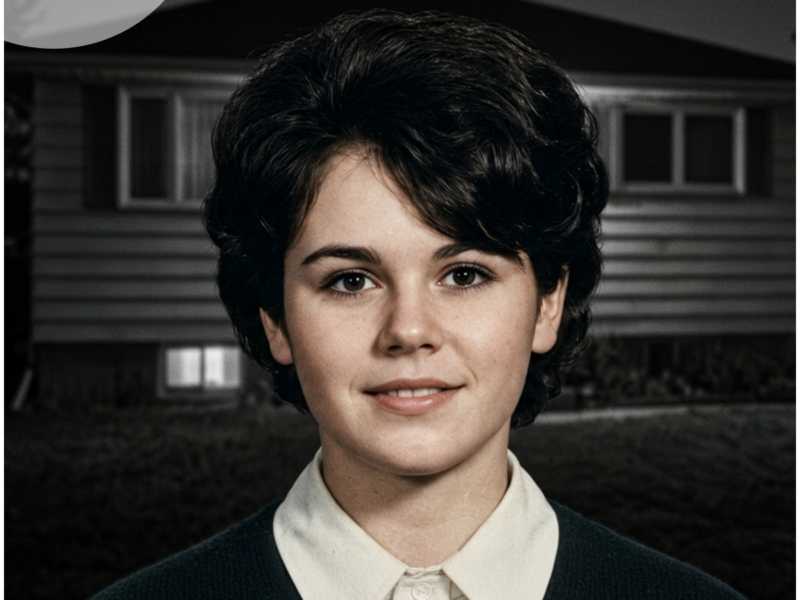
Tessa carried the letters upstairs before the light was gone. She set the photograph beside the clean cup on the kitchen counter and sat down with the first envelope in her lap. Part of her wanted to wait until morning. She knew some truths make the night longer. She’d learned that beside a hospital bed, and again at her mother’s dinner table. But her name was on it. She opened it.
My dear Tessa, your mother tells me you need quiet. People said that to me after your grandfather died. Sometimes I did need quiet. Sometimes I just needed someone to wash a cup beside me without asking if I felt better. You can come here without being cheerful. You can come without knowing what happens next. I have put fresh sheets on the little bed.
Tessa pressed the page flat beneath her palm. At the bottom, her grandmother had added little things — a crooked fence, Patch stealing an onion from a basket. She hadn’t tried to make grief sound noble. She had simply offered a place to carry it.
There were no stamps on any of the envelopes. Instead, on the backs, in faint pencil: Sent with Della. Nolan will bring this when he visits. Her grandmother had trusted the family to deliver them. For years, Tessa had wondered what she’d done to make Grandma stop writing. When she asked, her mother said the old woman “tired easily.” When she offered to visit, Nolan said it would “upset Mother.” So Tessa learned to miss someone silently.
Now the missing years lay across the table. She cried quietly, one hand on the photograph, Patch warm against her feet. She didn’t read every letter that night. For once, she let something unfinished wait.
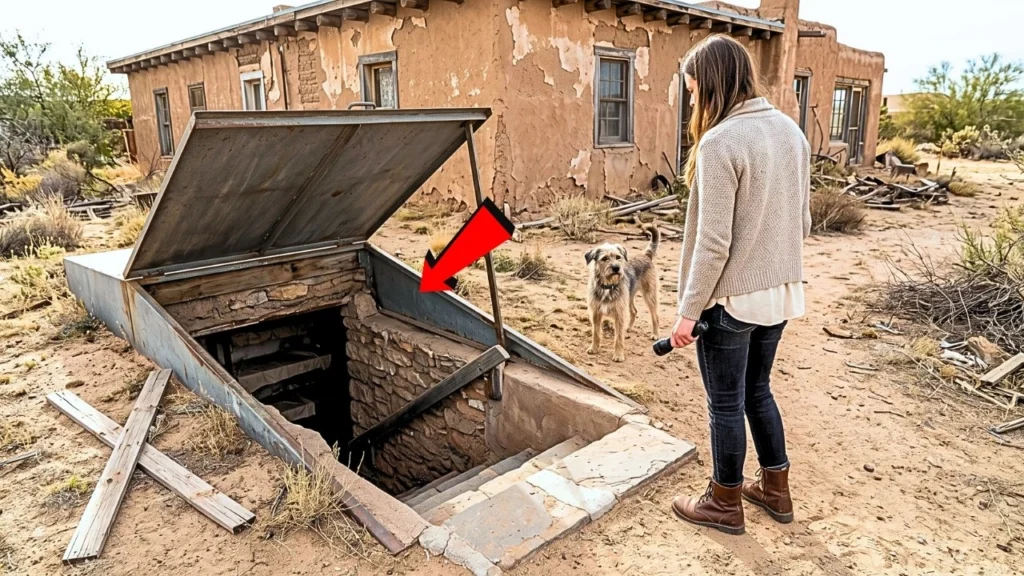
In the morning she texted her mother: I found Grandma’s letters. Did you know they were here? She left the phone on the porch rail and went back down to the cellar. In daylight, she saw a worktable beneath a high window, covered by a white sheet. She pulled it back. Her grandmother’s wooden loom.
At nineteen, Tessa had spent one whole summer at that loom, choosing colors, watching separate threads become something strong enough to hold. Then her mother needed her at home, and there was always another reason not to come back. A paper tag hung from the frame: Raise the seat a little. You always sat too low. Tessa let out a breath that was almost a laugh.
Underneath, wrapped in brown paper, was the runner she’d started that summer — one edge wandering, a row of blue pulled too tight. Pinned to it: Still yours to finish, if you want to. She sat on the seat her grandmother had raised for her. For years every chair she sat in had felt borrowed — beside her mother’s pill bottles, outside waiting rooms, on the edge of Nolan’s sofa while he told her what to do. This one had been adjusted for her.
In the table drawer was a ledger of weaving orders — and on the last page, a list titled People who asked whether Tessa might work with me again. Six names. Strangers who had heard her name spoken with hope. Tucked inside was a photo of Grandma at a craft display beneath a handmade sign: Woven by Ruth and Tessa. Tessa had made only three of those pieces. Her grandmother had put her name up anyway.
Beneath it lay a cream folder: House papers for Tessa. Ask Ada to help. Upstairs, her phone chimed. Nolan. Do not move anything out of the cellar. I need to arrange an inventory. Yesterday there had been nothing worth saving. Today he wanted an inventory.
What inventory? she wrote. Grandma left things unsettled. I’m handling it. Tessa looked at the folder. I’ll have someone explain the papers to me. Her phone rang. She watched his name until it stopped. Then: No need to involve strangers.
Outside, Patch’s tail began to wag. A small, broad-shouldered woman with silver hair under a wool hat was coming along the path carrying a covered basket. “There you are,” she told the dog. Then she saw Tessa in the doorway and stopped. Tessa braced herself for the question — why didn’t you come to the funeral?
Instead the woman set down her basket. “I’m Ada. Your grandmother kept your photograph by her kettle.” Ada glanced at the cardigan, then at Tessa’s face. “Have you eaten anything warm?” Tessa shook her head. “Well. Let’s begin there.”
Soon there was soup and bread between them. Tessa tried to explain the car, the suitcase, the letters — the words came out in the wrong order. Ada didn’t correct a single one. When she saw the envelopes, she took off her glasses. “Ruth wondered why you never answered.” “I never got them.” “I see that now.” “Did she think I’d forgotten her?”
Ada looked at the handwriting. “She was hurt sometimes. But she kept writing.” Then, gently: “She used to say caring for your mother took more from you than anyone admitted.” Tessa bent over the table, trying out of old habit to cry quietly. Ada slid a clean handkerchief beside her hand. She didn’t tell her to be strong. “Ruth was proud of how you cared for people,” she said. “She worried nobody was caring for you.”
Later, in the cellar, Ada ran a hand along the loom. “I helped her cover this.” “Why did she seal the doors?” “Nolan brought a man out to look around. Ruth hadn’t agreed to sell anything. Afterward, she asked me to help her close this room.” Ada paused. “After she passed, Nolan told me you knew about the house and wanted no part of it.” Tessa closed her eyes. “I didn’t know.” “I believe you,” Ada said simply.
Ada knew Ruth had worked with a woman named Lena Maher, who handled family property papers. “Will you come with me?” Tessa asked. “Of course.” That night Tessa slept in Ada’s spare room, Patch at her feet, the letters in her canvas bag. She would never again leave them where someone else could decide what she was allowed to know.
Lena’s office was a quiet room above a row of shops, a plant leaning toward the window. She read every page of the cream folder while Ada sat close enough that their sleeves touched. Finally Lena looked up. “These record Ruth’s wish for you to have the house, everything in it, and the land around it.” “Me? But Nolan said things were unsettled.” “I’ll confirm against the records Ruth left with me. But for now — you don’t have to agree to any sale or sign anything you haven’t had explained.”
Then Tessa remembered. Nolan had handed her an envelope with the house key. Just the house details. She’d never opened it. Lena did. Inside was a form allowing Nolan to sell the property on her behalf — with Tessa’s name printed beside a blank signature line. “He told me he was helping,” Tessa whispered. Ada said nothing. There was nothing useful to add.
Two days later, Lena confirmed it: the house was legally Tessa’s. Nolan could not decide for her. Tessa thanked her. Then she called her brother. “I’ll be at the house tomorrow. Bring my suitcase.”
Nolan arrived just before noon, their mother Della beside him. This time Tessa watched the car without rushing out to make everyone comfortable. Ada was in the kitchen. Patch lay under the table. Nolan set the suitcase on the porch. “There. I said I’d bring it.” Della climbed out slowly and stared at Ruth’s cardigan. “That old thing,” she murmured.
At the kitchen table, Nolan saw the papers arranged beside Tessa’s cup. “You’ve made this more complicated than it needed to be.” “I had it explained by someone who knew Grandma.” Tessa looked up at him. “Why did you tell me the cellar was ruined?” “I didn’t know what condition it was in.” “You told Ada I wanted nothing to do with this place.” “I assumed—” “You brought papers for me to sign.” She laid the unsigned form between them. “You were going to sell a house Grandma left to me.” For the first time in her life, her brother had no answer.
Tessa turned to her mother, who was folding and refolding the corner of her handkerchief. “Did you know about the letters?” Della’s hands went still. “Some of them.” “Why didn’t you give them to me?” Della stared at the table. “After your husband died, you talked about going to stay with her for a while.” “Yes.” “I was frightened. I didn’t know how I’d manage without you.”
There it was. No lost mail. No misunderstanding. Her mother had been afraid Tessa would choose a life that wasn’t built around her. “So you let me believe she didn’t want me.” Della’s face crumpled. “I thought it would pass. Then it had been so long…” Anger rose in Tessa, clear and steady. She didn’t need to shout to let it be real. “You could have told me you were afraid. You let me grieve someone who was still alive.”
Della began to cry. For years, Tessa had rushed toward her mother’s tears before ever noticing her own. This time, she stayed in her chair. “I’m sorry,” Della whispered. Tessa looked at the yellow-mended corner of the blue cushion. “I heard you.” “We can’t undo it,” Nolan muttered. “No,” Tessa said. “We can’t. But you can stop deciding what I’m allowed to know.”
She told them plainly: the house was hers. There would be no sale behind her back. Lena would handle the paperwork. “You’re staying here?” Nolan said. “You can’t run this place alone.” “I’ve asked for help.” In the kitchen doorway, Ada quietly set the kettle on. Nolan looked at her, opened his mouth — and then simply stood up and left. On the porch, Della touched the sleeve of Ruth’s cardigan. “May I call you?” Tessa thought about it. “Next week. I need a few days.” It was a small boundary. Her mother had to walk away carrying it.
Tessa unpacked her suitcase into the empty chest beside the little bed. Ada poured two cups of tea. Patch slept in the sun by the open door. And Tessa sat down before her tea went cold.
The first thing she finished was the runner. Her hands remembered some things and forgot others; some mornings she undid half a day’s work before lunch. A neighbor helped carry the loom upstairs to the window overlooking the stone wall. When the runner was done, its wandering first inches were still there. “Want that end against the wall?” Ada asked. “No,” Tessa said. “Leave it showing.” Like yellow thread on a blue cushion.
She took in mending to pay for groceries and repairs. She wrote to the six names in the ledger. Most had moved on. But a woman named Fay still wanted two blue mats — “only when you have time.” When Fay came to collect them, she lingered at the table turning her cup. “My house is very quiet since my sister moved.” Tessa knew that careful tone. “Would you like to stay while I finish this row?” Fay stayed. The next week, she brought mending. Ada came too.
Soon, Thursday afternoons had a simple shape: a kettle, a little work, long silences nobody rushed to fill. Some weeks three women came. Some weeks five. Tessa never called it anything. She just made sure there were enough cups. When her mother called, their first conversation lasted seven minutes. When Della began explaining how hard those years had been, Tessa said, “I know. I lived them too.” It was a beginning small enough to trust.
In spring, someone suggested she sell and move somewhere easier. Tessa walked through the house that night — the sticking window, the crooked cupboard, Fay’s forgotten scarf on the table, new cloth waiting on the loom. She imagined leaving. Then she imagined Thursday. The next morning she said: “I’m staying.”
One Thursday, a newcomer hesitated in the doorway while Ada moved a basket off the spare seat. “Are you sure there’s room?” Tessa looked at the little blue cushion, its yellow repair bright in the afternoon light, and smiled. “There is a chair for you here.” Then she stepped aside and let her in.
For years, Tessa had mistaken being needed for being wanted. Her grandmother’s letters showed her how much she had given, and how little she had let herself receive. And now, when she welcomed someone to her table, she never forgot to sit down too.
💬 Who made you feel like you truly belonged — and did you ever get to tell them? Share your story below. 💙 Pass this on to someone who always takes care of everyone else but forgets to take care of herself.