THE HALLOWEEN MURDERS THAT DESTROYED TWO…
PART 3 — THE HALLOWEEN MURDERS THAT DESTROYED TWO FAMILIES AND EXPOSED A DEVASTATING BETRAYAL
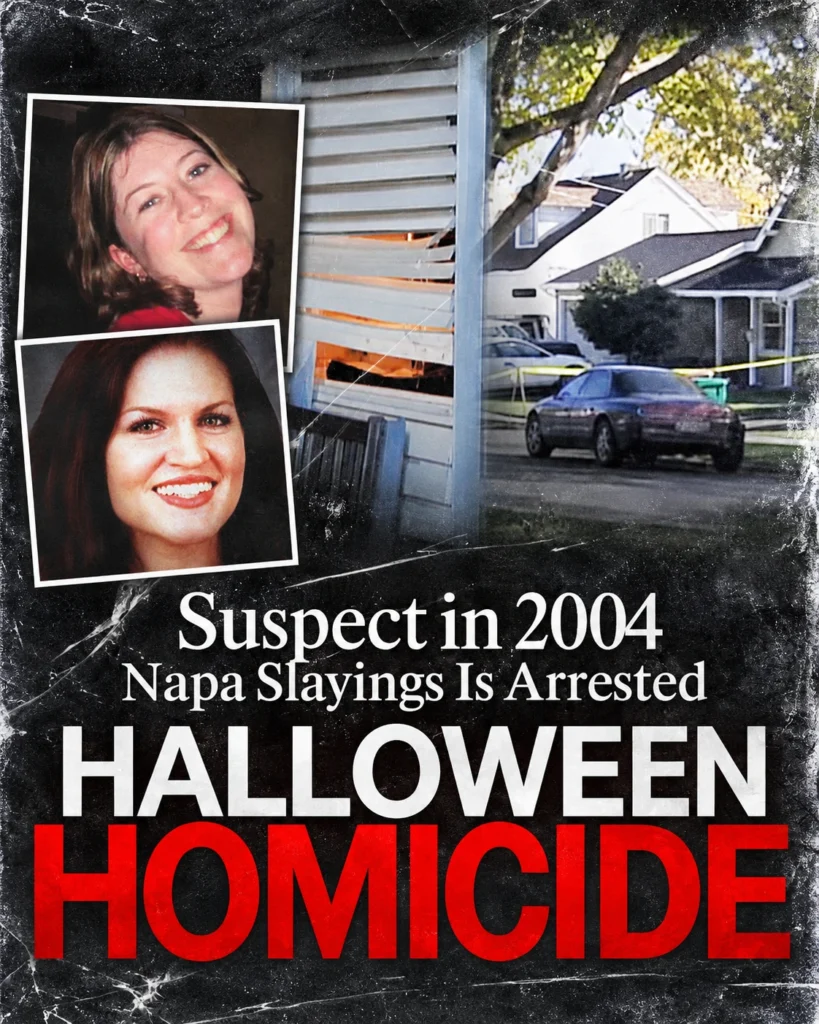
For the families of Adrienne Insogna and Leslie Mazzara, the nightmare did not end when police identified the killer.
It did not end when he confessed.
And it did not end when a judge sentenced him to spend the rest of his life in prison.
The truth brought answers.
But it also revealed a betrayal that made the tragedy even harder to understand.
The person responsible for the Halloween murders had been someone the victims knew.
Someone who had visited their home.
Someone connected to Adrienne’s closest friend.
And someone who had continued moving through their grieving community while the investigation remained unsolved.
His name was Eric Matthew Copple.
He was twenty-six when he was arrested.
And his confession brought an end to nearly a year of uncertainty surrounding one of Napa Valley’s most shocking crimes.
But understanding how the case reached that point requires remembering the two women whose lives were taken.
Adrienne Insogna was a determined young professional who had already survived a near-fatal accident.
Her recovery had required extraordinary effort.
She had rebuilt her life.
She had pursued an education.
And she had developed a career as a civil engineer.
Her family believed she understood the value of every day because she had once come so close to losing everything.
She was independent.
She was loyal to her friends.
And she was not afraid to stand up for the people she loved.
Leslie Mazzara had followed a very different path to California.
She had grown up in South Carolina, pursued dance and beauty pageants, and dreamed of an exciting future.
Her family remembered her as a beloved daughter with an enormous personality.
She had moved to Napa Valley looking for new opportunities.
And when she became roommates with Adrienne and Lauren Meanza, the arrangement seemed ideal.
The three women enjoyed their home.
They welcomed friends.
They worked.
They planned their futures.
And they expected their lives to continue unfolding in ordinary ways.
On Halloween night in 2004, nothing suggested that their home would become the scene of a double murder.
Children had been trick-or-treating in the neighborhood.
The women had handed out candy.
By late evening, they had gone to bed.
But around two in the morning, Lauren woke to the sound of her dog growling.
A security light had come on.
Then she heard breaking glass.
And a scream.
The sounds that followed would haunt her.
She heard someone crying for help.
She heard footsteps.
And she realized an intruder was inside.
Lauren escaped through the back door and hid outside.
She waited until she believed the attacker had left.
Then she returned to find her roommates gravely injured.
Leslie was already beyond saving.
Adrienne also died.
The attack left investigators confronting an exceptionally violent crime scene.
There was blood throughout the upstairs area.
Both victims had suffered repeated stab wounds.
Adrienne’s injuries suggested that she had tried to defend herself.
Investigators believed she may have rushed to Leslie’s room after hearing the initial attack.
The physical evidence was extensive.
Blood from an unknown person was recovered.
Cigarette butts were found outside.
Plastic zip ties were discovered near the point of entry.
Nothing significant appeared to have been stolen.
The circumstances suggested that the attacker had not entered simply to steal valuables.
Detectives began investigating the victims’ personal relationships.
They examined former romantic partners.
They interviewed friends.
They looked into people who might have developed an obsession with Leslie.
They investigated Adrienne’s boyfriend.
But the DNA evidence repeatedly failed to connect those individuals to the crime.
The investigation expanded.
The FBI became involved.
A substantial reward was offered.
Approximately 1,300 people were interviewed.
More than 200 DNA samples were collected.
Still, no arrest followed.
For months, the families waited.
They wondered whether the killer was a stranger.
They wondered whether someone had been watching the house.
They wondered whether the violence had been motivated by jealousy, anger, or something they could not yet imagine.
Then detectives publicized information about the cigarette brand found outside the home.
Camel Turkish Gold.
The surviving roommate recognized the brand.
She knew someone who smoked it.
Eric Copple.
The name was shocking because Eric was not a distant acquaintance.
He was connected to Adrienne through her close friend Lily.
He had visited the house.
He had participated in gatherings with the victims.
And after the murders, he had remained close to the people grieving them.
The revelation changed everything.
Eric eventually surrendered to authorities.
His family had reportedly become alarmed by letters in which he expressed suicidal intentions.
Those letters also contained statements about his actions and the consequences he believed he deserved.
They revealed a man who understood that his secret was becoming impossible to keep.
Investigators learned that Eric had felt threatened by Adrienne’s relationship with Lily.
Adrienne and Lily were close friends.
Adrienne had reportedly expressed doubts about whether Eric was the right partner for her.
Eric appeared to interpret that influence as a threat to his relationship.
In his later statements, he described Lily as the central source of happiness in his life.
He feared losing her.
And he apparently directed his resentment toward Adrienne.
That explanation did not justify what happened.
Nor did it make the murders understandable.
It revealed how a destructive combination of jealousy, anger, and possessiveness had become part of the circumstances surrounding the crime.
According to Eric’s account, he had been drinking heavily on Halloween night.
He claimed that after becoming angry, he took a knife and went to the women’s house.
He remembered smoking outside.
He remembered entering through a window.
But he claimed his memory of the actual attack was incomplete.
Prosecutors did not accept that his professed memory gaps removed his responsibility.
The evidence showed deliberate actions before and after the killings.
The attacker had entered the home.
Two women had been stabbed.
The intruder had escaped.
And Eric acknowledged burning clothing and shoes after returning home.
Those actions were important because they suggested an effort to destroy evidence.
His explanation of being intoxicated did not change the fact that two people had died.
Nor did it erase the physical evidence connecting him to the scene.
Eric ultimately pleaded guilty to two counts of first-degree murder.
The plea spared the families a trial that would likely have involved extensive testimony about the injuries and crime scene.
In exchange, prosecutors did not pursue the death penalty.
Eric received life imprisonment without the possibility of parole.
For many people, that sentence represented the legal conclusion of the case.
But the sentencing hearing revealed how deeply the murders had fractured the lives of those left behind.
Adrienne’s mother, Arlene, addressed Eric in court.
She had known him.
She had seen him as part of her daughter’s social world.