PART 3 — THE LAW THAT CARRIED HEATHER’S NAME
On Christmas Day in 2006, two families were waiting for people they loved to come home.
Heather Quan was twenty-one years old.
Ryan Waller was eighteen.
They had been spending time together at Ryan’s apartment in Phoenix, Arizona, when a violent attack changed both families forever.
Heather was killed.
Ryan survived a devastating gunshot injury.
But his survival created a second tragedy when the seriousness of his injuries was not immediately recognized during the police investigation.
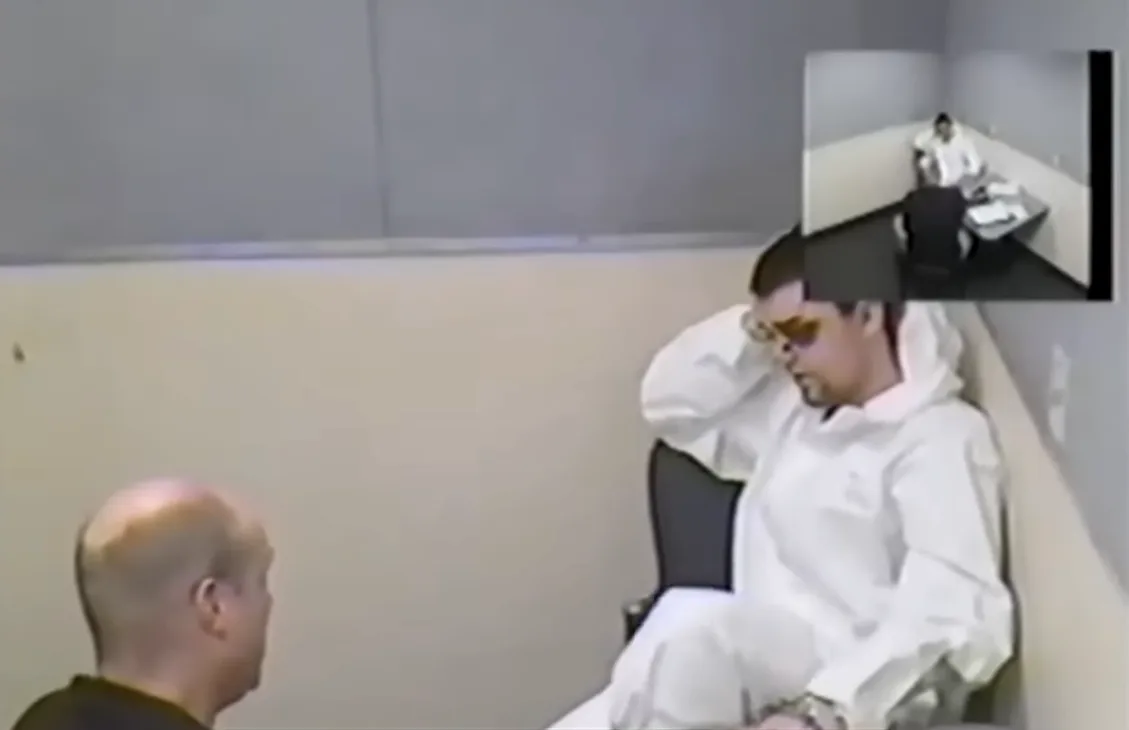
For hours, Ryan struggled to answer questions while suffering from catastrophic head trauma.
He appeared confused.
He couldn’t remember basic details.
He repeatedly asked to sleep.
And he insisted that two men had come to the apartment and shot him.
Investigators initially questioned the reliability of his account.
But Ryan had been telling them something essential.
He was a victim.
And the names he provided would help direct the investigation toward the people responsible.
The attack eventually led to convictions involving Richie Carver and his father, Larry Carver.
Richie was convicted in 2008 and received a natural-life sentence.
The case against Larry faced a significant legal obstacle before he was later prosecuted again.
That obstacle would lead Heather’s family into a battle that extended beyond the courtroom.
They wanted accountability for Heather’s death.
But they also wanted to address a legal problem they believed had interfered with the case.
The issue involved Arizona’s marital communications privilege.
Under that legal protection, certain private communications between spouses could not ordinarily be disclosed or used in court without satisfying applicable legal requirements.
The privilege serves an important purpose.
It protects confidential communications within marriage.
But Heather’s family believed that, in the circumstances of a serious violent crime, the rule had created an unacceptable barrier to justice.
Larry Carver had allegedly made statements to his wife about the attack.
When the prosecution sought to use those statements, the privilege became a major issue.
The initial case against him was dismissed.
For Heather’s family, the result was devastating.
They had already lost their daughter.
They had endured the investigation.
They had followed the proceedings.
And now they faced the possibility that one of the men accused in connection with her death might never stand trial.
But they refused to stop fighting.
Their advocacy helped produce legislation known as Heather’s Law.
The measure addressed the marital communications privilege in serious criminal cases when one spouse had voluntarily provided information to law enforcement.
It was a legal change with implications beyond Heather’s case.
The family had transformed their grief into an effort to change how the justice system handled certain evidence.
But passing the law did not immediately resolve everything.
There were additional legal questions about whether the change could apply to the earlier events.
Those issues required further proceedings.
Eventually, Larry Carver was indicted again in 2011.
He was later convicted of serious offenses connected to the attack, including first-degree murder and attempted first-degree murder.
For Heather’s family, the convictions brought an important measure of legal accountability.
But no verdict could bring Heather back.
She had been twenty-one.
She had plans.
Relationships.
A family expecting to spend Christmas with her.
And a future that ended in an apartment where she’d expected to enjoy an ordinary evening.
The tragedy also permanently changed Ryan’s life.
When officers first found him, he was conscious.
He could walk.
He could speak.
But those abilities concealed the severity of his injuries.
His brain had suffered catastrophic damage.
His memory and reasoning were impaired.
His responses were inconsistent because he was struggling to process what had happened.
He repeatedly told the detective that he’d been shot in the eye.
Yet the detective initially struggled to believe that someone with such an injury could still be sitting across from him.
That disbelief became one of the most troubling aspects of the case.
Ryan wasn’t simply refusing to answer questions.
He was physically unable to communicate normally.
He was confused about names.
He couldn’t reliably recall the order of events.
He struggled with ordinary background questions.
And he repeatedly asked to sleep because he was exhausted and severely injured.
The detective wanted a coherent account of the homicide.
Ryan needed emergency medical treatment.
Those two realities were tragically misaligned.
Eventually, investigators recognized the possibility that his facial wounds were consistent with a gunshot injury.
Medical personnel were called.
Ryan was transported to the hospital.
But by then, hours had passed since officers first encountered him.
His family would later question the delay and whether earlier treatment might have changed his outcome.
It is important to distinguish those concerns from what can be established medically.
Ryan’s original injuries were themselves catastrophic, and the precise effect of the treatment delay cannot be determined from interrogation footage alone.
What is clear is that his condition required urgent medical evaluation.
And his behavior should not have been interpreted solely through the lens of a criminal investigation.
After the shooting, Ryan faced a life that was radically different from the one he’d known.
He lost his sight.
He experienced severe neurological complications.
And he suffered seizures.
His family became responsible for helping him navigate the consequences of injuries that would never fully heal.
The young man who had once been preparing to celebrate Christmas with his girlfriend now faced permanent disability.
He had survived something extraordinary.
But survival did not mean recovery.
For years, the effects of the attack remained part of his daily life.
His family continued sharing information about what had happened.
They also expressed anger about the way he had been treated during the investigation.
To them, the interrogation footage was not merely evidence of a detective trying to solve a homicide.
It was a record of their injured son struggling to communicate while his condition went unrecognized.
The video became widely discussed because of the painful contrast between what viewers eventually knew and what the detective appeared to believe.
Ryan’s confusion looked different once the truth was understood.
His repeated requests to sleep were no longer merely frustrating interruptions.
His inability to remember Heather’s details was no longer simply suspicious.
His changing descriptions of the attack were no longer proof that he was inventing a story.
They were signs of a brain struggling to function after a severe injury.
The case illustrates a broader danger in criminal investigations.
A person who appears confused, evasive, or inconsistent may be experiencing a medical emergency.
A witness may be unable to remember events accurately.
A victim may not understand the questions being asked.
And someone who can walk and speak may still have a life-threatening injury.
That does not mean investigators should ignore suspicious circumstances.
It means medical assessment and investigative questioning must be handled with appropriate urgency and care.
In Ryan’s case, the stakes were extraordinarily high.
He was the surviving victim of an attack that had killed his girlfriend.
He had information about the attackers.
But his injuries made that information difficult to communicate.
The detective was trying to understand a violent crime.
Ryan was trying to explain something his damaged brain could barely reconstruct.
And the result became one of the most unsettling interrogation recordings associated with the case.
In January 2016, a YouTube account associated with Ryan’s family reported that he had died following a seizure related to the injuries he sustained in the shooting.
He had lived for years with the consequences of the attack.
But his family ultimately faced another devastating loss.
Ryan had survived the night Heather was killed.
He had survived the interrogation.
He had survived emergency treatment and the long period of recovery that followed.
Yet the injuries continued to affect him.
His death brought a painful end to a life permanently altered at eighteen.
Heather and Ryan’s stories are inseparable from the events of December 2006.
But they should not be reduced to the most disturbing moments of the interrogation.
Heather was a young woman whose family loved her.
Ryan was a young man who endured extraordinary suffering.
Both deserved the chance to live their lives without the violence that destroyed their future together.
Their families carried the consequences for years.
Heather’s loved ones pursued changes in the law.
Ryan’s family continued raising questions about the emergency response and the treatment he received.
Those efforts reflected different aspects of the same tragedy.
One family fought to ensure that the criminal case could proceed.
The other sought recognition of the seriousness of Ryan’s injuries and the failures they believed had occurred.
Both were trying to make sense of losses that should never have happened.
The legal convictions established accountability for the attack.
Heather’s Law became part of the broader legacy of the case.
And the interrogation footage remains a troubling reminder of how dangerous assumptions can become when a medical emergency is mistaken for suspicious behavior.
There is a moment in that recording that captures the tragedy with extraordinary clarity.
Ryan tells the detective he was shot in the eye.
The detective struggles to believe him.
Ryan himself seems unable to understand how he survived.
He knows something terrible happened.
He knows his head hurts.
He knows he wants to sleep.
But he cannot explain the experience in a way that satisfies the person questioning him.
That moment is heartbreaking because the viewer eventually understands what Ryan could not fully communicate.
He was gravely injured.
He needed help.
And the truth was sitting directly in front of the detective.
For Heather’s family, justice required years of legal work and advocacy.
For Ryan’s family, the consequences of the attack lasted throughout the remainder of his life.
Neither outcome can be described as a happy ending.
But their stories reveal the importance of persistence, careful investigation, and recognizing vulnerability when it appears in unexpected forms.
Heather’s family helped change the law.
Ryan’s experience continues to raise questions about how police should respond when someone at a crime scene shows signs of severe injury.
And the recording of his interrogation serves as a powerful reminder that confusion is not the same as guilt.
Sometimes the person who cannot explain what happened is the person who has suffered the most.
Ryan Waller was eighteen years old when he was shot.
Heather Quan was twenty-one when she was killed.
Their lives were changed forever during what should have been a peaceful Christmas holiday.
And the most enduring lesson of their story may be the simplest.
Before deciding that someone is lying, investigators must consider whether that person is medically capable of telling the story.
Because sometimes the truth is not being hidden.
Sometimes the person trying to tell it is fighting to survive.
What do you think should happen when police encounter a potential suspect who is visibly injured, disoriented, and unable to answer basic questions? Should emergency medical assessment always come before interrogation?