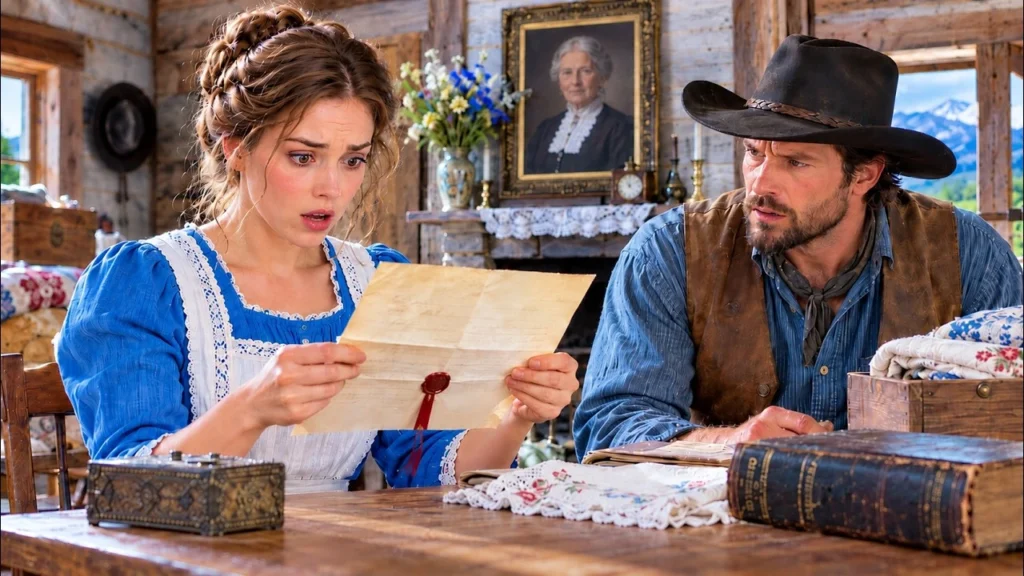
Part 3 🌅
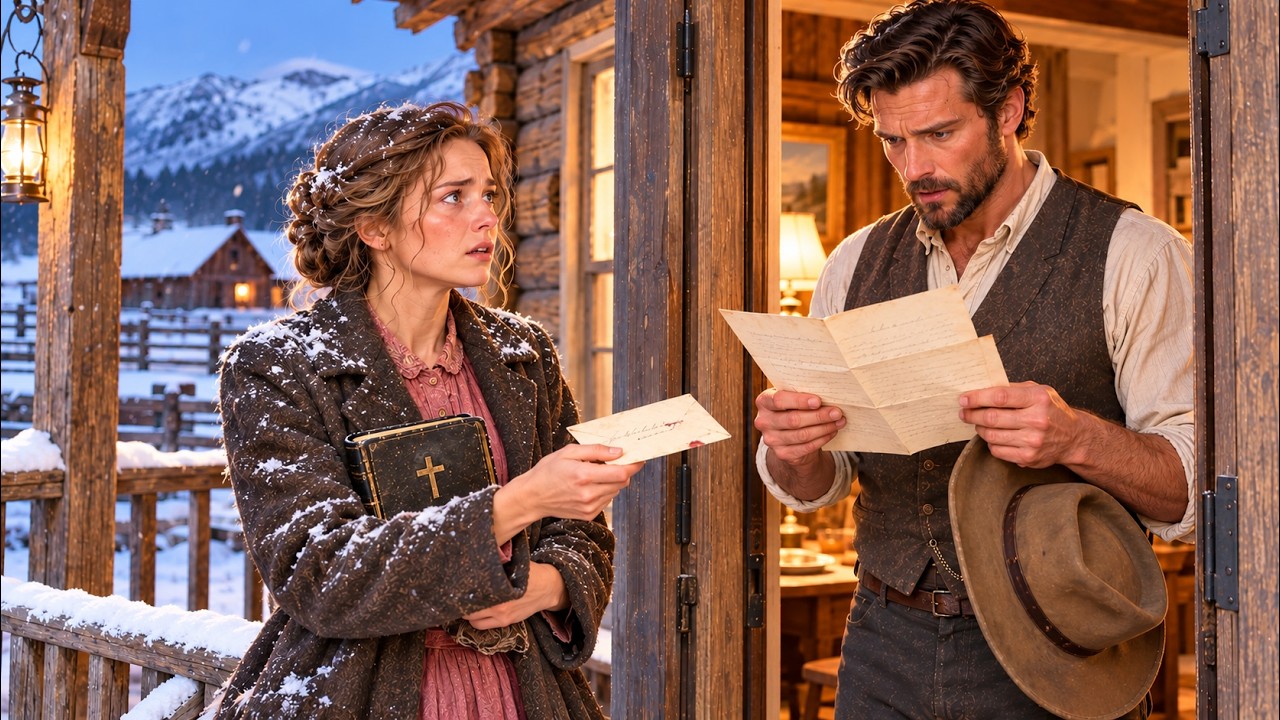
I have decided I will not.
Ellis read on by the light of one lamp.
February, 1885. The cattle note falls due every October. If I tell my son his mother is failing, he will sit on this porch and let his father’s herd walk off the mountain. I have seen what Ellis does for love. He does all of it. So I will lie. The Lord will have to be patient with me.
He turned the page.
March. I have made over the cottage to Opal. She told me I mustn’t. I told her it was done. A woman who has given six years to an old woman’s chair ought to own a door she can shut.
April. Opal wrote Ellis his first letter this week. “Your mother is well and ate a good dinner.” She cried afterward.
Ellis went cold.
In his desk at home, tied with twine, were fifty-three letters in that same neat hand. Your mother is well. Your mother sends her love.
He’d read every one at line camp over coffee. Feeling, for an hour, like a good son. 😢
August. A hotel in Pueblo offered Opal forty dollars a month. Twice what Ellis pays her. She turned it down before I even knew.
December. Opal sleeps on a pallet by my chair now. She says the kitchen is cold. The kitchen is not cold.
June. Ellis found me in the garden, on my own two feet. Opal had me dressed since six. He said I looked well. After he left, she carried me inside like a sack of flour. I laughed till I coughed. Best afternoon I’d had in a month.
Ellis put his hand over his mouth.
The last entry was in shaky, wandering writing.
If Ellis is reading this, he is angry. He ought to be angry only with me. He was where I sent him. I am prouder of every steer you saved than you’ll ever believe.
The cottage is Opal’s. She’ll be leaving on a Friday. She has the look of a woman who packs early.
Don’t make her say it twice.
Sit in the chair, Ellis. It is not so bad a chair. — Mother.
Ellis bowed his head in his mother’s chair.
“I didn’t know,” he whispered into the empty room.
Then, because it was true:
“I didn’t ask.” 💔
Outside, the sky turned gray. And below the spring, in the cottage window, a lamp was still burning.
The next morning, Ellis rode to town. Old Dr. Sorley confirmed every word.
“That girl walked a mile through snowdrifts at three in the morning to fetch me,” the doctor said. “Every bad night. Without a raise. Without a word to anyone.”
At noon, Ellis gathered every man on his ranch at the corral.
“I’ll say this once,” he said. “Opal Hartley kept my mother alive far longer than the doctor gave her. She turned down twice the pay to do it. She wrote me kind lies every week so I’d keep my herd. And she never told me. Not even when I asked her straight. Because she’d given her word.”
He looked down the line.
“Anyone who’s said otherwise can say it to me now.”
Nobody said anything.
Jed Haskett took off his hat. His face was red. “Boss. I didn’t know.”
“Nobody did,” Ellis said. “That was the point.” 😤
That evening, Opal looked down the meadow from the old house.
Ellis was kneeling on her cottage doorstep. Working on the door with a hammer.
She told herself he was fixing it up to sell.
She didn’t sleep all night.
Friday, a quarter to seven. Opal stood on the stage platform in her gray traveling dress. Trunk beside her. Bible in her hands.
Across the street, half a dozen women pretended to arrange a shop window. Watching.
Then a wagon came rattling up the street. Too fast.
Ellis was driving. And roped in the back, with its three flat pillows still tied on, sat his mother’s chair. Beside it, a crate of eleven teacups packed in straw.
He jumped down. He took off his hat.
“Miss Hartley.”
“Mr. Gilroy. Whatever this is, say it somewhere else. There are people.”
“I know,” he said. Loud enough for the whole street. “I’d as soon say it where I did the harm.”
Across the street, a window shade went up.
“I said a cruel thing to a window on Wednesday,” Ellis said. “It was meant for you. I’ve read what my mother wrote. Every page. And your letters. All fifty-three.”
His voice broke.
“They were lies. And they were kindness. And I’d take it as a favor if you didn’t make me choose between them.”
Opal looked away. Toward the mountains.
Ellis turned to the street.
“Since a good many people in this town have opinions,” he called out, “I’d like it known that nobody took a thing from my mother. This woman gave her seven years. And I’ll thank anyone to say so at the store.”
The shade across the street came down very fast. 😏
He turned back to her. Quieter now.
“The cottage is yours. My mother saw to that. I won’t fight one word. I’m only asking you not to get on that stage thinking nobody wanted you to stay.”
Opal let out a long, shaky breath.
“I won’t take a house as a gift, Mr. Gilroy. Or as a debt.”
She lifted her chin.
“I’ll take it because it’s mine. Because I’ve spent seven years folding up my life every time someone I loved was gone. And I’m tired of it.”
Her eyes filled.
“I’d like a door I can shut.”
“That,” Ellis said softly, “I can help with.”
She turned to the stage driver. “Mr. Pickens. I’ll be taking my trunk down. I’m not going.”
The old driver just tipped his hat. “Never yet knew a Friday that couldn’t change its mind, ma’am.”
They drove back along the creek in the thin snow, the teacups chiming in their straw.
At the cottage, a brand-new iron latch gleamed on the door. A brass lock beneath it. And hanging on a nail, a key tied with a scrap of red calico.
“I thought a woman ought to be able to shut her own door,” Ellis said.
Opal turned the key. Click.
She opened the door again. And just stood there. Looking at it.
Then she laughed. And pressed her hand to her mouth.
Ellis didn’t touch her. He just stood beside her. A little closer than before. And let her look. 🥹
By December, the whole county knew the truth.
Ellis came down the creek every Sunday. He fixed the gate. The stovepipe. A shutter that had banged for seven years. He never once came in without knocking.
Finally, Opal set down a plate.
“If you mean to keep coming down this road, Mr. Gilroy, you might as well tell me. Is it your mother’s chair you’re coming for? Or me?”
He didn’t answer quickly.
“You,” he said.
She didn’t smile. Quite.
“Then you may start by calling me Opal. And Sunday supper is at six. Not a minute before.”
“Six,” Ellis said. And walked home up the creek, whistling. ❤️
The first heavy snow came the first Sunday of December.
Ellis knocked. Opal opened the door with flour up to her elbows.
“You’re early.”
“You said six.”
“I didn’t say you had to freeze out there till then.”
Inside, the cottage was warm. Winifred’s chair sat by the window, its cushion neatly restitched.
Ellis sat down in it.
It wasn’t so bad a chair.
On the shelf above the stove stood eleven teacups in a row.
And at the very end, plain and white and brand new, stood a twelfth.
“That’s for next harvest,” Opal said when she caught him looking.
She poured his coffee into one of his mother’s cups. Then her own.
And the twelfth cup waited on the shelf. Clean and empty.
For a harvest Opal fully meant to be there to see. 🌅
✨ The quietest love is often the one that carries the heaviest load. Never forget to ask who’s been carrying yours.
💬 Who did quiet work for you that you never got to thank? Tell me in the comments.
(Note: This story is entirely fictional and created for entertainment purposes only. It does not represent any organization or individual, nor does it encourage inappropriate behavior. Content is created with the support of artificial intelligence.)


