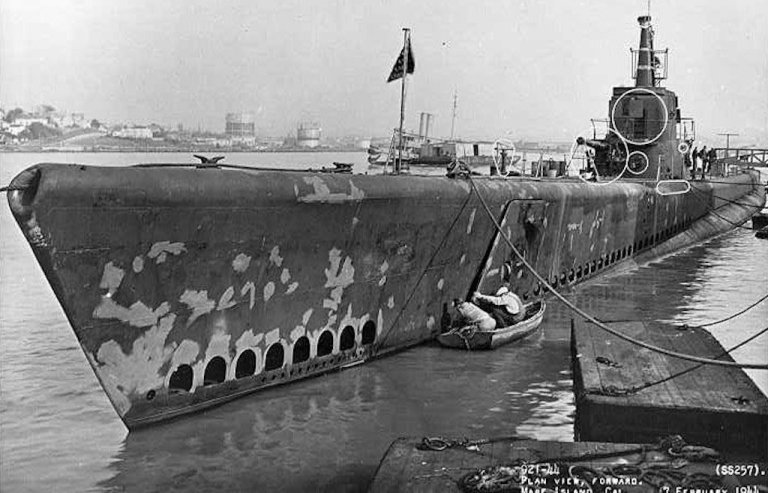
…
The question was not whether diving was safer in the next minute.
It was whether continuous evasion could still accomplish the patrol.
Diving was still the submarine’s best defense, but it was not free.
Every hour underwater consumed battery power and breathable air.
A long evasion could force the boat to surface later, perhaps in an even worse position.
In open water, a submarine might surrender the area and hunt somewhere else.
In the Sabutu passage, the mission remained on the other side.
Dei also knew that a charging destroyer was dangerous in a very specific way.
Its speed allowed it to close and ram.
Its sonar could hold a submerged contact.
Its depth charges could punish a boat after the periscope vanished.
But a high-speed charge also compressed the destroyer’s choices.
For a short interval, the ship had to keep coming toward the submarine’s last known position.
A target approaching almost head-on presented little width, yet its course could become unusually predictable.
DIY had already tested that idea during Harter’s previous patrol.
In April, the Japanese destroyer Ekkazuchi had closed aggressively on the submarine.
Harter fired at short range and sank it.
The lesson was not that every destroyer could be defeated the same way.
The lesson was narrower.
If De could see the charge early enough, turn the boat in time, and hold the firing solution until the range became short, the attacker’s own momentum could reduce its chance to evade.
Even then, the captain could not create the attack alone.
Periscope bearings had to be taken while exposing as little of the instrument as possible.
The target’s speed, angle, and distance had to be estimated and passed into the fire control solution.
The boat had to turn without losing depth control.
Torpedo rooms had to flood tubes, open outer doors, and stand ready while the sound of the approaching ship grew through the hull.
After firing, the diving team needed to take harder below the destroyer’s keel before the ship crossed the position.
A head-on target simplified one part of the geometry and made another part worse.
Its course could be steady, but the visible target was narrow.
A small error placed every torpedo on the same wrong side.
The closer deed, the less time the destroyer had to respond and the less time Harder had to disappear.
The tactic demanded a balance that could not be written into a simple rule.
Fire too early and the destroyer might see the torpedo wakes and turn.
Wait too long and harder might still be near periscope depth when the bow arrived.
Turn the wrong way, misjudge the angle, or suffer a torpedo failure, and the submarine would have traded its escape time for nothing.
On the night of June 6th, that balance stopped being theory.
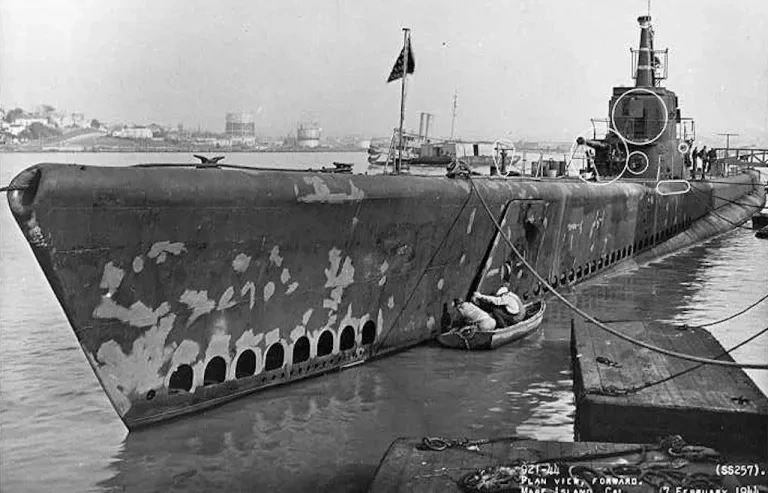
Harter entered the Sabbutu passage and found a convoy of three tankers escorted by two destroyers.
The tankers were important targets, but the escorts controlled the approach.
De kept the submarine on the surface to gain speed and work toward a firing position.
Clouds had been helping to hide the boat.
Then the cover shifted.
Moonlight spread across the water and exposed Harder’s low silhouette.
One of the escorts, Minazuki, turned out of formation and came after the submarine.
Dei drove harder at full speed, but the destroyer was faster.
The submarine’s wake marked its path across the moonlit water.
The range was shrinking, and remaining on the surface would end with gunfire or a collision.
Harder dived.
The sea closed over the bridge and the diesels stopped.
Men who had been looking at moonlight and spray were suddenly inside a steel hull lit by instruments and battle lamps.
The contact was now reduced to periscope glimpses, bearings, range estimates, and the beat of propellers moving closer.
But instead of using the dive only to escape, Dei turned the boat so its stern tubes faced back along the line of pursuit.
The maneuver changed the problem.
Minazuki was no longer chasing a visible submarine across the surface.
It was driving toward the point where Harter had vanished while Dei was trying to bring three torpedo tubes onto that approach.
The torpedoes were fast, but they were not invisible.
Their passage could leave tracks on the surface.
At longer range, a sharp lookout and an alert bridge might have time to see those tracks and turn across them.
At 1100 yd, Minazuki would have much less time to recognize the danger.
But Harter would also have little time to dive clear if the spread failed.
Through the periscope, the destroyer continued to grow.
De waited until the range was about,00 yardd, then fired three torpedoes from the stern.
Two hit.
Minazuki went down within minutes.
A destroyer’s charge could be turned against it.
Then the second escort arrived, and the answer immediately created a more dangerous question.
The surviving destroyer closed on the area of the sinking.
Harder turned again and fired all six bow tubes.
This time there was no compact pattern of hits, no ship breaking apart above the periscope.
Every torpedo missed.
The difference between success and failure had taken only moments.
Against Minizuki, the geometry had held long enough for two weapons to connect.
Against the second escort, it had not.
Whether the error came from angle, movement, timing, or the behavior of the torpedoes, the practical result was the same.
Harder had revealed itself at close range and emptied its forward tubes without removing the threat.
Deok the submarine deep.
The escort crossed the area and began dropping depth charges.
Explosions pressed against the hull.
Loose material came down from overhead.
Gauges shook.
Lights flickered.
and the men could do little more than stay quiet while the destroyer searched the water above them.
The three tankers escaped.
That failure mattered because it stripped away the comforting version of what had just happened.
Minizuki had not proved that di possessed an unbeatable method.
It had proved only that the method could work.
The mist spread proved the rest.
When it failed, the submarine began its evasion with less time, fewer ready weapons, and an enemy already on top of it.
Harder survived the attack, but by morning the Japanese knew a submarine was operating in the passage.
The mission to North Borneo was still unfinished.
The boat still had to move south.
And now the next destroyer would not be responding to a chance sighting in moonlight.
It would be sent directly toward the contact.
Early on June 7th, a Japanese aircraft spotted Harter and reported the position.
The destroyer Hyanami was directed toward the area.
The first warning inside the submarine came through sound.
Fast propellers were approaching.
De raised the periscope and found the destroyer coming in.
Now the decision carried the weight of the previous night.
De knew a close shot could work because Minizuki had sunk.
He also knew that six torpedoes could miss and leave harder beneath an angry escort.
The tactic had already produced both possible outcomes.
Hyanami came on at speed.
De maneuvered to keep the submarine’s bow toward the attack and prepared three forward tubes.
In the attack center, each new bearing tested whether the destroyer was still coming down the expected line.
If the bow began sliding rapidly across the periscope, the geometry was changing.
If it remained nearly fixed while the ship grew larger, Hyanami was coming almost directly toward harder.
That made the target visually small, but it also meant the destroyer was carrying itself toward the point from which the torpedoes would emerge.
The closer the destroyer came, the less time its bridge would have to see the tracks in order an effective turn.
But the same shrinking distance also reduced Harter’s margin to dive below the ship.
De had to release the torpedoes late enough to deny the enemy time, yet early enough for the submarine to clear the path of the bow.
There was no long interval in which to study a mistake.
At the combined closing speeds, several hundred yards disappeared in seconds.
Once the outer doors opened and the final order was given, the attack would either break Hyanami’s charge or leave harder directly beneath it.
He held the periscope on the target.
At about 650 yards, three torpedoes left the bow tubes.
Two struck Hyanami.
The magazine explosion tore through the destroyer, which sank with extraordinary speed.
Hundreds of men had been aboard.
Only a fraction survived.
Harter had now destroyed two Japanese destroyers in less than a day.
That was the visible success.
The unseen consequence was already moving outward from the two sinking positions.
More Japanese ships left Tawitawi to search.
Aircraft worked the area.
Sonar contacts multiplied.
The passage Dei still needed to cross was becoming more heavily guarded because of what Harter had done.
The submarine went deep as the response closed around it.
Pings passed through the hull in metallic pulses.
Propeller beats crossed from one bearing to another.
Then depth charges began exploding through the water.
Inside a submerged submarine in tropical seas.
Silence carried a physical cost.
Machinery that might reveal the boat had to be stopped or limited.
Ventilation and cooling could not provide normal relief.
Heat and humidity rose.
Men stayed still because unnecessary movement made noise and consumed air.
The boat that had just attacked at point blank range now survived by moving slowly enough to seem almost absent.
This was the next test of Di’s judgment.
Two destroyers had been sunk.
More targets were searching above.
Aggression had opened the passage, but it had also brought the passage down on top of Harder.
A captain intoxicated by the first two victories might have searched for another periscope shot at the earliest opportunity.
De did not.
When the approach was wrong, when several escorts could answer a single launch, or when the element of surprise had disappeared, he chose not to attack.
Harter stayed deep, used the changing layers of water to complicate Japanese sonar, and worked away from the search at low speed.
That restraint was as important as the two close-range shots.
The tactic depended on a destroyer committing to one line while Harter still possessed surprise.
In a swarm of alerted ships, there might be no clean line and no safe interval after firing.
Another kill would not complete the mission if the submarine died beside it.
For hours, the crew endured the search.
The explosions gradually moved farther away.
When Harder finally surfaced after darkness, fresh air entered the boat and the diesels began restoring the batteries.
The first phase was complete.
Harter had forced away through the screen.
Now it had to use that opening before the Japanese closed it again.
De turned toward the coast of North Borneo.
The submarine was no longer seeking a destroyer.
It was moving toward a rendevous where speed, navigation, and secrecy mattered more than another attack.
The coast presented a different kind of danger.
Harter had to approach Japanese-held territory in shallow water, close enough to recover men from shore.
A fleet submarine that struck a reef or grounded within range of coastal forces, could not hide by diving.
Its size, normally useful for long patrols, became a liability near an uncertain shoreline.
On the evening of June 7th, Harter moved in toward the rendevous.
The boat came to rest only a few thousand yards from the beach, so shallow that its hull touched bottom.
Two Australians already aboard Harter were there to help conduct the operation.
With members of the submarine’s crew, they assembled two folding canoes and put them into the water.
Radar information from the submarine was passed to the canoe party by radio as the small craft headed toward the dark coast.
The men inside Harter could not solve this problem with torpedoes.
Once the canoes left, the submarine had to remain available without advertising its position.
Shore patrols, aircraft, and unexpected vessel or a delay at the rendevous could force De to choose between protecting the boat and waiting for the returning party.
The canoes disappeared toward land.
Harter could not follow them closer, nor could it patrol freely without risking that the returning party would find empty water.
The submarine had to hold near the rendevous while remaining ready to move if an aircraft, coastal vessel, or patrol appeared.
Its hole was already near the bottom.
A sudden emergency dive offered little protection in water this shallow.
Time passed.
Harter remained close to the bottom, its crew listening and watching the approaches.
The operation depended on signals, navigation, and the assumption that the men ashore had reached the right point without being followed.
The same radar that could warn of a vessel offshore was also being used to guide two fragile craft whose crews had no steel hull around them.
A little more than 2 hours after setting out, the canoe party located the six soldiers of Zunit.
Outboard [clears throat] motors helped carry the enlarged group back toward the submarine.
They reached harder after midnight.
One by one, the six men came aboard.
The canoes were recovered, the hatches were secured, and the submarine backed away from the hostile coast.
The recovery answered the mission’s most human question.
The men were no longer isolated ashore.
It also made the return more dangerous.
Harder now carried the rescued soldiers in addition to its own crew.
The only practical route back toward Tawittowi in the reconnaissance area led through the same passage where two Japanese destroyers had already been sunk.
By then, the enemy was not merely guarding a normal transit route.
It was searching for the submarine responsible.
The patrol had changed shape again.