But the problem with the Xcars was that much like…
But the problem with the Xcars was that much like the Aspen Valari, which was the most recalled car to date, the X cars surpassed the Aspen and Valari as the most recalled cars to date.
And they had so many issues.
They just like the Aspen Valari had drivability issues.
Remember this was the days of electronic feedback carburetors.
And it would be until wouldn’t be until the 1982 model year that any of the X cars would get some form of fuel injected and in those cases only on the four cylinders.
The V6 would remain carbureted through the entire run.
And uh the drivability issues were one major problem.
Then the power steering racks would get so-called morning sickness where they would become hard to turn.
The seals would internally wear out.
In fact, this was such a common failure on not only the X cars but almost any GM front-wheel drive vehicle of the time.
the X cars, the J cars like the Cavalier, the even the C cars in 1985 like the S’s98 and Buick Electra and Cadillac Fleetwood, the A cars that came out in 1982 like the Chevy Celebrity, they all had this issue with the steering racks and it was almost impossible to get them replaced because there were no parts.
Every car needed a replacement steering rack.
It was just terrible.
Then there were issues with on the manual transmission Xcars, the parking brake release would pull through the underside of the dash.
It just wasn’t secured appropriately.
But the most egregious of all the X-car issues was the rear brake system that would prematurely lock.
And it wasn’t just the fact that these cars had challenges with their brake systems, but that GM fought it and fought the National Highway Transportation Safety Administration in terms of recalling the cars.
First, they just recalled some early manual transmission vehicles.
Then they recalled, I believe, all manual transmission vehicles and some early automatic transmission vehicles.
They never actually recalled the entire population of Xcars.
And when they did recall them, the fix was a new proportioning valve.
That even internal GM documents showed that that wouldn’t necessarily fix the issue, or at least engineers were doubtful that it would.
And so, because of all the recalls and the issues, the Xcar really just ended up turning off again a lot of customers to American vehicles and GM vehicles.
And as the more I think about it, the more issues I can come up with on the, you know, X-C cars, too.
Everything from, as I mentioned already, the power steering racks and the rear brake issues.
But the window regulators would fail.
These had tape drive window regulator mechanisms that would frequently snap and then the door glass would fall into the door.
The interior trim bits would come off.
The hub caps wouldn’t remain secure on the base level Chevrolet citations.
Uh it just really was kind of a mess in terms of the vehicles, which is so unfortunate because if you drive one of the X cars that is in good tune and has everything working well.
It actually is a pleasant little car to drive.
The ergonomics are well thought out.
The packaging inside is amazing for the time.
There’s great trunk space in the car.
There’s great passenger space and roominess.
The seats are comfortable.
extremely comfortable.
By the way, uh the doors are so thin that gives you a lot more interior room.
They really had about 95% of everything right.
But unfortunately, that last 5% was so vital and ended up dooming the Xcar.
And for that reason, the sales just plummeted each year after the first year of introduction.
The citation sold 800,000 units the first year.
The next year, it sold only 400,000, then 200,000.
and it just kept basically divide by two each year thereafter and you can conclude the citations uh sales curve.
Now it also tells you something that GM knew they had a problem because they would rebadge the citation the citation too after several model years in an effort to convince the buying public that it was different and improved but of course it really wasn’t materially improved.
And the amazing thing is the Abody cars that would come out in 1982 were effectively warmed over Xplatform cars with a little extra length and those would become extremely successful and not known for recalls.
They actually ended up being known in general for their reliability and durability.
At least once you get to the A body cars that were produced, I would say from 1986 and later, those ended up being halfway decent.
GM actually really did improve their quality in the late 1980s and the 1988 89 model year cars and 1990 model year cars for example are measurably better than the early 1980s cars but alas for the X cars it was too little too late.
Let’s move on to number one.
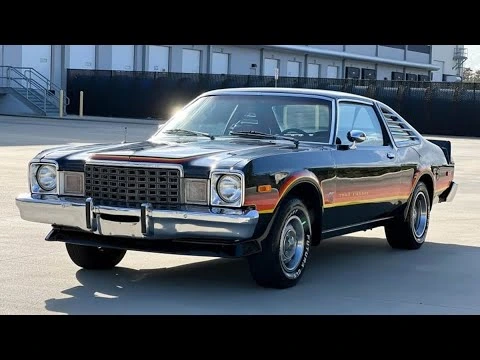
And at number one we have the Chevrolet Vega and I guess you can throw in the Pontiac Astra as well.
The Vega was introduced for the 1971 model year would continue through to 1977.
And the unfortunate part about the Vega was that it was such a promising little car.
It looked great.
It looked like a Mini Camaro.
The stylist did a wonderful job on that early Vega.
Uh the looks didn’t necessarily improve as the model years went on.
Really in part because of the bumper standards that would go into effect for the 1973 model year in the front and 1974 model year on the front and rear of the vehicles.
But the little Vega was a greatl looking car and it was initially a great seller.
The problem though was well I shouldn’t say the problem.
The problems were myriad with the Vega in particular.
They rusted faster than just about any other compact uh on the market or any other vehicle.
And beyond the rust, the main issue with the Vegas was what was under hood.
More specifically, the 2.
3 L aluminum block cast iron head 4 cylinder engine.
Now, this little engine had so much promise.
It was an overhead cam design.
It wasn’t overly powerful, but it also wasn’t a slouch for the time, particularly in the compact car space.
But the aluminum block that did not have cast iron cylinder liners in it proved to be an extreme problem for Vega owners.
And it was the design of that aluminum block engine that did not have those liners that would give buyers a lot of trouble.
More specifically, there were a few faults with this engine.
It was an open deck aluminum block design and the cylinder bores could potentially rock back and forth a little bit because there wasn’t a great amount of structure to keep them in place.
And that sometimes caused ceiling issues with the head gasket, especially when coupled with the fact that you had aluminum for the block material and cast iron for the head material, which expanded and contracted at different rates.
Uh, never a great proposition to have dissimilar metals kind of mating up in one place unless you have great gasketing material and the head gasket wasn’t necessarily up to the task.
And the fact that the car didn’t have cast iron cylinder liners was a problem as well because if the engine ever overheated, what tended to happen was that the pistons would basically permanently etch the cylinder walls and then the car would become an oil burner thereafter.
Moreover, the car did sometimes have a tendency to overheat because Chevrolet outfitted it with a radiator that was about the size of 1 ftx 1 ft.
very very small overall.
And when Chevrolet was testing the Vega engines, the first step in the test procedure was to ensure that all fluids were full.
Well, as you can imagine that most buyers and drivers of these Vegas didn’t pop their hood frequently, and so when they would run a little bit low on coolant, well, then you’d had a significantly reduced amount of cooling capacity in the system.
and the cars would have a tendency to overheat.
This was also during the time frame where at least on the initial model years the cars didn’t have an overflow tank.
So coolant would burp out as an example in some cases or would just the water would evaporate out of it and you would be left with less coolant and less heat transfer capabilities than what the car was intended to have.
And like I said, the cars would overheat, then they would become oil burners.
There were also issues with valve stem seals that would cause them to become oil burners.
And the engine was really just a mess.
Now, it became such a mess that in the latter years of the Vega, Chevrolet would try to rebrand the engine after some improvements, the Durabilu 2300 engine to signify that they had made those improvements, but again, it was just too late.
There were a lot of other funky things on the Vega, too, that like the air cleaner that you had to replace the entire housing.
You couldn’t just replace the paper element uh unless you bought an aftermarket filter or you cut it open and kind of recrimped the uh air cleaner housing.
That would be something that GM would employ on a couple other vehicles too like the Chevettes.
Uh but it really began here with the Vega.
So the combination of the rust issues and the reliability of the engine in particular under hood uh just doomed the Vega.
And as a consequence, what appeared to be a beautiful little car ended up being a nightmare for many, many people.
And beyond the issues I mentioned, the Vegas sometimes also had an issue.
There was a recall for the rear axle separating from the body.
It just was a recalled car, a glitchy car.
I mentioned the rust already, but the rust was actually the result in part of a problem with the dipping process that GM was employing for anti-corrosion inhibitors where there was an air gap as the bodies would go through this dip and get submerged and there was a good portion of the body that just wouldn’t get touched with that anti-corrosion inhibitors.
Uh, and that just accelerated the rust problems.
So, the Vega is number one on the list because the engine in particular and the rust issues were so bad that it turned Americans off of compact cars for many, many years to come and something that the American auto companies just never recovered from.
So, that’s the list.
I will say there’s a couple honorable mentions here.
Uh, the first would be anything with an osemobile diesel engine in it.
The Oville diesels were introduced in 1978 and then ran through 1985.
They made three different variants of the diesels.
A 5.
7 L 350 cubic inch V8 diesel V8 diesel, a 4.
3 L V8 diesel, and a 4.
3 L V6 diesel.
And in particular, the early model years before GM would go to the DX block on the 5.
7 L, they had a lot of issues, mostly with headbolts stretching because they use the same number of headbolts as the gasoline engines that would blow the head gasket.
Well, and you know what would happen from there? Not good things.
So, that’s an honorable mention.
Another honorable mention I would say is the Chevy Corv where Ralph Nater obviously wrote his book Unsafe at Any Speed about the Corv and its handling abilities and how twitchy it was because it was rear engine had a lot of weight in the rear and it had a swing arm rear suspension design.
Reason I didn’t put the Corvair higher on this list was the car was actually decently reliable and I think that some of the handling uh let’s say criticism was overblown.
They are a bit twitchy, particularly in the early model years, but a rear swing arm suspension was something that was not uncommon during the day.
In fact, Volkswagens used it with a rear engine design, too.
So, uh I would actually say the Corvair was a halfway decent car.
It was, you know, maybe the suspension could have been revised a bit and the twitchiness could have been revised, uh so that it wasn’t so twitchy, but overall, it was a halfway decent car.
Uh I have to say, and pretty reliable.
a lot of owners ended up liking them and I don’t think that that necessarily did the damage as an example that the Vega did where the engine just was completely unreliable and the car rusted almost from the minute that you brought it home from the showroom.
But what do you think? Put a comment in the comment section.
Did I get it right? Did I get the ordering right? Did I miss something? Let me know what you think.
Thanks again for watching.