Top 5 Worst American Cars of All Time: Why Consume…
Top 5 Worst American Cars of All Time: Why Consumers Turned to Foreign Automobiles
In the 1920s,30s,4s,50s, and through the 1960s, many consumers loved American vehicles.
There really wasn’t much competition in the marketplace in the US, aside from domestic competition.
You could take your pick of a vehicle from GM, Ford, Chrysler.
There wasn’t yet American Motors in the 1940s or 30s, but there was Nash and Hudson that would later merge to form American Motors, Packard, Studebaker, and a host of other auto companies at that time.
And American consumers were by and large impressed and pleased with the vehicles that they were driving.
But something started to change as the American auto industry hit the 1970s and particularly as time would go on into the 1980s.
And more specifically, there were a number of vehicles that the various domestic auto companies would introduce that would really sour Americans taste on buying domestic vehicles for in some cases the rest of the potential customer’s lifetime.
There were some vehicles that were produced that were just so bad and got such bad publicity that unfortunately it really helped sink the American auto industry.
And it’s something that arguably the American auto industry never recovered from.
Today, the market share of the big three remains relatively low compared to what it was several decades prior.
And in all likelihood, it’s not going to come back.
But what were those vehicles that really created this precipitous drop in market share? Let’s examine them and look at the top five vehicles that unfavorably changed Americans perceptions of their own domestic auto industry.
Let’s begin with number five.
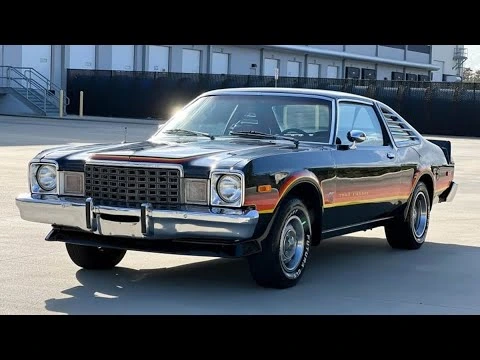
And at number five, we have the 1979 Chrysler RBbody cars.
Now, the RBody cars, as mentioned, were introduced in 1979 and had an extremely brief run in the sales department from only 1979 to 1981, just three model years.
In fact, some of the ROD models like the Plymouth Grand Fury were only around for two model years, 1980 and 81.
Other ROD models like the Chrysler Newport and the Chrysler New Yorker and the Dodge St.
Reges were around for all three.
So, why do the R bodies make this list? Well, first of all, this was effectively a warmed over B-body platform.
And the B-body was introduced by Chrysler in 1962.
And remember, at this point, Chrysler just didn’t have a lot of capital to invest to come up with new platforms.
So, it warmed over that Bbody platform and introduced these relatively large vehicles at a time when oil prices were spiking in the US market.
Now, remember that GM had downsized their full-size vehicles in 1977 and did so rather successfully.
Customers ended up liking the smaller and more compact size.
Ford and Chrysler stuck with their extremely large full-size automobiles all the way through to 1978 and would take until 1979 for Ford to introduce the Panther platform cars and for Chrysler to introduce the R bodies.
But the unfortunate thing about the R body was that not only was the styling relatively dated, but also a good fraction of the engineering was dated.
As I mentioned, and unfortunately, the quality control on these cars was abysmal.
They were outfitted under hood with lean burn electronic feedback carburetor systems that didn’t necessarily run right at least part of the time, including this strange box on the air cleaner under hood that was effectively the brains of the unit.
Why Chrysler would put a computer under hood in an area where it’s subject to lots of thermal cycles is beyond me.
Obviously, most automakers would put the uh the electronic control modules inside the vehicle and have wiring going inside the car, but Chrysler did not.
And that created some reliability issues, but also the electrical systems in these cars were just not up to the task.
In fact, some journalists tested these vehicles at the time and remarked that when they would step on the brakes, the interior lights would come on or the clock would go off.
It just was really a mess.
In fact, during this time period, Chrysler also had the tooling brake for one of their torsion bars on the front suspension.
And as a consequence, they just gave the cars two left or two right torsion bars.
Uh, and that would seemingly sound okay, but the problem is the car obviously has different weights on the driver’s side versus the passenger side.
and the torsion bars were originally tailored to said weight.
And of course, if you just put two lefts or two rights on, that’s not going to be the case.
So, the cars didn’t ride as well either.
Chrysler just didn’t have the money to replace the torsion bar tooling.
So, the R bodies were really this stop gap measure and they were not successful.
kind of lived in the shadow of GM’s downsizing from 1977, but they had considerably more gremlins and quality control issues, including the lean burn setups under hood.
And for that reason, it makes number five on this list.
Let’s move on to number four.
And at number four, we have the Ford Pinto.
And let’s not forget the Mercury Bobcat.
The Pinto was introduced for the 1971 model year, produced through the 1980 model year.
And I have to say by and large it was a decent little compact car.
It wasn’t horrible by any stretch of the imagination.
In fact, it was relatively reliable, relatively wellb built.
This was an economy car after all.
One of the things that it was cursed with was rust.
And it had halfway decent engines in it.
Some of them were a little quirky.
And engines like the Cologne V6 as an example and some Pintos were a bit of oil leakers, but they were generally relatively reliable, especially when we compare them to other vehicles that are on this list.
Now, the Pinto had two Achilles heels.
One was rust.
These cars seemingly you’d breathe on them and they would begin to rust and that was somewhat typical of other cars of the era, too.
So that wasn’t necessarily a distinguishing feature, but what was was the publicity surrounding Ford and a particular costbenefit analysis that was performed by Ford wherein it was revealed that Ford recognized that the Pinto had an ability to self-imulate in the event of a rear-end collision.
And the fix for this was an $11 part that would basically provide extra strength in the event of a rear-end collision.
Well, $11 per car is relatively expensive.
and a costbenefit memo became publicized where Ford compared the cost of outfitting the Pintos with this $11 part or series of components and compared that to the cost of paying out against various claims related to serious burns or deaths.
And Ford had calculated that they would have 180 deaths, 180 serious burns.
And the net cost of just paying out in those cases was far less than the cost to install the hardware required in the Pinto to preclude such adverse events.
Now, as you can imagine, the American public was outraged that Ford would think about this in such a rational and calculating manner.
And the reputational damage that Ford incurred from this was severe and continued for many, many years.
The unfortunate part, like I said, and why the Pinto only made it to number four on this list is because despite the publicity, the car actually wasn’t a horrible car, especially when you think about the other compacts that were around at the time, like the Chevrolet Vega or the AMC Gremlin.
I would have picked the Gremlin, by the way.
proven technology.
AMC’s inline six-cylinder engine, Chrysler Torqueflight, at least after the Borg Warner automatic was dropped in the early 1970s.
And you know, that was kind of a proven car and a good-looking car.
The Gremlin was great looking.
But in any case, the Pinto was not a bad vehicle, but the publicity that ensued from it just overtook its reputation as being a decent little compact car and turned a lot of customers away from American vehicles.
Let’s move on to number three.
And at number three, we have the 1976 Aspen and Valari.
Now, the Aspen and Valari were introduced by Chrysler for the 1976 model year and succeeded the Plymouth Valiant and Dodge Dart.
And Chrysler had conceived the Aspen Velari Duo as a car, like a compact car that effectively could be a just regular old compact car, but also be dressed up as a more luxurious vehicle.
It was a good premise, especially for the time in which some consumers were concerned about fuel economy.
The problem with the Aspen Ferrari was that it became the most recalled car up until that point.
There were so many problematic issues associated with it.
First was the drivability.
I already mentioned the lean burn setup on the RBbody Chryslers and it was still bad by that point, but a few years prior on these Aspen and Felaris, that lean burn setup was known for causing stalling and drivability issues.
In fact, Chrysler, I believe in 1977, issued a recall on 1.
3 million vehicles because of drivability issues.
They just were not drivable.
They would stall out.
You’d go around corners and you basically have to be ready to shift the car into neutral and restart it and then pop it back into drive.
They also had myriad issues like the seat belts becoming detached in high deceleration events.
Obviously, that’s not a good thing because then you have unbted occupants.
There were in some cases misouted fuel vapor lines that could come into contact with the alternator belt and then cause a fire under hood.
That was not good either.
Then there were the brake lines which were routed under the battery tray and battery acid could drip on them.
So that would rot out the brake lines and you would not have any brakes in your vehicle.
Then there was the possibility of the front subframe becoming detached.
the likelihood that the secondary hood latch was not strong enough to keep the hood closed in the event that the primary latch had failed and the fact that Chrysler did not install the inner wheelhouses in these vehicles.
Chrysler didn’t learn their lesson from the 1957 cars which rusted prematurely and the same happened to the Aspen and Aari.
So the cars rusted, they weren’t that drivable.
They had tons of drivability issues.
they didn’t have, let’s say, the appropriate safety gear in some instances, like I mentioned, the seat belts that would unlatch themselves.
And so, for all these reasons, what was really a good premise of a vehicle and a lot of the core componentry like the engines and transmissions in the Aspen and Aari, aside from the lean burn portion of the engine, they actually were wellineered, well-built engines.
the Slant 6 as an example or any of the Chrysler V8s that you could get under hood.
Good engines, but you know that lean burn setup just was not not uh well engineered and perhaps introduced prematurely.
And you couple that with all those other recalls and this being the most recalled car to date, people ended up hating their Aspen Valari and it just turned them off from not only Chrysler but in some cases American cars.
And that’s the reason why this makes it to number three on the list.
Let’s move on to number two.
And at number two, we have the GMX cars, which were introduced for the 1980 model year.
Now, the GMX cars were, as I said, introduced for the 1980 model year.
They came out partway through 1979.
And initially, they were extremely successful.
In fact, Chevrolet sold over 800,000 citations in the 1980 model year alone.
The car was a runaway hit.
It was the perfect combination of, can you say this today, style actually weren’t badl looking cars, but the style was right.
The packaging was great.
If you’ve ever sat in one of these cars, they are very roomy on the inside despite the fact that they are small vehicles, so they were the right size.
They looked good.
They generally drove well.
They had relatively good road isolation in them.
They were relatively quiet, especially for the time frame.
Well, maybe except the 2.
5 L Iron Duke engine under hood, which people know what my opinion is of that if you’ve been watching this channel for some time.
Although, these cars did have an optional 2.
8 L V6 engine.