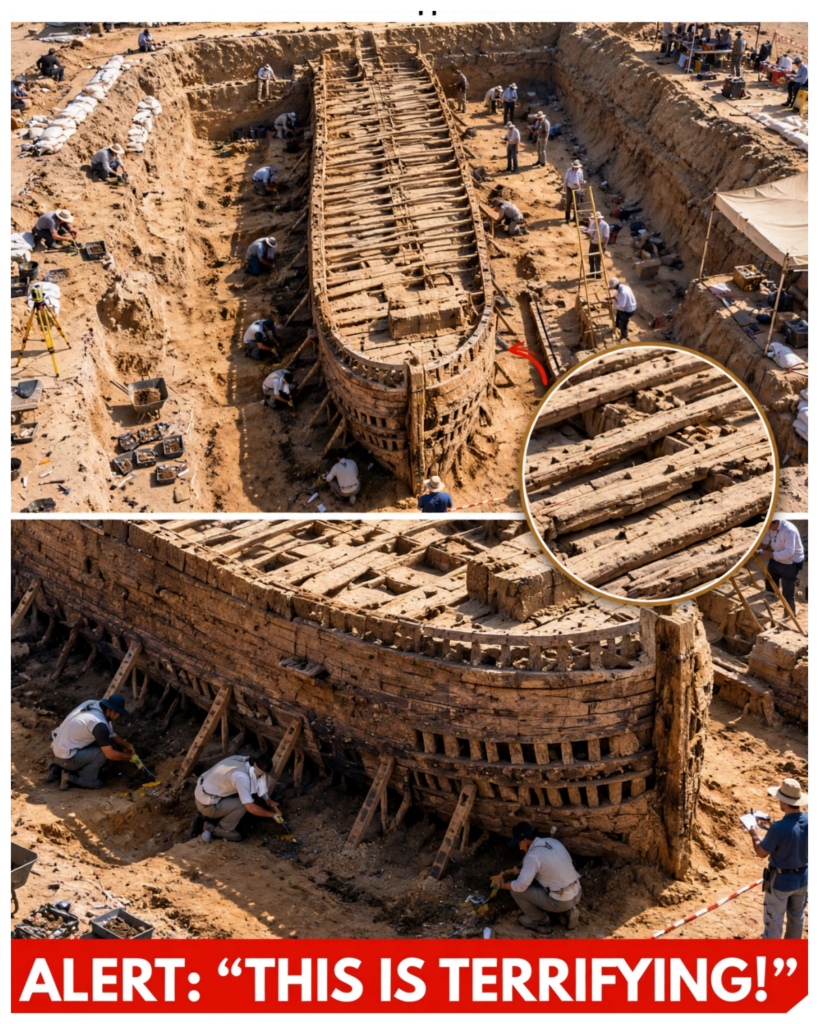
These photos actually show Noah’s ark, then they can prove that everything that’s written in the Bible about this whole event is [music] actually true, right?
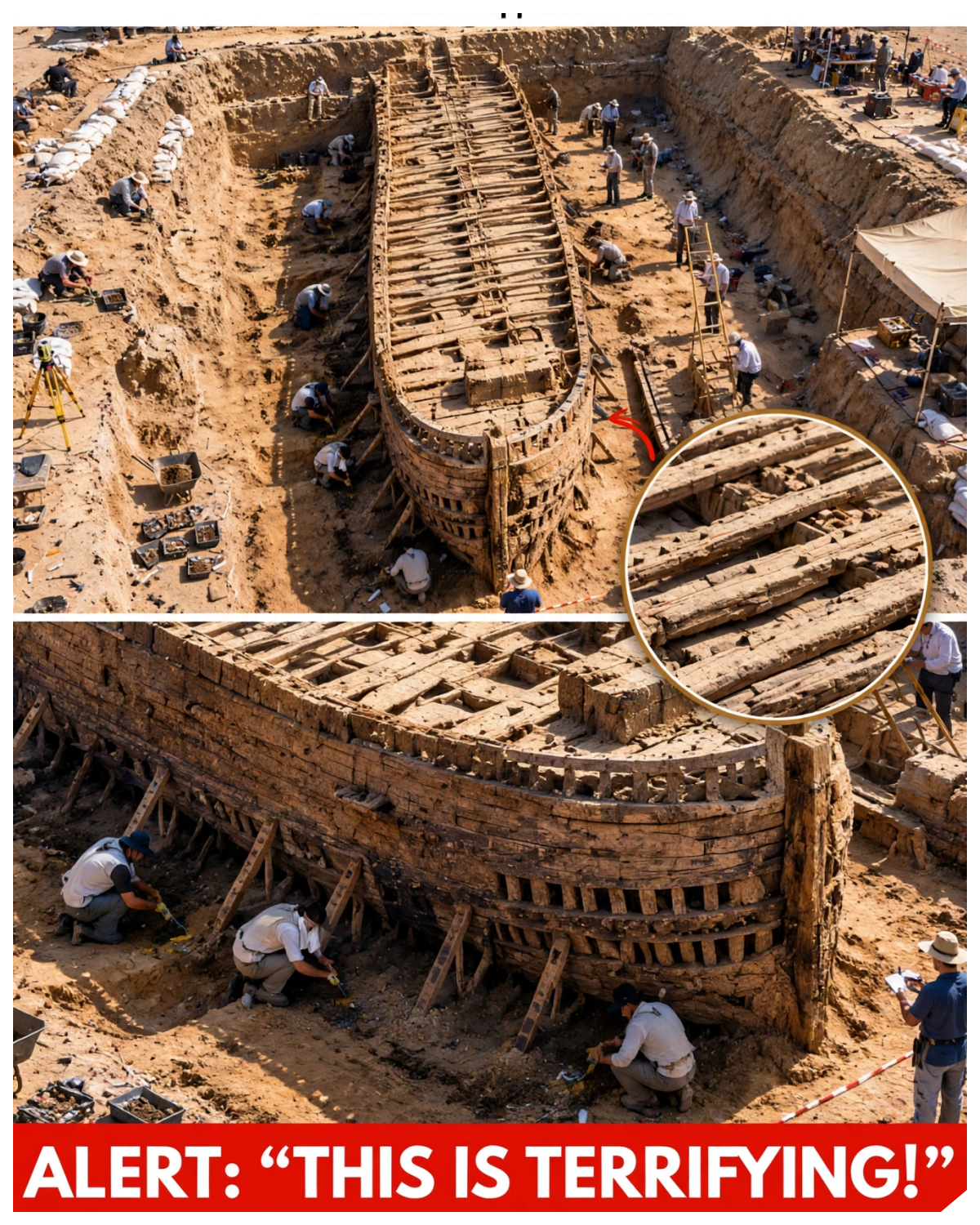
This is a historical event that actually happened.
In the high country of eastern Turkey, the story goes, a daring team set out to answer one of history’s oldest questions.
They carried radar, cameras, and years of stubborn hope.
And on a freezing slope, they supposedly found it.
A wooden structure nearly 5,000 years old that might be the remains of Noah’s ark.
It is a story built to make your pulse jump.
A hidden location, a secret laboratory, churches celebrating, scientists shouting, and a world waiting for proof.
But here’s the problem, and I’ll say it now so we can enjoy the rest of the ride.
Honestly, the version going around online is a dramatization.
Many of its heroes and critics, the professors, the pastors, the television panels, are names I could not trace to any real person.
Some details are real, some are scrambled, and some are simply the kind of thing a storyteller adds to keep you watching.
So, this film will do two jobs.
We’ll follow the story exactly as it is told, chapter by chapter.
And at every turn will stop and ask what is documented, what is invented, and what is genuinely still open.
Because the true history of this mountain and of the legend is stranger than the legend itself.
Let’s begin on the slopes.
First, a sense of the stage.
Mount Ararat is not one summit, but two.
Greater Ararat rises to about 5,137 m and lesser Ararat, a smaller sibling, stands to its east at roughly 3,896.
On a clear day, the great white cone looms over the Armenian capital Yeravan across the border, which is why Armenians treat it as a national symbol, even though it now lies inside Turkey.
A mountain this large alone on the plane practically invites a legend.
The discovery as it is told.
The scene opens on a bitterly cold morning in the Armenian highlands.
A team of ark enthusiasts has spent years combing the slopes of Mount Ararat.
Their leader in this telling is an archaeologist called Dr.
Yuku, a man who fell in love with the story of Noah as a boy.
He has assembled scholars, students, expert climbers, photographers, and technicians along with cameras, mapping gear, and specially built ground penetrating radar.
His plan is simple.
Scan every inch of the terrain, and something extraordinary will appear.
Days of hard climbing follow.
Thin air, savage wind, freezing nights intents.
At last, the group reaches a place called Durupanar on the flank of the Tenderek Mountains, which local tradition marks as the final resting place of the ark.
Then, a researcher named Andrew Jones spots something poking through the snow.
Dark timbers, straight lines, right angles, far too regular, he says, to be natural.
The radar goes down.
The screen fills with a large organized mass buried beneath snow and volcanic rubble.
Jones calls out that the dimensions seem to match Genesis with internal compartments and what looks like processed lumber.
The team cheers.
News spreads.
Local museums and British media are notified.
Samples of wood and metal are pulled from the snow and shipped for dating.
And the laboratory says they are about 4,800 years old.
That is the story.
Now the reality check.
The real history of Durupanar begins quietly.
In 1959, a Turkish army captain, Ilhan Durupanar, noticed a boat-shaped outline in aerial photographs taken for mapping.
In September 1960, Life magazine published the image, and a small expedition rushed out and concluded the shape was natural.
Then in 1977, an American nurse anesthetist named Ron Wyatt measured the ridge and declared it the ark.
In 1987, Turkey designated the area a national park, which lent the hill an official look that skeptics say ran ahead of the evidence.
That is how a muddy ridge turned into a pilgrimage site.
Andrew Jones is real.
He leads a group called Noah’s Ark Scans and his team has surveyed the Durupanar formation with radar and drones for several years.
But Durupanar is not a snowbound summit camp.
It is a boat-shaped ridge in Ara province roughly 18 mi south of Mount Ararat at an altitude of around 1,900 m sitting in a shallow valley near the town of Dobazot.
It can be reached by road.
In summer, it is bare, dusty ground, which is part of why it has attracted visitors for 60 years.
Behind it rises Tendurik, a volcano about 3,500 m high, whose old lava flows explained the volcanic rubble in the story.
The lead archaeologist of the 2026 fieldwork was not a Dr.
Yuku.
It was Sankaratila of Civas Kumhury University, and he has been far more cautious than the film’s hero.
No report I can find describes timbers sticking out of the snow.
What the real teams describe is radar images, drilled soil cores, and sampled organic material.
As of this season, the project itself says no ancient wood has been identified.
One more detail deserves attention.
The story says wood and metal were radiocarbon dated.
Radiocarbon dating only works on material that was once alive, such as wood, bone, charcoal, or seeds.
Metal can’t be dated that way since there is no leftover biological carbon to measure.
A claim that metal shards were carbon dated is a red flag.
Ground penetrating radar deserves a word here because it carries so much of this story.
The instrument sends pulses of radio energy into the ground and records the echoes.
It is superb for finding buried walls and graves in dry sandy soil.
But it records contrasts in material, not objects.
A reflection that looks like a plank can be a layer of rock, a change in moisture, or a fracture.
Radar cannot tell you that something is processed lumber.
Only a sample can.
This is also not the first time a boat-shaped hope has swept the region.
In 1955, the French industrialist Fernon Navara brought down a chunk of timber from the glacier on Ararat itself and laboratories gave it ages ranging from about 1,400.
In 2010, a Hong Kong group announced it had found the ark, and a member of the expedition later alleged the wood had been planted.
Each time the first headline was louder than the last correction.
And behind this whole tale sits a famous modern echo.
A full-size arc in Kentucky.
Let’s talk about how the world reacted.
A world divided.
In the story, the news explodes.
Christian groups celebrate.
Scientists hesitate.
A famous evolutionary scientist, Dr.
William Danvers tells a TV audience that old wood on a mountain does not prove an ark.
The explorers keep the exact location secret and say they’re preparing more high-tech tests.
Then the reactions pour in.
A divinity professor on a CNN panel says that if the wood dates to the biblical flood, it would verify scripture.
A small church pastor in Oklahoma tells his flock that they can now touch God’s covenant with Noah.
A group called God-Proof Archaeology starts raising money for new expeditions.
On the other side, a Berkeley professor on MSNBC says the planet’s geology shows no global flood a few thousand years ago.
A paleoanthropologist tweets that one odd structure cannot overturn evolution.
Some skeptics even accuse the explorers of staging the find.
I could not verify any of those named experts panels or quotes.
They read like composite characters, but the arguments themselves are real and they have a long history.
The scientific objection to a global flood is not new and it did not begin with evolution.
In the early 19th century, many of the founders of geology, including the Reverend William Buckland, believed a great flood had shaped the landscape.
Then the evidence piled up.
In 1831, the geologist Adam Sedwick, himself, a clergyman, stood before the Geological Society of London and publicly gave up the idea, saying the rocks did not support it.
Glaciers.
Not a single deluge, explained the scattered boulders and gravel that had once seemed like flood debris.
[music] Since then, ice cores, tree rings, and sediment layers have shown no worldwide flood within human history.
That does not mean floods were imaginary.
In 1929, the British archaeologist Leonard Woolly announced that he had found a thick layer of river silt beneath the city of Er in southern Iraq.
And for a time, it was hailed as the flood of Noah.
Later work showed that similar silt layers at other Mesopotamian cities date to different centuries, which means they record separate local floods.
Another idea proposed in the 1990s by the geologists William Ryan and Walter Pitman suggested that the Black Sea was catastrophically refilled by the Mediterranean thousands of years ago.
That hypothesis remains contested, but it shows how real disasters may have fed the memory of a great deluge without requiring a flood over the world’s highest mountains.
The ark in Kentucky mentioned in the story is also real.
The Ark Encounter, which opened in Williamstown in 2016, is run by the group Answers in Genesis, and its wooden replica is about 510 ft long, 85 ft wide, and 51 ft tall.
It was built to illustrate a literal reading of Genesis, and it attracts large crowds.
It follows the group’s creation museum, which opened in 2007, and the Ark Encounter reportedly cost around $und00 million with much of its timber frame raised by skilled traditional builders.
Its founder, Ken Ham, even faced the science educator Bill Nye in a televised debate in 2014.
It is a museum and a faith project, not an archaeological site.
It also shows something important.
Millions of people care about this story, which is why viral videos about it spread so fast.
A smaller cousin, a half-scale ark built in the Netherlands, appears later in our story.
The story ends this stretch with a challenge.
The leader agrees to take a team of neutral experts to the secret site to settle the matter, and that is where the story introduces someone new, Dr.
Alice, and the carbon clock.
Dr.
Alice is a historian of religion, torn between faith and professional duty.
Her faith says the Bible is true.
Her training says dates require evidence.
As she watches the controversy unfold, she keeps a journal torn between hope and doubt.
Meanwhile, the ark fragments are examined in secret laboratories while the world waits.
Then the news arrives.
The radiocarbon results come back at around 4,800 years, which places the wood near 2800 B.CE, give or take a few generations.
According to the story, that is older than the oldest known human buildings.
It also falls supposedly inside the biblical flood window, which the story gives as between 5,000 and 30,000 B.CE.
Let’s take that apart.
A date of 4,800 years sounds precise, but several things complicate it.
First, the claim about the oldest buildings is wrong.
Human beings were building monumental stone structures thousands of years earlier.
At Gobecepe in southeastern Turkey, carved stone pillars were raised around 9500 B.CE.
The walls and tower at Jericho date to around 8,000 B.CE.
Even the earliest phase of Stonehenge, a circular ditch and bank, began around 3000 B.CE.
Second, a biblical flood date is far less fixed than the story suggests.
Different ancient manuscripts give different genealogies.
The 17th century Irish Archbishop James Usher calculated 2,348 B.CE, about 4,350 years ago.
A traditional Jewish chronology gives a date around 21105 B.CE.
The Greek Septuagent translation which counts a longer span lands in the 3000s B.CE.
So a sample at 2800 B.CE would match none of these exactly though it would sit between some of them.
That’s why nearly any date from the ancient near east seems to overlap with one tradition or another.
And it’s why overlap proves little.
If a window is wide enough, almost every sample falls inside it.
Third, radiocarbon dating measures when a living thing died, not when something was built.
Wood can be old when it is used, which scientists call the old wood problem.
A tree that died in 2800 B.CE could be cut up and reused for centuries, or wood might wash down a slope from somewhere else.
A date on a sample tells you about the sample.
And fourth, the method has to be done carefully.
The technique pioneered by the chemist Willard Libby in the 1940s tracks the slow decay of carbon 14, which has a half-life of about 5,730 years.
Raw results must be converted into calendar years using a calibration curve built from tree rings, corals, and cave deposits.
That adds uncertainty.
Samples must be treated to remove modern contamination such as soil acids or fungal growth.
And good practice is to send material to several independent laboratories without telling them where it came from.
There’s also a better tool for wood than carbon alone.
Tree ring dating.
Cornell University’s Aian Dendrochronology project led for decades by Peter Cooneyholm built a master tree ring chronology for Anatolia that reaches back many thousands of years.
Libbyy’s original curve has been refined again and again.
The international calibration standard known as INCAL was most recently updated in 2020 with thousands of new tree ring and coral measurements.
If a real timber from this site could be matched against that record.
The date could be pinned down to a specific span and even the type of tree would be known.
The story says tests also included DNA analysis.
Ancient wood rarely preserves usable DNA, so that claim is one to take lightly.
What the story is really capturing is a feeling.
In the middle of a global argument, a person stands at a crossroads, unsure how to weigh faith against proof.
That feeling is exactly what the next chapter explores.
Dr.
William and the date that shook the world.
A new voice enters.
Dr.
William Jennings, a respected Old Testament professor, declares that if the lab numbers are right, the remains date to the very era Genesis describes.
In his words, as the story tells it, the coincidence is astounding.
Theologians rush back to the passages about the ark’s dimensions and materials.
Pastors tell their congregations that science now supports scripture.
Not everyone buys it.
A geologist who initially dismissed the find says he suspects contamination and reminds everyone that calibrating carbon dates across thousands of years is, in his words, as much an art as a science.
A group of anthropologists writes in a magazine that old wood does not prove an ark.
A biologist, the story says, loses his university tenure after attacking colleagues in print.
Meanwhile, the discoverers insist they are neutral.
Though in private, a team member admits the match with the flood chronology surprised them.
Again, none of those named individuals can be verified, and the tenure story has no source I could find.
But the underlying argument is worth taking seriously because it highlights a real problem in science called confirmation bias.
When a result matches what you hope to find, you tend to check it less rigorously.
That’s why good science tests a surprising result harder, not softer.
It is also why scientists insist on blind testing, independent repeats, and open publication.
What would real confirmation look like?
A sample of wood cut from a documented spot, photographed in place, and sent to at least two independent laboratories.
A species identification because the Bible’s gopher wood would would need a plausible match tool marks or joinery which show human work pitch residue that chemistry can identify as bumen or resin and then a paper in a peer-reviewed journal so that other experts can attack it.
Nothing short of that would persuade a skeptic and nothing short of that should.
Then comes the most controversial move in the whole story.
The discoverers announce that they have found remnants of the ark, but they refuse to reveal the exact coordinates.
They say they fear a rush of unqualified visitors will damage the site.
Believers say that proves it is real.
Academics say it proves nothing.
The world waits.
Secrecy has a cost.
Science works because anyone can check.
A discovery whose location is hidden cannot be examined.
And a sample whose origin is unknown cannot be trusted.
There is a legitimate reason to protect a site since Turkish law requires permits and protects cultural property.
But in this case, Durupanar is a public well-known site which makes the idea of a secret location oddly out of place.
That detail suggests the story is borrowing the language of mystery more than describing a real discovery.
Then the story turns to Genesis itself and to a surprisingly tricky question.
What exactly does the Bible say about where the ark landed?
Which mountain?
The story quotes the flood account.
40 days and 40 nights of rain.
The waters recede.
The ark comes to rest as Genesis says on the mountains of Ararat.
Traditions settled on the Great Peak in Turkey, the tallest in the region, which rises above 5,100 meters and carries a permanent ice cap.
A popular podcaster in the story argues that finding an ark on that mountain would root Christian doctrine in demonstrable history.
Even a conservative society that once revoked the leader membership for exploring evolution now praises him.
But biblical scholars quickly cool the excitement.
Genesis never names a single peak.
It says mountains plural of Ararat.
And Ararat in Hebrew is a region linked to the ancient kingdom of Uratu.
Assyrian kings mentioned a land called Uruatri as early as the 13th century B.CE.
And the kingdom of Uratu around Lake Van flourished between roughly the 9th and 6th centuries B.C.E.
The mountain we call Ararat was not named that way in antiquity.
The identification came later through medieval Armenian tradition.
The names themselves tell a story.
Armenians call the mountain Masis.
Turks call it Arada.
In Persian tradition, it has been known as Kuhi, Noah’s mountain.
Each culture has laid its own memory over the same snowy cone.
And that layering is part of why the legend feels so ancient.
Other traditions place the landing elsewhere.
Early Aramaic translations of Genesis speak of the mountains of Cardu in the Kurdish highlands.
The Quran says the ark settled on Mount Judy, which many Muslim scholars place in southeastern Turkey.
The Babylonian priest Barasus put it in the Kurdish mountains as well.
The story’s critic, a professor named Isaiah Dunn, makes just this point.
Ararat could mean many ranges, possibly hundreds of miles from the famous peak.
Supporters respond that if it isn’t the highest mountain, what else could it be?
Andrew Jones, the story says, even asks why skeptics can’t accept that the explorers were divinely led to the site wherever it is.
And then the story takes a dark turn.
A wealthy adventurer called Brock Lancaster spends a fortune on solo climbs to find Noah’s true resting place and vanishes.
Searchers find only his gear and remains.
I could not find any record of such a person, but the mountains dangerous reputation is real.
Ararat is not technically extreme.
Yet storms, cold, creasses, and rockfall have killed climbers, and the border region has been tense for decades with access limited by permits and security rules.
An 1840 earthquake and landslide buried a village and a monastery on its slopes.
Whoever really goes looking for the ark goes to a place that demands respect.
The search itself is ancient.
The Jewish historian Josephus writing in the first century said remains of the ark were still shown in Armenia.
Around 1300, Marco Polo reported that the ark lay on a great mountain that snow made impossible to climb.
The summit was finally reached in 1829 by the scientist Friedrich Parrot, who found no ship.
That pattern, a tantalizing rumor followed by a disappointing climb, has repeated for nearly two centuries.
So after all the drama, we arrive at the heart of the matter.
What is the actual story of Noah?
The real story of the flood.
The account in Genesis is one of the most famous stories in the world and it is sacred to Judaism, Christianity, and Islam.
In the telling, humanity has become corrupt.
God decides to wash the world clean.
But one man, Noah, stands out as righteous.
He is told to build a vessel and bring his family and pairs of animals aboard.
The dimensions given are 300 cubits long, 50 wide, and 30 high with three decks.
The story says that means about 500 ft long, 73 ft wide, and 44 ft high.
Those numbers don’t quite add up.
A cubit varied, so conversions differ.
With a short cubit of about 17.5 in, the ark is roughly 437 ft long, 73 wide, and 44 high with the longer 20.4 in cubit used by the Kentucky replica.
It comes to 510x 85x 51.
The story mixed the two.
Genesis also says Noah was 600 years old when the flood came and that God had set a limit of 120 years for humanity which is where the tradition of a long building period comes from.
The pitch mentioned in the text uses the Hebrew word kofur and bitumen a natural tar that seeps from the ground in Mesopotamia was used to waterproof boats for thousands of years including the reed boats of the early Sumerians.
In other words, the Bible’s detail about sealing a boat with pitch matches real ancient practice.
Genesis gives more detail than most people remember.
The vessel is sealed with pitch inside and out.
There is an opening a cubit from the top, a door in the side, and rooms.
The wood is called gopher, a word that appears nowhere else in the Bible, so no one is certain which tree is meant.
The Hebrew word sar translated as window or roof has also puzzled scholars for centuries.
The story also says Noah worked for a hundred years.
The text of Genesis does not actually say that.
It gives Noah’s age at several points and tradition has long inferred a building time of a century or more.
But the number is an interpretation, not a quotation.
And there’s a detail that surprises many readers.
The narrative says Noah took two of every animal, but one passage says seven pairs of the clean animals and of birds.
Scholars have long noted that Genesis seems to blend slightly different accounts.
Then the waters rise, rain falls for 40 days and nights, and the fountains of the great deep burst open.
The story says the mountains were covered by nearly 30 ft of water.
Genesis says 15 cubits above the peaks which is about 22 to 26 feet depending on the cubit.
The waters prevail for 150 days.
The ark rests on the mountains in the seventh month and Noah sends out a raven and then a dove which returns with an olive leaf.
All told, Noah is aboard for a little more than a year, about 370 days.
The story says 420.
The text supports something just over a year, roughly 370 days.
The story’s emotional ending is just as striking.
When the waters finally fall, Noah builds an altar, and Genesis says, “God sets a rainbow in the clouds as a promise never to flood the earth again.”
The Quran adds a heartbreaking moment of its own.
Noah calls to his son who refuses to board and says he will climb a mountain to escape the water and is swept away.
Is this story unique?
Not even close.
Mesopotamian literature tells of a flood centuries before Genesis was written down.
In the epic of Gilgamesh, a man named Utnapishtim survives a flood in a boat, sends out a dove, a swallow, and a raven, and lands on a mountain.
Earlier versions such as the Sumerian story of Zeusra and the Babylonian Atraasus are even older.
Scholars still debate how these stories relate, but the family resemblance is obvious.
Many researchers believe that river floods in Mesopotamia, which were a real and terrifying part of life, inspired the tradition.
The story ends this stretch by saying Noah’s descendants are the new ancestors of humankind.
In Islam, the prophet Nu is a central figure with an entire chapter of the Quran named for him.
And the same basic outline appears across all three faiths.
And once you accept the story’s premise, even for a moment, you have to ask practical questions.
How would it work?
Building the impossible.
For centuries, thinkers have tried to understand the logistics.
How could a family build a vessel that large with bronze age tools?
How could thousands of animals live together for a year?
Where did the food, the fresh water, and the waste go?
Start with the ship.
The story says the ark would be longer than the Titanic and that it would span four football fields.
Both claims are wrong.
The Titanic was about 882 ft long, nearly twice the ark’s length.
Even the largest estimate of the ark is about 1 and a half football fields.
The real challenge is the material.
The largest wooden ship of the modern era, the Schooner Wyoming, was launched in 1909 at about 330 ft with steel reinforcing straps.
In rough seas, her long hull flexed so badly that planks opened and pumps ran constantly, and she sank in 1924 with all hands.
Wooden hulls above about 300 ft tend to hog and sag between waves and leak.
That is a serious problem for any vessel of 450 ft or more, and it is why skeptics call the story impossible.
Believers answer with design.
Tim Lovevet, an engineer who has worked with Answers in Genesis, argues the ark would not have been a box, but a shaped hull with narrowing floors and outwardleaning walls to shed waves.
A Dutch builder, Johan Hubers, constructed a half-size replica in 2012, around 230 ft long, which floats and draws visitors.
A half-size model proves that a large wooden boat can float, though not that a full-size one can survive a worldwide storm.
History gives us a few benchmarks.
The Roman Emperor Caligula’s lake ships recovered from Lake Nemi were around 230 to 240 ft, built for calm water.
Kufu’serary boat found beside the Great Pyramid is about 143 ft.
Chinese records describe enormous treasure ships of the 15th century.
Some claimed at 400 ft or more, though historians still argue about whether those figures are accurate.
Nothing proven in the ancient world approaches the ark’s size, and nothing built from wood has proven seaorthy at that length for long.
Then come the animals.
Scientists have described around 2 million species, and estimates of the true number are far higher.
The Kentucky Project’s designers estimate roughly 7,000 animals aboard, drawn from about 1,400 kinds, a number meant to be small enough to fit.
Defenders say Noah needed only kinds, a broader category, and that young animals took less space.
In 1961, the theologian John Wickham and the engineer Henry Morris published the Genesis Flood, a book that launched the modern creationist flood movement.
In 1996, a writer named John Woodarop published Noah’s Ark, a feasibility study which tried to calculate space, food, and water needs.
The story credits Morris with that study, but it was Wood Morap’s work.
His book suggests, among other ideas, that animals might have been calm or dormant.
Critics respond that such answers rely on miracles and that science can’t test a miracle.
Food is a puzzle on its own.
Storing enough diverse food for a year, including meat, fish, grain, grass, and fruit, would be a serious burden before even considering fresh water, ventilation, and waste.
The story imagines a kind of nautical chain of command with Noah as captain and his sons and their wives running crews to feed animals, clear waste, and patch leaks.
It is a charming image and it shows how deeply this story stirs the imagination which brings us back to where we began.
A real ridge sits in eastern Turkey.
Real teams have scanned it, drilled it, and argued over it.
The wild details, the secret lab, the television panels, the vanished adventurer belong more to storytelling than to the record.
What is solid is that no ancient wood has been identified and no timber has been tested and published.
If it ever is, the world will know because real evidence does not need to hide.
Until then, the lesson may be this.
The most important evidence in any mystery is the kind you can check.
And maybe that is why the legend never dies.
The story has already done something remarkable.
It has outlasted empires, languages, and almost every argument that has tried to settle it.
So, tell me what you think.
Does the legend need proof to stay powerful, or does it work on a different level entirely?
Leave your thoughts in the comments.
And if you enjoy stories that follow the evidence instead of the headline, like the video, subscribe, and I’ll see you in the next