Well, Andrew Jones, you are with Noah’s Ark scans, and you came on last year with me to talk about evidence for Noah’s Ark, and you have been in the headlines though this past week quite a bit, the New York Post, a number of other outlets.
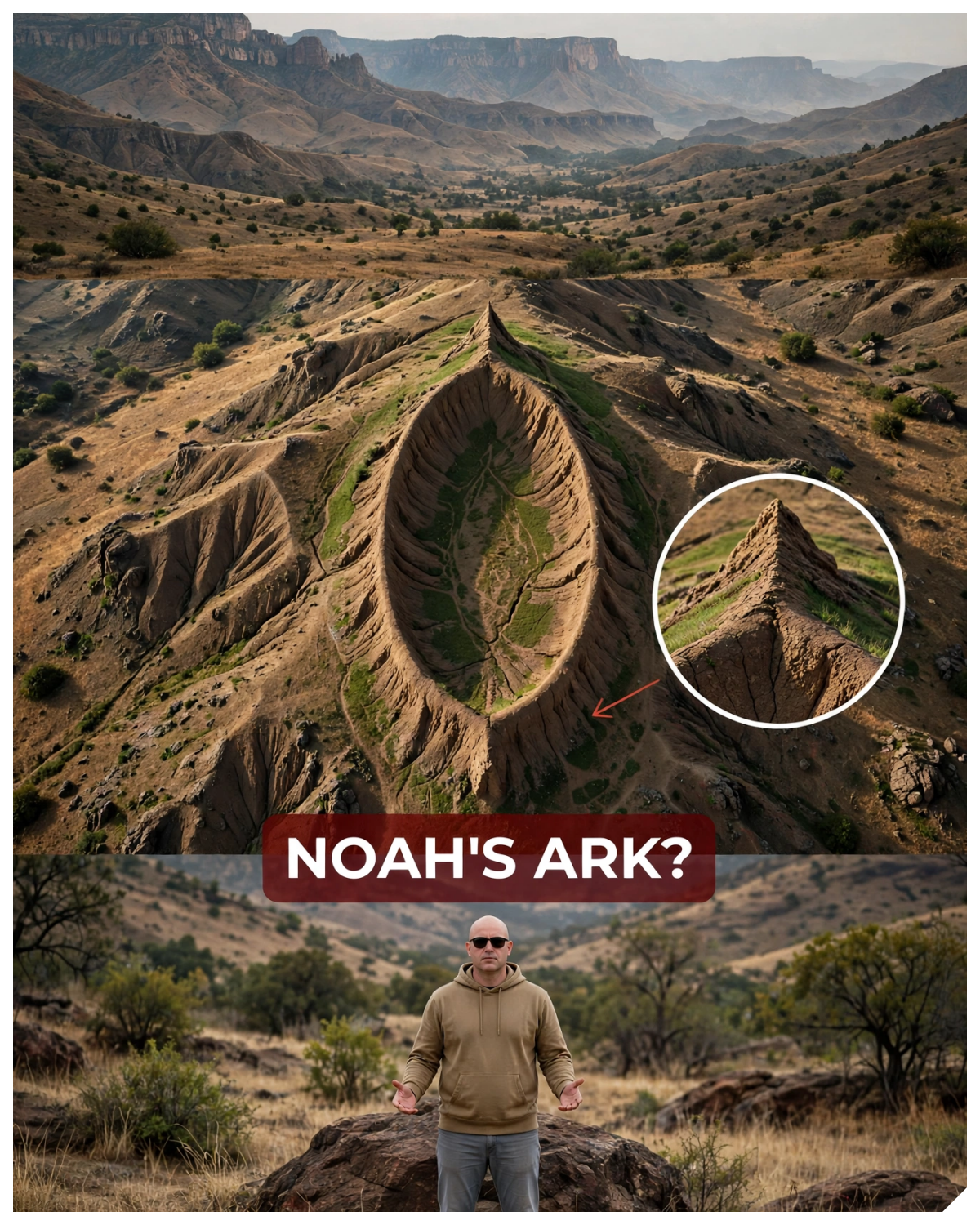
You were on Fox News, I believe, as well, um, talking about this issue.
Now, you believe that you have evidence that could back Noah’s ark, which obviously as Christians, we believe this story is true.
And for a long time, people have been looking for evidence of the ark and they have been, you know, there have been expedition after expedition.
Can you talk generally from a 30,000 foot view about the evidence that you believe does back the existence of the ark?
And by the way, you are on site right now right in front of the place where you believe some of this evidence is.
Thank you for having me back on.
Yes, I am here in the mountains of Arat.
We’re just beside the Iranian border here in eastern Turkey.
And in this area, many expeditions have been have gone here in the past from looking on the big mountain which is right over here actually the big mount Arat and then of course the uh Durupanar boat formation here that Ron Wyatt and others investigated in the 1980s.
And so, uh, we’re back in the news because of the evidence, the the soil analysis, the GPR scans being rean analyzed by professionals.
And again, it just brings more and more data to this site.
That’s why we’re excited to share it.
Um, so to give you the big picture, well, the site was first discovered for those who don’t know in 1959 by a Turkish army captain.
He saw this boat formation.
He was a cryptographer in the army uh here in Turkey and they had just joined NATO that year.
So this area was bordering the the then Soviet Union and they were mapping out their territory and he discovered this boat formation.
Uh about one month later it was in the news around the world.
The photograph was released by the Turkish military and then one year later in June of 1960 an American Turkish expedition came out here.
They had an archaeologist.
They had reporters.
They had a business person, but they also had the Turkish military and Captain Duffanar came out.
Uh they came back with uh one of the guys who was a photoggramometry expert from Ohio State University.
He was actually Swiss and he had worked in Turkey in the past on some of these type of surveys.
He really believed that um after a two-day uh quick expedition to the site that they could not determine what it was.
He said, you know, we didn’t have enough time.
Others thought it was just a natural formation, so it died down.
No, no, nothing was done here.
Scientifically, they just came and looked at it and took pictures.
Uh about um 17 years later, it was 1977, that’s when Ron Wyatt, an explorer from Tennessee, got involved.
And throughout the 80s and early 90s, he was in the news a lot cuz he was trying to do work out here.
And he did he did soil testing initially.
Then he did uh the first uh radar they were using in Turkey was at the site, the analog radar that printed out on paper the results.
And then they did metal detector scans and it got enough interest that the Turkish government in 1987 built a visitor center which I’m standing in front of right here so that tourists could come see it.
And that’s then it died down again.
Uh I came out here in 1997.
I was in college.
I came out here as a tourist just to see it myself.
I got interested really uh wanting to pursue more than just taking pictures.
I met up with Dr.
Sali Bra Toutan who’s a retired now professor of geology uh from Adaturk University at that time and he had been studying this site even up to today cuz he’s still around he’s been studying this region and site for many decades um and he really believed that this is the best possible candidate for Noah’s arc.
So I asked him some of the questions about the geology and why people say it’s a rock or it’s a sincline or mud that’s go went around a rock and things like that.
And he gave me the the details about you know what’s going on at the site and why he thinks it’s more than that.
And so then in 2019 with the history uh actually the science channel was here and with permission uh from the Turkish government we were out here scanning for a science channel documentary film and that’s when we did the GPR uh at that time and we did two different types of scanning that would go at different depths.
Uh that material uh initially the the report um that was uh coming from that uh expedition showed right angles and some parallel lines and it was an American archaeologist who was not part of our team who analyzed that and he said look if you were to do an excavation I would say do it right here cuz I’m seeing a series of right angles about 7 m down or 21 ft.
So that was interesting but it wasn’t until I reconnected with Dr.
By Tuton during the pandemic, I think it was 2021 or 22.
I I met with him again after my initial meeting 20ome years ago and I told him, “Hey, we have this data, but uh I would like a third party to look at it.”
So, we gave this raw data to an American geoysicist.
She had 30 years experience and her own company doing these type of scans.
And so, we just she had nothing to do with Noah’s Arc.
We asked her and she said she would do it for free.
He said, “Okay.”
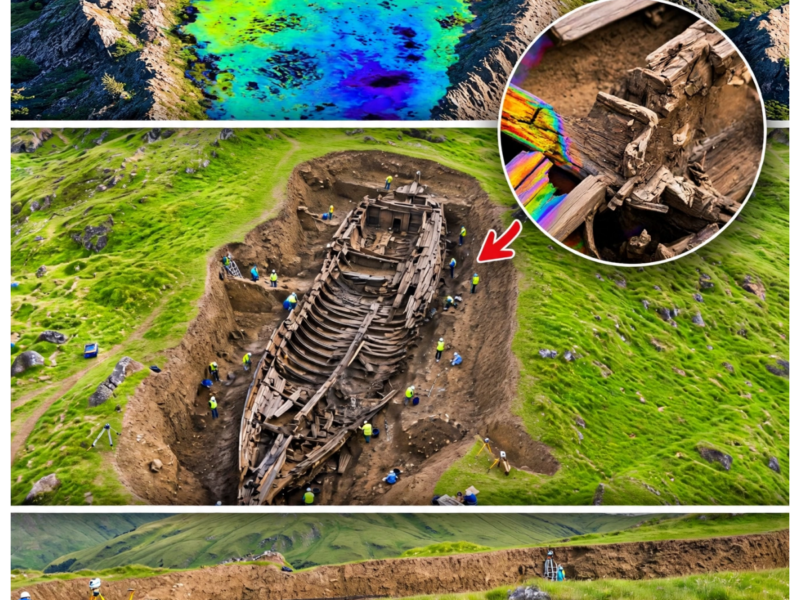
So we sent her the gigabytes and gigabytes of data and within 6 months she had analyzed it and this is what’s in the news right now because she had come back and she told us said look I am finding she asked we had dug a tunnel down the site said no it’s on a mountain side there’s no utility line or something but uh she said look about 4 meters down there is a tunnel a series of voids that connects that goes from the pointed top end all the way to a little past where the there’s a big boulder in the middle and she that is following the center line of the boat formation.
And then she saw a broken up one on the inside edge of this boat parameter.
And so uh she said these are, you know, voids.
This is something that hasn’t filled in yet.
And so she thought that was very interesting.
And then at the center of this boat formation, she found a almost squareish shape.
Uh I call it central atrium, but this center void that goes down almost 40 feet 13 m below the surface.
And that’s actually where our data bottoms out.
And so we have this tunnel leading to a central cavity and then we’re having uh right below that and this is something we haven’t even released yet right below where this t the central hallway or corridor is this tunnel you’re seeing these very faint uh uh series of parallel lines and right angles as if they are support beams for the floor.
You could say if this was a natural object, I mean a man-made object, you know, something that’s not just random.
You’re seeing this whole thing and it’s going down in depth.
So, it’s not a shallow feature.
And so, we’ve had um uh you know, we have plans with uh hopefully with the Turkish University.
We’re waiting um on them uh that they could go out here and do some of the things we’d like them to do for the future to go into the site with you know cameras, robots, whatever to keep, you know, it’s very fragile site so you can’t just do a big hole in it.
Uh but well let me ask you because that that let me let me ask you really quick on that because that’s the question a lot of people have.
You know for so many years you know for so many years people obviously they built a visitor center there.
There’s been speculation.
Why has it taken so long to get in there and actually look right?
That’s the question people have.
Yeah.
And we’ve asked you know ever since I first heard about as a kid and of course I couldn’t communicate with the Turkish government but then I come out here you see the visitor center.
At that time it was 10 years old and then when you three years later I met the geologist who’ve been working at this site Dr.
Byrick Tutan and and it’s always like okay when can they do more than uh non-destructive scanning uh you know what can be done next and um I’ve heard different answers.
Uh, one answer is that it’s so fragile they rather have non-destructive techniques scan it because traditional archaeology you put a big hole like 5 meter by 5 meter square and and it’s a destruction you know you you have a scar in the site and people come here they want to see the boat shape and so now suddenly uh this uh hole is there.
Um and so that was one thing someone said it’s too fragile.
Uh, another one is it’s very actually hard to find someone interested to study it.
So, you’re looking at, so you’re in Turkey, so you need to find a Turkish archaeologist under a Turkish university.
And so, they’re basically putting their credentials on the line looking for Noah’s arc.
And and in this environment, even though this is a country where, you know, people do believe in the the story of knowing the flood is in the Quran, uh, you still have in academia people who would think you’re looking at fairy tales.
Looking for Santa Claus’s home or something, you know, looking for an Ozark.
So, why would they put the time and money?
It’s not legal.
It’s not legal to just go up there and start doing it, right?
You need permission from the government.
Yeah.
Yeah.
In fact, we’re in a military zone, too.
It’s right the border’s right there.
This is a very special zone.
We have a tourist site, but you also have this boatshaped object that they’re not going to allow.
That’s why they actually designated it as a national park in the sense that they want it to be preserved.
They don’t want villagers plowing it for a field or tourists to go down there and dig a hole.
And you know that’s the very reason why there’s at least a somewhat type of protection that way.
But in regards to future work, it will require archaeologists, geologists, someone who can get uh who’s, you know, under a university in Turkey that we would then partner with.
Uh so it it’s not an easy thing and things move very slowly here.
Um, you know, I live out here most of the year or I should say half the year.
And so when you’re meeting with these officials, it’s it’s either the same story or they said a little talk to someone and then you’re just kind of waiting around.
U so, you know, we’ll see what happens.
So, okay.
Can you show people because you are standing in front of this mountain where you believe the ark could be.
Can you show them right now where that formation is?
I think they can probably see it, but can you kind of point it out so they can Yeah, let me turn my camera just a little bit more.
So, um, so on right behind me, so this is there’s a central boulder that people mistakenly think it’s bedrock, but the ERT scans show that it’s actually a huge boulder.
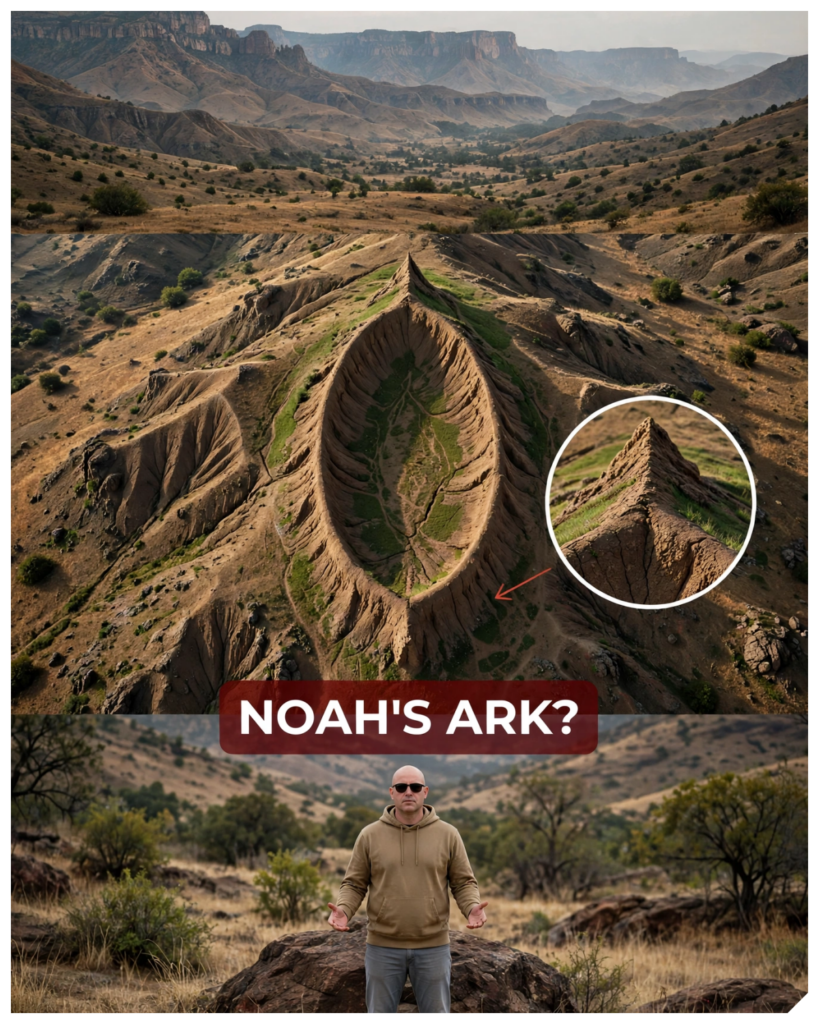
And now in this mud flow, this is a big earth flow that where the mountain side, you know, hundreds or thousands or whatever it was, a thousand years ago, whatever, we don’t know the date yet, but where it collapsed and in this mud flow, you do see this boat formation and there’s a lot of boulders in it.
Uh this boulder actually it’s the same type of rock that’s found at the very very top at this there’s kind of a saddleback crescent ridge there.
It’s limestone full of fossils, fossilized coral.
But where you see that boulder, this is the edge of it.
This is the western side I’m standing on and it goes all the way there.
And then I’m kind of drawn looking at my camera.
But that’s the boat shape in the valley floor.
So that’s about 6,500 ft elevation.
We’re about 1500 ft off the valley floor here.
And all this material around me according to Dr.
Salicar Tuton this is sedimentary rock so laid down by the flood this is it’s not there is mix inside um like the mud flow itself this earth flow around it is a mange of different types of rocks there are basaltt like volcanic rock inside but most of it is sedimentary rock you see even that red uh rock up there it’s sedimentary rock uh the boulders limestone and so all of this is evidence for water being in this area of course the fossils we found here but this is the formation that got everyone interested and we keep hearing the saying that oh no this is found all over the place in this area so why is this thing unique that’s that is totally not true this is the only one first of all what really got people interested was the boat shape and then measuring it to be 300 cubits you know if you find a boat shape anywhere in the world and you’re think it’s Noah’s arc and it’s like 1500 ft long then it’s not matching the biblical record so if this thing didn’t match the biblical record it was just you know random shape out here then no one would have gotten into interest it but because you have that exact length that that’s like a plus on your on the side that hey this is an interesting object you’re in the mountains of Arat.
You’re not in China and you’re at a place that sedimentary material is laying on top of and you have the exact length given in the Bible and so the shape this is the one that they found when they were scanning this whole area when they’re making their their cgraphy maps back in the 1959 and60s when they’re going through here mapping out Turkey.
They didn’t find a whole fleet of Noah’s Arc.
There was not um a whole bunch of lifeboat sized uh only this one.
And so this was the one that got everyone’s attention.
There was not another one on nearby hill.
Uh and you look at the original black and white photographs especially before some of the earthquakes and seismic activity dropped the soil away and further exposed it.
You have this really amazing shape just sitting there on the mountain side.
You can see why people got excited about it back in the 60s.
Yeah.
You know, it’s it’s interesting looking at all this because you have devoted your life to this, right?
I mean, you’re there most of the year as you were saying.
You’re living there mostly and you’ve spent a lot of time researching this.
You you have gotten some push back obviously.
You got apologist Wesley Huff and some other people.
You know, he said that that these findings are not legit, that they’re rooted in sensationalism.
I know your organization knows his arcans responded, but what is your response to Wesley Huff and others who are questioning this?
I have no problem with legitimate criticism.
What I think people have done ever since the uh this back back up to when this boat was really in the news in the 80s because this has been in and out of the news.
Um and people have criticized it.
So this is the criticism today is not like some new argument.
It’s uh some of the same things but they’re repeating some of the past things that don’t take in account what we’re doing today.
And and here’s one example.
One of the criticisms they say is that we have a mud flow coming down the mountain side.
That’s true.
And they claim that mud went around some type of obstruction and obviously they see a big boulder in the middle and they say, “Well, maybe that’s that or some type of basement rock that’s coming up from the valley floor and mud went around that and then forms this oval shape, this boat shape.”
And so for them it’s a natural formation because the dirt went around it.
So to test that theory and what actually got us interested, this has been in the news is that we did a randomized soil sampling 88 samples from inside and outside of the formation and the reason why we did that was in 2024 we had a soil scientist here from Australia and also the Turkish geologist uh Dr.
Byra Tuton and I I told him hey guys look at the site there’s something going on and it’s the first time I noticed it.
Maybe it happens every year, but you have yellow grass growing inside, but right outside the parameter of this boat shape, it’s green.
So I I said, “There’s something in the soil.
Let’s find out what it is.”
And at first they’re like, “I don’t know if you can figure that out.”
So let’s just find out.
Let’s just take samples.
Take it to the lab and see if there’s any difference between the inside and outside for the soil.
And so they designed a soil survey to get four samples.
So you get, you know, a good mix because you don’t want to get like one sample that had high in iron.
So you got four samples from 22 locations, 88 samples at different depths.
And then they sent it off.
Uh we didn’t tell the lab, you know, what was what and then we did the analysis, the soil scientist, uh we had two soil scientists, one not associated with our project, analyze it, and then we had the geologist.
And I even I’m not a a soil scientist, but I uploaded the results.
You know, you get they give you a spreadsheet and they tell you how much is in all the columns.
They said for okay for this location you know for the 22 sites here’s the values for pH uh organic matter uh you know potassium and all that and so I uploaded it even to Grock and um a chat GBT just to see math to see like okay can identify the differences and they all matched you know what the AI chats matched with what the soil scientists and geologists found and basically what we found was that inside this site that’s supposedly just the same soil that’s all around here is three times more organic matter.
Uh a high concentration of organic matter.
And you’re saying, “Okay, what does that mean?”
Well, if this is a decayed wooden boat, the thousands of years that sat here and then got covered with dirt, then you would expect that wood to do this to the soil.
So, we have 38% more potassium.
Decaying wood affects the potassium, increases it.
We have the on the pH scale, eight times difference between inside versus outside.
And so it is distinct chemical uh in the chemistry for this soil versus right outside.
Uh so for me that says one thing and that is this is not regular soil that just came down the mountain side and went around a boulder.
Uh so then another criticism and this has even been peer peer reviewed and published by a Turkish geologist a number of years ago and people like to quote from that.
The guy says that this is a solid block of rock that then glaciers came down millions of years and formed it into a ship shape.
Um, when you’re out here walking on it, the only rock is this thing right here, this boulder.
And when you look at the scan, the scans like the ERT scans and the GPR, none of it shows a solid big blob of rock.
And again, you’re walking around, it’s all soil.
It’s an earthn formation.
It’s not uh folded sedimentary rock to form a sincline.
And these are all things that Dr.
For Sally Brock Tuton the geologist who’s been studying this from 1984 or ’85 until now this is stuff he’s pointed out to me and stuff that you know just someone with two eyes can walk out there and see and so some of the initial criticism I think that’s coming right now it’s from people who are repeating what someone heard you know 20 30 years ago maybe and hasn’t really you know contacted us or find out what the the the new things we’re doing at the site what the soil results are and the GPR I I saw the criticism saying Well, you can’t really determine uh what is out there with GPR, but it is a tool that archaeologists use.
It’s not the final step.
It’s one of the steps.
And so, if the GPR showed nothing, okay, it would have been nothing, you know, but is actually showing these right angles, these parallel lines, and then these series of voids and a central cavity.
So things that are interesting enough that to continue the research u and I think even west made a point on his uh you know not to go point by point with what he’s saying but he mentioned something about mount arat and how the name came later and all well we’re not on mount arat I think that’s some confusion from people who haven’t been out here we’re 19 miles south of the mountain or across the valley up in this sedimentary mountains here that we’re at Mount Arat is a strat volcano I think even answers and genesis who you know they don’t think there’s any Noah’s arc to be found right now.
And so they don’t accept any site, but they may, you know, they have the big model in Kentucky.
And they wrote a good article, I thought, about why Mount Arat itself is a post flood volcano, but yet you have people with PhDs and arc hunters and adventurers still looking for the ark up there.
Uh so, you know, for us, we think uh we have the the better sites to keep investigating.
We’re not saying we have the final word yet, but we’ll continue.
All right.
So, final [clears throat] quick question for you.
What is next?
Because we’re talking about, hey, we want to do more digging.
We want to understand or actually do some digging potentially, you know, what are your next steps and how will you get there to maybe start really because the only way that this debate is settled is if you get a chance to get in there and actually look.
So, what comes next?
Well, there’s a couple things.
Um without giving away everything we’re trying to do.
Um and and I only say that because you think this um okay it’s a controversy but you think people would just say okay I agree or I disagree but even comes down to I’ve been out here in the past you know a number of years ago and another team try to throw me out of Turkey saying I was an American spy.
So you get really bad bad things try to happen to you and you try to lay everything out you do and then people try to stab you in the back so to speak.
It’s sad.
Um, but anyways, we no the goal is to get inside.
Now, I mentioned how hard it is to get an excavation permit.
Uh, I think what we proposed to the Turkish universities and we’re seeing, you know, who will uh who will do it um is to core drill.
Now, there was a core drill attempt in 1987, and some people who really know the history of the site have talked about it, but it was bad results.
They used water cooling.
It washed all the soil away.
When they pulled up the bit, they had rubble, like pieces of rock in it.
So we’re looking at a dry cooling type of like sonic drilling which uses vibration to go through the rock and soil and it preserves the whole chamber the core and so then that way we can see what are these right angles what’s inside these cavities you know what’s at the bottom of this mountain side you know in the valley floor.
Well, I so appreciate you breaking it all down.
We’re going to keep having you back as new developments unfold.
And thank you for being on site there so you could kind of show us and we could actually see it and not just talk about it.
And we appreciate your time today.
Thank you for having me