In 1985, a ship salvage expert named David Fasold climbed onto a boat-shaped ridge in eastern Turkey and told the world he had found the wreck of Noah’s Ark.
He wrote the book that made the place famous.
But in April 1997, under oath in an Australian courtroom, the same man called the whole thing complete nonsense.
So, which facade do we believe?
The one who found it or the one who buried it?
Because in December 2024, a new team went back to that ridge and what they pulled out of the ground cracked the whole case open.
It starts with a shepherd.
On May 19th, 1948, after heavy rain and three earthquakes in a row shook the Dogazit district near Turkeykey’s border with Iran, a Kurdish shepherd named Rashett Saran spotted something the mud had uncovered on the mountain side.
A shape long and smooth, pointed at one end and rounded at the other with raised [music] sides curving up out of the slope like the hull of a ship.
For 11 years, almost nobody outside the local villages knew it was there.
Then in October 1959, a Turkish [music] Air Force captain named Ilhan Durupinar was studying photos taken from the air on a NATO mapping mission when he saw the same outline from above.
It looked so much like a boat that he pointed it out to his bosses and passed on the map spot.
The site has carried his name ever since.
Photos of it ran in Life magazine on September 5th, 1960 after an Australian magazine printed them earlier that same summer.
[music] And for the first time, the world got a real look at the thing.
And the numbers are what make people stop.
The shape runs about 538 ft from tip to tip, sitting at roughly 6,500 ft above sea level.
The book of Genesis says the ark was 300 cubits long.
Run that through the Royal Egyptian cubit and you land almost exactly on 515 ft.
Close enough that people noticed right away.
[music] It is worth being honest about the math because the cubit was never one set length.
It ran from about 17 1/2 in on the short Hebrew measure to about 20.6 in on the Royal Egyptian one [music] and supporters naturally pick the longer one that makes the fit tightest.
The shape [music] is also wider than the ark should be.
And believers explain that away by saying the sides spread out under the weight of the mud, which is an easy [music] answer.
But even after you take all of that into account, the length still lands close enough to feel like more than an accident.
Then there is the place, and this part matters more than people think.
Genesis 8 says, “The ark [music] came to rest on the mountains of Ararat.”
Not the mountain, the mountains.
In the original Hebrew, Ararat is Uratu, the name of a whole old kingdom that once covered this entire part of eastern Anatolia.
So the words are not pointing at a single peak.
They are pointing at a whole land.
And this ridge sits right in the middle of it, about 18 mi south of the mountain we call Ararat [music] today.
The shape fit, the size fit, the address fit.
So in the summer of 1960, the experts came to dig it up.
And what they found should have ended the story [music] forever.
The team that showed up in September 1960 was not a group of believers hunting for a miracle.
It included Durupinar himself, an American named George Vanam, and Arthur Brandenburgger, a professor from Ohio State University, who read maps from photos.
They spent about 2 days on the ridge.
They dug into it.
They set off dynamite inside the shape to see what the boat was made of.
And they found soil and rock.
No wood, no rooms, no metal parts, nothing [music] that looked built by a hand.
Brandenburgger’s call was blunt.
A freak of nature, clay pushed up through a lava field that happened to fall into the outline of a ship.
The official notice said there were no remains you could see.
And then the world moved on.
For 17 years, the boat shape sat on its ridge, forgotten, but it did not wash away.
And that [music] quiet detail, more than any radar scan, is what would one day drag everyone back.
In 1977, an amateur got obsessed.
Ron Wyatt was a nurse who put patients [music] to sleep for surgery from Tennessee, not a trained digger, but he believed the Bible was real history and he had read about the site in that old life article years earlier.
He drove out to Eastern Turkey [music] with his two teenage sons and started measuring.
Through the 1980s, he pushed the site hard and he was mostly ignored.
He tried to get the former astronaut James Irwin interested, the man who had walked on the moon and later hunted for the ark.
And he tried the creationist rock scientist John Morris and neither man came away convinced.
Wyatt was a fan with no training and the [music] experts treated him like one.
Everything changed in 1985 when Wyatt was joined by David Facult, a ship salvage expert who really knew ships and John Balgardner, an earth scientist from Los Alamos.
Facult took one look at the ridge and called it a shipwreck on the spot.
He brought radar that reads under the ground and a device he called a frequency generator.
Set it to pick up iron and walked the shape hunting for metal below.
He said the readings came back [music] in a regular pattern, straight lines and evenly spaced points, the kind of thing you would expect from a hull with iron parts [music] rather than from random rock.
Critics later compared his iron hunting to dowsing, which stung, but Foshold was sure.
He measured the length at 538 ft and became certain this was the turn to stone shell of the ark.
Its wooden ribs long gone, its faint iron skeletons still ringing under the dirt.
It was enough to move a government.
[music] In 1987, Turkey officially named the site a national park built around Noah’s Ark and put in a visitor center.
Tour buses began climbing the switchbacks up from Doggo Bayazit.
For a while, the case looked like it was only getting stronger.
And the next piece of proof was the strangest of all.
Down in a nearby village once called Arzap and now called [music] Kazan, Wyatt and Facult found the stones.
Huge standing slabs of rock, some taller than a man, each with a single [music] hole carefully cut through one end as if a rope had once been threaded through it.
To the team, the point was obvious.
These were drogue stones, old anchor weights, the kind you hang off a ship in a storm to keep the bow pointed into the waves.
Here is what made it electric.
These stones sit thousands of feet above sea level and hundreds of miles from any open ocean.
There is no normal reason for ship anchors to be lying on a mountain side in inland eastern Turkey, unless a very large ship once was there, too.
Some of the slabs even have crosses [music] carved into their faces.
And a few carry eight crosses, which believers read as a way of honoring Noah and the seven family members who wrote out the flood with him.
For years, those stones were the single most solid piece of proof in the whole case.
And then rock experts took samples.
The rock was local andite, the same volcano rock that forms the hills all around the village.
Nothing carried in from Mesopotamia, where [music] the ark was supposed to have been built.
Worse for the theory, standing stones with holes like these turn up all over ancient Armenia.
At one site alone called Zorat Carrer, there are 223 standing stones and 80 of them have holes cut [music] through the top.
Nobody thinks those are boat anchors.
They are pagan holy stones.
And the crosses on the Arzap slabs were added much later by early Christians and then crusaders around the year 1200, cut into stones that were already old.
The anchors, it turned out, were probably never anchors.
But the man who found them was about to do something nobody saw coming.
Fold started to doubt his own find.
Through drilling and digging in [music] the early 1990s, the ground below kept refusing to look like a ship.
In September 1994, he walked the site with an Australian rock scientist [music] named Ian Plimer and came away saying flatly that it was not a boat.
Then in 1996, he did the [music] thing that still shocks people who follow this story.
He helped write a science paper arguing the whole shape was natural.
His co-writer was Lawrence Collins, a rock scientist from California who never believed a word of the ark idea.
[music] The title did not soften it.
They called it a fake Noah’s ark.
Nothing but a common rock shape.
Their reason was exact, and that exactness is what makes it hard to brush off.
The boat shape, they wrote, is a doubly plunging sinkline, a spot where layers of rock fold down into a dip and then rise again, and wearing away over time, cut a hull-like mound out of the fold.
Facult’s dramatic iron readings were natural clumps of lmonite and magnetite, two iron minerals that run all through the volcano rock of eastern Turkey.
The famous iron bracket someone had photographed was worn down volcano mineral.
The chunk of turned to stone gopherwood [music] bark that had been passed around as a holy piece of the ark’s hull was under the microscope crumpled changed up peritite a rock not wood.
Then came the detail that is almost impossible to argue with.
Cutting across the fold are layers of limestone full of fossils.
And those limestone layers are younger than the shape they cut through.
If the flood material sitting on and around the shape is younger than the shape itself, then the shape cannot be the arc that the flood supposedly carried there.
The timeline runs backward and Facult was not the only one to switch sides.
Tom Fenner, the radar engineer from the very company whose gear was used in the 1985 scan, went back to the site with better tools and a full survey and said plainly that calling this the ark was, in his words, at best [music] wishful thinking and at worst a lie.
Bombgardner, the Earth scientist from that same 1985 trip, drilled at many points along the length of the shape and found no boat bottom, just uneven rock and lumps of basaltt where a hull should have been.
A 1988 try to core drill the site in four separate spots came up empty, and Collins pointed to a comparison [music] that lands hard once you hear it.
When a wooden ship rots in the ground, it can leave a perfect print of itself behind.
[music] the way the Sutton who burial ship in England fell apart but stamped its planks and ribs into the soil in a ghostly outline that diggers could photograph.
If a real ship had turned to stone inside this ridge, we should [music] see the marks of planks and beams.
There are none.
Even Andrew Snelling, a young earth creationist who fully believes [music] the flood happened, looked at the site and decided it is a natural shape.
A Turkish earth engineer named Eszref Adabbe working closer to the ground than any of them came to the same answer on his [music] own.
And the two doubters who disagree on almost everything else, one against creation and one a young earth creationist, even agreed the mound is worth saving as a natural landmark.
Sit with that for a second.
This was never a clean fight between believers and doubters.
Some of the people who most wanted this to be [music] the ark are the ones who ruled it out.
There is also one photo nobody on the believing side likes to bring up.
The Turkish Air Force once put out an image [music] showing three more boat shapes nearly the same as this one sitting in the mud flows on the slopes of nearby Lesser Ararat.
If this land can stamp [music] out a convincing hole shape four separate times, then the shape by itself proves nothing at all.
[music] So that should be the end of it.
Except it is not.
In April 1997, under oath in that Australian court, Facult said again that the ark claim was nonsense.
He died the next year.
[music] And yet, according to several people who knew him, in his final years, he could not quite let go.
He kept saying there [music] was too much going on at the Durupinar site to write it off completely.
The man who wrote the paper, tearing it down, seems to have half doubted his own tearing down right to the end.
Starting around 2019, a project called Noah’s Ark Scans brought back tools the 1980s never had.
No dynamite, no blind drilling into the shape.
Radar that maps under the [music] ground in three dimensions, magnet sensing tools, and careful soil testing, all built to look underneath without cutting the site open.
In 2011, the Turkish Parliament had [music] actually handed real control over arc research at the site to a board of professors at the local Agri Ibrahim Sichen University.
So this time the work moved through official channels.
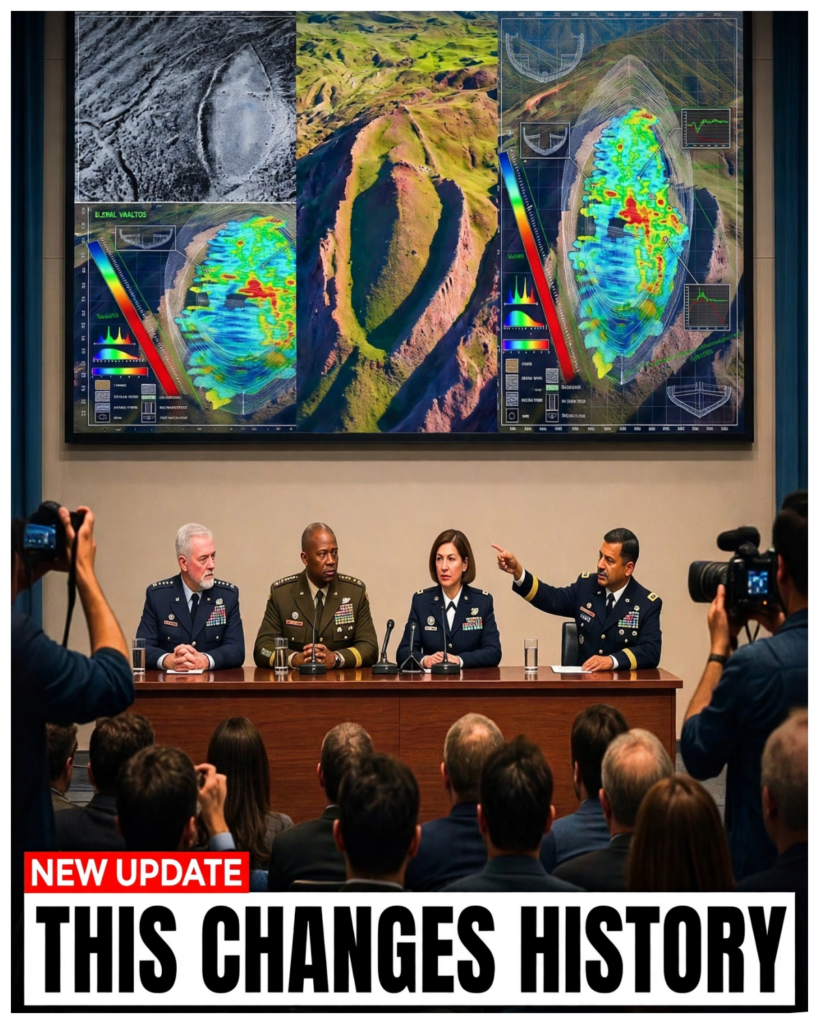
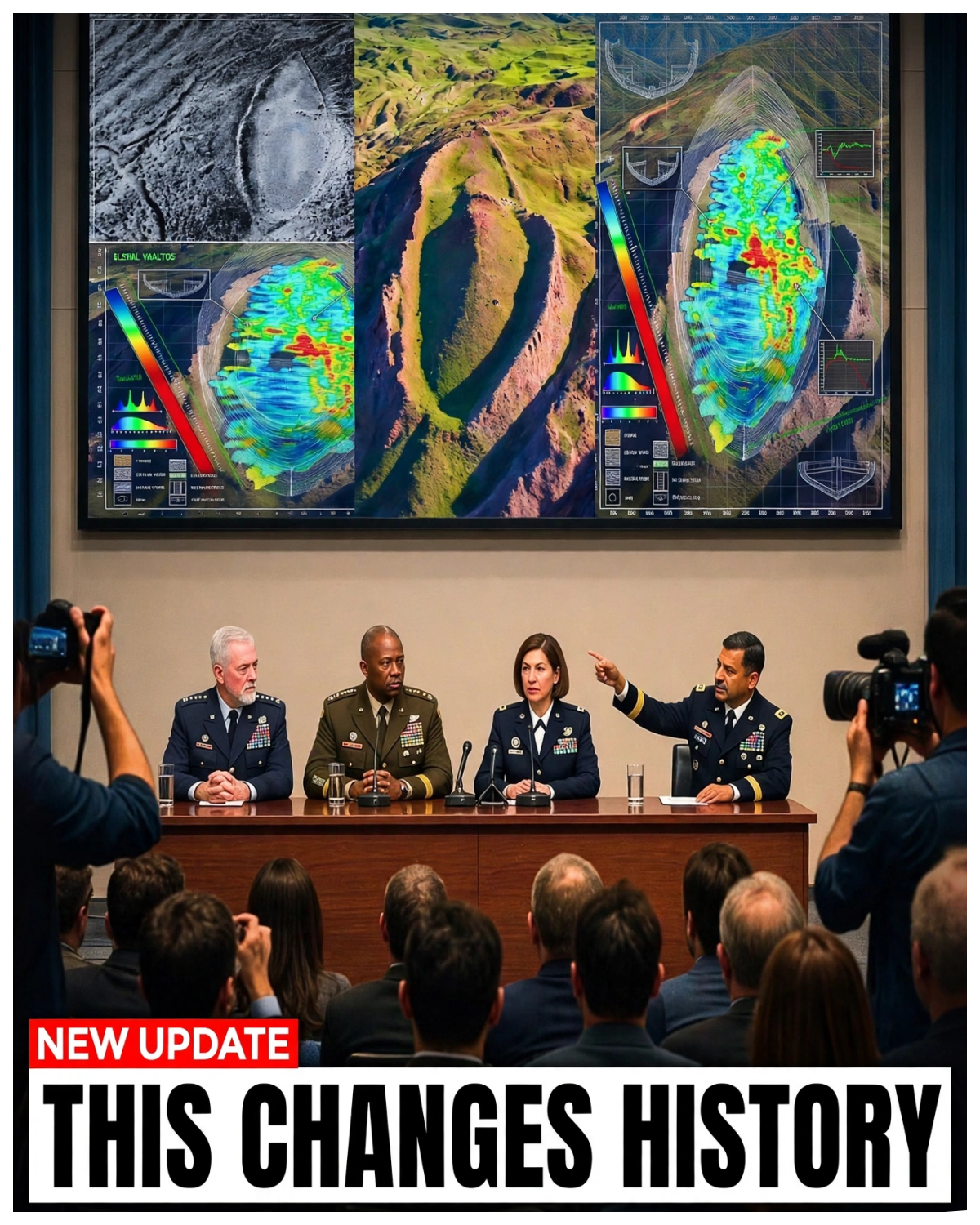
[music] When the lead investigator, Andrew Jones, and his team went back over the 2019 radar in detail, they said [music] the scans showed something the wearing away story struggles to explain.
Straight lines, right angles, [music] a hallway running roughly 234 ft through the shape and even right angled features as deep as 20 ft below the surface laid out in a way that reads [music] like rooms and halls.
Natural rock, Jones argued, does not usually build right angles.
Then came the dirt, [music] and this is where it gets truly hard to explain.
In 2024, working with Istanbul Technical University, the team gathered close [music] to 30 soil and rock samples from inside and outside the shape.
The results tested later that year were strange in a useful way.
The soil taken from inside the boat outline held about 2 and 1/2 times more material from living things than the soil right beside it, along with higher potassium, which is exactly the chemical clue you would expect from a big mass of wood slowly rotting in one spot over a very long time.
The samples also held clay, sea mud, and traces of shellfish, the kind [music] of stuff water leaves behind.
And the dating placed everything between 3,500 and 5,000 years old.
Professor Faruk Kaya, a top official at the local university, [music] said the early results pointed to people living in the area during that same window.
This is the moment where the story usually gets pushed too far.
So, we are going to slow down and be honest about it.
Take the new proof at its very strongest.
It still does not show a ship.
Dates of 3,500 to 5,000 years.
Sea mud, shellfish.
All of that tells us one thing clearly.
This ground was underwater at some point long ago.
And a mudflow buried old living material here that is real and it is fascinating.
It is not the same as a wooden ship.
The extra living material and the potassium fit with buried rotting wood.
They also fit with any thick [music] tangle of plants and roots that a mud flow could sweep into a low fold and pack down for a few thousand years.
The right angles in the radar are harder to wave away, and they are the best card the new team is holding.
But radar readings get read the way the reader expects to read them and that has burned this exact site before in 1985 when a different team read a different scan with the same confidence [music] and turned out to be wrong.
There is a reason no one has confirmed this yet.
The iron ore packed through the ground, that same lmonite, throws off the signals and makes finding any leftover wood truly [music] hard, which is the honest reason the final test has not happened.
But here is the one thing that has never been fully explained and it [music] is the reason careful people keep coming back to this hillside instead of writing it off.
This whole mountain side is moving.
[music] It is a slowmoving slide of earth cracking and sliding a little more with every hard winter and every earthquake.
Line up the photos from 1959 to today and the slope around the shape is always shifting.
But the boat shape stays same outline, same size first measured more than 60 years ago.
As if something solid underneath is holding its form while everything around it slowly slides downhill.
No science group in rock or in digging has ever confirmed this as Noah’s ark.
The one thing that could really settle it, a full and careful dig, has never been done, partly because the site is protected by law and [music] partly because that ironrich ground makes the search so hard.
The Turkish officials and the research team both say the dig is the next step.
Until someone is finally allowed to open it up, the Durupanar sight stays exactly what [music] it has been since a shepherd first spotted it in the mud.
The right size in the right place, holding a shape it has no business keeping and refusing to tell us what is underneath.
And here is the part that keeps the whole search alive.
This ridge is not even the only one claiming the title.
[music] The Christian story puts the ark on the peak of Mount Ararat, but the Quran names a whole different mountain, Kudi, and points there instead.
Fold himself once tried to tie a nearby peak to that name.
So, we have a boat-shaped mound that fits the measurements, a snowy peak that owns the legend, and a second mountain that a whole other faith says is the real one.
Next, we [music] cross the valley to the mountain everyone else bet on, Mount Ararat itself, and the strange reason the ark might not be up there at

