What remains of Jesus in the physical world today?
What if the marks he [music] left behind could still be seen, touched, and visited by you?
There are olive trees in Jerusalem whose roots witnessed Jesus kneeling on the darkest night in history.
There is a well in Samaria, 32 m deep, that still holds water, the same water he asked from a woman rejected by everyone around her.
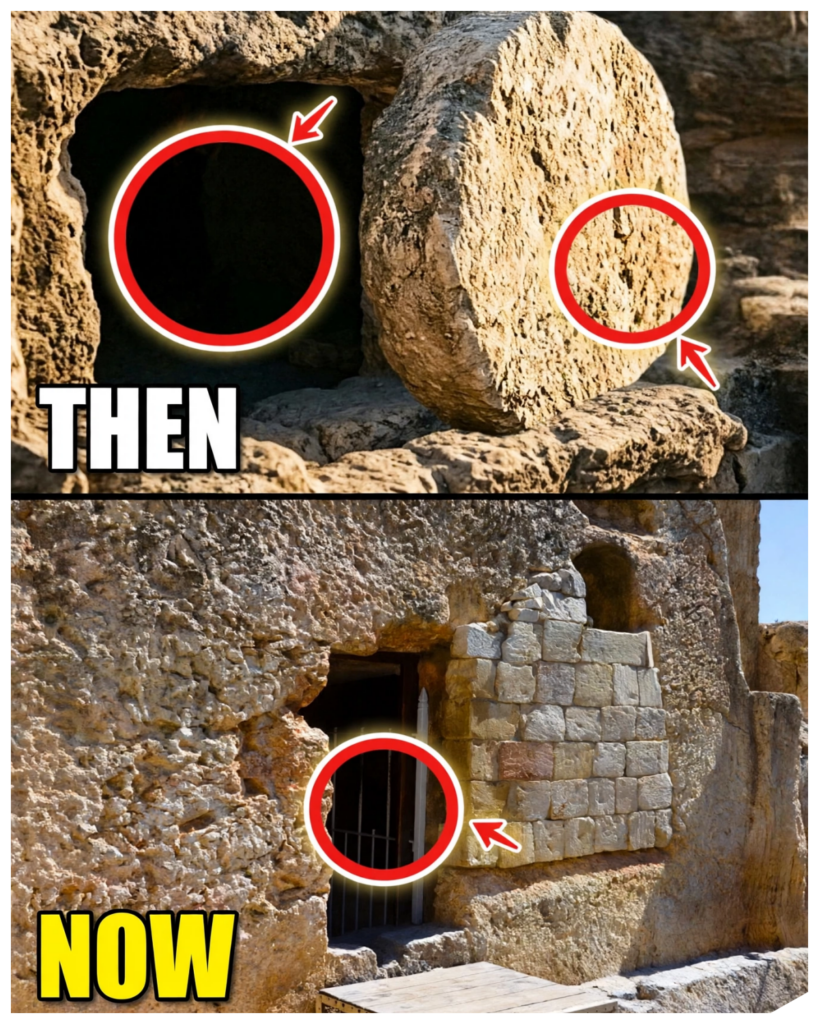
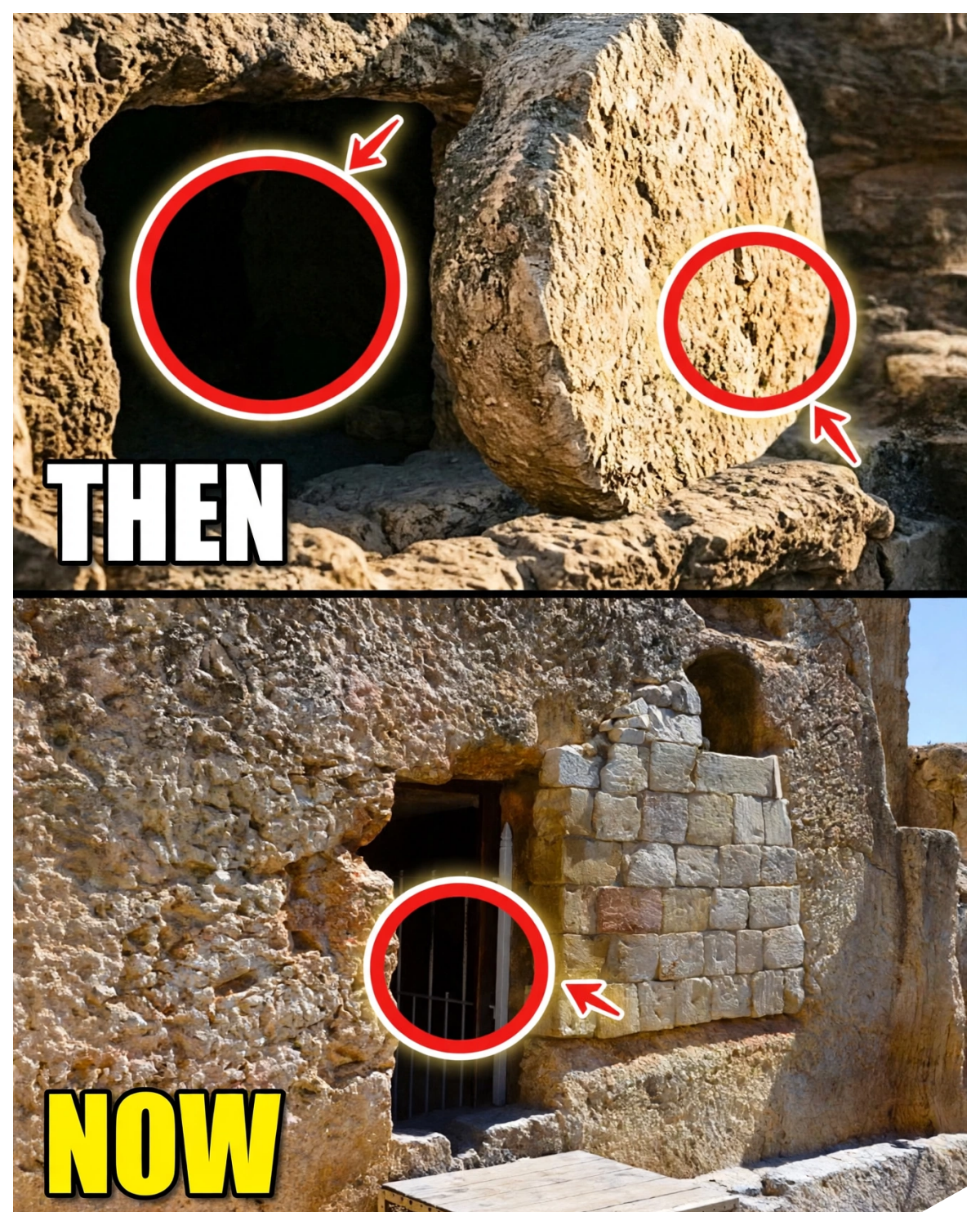
There is a tomb carved into solid rock where the body of Jesus was laid and from which he [music] rose again.
In this video, you will walk through seven places where Jesus truly stood.
And you will discover what modern archaeology has uncovered at each one.
Because we do not follow an abstract idea.
We follow the God who walked upon this earth.
Stay until the end because what you are about to see will strengthen your faith in a way that goes far beyond historical curiosity.
The Church of the Holy Sephller.
Today, if you enter the church of the holy supplr in Jerusalem, you will find long lines of pilgrims arriving from every continent.
The air is thick with incense.
The stone floor has been worn smooth by the footsteps of millions of visitors over the centuries.
[music] Candles flicker inside dark aloves.
Priests from different Christian traditions share the same sacred space with a devotion that has endured for generations.
At the center of the church stands a marble structure known as the ediule.
[music] Inside it is a tomb carved into the rock.
In 2016, archaeologists opened it for the first time in centuries and discovered the original first century limestone [music] burial bed still preserved beneath the layers of later construction.
The site honored by Christians since the earliest centuries was confirmed to be authentic from both geological and historical perspectives.
Inside that same church is also Golgtha, the rock of the crucifixion, still visible through a glass panel set into the floor.
Two of the most decisive moments in human history took place only a few meters apart and both can still be seen today.
The tomb exists.
Golgtha exists.
They can be seen.
They can be touched.
It was there that Joseph of Arythea placed the body of Jesus into a new tomb, sealing it with a large stone in the hurried hours before the Sabbath began.
And it was there before dawn on the first day of the week that Mary Magdalene arrived alone carrying the weight of grief only to find the stone rolled away.
There was no body, only the folded burial cloths and one question that has [music] echoed across 2,000 years.
Why do you look for the living among the dead?
This is the central claim of the Christian faith.
Not an idea, not a metaphor, but an event rooted in a real place at a specific moment in history.
Confirmed by the very rock itself.
Jesus was buried there and he did not remain there.
[music] Everyone who enters that place today carries both the weight and the joy of that truth.
Death was defeated there and the stones still bear witness.
But Jerusalem also holds another place, smaller, quieter, more intimate, a garden where that same night began and where some of the very trees are still standing.
The garden of Gethsemane.
Today, the Garden of Gethsemane lies at the foot of the Mount of Olives, just a short distance from Jerusalem’s [music] eastern wall.
Visitors arrive at a small enclosed garden dominated by eight ancient olive trees.
Their massive [music] twisted trunks rise like pillars of living stone.
The ground around them is dry and earthy, protected by low fences.
In 2021, scientists from the University of [music] Bologna conducted DNA analysis and dating studies on these trees.
The results were remarkable.
Some of their root systems date back to the first century.
Olive trees regenerate through the same root systems for thousands of years.
The roots beneath that soil today are the very same roots that were there on that night.
Visitors to Gethsemane can touch those trunks.
They can sit on that ground.
They can look at those trees and know with scientific confidence that they were there.
They witnessed those events and they are still [music] standing.
What they witnessed was the loneliest moment in human history.
After the last supper, Jesus entered that garden.
He asked his disciples to wait while he went farther to pray.
Luke records that in his agony, [music] he prayed so intensely that his sweat became like drops of blood falling to the ground.
Matthew preserves his exact words.
My father, if it is possible, let this cup pass from [music] me.
Yet not as I will, but as you will.
Then came the torches, the soldiers, and Judas with a kiss.
Those trees witnessed it all.
The significance of that garden is not only what happened there.
It is what Jesus [music] chose there.
He knew what was coming and he stayed.
He did not run.
He did not resist.
He did not call upon the angels he could have summoned.
He willingly surrendered himself with full awareness on that ground beneath those olive trees.
For every person who would one day hear this story, his sacrifice [music] did not begin at the cross.
It began there with a prayer that cost him everything.
But now we moved to another place.
This time far from Jerusalem, a well in a region that no devout Jew was expected to pass through.
Yet Jesus went there.
He stopped.
He sat down.
And he asked for water.
Jacob’s well, walked down a few steps inside an Orthodox church in Nabless in the West Bank.
And you will find something few people expect.
An open well still filled with water 32 m deep, handcarved into solid rock more than 3,000 years ago.
A bucket tied to a rope is still [music] lowered into the water today.
The ground surrounding it is made of ancient stone, cool to the touch, worn smooth by time, and by the footsteps of pilgrims who have traveled [music] from every corner of the world to see exactly this.
A well that still works.
A well that still holds water.
A well that still exists.
Archaeologists have identified the original opening of the well dating to the second temple period preserved beneath the later layers of construction.
Christians have continuously honored this site since the first century.
Its identification has remained continuous documented and uninterrupted.
Something exceptionally rare in the world of biblical archaeology.
Among all the places Jesus visited, this is one of the closest we have to historical [music] certainty.
The well described in John 4 still exists.
It can be seen.
[music] It can be touched.
And it still holds water.
It was at this well that Jesus stopped.
He sat beside the [music] stone, weary from his journey, and asked a Samaritan woman for a drink.
She had come alone in the heat of midday.
She came at that hour precisely because she wanted to avoid everyone else.
Instead, [music] she met Jesus, and he knew everything about her before she said a single word.
Her five husbands, the man she was living with.
Her entire life was laid bare without [music] judgment, without condemnation.
There is something else to remember.
Jesus did not have to pass through Samaria.
Jews usually avoided that route as a matter of principle.
But he chose to go.
He chose to sit beside that particular well, waiting for that particular woman, the one no one else wanted to meet.
There are no accidents in the Gospels.
There is purpose and that well still stands as a reminder of it.
The same water, the same rock, the same place.
But the next location tells a different story.
A town on the shore of the Sea of Galilee, where a stone discovered by accident in 2009 changed what we knew about where Jesus preached.
Magdala.
In 2009, workers preparing the site for a hotel on the shores of the Sea of Galilee uncovered something that immediately brought construction to a halt.
A first century synagogue, one of the best preserved synagogues ever discovered in Israel.
The original floor was still there.
The walls were still standing.
And at the center was a carved stone that no one expected to find, the Magdala stone.
Its carvings depict the temple in Jerusalem exactly as it stood during the time of Jesus.
It is the oldest known representation of the temple ever discovered.
Today, the archaeological site of Magdala can be visited on the shore of the very lake where Jesus walked.
The synagogue has been excavated, exposed, visible to everyone.
Archaeologists state with confidence that Jesus preached in that very place, not in a similar synagogue, in that one.
On that floor before those walls.
It [music] was in this town that Mary Magdalene lived.
Luke records that Jesus cast seven demons out of her.
Her life had been marked by brokenness, by darkness, by everything that separates a person from the life they were meant to live.
But she met Jesus and everything changed.
She became one of his followers, part of the group that traveled with him throughout Galilee.
Then came the cross, the silence of the Sabbath, and the dawn of the first day of the week.
Mary Magdalene stood in the garden.
She was weeping and she became the first person to whom the risen Jesus appeared.
He spoke her name.
She ran to the disciples with these words.
I have seen the Lord.
The woman once possessed by seven demons became the first witness of the resurrection.
The first to announce the greatest news in human history.
That was not an accident.
It was a choice.
Jesus knew that town.
He knew that synagogue.
He knew that woman.
And he chose her, precisely her, to carry the announcement that would change the world.
[music] The contrast between who she once was and who she became is not simply a beautiful story.
It is the very logic of the gospel unfolding before our eyes.
But the next place tells another kind of story, a wedding celebration, a family in distress, and the moment Jesus revealed to the [music] world for the first time who he truly was.
Ka at Kerbet Kana just a few kilometers north of Nazareth.
Archaeological excavations have uncovered a first century village complete with an underground cave system used for storing water.
Inside those caves, archaeologists discovered something every reader of John’s gospel would immediately recognize.
Large stone jars from the time of Jesus.
The kind used specifically for Jewish ceremonial purification.
Exactly as described in John 2:6.
Not similar jars.
Not jars from the same era, the same type of jars in the same place, from the same period.
The archaeological site can still be visited today.
The caves are still there.
And everyone who descends into those caves carries the awareness that they are standing in the very place where, according to the gospels, Jesus performed his first public miracle.
It was a wedding.
The wine had run out.
In a first century Jewish wedding, this was not simply a household inconvenience.
It was a serious public disgrace, the kind of shame that could follow a family for generations.
Mary came to Jesus and simply said, “They have no wine.”
His reply sounded almost like a refusal, but Mary turned to the servants and said, “Do whatever he tells you.”
There were six stone jars used for ceremonial purification.
Each held more than 100 L.
Jesus instructed the servants to fill them with water.
Then he told them to serve it.
The master of the banquet tasted it without knowing where it had come from and called the bridegroom.
He said that everyone serves the best wine first and saves the [music] cheaper wine until later.
But this was the finest wine of all.
Mary believed before she saw anything.
She asked for no explanation.
She waited for no guarantee.
She simply told the servants to obey and she remained there.
That quiet act of faith came before the miracle in every way.
And Jesus acted precisely when every human resource had been exhausted.
When there was nothing left to do, when the celebration was about to end in shame.
Abundance did not come before the crisis.
It came afterward.
It always does.
The stone jars discovered at Kerbet Kaa are still there.
Silent, heavy, ancient, and impossible to ignore for anyone who knows [music] the story.
But the next place is different.
It is a home.
A home where Jesus wept and where [music] death reached its limit.
Bethany.
The modern town of Aliseria in the West Bank preserves something that most visitors pass without noticing.
The tomb of Lazarus carved into solid rock with first century steps that remain preserved and open to visitors.
Those who enter descend a narrow winding staircase worn smooth by 2,000 years of footsteps.
Inside the chamber is small, dark, cold.
The surrounding rock is the original rock.
The steps are the original steps.
Archaeologists have identified the first century village of Bethany beneath the modern town through strategraphy and pottery from the period.
A 4th century Byzantine church was discovered above the site identified as the home of Martha and Mary.
It was built there because Christians of that century still knew the exact location.
The tomb can still be visited today.
The staircase can still be descended.
The rock can still be touched.
And anyone who remains silent there for even a few moments begins to understand what it means to stand in the place where Jesus called out a name.
[music] And a man who had been dead for 4 days walked out alive.
Lazarus had been dead for 4 days when Jesus arrived.
John records the shortest verse in all the gospels.
[music] Two simple words that reveal something about God no theological argument can replace.
Jesus wept.
Then he went to the tomb.
He ordered the stone to be removed.
[music] He called the name of a dead man and that man came walking out.
Bethany was also the place where Jesus found rest, where he was welcomed without ceremony, where genuine affection awaited him.
Far from the crowds, far from the pressure of Jerusalem, the home of Martha, Mary, and Lazarus was the place where he could simply arrive.
And the tomb of that family carved into the rock of that village is still there.
Dark, narrow, cold, with the same first century steps beneath the feet of every visitor who descends today.
But the final place on this list tells a different story.
A fishing village beside the same lake where Jesus walked on the water.
A site confirmed by archaeology only in 2023.
Betha.
In 2023, archaeologists completed excavations at the site of Elaraj on the shores of the Sea of Galilee.
Through stratographic analysis and coins from the period, they confirmed that this is the original location of first century Bethida.
What they discovered there is difficult to ignore.
Boat anchors, fishing structures, tools from the first century.
Everything preserved beneath layers of sediment accumulated over 2,000 years.
A fishing village buried, forgotten for centuries, confirmed by science only three years ago.
Today, the archaeological site is open to visitors.
The lake is only a short walk away.
And everyone [music] who walks through those excavations is standing on the ground where Peter, Andrew, and Philip [music] grew up, worked, and first heard the man who would change their lives with two simple words, follow me.
John records that Bethida was the hometown of Peter, Andrew, and Philip.
Mark describes Jesus healing a blind man there through a gradual miracle unlike any other recorded in the gospels.
And Matthew preserves something deeply unsettling.
Jesus pronounced judgment upon Bethida.
He declared that pagan cities would have repented long ago if they had witnessed what Bethesda had seen.
It was a city where miracles happened before [music] people’s very eyes.
Yet their hearts remained hard.
A city that watched Peter, Andrew, and Philip [music] leave everything to follow Jesus.
Yet, it refused to follow, and it disappeared from history exactly as Jesus had declared.
The boat anchors discovered at Elage are among the most compelling details.
Concrete, heavy, real objects.
The very tools of [music] the fishermen who left their boats behind to follow Jesus without looking back.
Peter walked away from that ground, away from that lake, away from a life of nets and anchors to become the rock upon which Jesus [music] said he would build his church.
And the city he left behind became ruins, layers of sediment, [music] an archaeological site, confirmed 2,000 years later.
Betha is the final place on this list and perhaps the quietest of them all.
There are no long lines of pilgrims, no burning candles, no incense filling the air.
There are excavations.
There is the lake.
There is the wind.
And there is one question that remains.
After seeing all of this, take a moment to reflect.
Seven places.
Seven locations where the son of God walked, prayed, wept, and gave himself for humanity.
An empty tomb with its original first century rocks still preserved.
Olive trees whose ancient roots have been scientifically dated to the very time Jesus prayed beneath them in agony.
A well that still holds water.
Stone steps that can still be descended.
Fishing anchors confirmed in 2023 after 2,000 years of silence.
Do you know why all of this matters?
Because we do not follow a legend.
We follow the God who entered history [music] and left his footprints upon this earth.
The Christian faith does not fear archaeology.
It welcomes it.
[music] Because every dated stone, every excavated layer continues to confirm what the gospels recorded 2,000 years ago.
If this documentary strengthened your faith, please leave a like, subscribe to the channel, and share it with someone who needs to see it.
And let me know in the comments, which of these places would you most like to visit?
I’d love to hear your answer.
Until the next video, may God bless you.