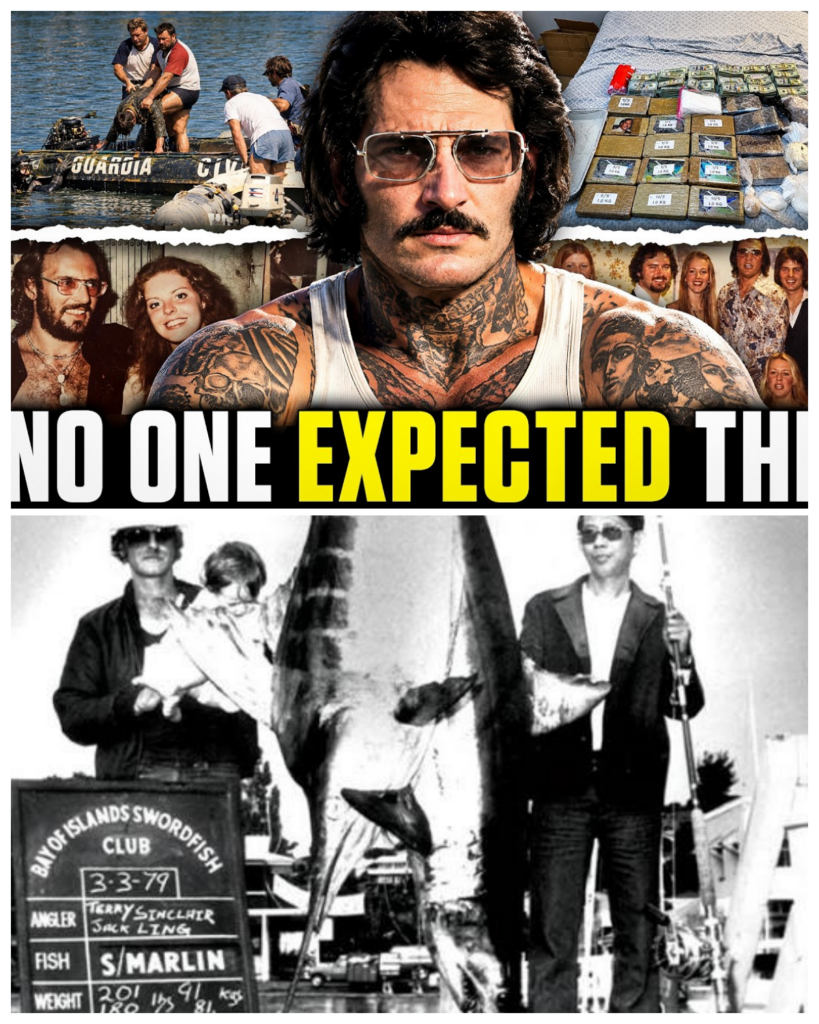
Mr Asia Syndicate: The Drug Empire That Terrorised Australia On the 14th of October 1979, amateur divers in a flooded quarry in England found a body with no hands.
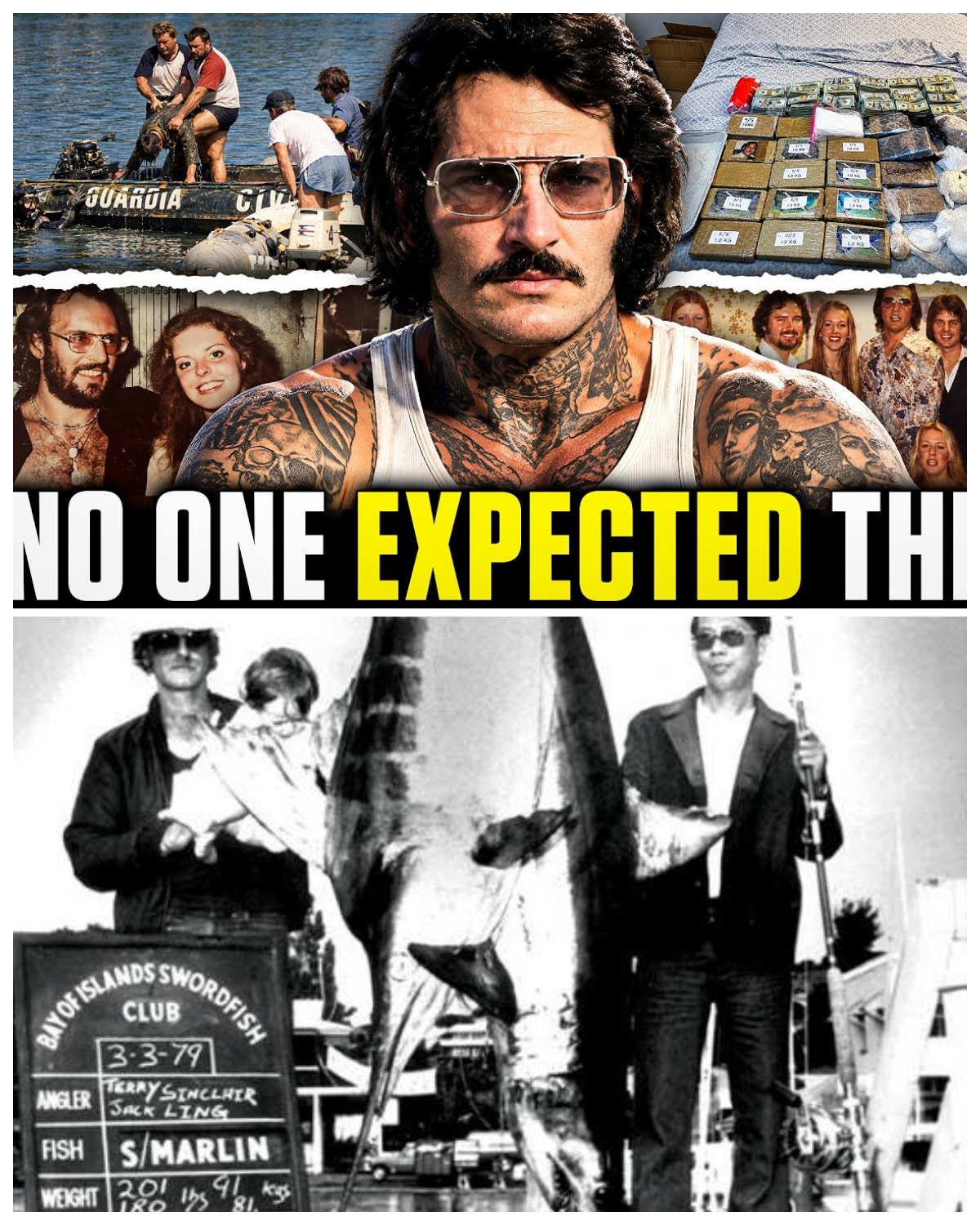
It was the man the press called Mr Asia, the nominal head of a heroin empire that had spread across Australia.
The order to kill him came from his own partner.
This is the story of the Mr Asia syndicate.
It smuggled heroin into Australia, New Zealand and Britain in the late 1970s, killed people inside its own ranks, and led four governments to set up a royal commission.
The hosts of the New Zealand Herald’s podcast on the case say a handful of people changed New Zealand’s drug culture forever.
Even the name at the centre of the story is wrong.
Start with that name.
Mr Asia was not Terry Clark.
The label was given to Marty Johnstone by the Auckland Star newspaper in August 1978, in a series of articles by journalist Pat Booth.
Johnstone was the face of the operation.
Clark was his business partner, and in the end his killer.
The mix up is still common.
When the Underbelly series about Clark aired in New Zealand, it was advertised as The Mr Asia Story, a title that grew out of that mistake.
The syndicate operated from about 1976 to 1979.
The Sydney Crime Museum calls it the first major heroin importer in Australia and says its imports totalled at least 200 kilograms.
A Queensland museum collection says the hundreds of kilograms the gang moved across three countries had a conservative street value of about 850 million Australian dollars in 2004 prices.
So this video follows the money, the murders and the police protection.
It also asks the question a royal commission could only partly answer.
How did a gang of New Zealanders build one of the biggest heroin operations Australia has seen, and who let them?
Marty Johnstone was born in Auckland in 1951.
Before he became one of the most notorious drug dealers in New Zealand, he worked as a menswear salesman on the North Shore.
By the mid 1970s he was importing cannabis from Southeast Asia, mostly as Thai sticks, a potent form of the drug.
Terry Clark was born in Gisborne in 1944.
He was a small time criminal with a record.
In 1971 he was sentenced to four years and three months for car conversion.
At one point he became a police informant after a burglary sentence.
Then he began buying cannabis from Johnstone.
Clark had another partner.
The Sydney Crime Museum says he and a man named Greg Ollard first met while serving time for theft in New Zealand in 1973 and 1974.
Ollard would later vanish.
Remember that name.
In 1975, Johnstone sailed an 18 metre yacht from Thailand loaded with 450,000 Thai sticks.
They cost about 10 cents each in Asia.
According to the New Zealand Herald, the voyage earned Johnstone and Clark a profit of more than 10 million dollars in today’s money.
That kind of return made the next step feel easy.
They moved into heroin.
Journalists and police were already circling.
Pat Booth, the Auckland Star’s deputy editor since 1977, published his series on the syndicate despite what his biography describes as considerable threats.
He followed it with a 1980 book called The Mr Asia File.
Police used electronic bugging against the syndicate for the first time, and a documentary producer later called the case a coming of age for both the smugglers and the police.
Around 1976 the network began trading heroin.
Johnstone was based in Singapore, close to the supply.
Clark took the other end of the business, and the Sydney Crime Museum says he very much enjoyed being the heavy.
Working through about a dozen New Zealand operatives, the network sold heroin in Melbourne, Adelaide, Brisbane and Sydney.
Australia’s market was changing too.
The Sydney Crime Museum says an Eastern Suburbs network made the same switch from cannabis to heroin at about the same time, and that young New Zealand migrants were becoming heavily involved in several Australian vice trades.
Now a misconception.
The New Zealanders did not control Australia’s heroin trade.
The museum’s account says they traded with an older Sydney network known as the Double Bay mob.
Its core members rarely met Johnstone, and they stayed silent when investigators came asking questions.
When Clark expanded into Australia in 1977, he asked a man named Jim Shepherd how to obtain police protection.
Shepherd would later be named by the Stewart Royal Commission as second in command of the syndicate.
The question alone shows how the business was meant to work.
According to the museum, Clark broke into the Sydney market by using Shepherd and other enforcers to beat up the opposition.
Shepherd then ran a large team of distributors from a flat on Oxford Street.
The flat was full of garbage bins holding cash and bags of heroin.
The protection worked.
The museum says one of the biggest heroin operations Australia has seen drew almost no attention from police.
Justice Donald Stewart, who later led the royal commission, told a 2004 documentary that police in New South Wales and Queensland were completely corrupt at the time.
He repeated a saying of the era, that both forces could be bought for the price of a hamburger.
The heroin came from Southeast Asia.
A Singapore based supplier known as Chinese Jack, a onetime ship steward, sourced it and sealed it inside suitcases.
Couriers flew the suitcases into Australia.
One courier, a receptionist, later told police her first run was in May 1978, carrying heroin from Singapore in two suitcases.
Reporting also names a former kindergarten teacher from Rotorua, Allison Dine, as one of Clark’s main couriers who recruited other young women.
Violence kept the system in line.
After a heated meeting with several of the syndicate’s operatives at a Melbourne hotel in November 1977, Greg Ollard and a young woman named Julie Theilman vanished.
According to author Richard Hall, Clark is known to have killed six people, all of them tied to his drug business.
New Zealand’s Ministry for Culture and Heritage says he ruthlessly killed associates he suspected of informing.
Shepherd later told journalist David Lomas that Clark had a lust to kill.
The deaths may have reached into his own home.
Retired detective Brears Basham says police always believed Clark was involved in the heroin overdose of his second wife, Norma Fleet.
He also says there was no hard evidence.
Shepherd believes Clark killed her.
That has never been proven.
The danger inside the syndicate was as real as any danger from the law.
In June 1978, it arrived in the form of a young married couple in a police interview room in Brisbane.
Doug and Isabel Wilson were New Zealanders in their twenties, living in Rose Bay in Sydney.
They worked as couriers for the syndicate.
Queensland police arrested them in Brisbane while they were waiting to collect a drug shipment from a passing ship.
For three days, from the 9th to the 12th of June, police questioned them.
Then they decided to cooperate.
They gave long and detailed statements to state police and federal narcotics agents.
They described how the syndicate worked, and they alleged that Clark was responsible for a number of executions.
Police recorded the interviews on tape.
Then the couple were released.
Clark was arrested in Brisbane too, at the Gazebo Hotel on the 9th of June 1978.
He had a Colt Python revolver on him.
He also carried five passports in different names, a detail that would matter later.
He was sent back to New Zealand to face charges, and he was acquitted.
Meanwhile, the Wilsons’ tapes were on the move.
The Sydney Crime Museum says corrupt police sold them to a middleman named Brian Alexander, who sold them on to Clark for at least 100,000 dollars.
The one thing the couple had done to protect themselves had been handed to the man they had named.
The Wilsons were murdered.
A charge laid years later said it happened on or about the 13th of March 1979.
Their bodies were found in shallow graves at Rye, on the Mornington Peninsula south of Melbourne, on the 18th of May 1979.
Doug was 26.
Isabel was 24.
The Victorian coroner, Kevin Mason, examined their deaths.
He found that a criminal group involving Clark existed in Australia, and that a huge drug empire had grown under his leadership.
After that finding, Prime Minister Malcolm Fraser announced a judicial inquiry in September 1980.
If you were the detective in that Brisbane interview room, would you have let the Wilsons walk out?
Tell me in the comments, and subscribe if you want the rest of the story.
By then Clark had left the country.
Victorian police wanted him over the Wilsons, but he had fled to Britain, where he lived under the name Terry Sinclair, one of several aliases.
Official papers also give his name as Alexander James Sinclair.
His fortune was huge.
The Mr Asia money was stashed in safes and bank accounts around the world.
He had bought property in the Bay of Islands and Fiji.
Clark’s lifestyle matched the money.
Richard Hall’s account describes a man who punted thousands of pounds at a London casino and left the cleaner twenty pound tips in the wastepaper basket.
By the end, Clark himself claimed a personal fortune of 50 million dollars.
That figure is his own claim, and it was never verified.
Shepherd says Clark had also developed a cocaine addiction in Britain that further damaged his already erratic judgment.
Inside the syndicate, trust had run out.
A witness whose name was suppressed told an inquest that senior figures believed Johnstone was keeping money for himself and planning to leave the business with a nest egg.
She said the cash from Sydney was arriving short in Singapore.
In October 1979 Johnstone was lured to Britain with the promise of a drug deal in Scotland.
He went to meet Andy Maher, his longtime friend and a fellow member of the syndicate.
Maher killed him on Clark’s orders.
Then he tried to make the body impossible to identify.
He cut off the hands and mutilated the face to defeat dental identification.
The body was dumped in a flooded disused quarry at Eccleston, in Lancashire.
On the 14th of October 1979, local divers found it.
Police did not know who the man was.
They published a death mask in several newspapers, hoping someone would recognise the face.
Someone did.
The dead man was Marty Johnstone, and the name Mr Asia now belonged to a murder victim.
Detectives traced the killing to Clark.
He was arrested in London, living as Sinclair.
The Sydney Crime Museum says British police proved far more enthusiastic than their Sydney counterparts, and within weeks Clark was in custody.
He was tried at Lancaster Castle.
The trial was held under heavy security and has been described as Britain’s most expensive case at that time.
Clark and Maher were among those convicted.
Sources differ on the sentence.
New Zealand’s Ministry for Culture and Heritage says life imprisonment, while one review of Richard Hall’s book says 20 years.
What is not in dispute is that he never walked free.
Local newspapers called the convicted men the Handless Corpse gang.
The man at the top of a heroin empire had not been caught by the drug trade he spent years protecting.
He was caught by the murder of his own partner.
But one man in prison did not answer the bigger question.
Who in Australia had made his empire so easy to build?
In 1981 the Commonwealth, New South Wales, Queensland and Victorian governments set up the Royal Commission of Inquiry into Drug Trafficking.
Justice Donald Stewart of the New South Wales Supreme Court was told to examine the drug trafficking and related activities of Clark and his associates.
It became known as the Stewart Royal Commission.
His terms of reference told him to establish the extent and nature of Clark’s drug activities, who had been associated with him, and how the ring operated.
Much of its work ended up focused on a different weakness, the passport system.
Clark had five passports in different names on him when he was arrested in 1978.
The commission examined how criminals were using and abusing the system to move in and out of the country.
New Zealand also appointed Stewart to a parallel commission in 1982.
It asked how Clark’s money had been banked, who had helped him, and what he had bought with it.
It was due to report by the 31st of March 1983.
The commission’s life was extended twice, first to February and then to March 1983, as its work grew.
Twenty people were given indemnity in return for evidence.
Thanks to that inquiry and to Shepherd’s later book, an unusual amount is known about how the syndicate worked.
The commission delivered its report in March 1983 with 40 recommendations, including that passport applicants attend an office in person and that a birth certificate no longer count as sufficient proof of identity.
Most were acted upon.
The same year, Victorian detectives laid charges over the Wilson murders, after noticing a link between their own material and what the commission had gathered.
A former painter and docker, James Bazley, was charged.
So was a second man, whose name was suppressed.
In the same week, a Queensland man named Darryl Sorby faced 26 charges, and a prosecutor said he had become a major heroin distributor through his Mr Asia contacts.
Chief Inspector Carl Mengler, the senior Victorian officer assisting the commission, told reporters at the time that crime was so widespread the future frightened him.
Another thread ran back to the town of Griffith.
In July 1977 Donald Mackay, a local businessman who had been warning about the cannabis trade, vanished from the Griffith Hotel car park.
The Woodward Royal Commission found he had been murdered by an organisation based in Griffith, and named Robert Trimbole as one of the top men in the local cannabis trade.
The widely reported official account says figures linked to a Calabrian organisation in Griffith paid a Melbourne hitman, James Bazley, 10,000 dollars to carry out the killing.
The commission found that the appointment to meet Mackay at Jerilderie was part of a plan to ambush him.
At the 1984 inquest, a detective told the court that after Mackay vanished, Trimbole gave his associates the go ahead to expand into heroin together with Clark.
That was evidence given at an inquest, not a finding of guilt.
Bazley was jailed over the plot to kill Mackay and over the murders of the Wilsons.
No one has ever been convicted of Mackay’s murder itself.
Terry Clark died at Parkhurst Prison on the Isle of Wight on the 12th of August 1983.
He was 38.
The official cause was a heart attack.
Some people have long suspected foul play, but that remains speculation.
Jim Shepherd was sentenced to 25 years.
He later wrote a book about the syndicate that he described as a warning to others.
Justice Stewart went on to become the founding chairman of the National Crime Authority, and died in 2016 at the age of 87.
Pat Booth, the journalist who named Mr Asia, died in January 2018, also aged 87.
Shepherd, a convicted insider, once told a journalist that the country’s drug problems could be traced back to Clark.
That is his view, not a finding.
Donald Mackay’s body has not been found, as far as the latest reporting shows.
A reward of up to 200,000 dollars was offered in 2012 for information leading to his remains, and police were still searching on the 40th anniversary of his disappearance.
In 2007 his son Paul wrote to the New South Wales police commissioner saying that most Griffith residents believed the people behind the killing had effectively got away with murder.
The syndicate’s shadow is still there.
In 2020 a convicted murderer and former Clark associate, Patrick Norton-Bennetts, was jailed in New Zealand over a substantial methamphetamine deal.
In September 2026, the clifftop mansion Clark began building at Okiato Point in the Bay of Islands was listed for sale at 10 million New Zealand dollars.
Clark died without ever seeing it finished.
The human cost rarely made headlines the way the murders did.
The New Zealand Herald’s podcast Mr Asia: A Forgotten History, released in 2025, set out to give a voice to people addicted to heroin in that era, who the paper says have been the forgotten voices in this story.
The series draws on police, journalists and criminals, including a former cellmate who became a close friend of Clark.
Detective Superintendent Greg Williams, head of the New Zealand Police Organised Crime Group, told the podcast that the syndicate paved the way for his country’s methamphetamine problem.
He also said he now sees gangs the size of Mr Asia cycling through every three or four months.
The Mr Asia syndicate did not fall because anyone in Australia caught it.
It fell because of a body in an English quarry.
A New Zealand film archive describes the chance discovery of that body as the signal that ended the whole operation.
That is the part that should stay with you.
A syndicate moved at least 200 kilograms of heroin through Australia, left two of its own couriers in shallow graves, and kept going until a murder on the other side of the world exposed it.
As New Zealand’s official history of the case puts it, addiction and death trailed closely in his wake.
The lesson is not only about one violent man.
It is about a heroin operation that drew almost no police attention for years, and about the people who paid for that, the addicts, the couriers and the families.
Was the police protection the real story here?
Tell me what you think in the comments.