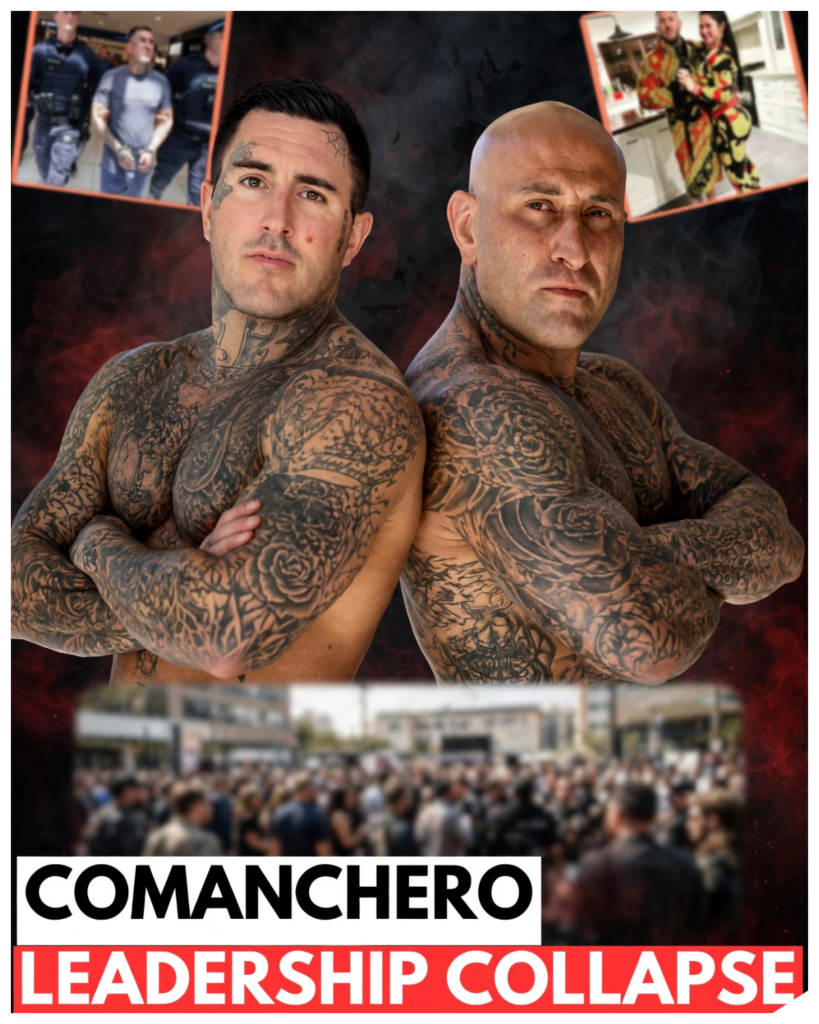
In 2016, the head of Australia’s Common Chero Motorcycle Club fled the country, one step ahead of a murder investigation.
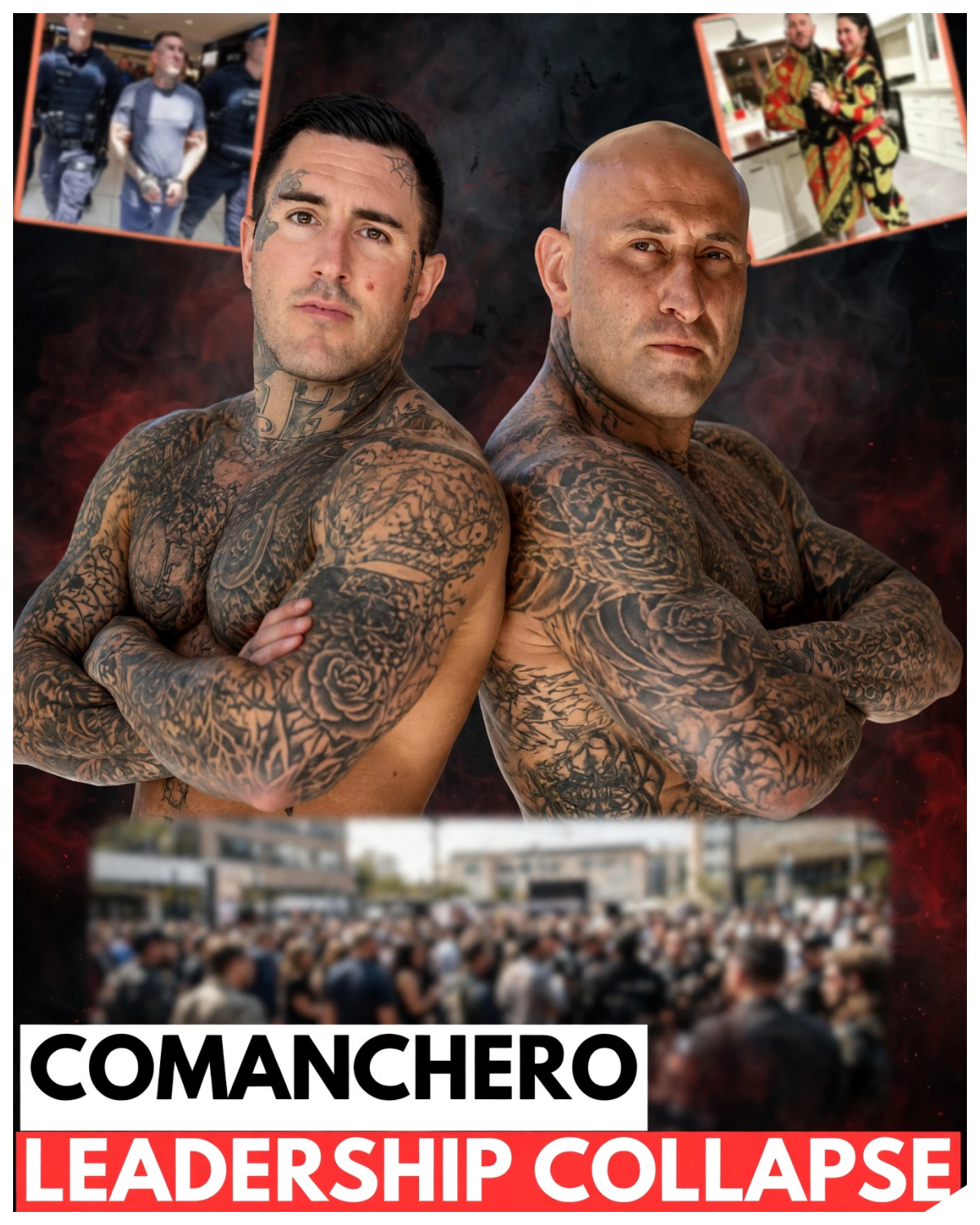
Rather than name a single successor, he did something unusual.
He appointed three men to run the club together.
A triumvirate, equal power in theory, split three ways.
For 6 years, that arrangement held.
Then in the space of about 4 months in 2022, it came apart almost entirely.
One of the three was arrested and charged with murder.
A second was shot 10 times in the foyer of a suburban gym, surviving only just, while his younger brother, standing beside him, did not.
Weeks later, while that same man was still recovering from his wounds, police charged him with an entirely separate murder, one dating back eight years.
Of the original three, only one walked away from 2022 with his position intact.
This is the story of Alan Mian and Tar Zahed, two of the men who once ran Australia’s largest outlaw motorcycle club side by side, and the year that decided which of them would actually keep running it.
Before we go further, a note on how this video is put together.
Everything here is drawn from court reporting and independent news coverage cross-cheed across multiple sources.
Tarak Zahed has been charged with murder in connection with a 2014 case.
That matter has not, as far as this account can confirm, been resolved through a conviction.
And we’re going to treat it that way throughout.
A charge, not a finding of guilt.
Where a specific detail rests on a single source or where reporting genuinely conflicts will say so directly.
Mian and Zahed stories only make sense together.
They rose inside the same organization under the same absent leader at the same time.
And when that leader’s own committee structure finally buckled under police pressure, one of them ended up shot in a gym car park with a bounty still on his head, while the other ended up within a matter of weeks the sole national president of the entire club.
In this video, we’ll go through how these two men rose together inside the common cherro, what actually happened across the few catastrophic months that took the club’s entire senior leadership apart almost simultaneously, and where each of them stands now, one still fighting a murder charge from a hospital bed.
The other reportedly having climbed even higher than the position he inherited.
If you’re new here, this channel covers organized crime history across Australia and New Zealand using court records and verified public reporting.
No dramatizing, no glorifying.
Subscribe and turn on the bell if you want to see where this one goes.
We’ll start with the man who put both of them in positions of power in the first place and the reason he could no longer set foot in the country he was supposedly still running.
To understand how Alan Mian and Tar Zahed ended up sharing power at the top of Australia’s largest outlaw motorcycle club, it helps to start with the man who put them there and the reason he could no longer run the organization himself.
Mark Battle had built a genuine senior standing within the common cheros over years eventually holding the position widely referred to within the club as supreme commander.
In 2016, he left Australia for the United Arab Emirates after being declared a person of interest by police investigating the 2010 murder of a security guard.
Rather than return to face that investigation, Battle stayed in the UAE, a decision that removed him from direct physical control of the organization he still nominally led, but didn’t end his involvement in it entirely.
What did next reflects a genuinely unusual approach to managing an outlaw motorcycle club from exile, one this channel hasn’t documented in quite this form across any of the other organizations it’s covered.
Rather than naming a single deputy to run the club in his absence, he appointed a three-person committee.
Tar Zahed, the club’s national sergeant-at-arms, responsible for enforcing internal discipline.
Mick Murray, president of the Melbourne chapter, and Alan Mian, president of the Sydney chapter.
Three men, each already holding significant authority within their own specific domain, now sharing collective responsibility for the entire national organization.
It’s worth pausing on what this structure actually represented because it’s a genuinely different model of leadership than the single centralized presidency this channel has documented in its coverage of other major outlaw motorcycle clubs.
A triumvirate spreads authority, but it also creates a specific kind of instability that a single leader doesn’t.
Three men, each with genuine standing and genuine ambition, notionally equal, but inevitably positioned as rivals the moment any question arose about who should actually be in charge going forward, particularly once Battle’s own return to Australia became increasingly unlikely.
Targahed brought a specific well doumented history of serious violence into that arrangement.
Born in Sydney in 1980 to Lebanese parents who’d fled the Lebanese civil war, his own criminal record predates his commoner membership by well over a decade.
He was convicted of assault and resisting arrest in 1995.
In 2001, he was convicted again after an incident in which he set his own dogs on a woman during a road rage confrontation.
In 2004, a further assault conviction followed a drug deal that went wrong during which he stomped on a man’s head with enough force to fracture his skull.
He began associating with the common cheros in 2009, formally joining shortly after and in 2011 was convicted of attempted murder, having shot a man.
By the time Ble appointed him to the leadership committee, Zahed had already spent close to two decades demonstrating exactly the kind of capacity for serious sustained violence that would eventually make him the club’s chief internal enforcer.
Alan Mian’s early path looked considerably different, at least on the surface.
Born in Sydney in 1987, he grew up in a family of Irish descent in genuine poverty on a public housing estate.
This account hasn’t been able to establish through independently verified reporting the specific details of how or when Mien first connected with the Kancheros.
But by the time assembled his leadership committee in 2016, Mien had already risen to the presidency of the club’s Sydney chapter, the most significant single chapter within the national organization.
What connected these two men alongside McMurray wasn’t friendship in any conventional sense, but a shared position.
Each had risen far enough within the common cheros to be trusted by an exiled leader who could no longer directly supervise them with a genuine share of the club’s national authority.
That arrangement held together, according to available reporting, for roughly six years through internal disputes, at least one significant brawl between rival chapters, and the ordinary accumulating pressure of running one of Australia’s largest and most closely watched criminal organizations.
What finally broke it wasn’t a single dramatic falling out between the three men themselves.
It was a catastrophic near simultaneous collapse in 2022 that would end McMurray’s involvement entirely, very nearly end TK Zahed’s life, and leave Alan Mi standing alone at the top of an organization he’d once shared with two other men.
The triumvirate Mark Buddle, established in 2016, didn’t hold together as cleanly as its name suggests.
Within a year, it had already been tested by internal violence serious enough to draw police attention across state lines.
And Battle’s own response to that test revealed just how unstable his exile era leadership structure actually was.
On 20th August 2017, close to 200 Common Cheros gathered in CRA for the club’s annual national ride, time to coincide with what members refer to as their annual general meeting.
Around 40 of them ended up at the Capital Men’s Club, a strip venue in the Canberra suburb of Fishwick.
At roughly 3:00 in the morning, an argument between a small group of men in the Smokers area, escalated into a full brawl between members of the club’s Victorian and New South Wales chapters.
The same two chapters, whose presidents, McMurray and Alan Mian, respectively, made up twothirds of Battle’s leadership committee.
CCTV footage from inside the venue reportedly showed men smashing beer glasses into their own foreheads as a display of bravado before the violence escalated further spreading through much of the club.
It’s worth pausing on a specific detail from that footage because it speaks directly to the question of how genuinely engaged the triumvirates members actually were in managing their own organizations internal discipline.
According to reporting on the incident, Mick Murray, at the time serving as acting national president, the most senior formal role within the entire structure Battle had built, was visible on CCTV, standing in the background throughout the brawl, making no apparent attempt to intervene or bring it under control.
For a man holding the club’s most senior domestic leadership position, watching a serious brawl between two of his own chapters without acting suggests either a genuine inability to exert control in the moment or a leadership style considerably more passive than the title itself implies.
Four Comancheros were eventually jailed over the Fishwick brawl, including Hassantoal, described in court reporting as the club’s Victorian commander and notably someone who had himself served as acting national president during a period when Mick Murray was in custody.
A detail worth flagging because it illustrates just how many different figures cycled through some version of acting leadership across this period.
Well beyond the three names most commonly associated with the formal triumpvirate structure.
Butle’s own response to the Fishwick violence adds a further layer of instability to this picture.
Rather than working through his existing threeperson committee to restore order, he turned to a different figure entirely, Ali Bazi, described in reporting as Butle’s right-hand man, who’d been traveling with him in Europe.
Bazi had his own recent history of internal violence.
He’d come to blows with another senior Kancherero, Mesan Chandab, earlier that same year.
Despite that, following the Fishwick brawl, Ble sent Bazi back to Australia and texted the club’s entire membership directly, informing them that Bazi was now in charge of the organization until Battle himself returned.
It’s worth reflecting on what this decision actually reveals about the state of Comanche leadership by 2017, roughly a year into the triumvirate arrangement.
Rather than trusting Murray, Zahed, [snorts] and Mian, the three men he’d specifically appointed to manage exactly this kind of situation in his absence to resolve the Fishwick crisis themselves, Budle bypassed all three, installing a fourth figure via mass text message.
Whatever formal authority the triumvirate held on paper, Budle’s own actions suggest he didn’t fully trust that structure to manage a genuine internal crisis when one actually arose.
Police monitoring the situation, including the dedicated anti-bikey strike force raptor unit, treated the entire episode seriously enough to raise genuine concerns about the possibility of open civil war breaking out within the club’s own ranks.
There’s a further conflict worth understanding from this same general period because it adds crucial context to just how much sustained external pressure the commoner leadership was managing simultaneously with its own internal tensions.
Beginning around 2012, the Common Cherros found themselves in conflict with the Rock Machine Motorcycle Club, the same organization this channel has already documented extensively in its coverage of the parallel separate conflict playing out in Western Australia through Damian and Paul Marandi’s own accounts.
This New South Wales dimension of the Rock Machine conflict had its own specific origin.
Rock machine chapters in the state had developed links to a Serbian organized crime network and used that connection to patch over a number of existing commoner members in mid 2012 directly poaching from the club’s own ranks in a way that created immediate serious tension.
That tension turned lethal.
One of the members who defected to Rock Machine Falop Pisu was shot dead at a wedding in southwest Sydney.
2 days later in a direct retaliatory strike, Rock Machine’s Sydney chapter targeted a Comanche member named John Divine, shooting him six times at a construction site in roads.
It’s worth being specific about who Divine actually was, because it illustrates how personally this particular conflict reached into the club’s own senior leadership.
He was Mark Butle’s own cousin.
The same managing a three-way leadership committee from exile in the Middle East was during this same broad period also dealing with a rival club’s retaliatory campaign that had already claimed a member of his own family.
Taken together, this period roughly 2016 through 2019 presents a picture of Comanche leadership considerably more chaotic and contested than the tidy phrase triumvirate initially suggests.
A three-person committee that its own architect apparently didn’t fully trust to manage a genuine internal crisis.
A fourth figure installed by mass text message when that crisis actually arrived.
An acting national president caught on camera failing to intervene in a brawl between his own organization’s chapters.
And running alongside all of this, an entirely separate lethal external conflict with a rival club that had already reached directly into the exiled leader’s own family.
It’s worth holding this broader instability in mind heading into what happened in 2022 because it complicates any narrative suggesting the triumvirates collapse that year came out of nowhere or represented some sudden unprecedented crisis for an otherwise stable organization.
The structure Bull built in 2016 had already shown clear signs of strain within its first year and had continued operating through repeated internal violence, contested acting leadership, and a genuinely deadly external rivalry for the better part of 6 years before the events that would finally catastrophically end it.
What made 2022 different wasn’t that instability suddenly appeared where none had existed before.
It was the sheer compressed speed at which multiple separate crises, each individually serious enough to end a lesser leader’s position, arrived almost simultaneously, taking out all three members of the original committee within a matter of months.
By early May 2022, Tar Zahed had been carrying a very specific, very public kind of danger for weeks.
Underworld sources and police investigators have both told him the same thing that a bounty had been placed on his head reportedly somewhere between1 million and $7 million connected to the broader Alamadine Hanzi conflict.
This channel has already documented in detail through its coverage of Basam Hanzi’s own story.
According to reporting on the shooting that followed, Zahed didn’t respond to that warning by disappearing from public view.
He kept going to Body Fit Fitness Center in Orbin, continuing to post gym content to social media even as the threat against him grew.
It’s worth pausing on why that specific choice mattered as much as it did.
An Underworld source speaking to reporters afterward offered a blunt explanation for why gyms in particular had become a recurring venue for this kind of gangland violence during this period.
Routine makes a target predictable and a gym is a place where the target generally isn’t armed.
It wasn’t an isolated observation.
6 months earlier in November 2021, an Alamadine associate named Morat Gulasi had been shot in the leg at a different Sydney gym entirely.
Zahed’s own continued presence at Body Fit, despite everything he’d been told, fit a pattern that had already proven lethal once before.
On the evening of 10 May 2022, at around 8:00, gunman opened fire on Zahed and his younger brother Omar in the foyer of the gym on the busy Paramea Road in Orin.
Omar, 39, was hit in the arms, stomach, and legs and went into cardiac arrest.
Paramedics couldn’t save him.
TK, 41, was hit 10 separate times across his face, head, arms, legs, stomach, and pelvis.
One bullet lodged in his skull near his right eye.
He would permanently lose sight in that eye as a result.
He was rushed to Westme Hospital in critical condition.
The gunman fled the scene in vehicles that were later found deliberately set a light in nearby suburbs.
Footage later emerged showing someone pouring accelerant over one of the getaway cars before it burst into flames.
The scale of the police response reflected how seriously New South Wales authorities treated the attack.
A dedicated new unit, Strikeforce Liry, was established specifically to investigate the shooting, working alongside the existing anti-bikey strike force raptor, which was boosted by an additional 30 detectives, bringing its total strength to 145.
NSW Police Minister Paul Tulle delivered a public statement making clear the state’s intended response, describing the shooting as shocking and unacceptable, warning that anyone connected to Sydney’s underworld should expect police to disrupt their lives directly in response and promising that those responsible would be pursued and locked up.
NSW police commissioner Karen Webb offered her own blunt assessment of the mentality driving this kind of violence that some of the people involved seem to think themselves invincible.
There’s a detail worth including here that speaks to the human cost extending beyond Tar and Omar themselves.
According to reporting on the aftermath, a further Zahed brother, the youngest of the family, was at the time himself in custody on unrelated matters and formerly requested release specifically to attend Omar’s funeral.
It’s a reminder of something this channel has now documented across multiple different organized crime families in its broader coverage.
Violence and incarceration within families connected to this world rarely stays contained to a single individual.
The Zahed family across this single week alone was managing a funeral, a brother fighting for his life in hospital, and another brother watching all of it unfold from inside a prison cell.
What happened over the following months complicates any simple reading of the relationship between Zahed and Alan Mi, the man who’d beaten him for the national presidency only weeks before the shooting.
In August 2022, Mi posted a photograph of himself with Zahed to his own Instagram account, referring to him with the nickname Hard to Kill alongside a caption invoking love and brotherhood and dismissing whatever rumors had apparently been circulating about tension between them.
It’s worth reflecting on what this public gesture actually represents, set against the timing of everything else covered in this account.
Mian had won the leadership contest against Zahed.
Zahed had then been shot and nearly killed in an attack connected to a conflict the club’s own recent strategic decisions had helped generate.
And rather than distance himself from a rival who was now both badly wounded and facing serious ongoing legal jeopardy, Mian chose to publicly visibly align himself with Zahed instead.
A decision that could reflect genuine loyalty, a calculated effort to project unity within an organization already under intense police and media scrutiny, or some combination of both.
That same month brought a development that would have seemed almost unthinkable, set against the sympathy generated by Zahed’s own shooting just weeks earlier.
In August 2022, Tarak Zahed and his younger brother Abdul Kahir Zahed were charged with first-degree murder connected to the killing of a man named Ysef Assum on 11th December 2014.
According to the allegations, Assum had been kidnapped and killed, his body found inside his own car, which had been set on fire.
Police reportedly recovered Zahed’s fingerprints from inside the burned vehicle’s remains.
It’s essential to be precise about what this charge represents and to hold it separately from everything else this account has already covered about Zahed as a shooting victim.
Being shot 10 times and nearly killed doesn’t make someone incapable of having committed a serious crime years earlier.
And surviving an assassination attempt isn’t evidence of innocence regarding an entirely separate allegation.
At the same time, a charge is not a conviction, and this account hasn’t been able to establish through available reporting that this specific matter has been resolved through a trial verdict.
Zahed is, as far as this account can confirm, someone who has been charged with the 2014 murder of Ysef Assum, a serious formal allegation, but not yet on the evidence available to this channel, a proven fact.
The arrest itself when it came on 29th August 2022 was dramatic even by the standards of everything else covered in this account.
Zahed was in Edgliffe in Sydney’s eastern suburbs when tactical police moved to take him into custody.
According to police accounts of the operation, Zahed refused to exit his BMW when instructed, prompting officers to shoot out the vehicle’s windows before physically pulling him from the car.
UNS Wales Police Commander Danny Doati offered a characteristically blunt assessment afterward, describing Zahed as someone who was non-compliant at the best of times and had been particularly so that day.
Taken together, the roughly four months between McMurray’s arrest in late April and Zahed’s own arrest in late August represent one of the most compressed, catastrophic periods of leadership turnover this channel has documented across its entire coverage of Australian organized crime.
A national president arrested for murder, his wouldbe successor shot 10 times and permanently blinded in one eye, his own brother killed in the same attack.
That same survivor then charged with an entirely separate murder from eight years earlier, arrested in a tactical operation dramatic enough to involve police shooting out his car windows.
And running through the middle of all of it, a public Instagram post from the man who’d actually won the presidency, declaring loyalty to the rival he’d beaten, using a nickname that in retrospect would prove genuinely apt, hard to kill.
There’s a detail buried inside Alan Mi’s own path to the presidency worth returning to now because it reframes something about the loyalty he later publicly displayed toward Tar Zahed.
Mi didn’t start his outlaw motorcycle club career with the Kancheros at all.
At 18, he joined the Rebels, eventually rising to president of that club’s Kronella chapter before defecting to the Comancheros, becoming under Mark Buddle’s mentorship, a genuine protege within his new organization.
It’s a trajectory this channel has now documented in slightly different forms across several other figures in its broader coverage of Australian outlaw motorcycle clubs.
And it’s worth noting here because it means Mi’s rise inside the Comancheros wasn’t the product of decades of accumulated internal seniority.
It happened relatively fast, built substantially on Battle’s own direct patronage.
That rise continued even after B’s exile.
In 2020, Mi became president of the Common Cherro’s Cambra chapter, stepping into the role, according to available reporting, after the previous chapter president was murdered.
It’s a detail worth sitting with because it establishes a pattern that would recur considerably more publicly two years later.
Mi’s leadership positions within the common cheros had a documented tendency to open up specifically because the person previously holding them met a violent end.
He went on to become president of the Sydney chapter as well, positioning him alongside Murray and Zahed as one of the three men effectively running the national organization by the time Buddh’s committee structure finally collapsed in 2022.
It’s against this backdrop that Mian’s Instagram post about Zahed, the hard tokill message, the declaration of love and brotherhood, the instruction to forget whatever rumors people had heard, takes on a considerably sharper meaning than a simple gesture of solidarity between rivals.
According to reporting on the specific context surrounding that post, Mian’s message was widely understood as a direct attempt to rebut a very specific rumor circulating within Sydney’s underworld.
That Mian himself might have been behind the attempt on Zahed’s life.
Read in that light, the post wasn’t simply Mian expressing sympathy for a wounded former rival.
It was damage control aimed at a rumor serious enough that Mian apparently felt compelled to address it publicly.
On the same platform where he’d need his own remaining members and allies to actually believe him.
This account can’t establish through any independently verified reporting whether that specific rumor had any basis in fact.
What it can establish is that the suspicion existed seriously enough in the weeks following Zahed’s shooting to require this kind of direct public denial from the man who just won the position Zahed had been competing for.
It’s worth holding that ambiguity honestly rather than resolving it in either direction.
This account can’t actually support.
Mi may have genuinely had nothing to do with the attack on his former rival and simply found himself the convenient subject of suspicion given the timing and the obvious benefit he stood to gain from Zahed’s removal.
Or the rumor may have reflected something closer to genuine informed underworld knowledge.
This account doesn’t have the evidence to distinguish between those two possibilities, and it isn’t going to pretend otherwise.
Whatever the truth of that specific suspicion, the violence connected to Mian’s own presidency didn’t end with Zahed’s shooting.
The following month, September 2022, one of Mian’s closest allies within the organization, Kyle Leopa, was shot in the face.
Around the same period, a further Kanchetto figure, Levi Johnson, was stabbed to death.
It’s worth reflecting on what this continued violence striking Mian’s own inner circle just weeks after he’d secured the national presidency suggests about the actual stability of his new position.
Winning the leadership contest against Zahed didn’t resolve the broader conflict that had produced the Zahed shooting in the first place.
It simply meant Mian was now the man nominally in charge of an organization still absorbing serious targeted violence connected to exactly the same underlying tensions.
By 2023, Mian’s own physical safety had become enough of a concern that he relocated to Queensland.
His lawyer, Angus Edwards, told a court directly that the move was for Mian’s own safety.
A striking admission from the legal representative of a man who by this point held the most senior formal position within Australia’s largest outlaw motorcycle club.
It’s worth pausing on what this detail actually reveals about the nature of Mian’s authority.
A national president forced to relocate inner state for his own protection isn’t operating from a position of secure unchallenged control.
He’s managing an organization where the same kind of violence that took out his two immediate predecessors, Murray’s arrest, Zahed’s shooting, remained alive, personal threat to him as well, regardless of his formal title.
There’s a further thread worth naming here, one this account can only gesture toward given the limits of available reporting.
Mian is described in the years following his ascension to the presidency as remaining locked in an ongoing power struggle with Mick Murray, the man he’d formerly succeeded after Murray’s murder arrest in April 2022.
This account hasn’t been able to establish the specific mechanics of that continued rivalry, including how Murray, facing a serious murder charge of his own, retained enough standing or influence to remain a genuine competitor for Mian’s authority.
What it suggests at minimum is that the leadership question this entire account has traced.
Who actually controls the common cheros following the collapse of Battle’s original triumvirate didn’t resolve cleanly once Mian claimed the presidency in 2022.
It appears to have continued as an active ongoing contest for years afterward, playing out alongside rather than instead of the formal legal proceedings each of the men involved was separately navigating.
What this leaves taken together is a picture of commoner leadership across 2022 and the years that followed that looks considerably less like a stable transition of power and more like an extended multiffront crisis that simply never fully resolved.
Murray facing a murder charge, Zahed recovering from near fatal injuries while himself facing a separate murder charge.
Mian holding the formal presidency while relocating interstate for his own safety and managing continued violence within his own immediate circle.
All while facing persistent rumors that he may have been behind the very attack that cleared his path to the position in the first place.
This isn’t the story of one man successfully outmaneuvering his rivals to claim uncontested control of a major criminal organization.
It’s a story of an organization whose entire senior leadership structure came apart almost simultaneously, leaving whoever happened to still be standing, in Mi’s case, quite literally uninjured, unlike both of his former committee colleagues, to claim a title that came with considerably less actual security than the position might once have offered.
There’s a role sitting above everything this account has traced so far, one this channel hasn’t yet fully explained.
Supreme Commander, the Kancherero’s international leadership title held by Mark Buttle before his exile and according to the most recent available reporting, eventually claimed by Alan Mi himself.
Tracing who’s actually held that title and how adds a further layer to the pattern of instability this account has already documented at the national and chapter level.
Because the very top of the Kmanero’s global structure has proven just as unstable as everything beneath it.
Battle himself became national president in 2011 after his own predecessor Duax Dax Nakuru fled Australia to Turkey.
It’s worth pausing on that detail because of where this account eventually finds Nakuru again having escaped Australian authorities in 2011.
Nakuru went on to become at some later point the commoner’s supreme commander in his own right the same international role Battlele would eventually hold and eventually lose in turn.
On 14th January 2023 more than a decade after his original flight from Australia.
Nakuru was arrested in Turkey on drug smuggling charges.
Caught in the end in the same country he had apparently used as a haven for over a decade.
Undone by exactly the kind of international law enforcement cooperation that has, according to this channel’s broader coverage of Australian organized crime, become an increasingly significant tool against exiled figures who assume distance alone will keep them safe indefinitely.
Successor as supreme commander, according to reporting from this same general period, was Noah Bones Ramseia, a former Sydney cider who’d relocated to Dubai and who owned, of all things, a wedding car hire business.
Ramsia was reportedly the proud owner of a Bentley and maintained connections to a further former Comanche figure, Marco Coffin, also living overseas by this point.
It’s worth reflecting on what this succession pattern actually reveals about the nature of leading an outlaw motorcycle club from genuine exile.
Each of these men, Budel, Gakuru, Ramseia, chose the same basic strategy once Australian law enforcement pressure became too intense to withstand directly.
Relocate somewhere beyond easy extradition reach, build some form of legitimate or semi-legitimate business front, and attempt to continue directing the organization’s affairs from a genuinely safe distance.
None of them, on the evidence this account has traced, managed to hold that position indefinitely.
By 2026, according to the most recent available reporting, Alan Mian himself is understood to hold the Supreme Commander title in addition to remaining national president domestically.
A genuine consolidation of authority across both the club’s Australian operations and its broader international structure.
It’s worth sitting with the specific arc this represents.
A man who joined the rebels at 18, defected to the common cheros, rose through Battle’s direct patronage, won a leadership contest against a rival who was shot 10 times weeks later, publicly denied any involvement in that shooting, relocated interstate for his own safety, and remained locked in an ongoing power struggle with the predecessor he’d formerally replaced.
Has across the following several years gone on to claim not just the national presidency he originally won in 2022 but the same international role that Battle Nakuru and Ramseia each held before eventually losing it one way or another.
There’s a genuine question worth raising about what Mian’s apparent success in consolidating both roles actually says set against the pattern of failure that preceded him.
It’s possible Mian has simply proven more capable, more cautious, or more fortunate than his own predecessors in this specific role, managing to hold both positions simultaneously in a way none of the men before him achieved.
It’s also possible this account is simply catching his story at an earlier point in what will eventually prove to be the same cycle.
A leader who appears for now to have successfully consolidated power before the same combination of police pressure, internal rivalry, and outright violence that took out Battle Murray and nearly took out Zahed eventually catches up with him as well.
This account can’t resolve that question because the answer depends entirely on events that haven’t happened yet or haven’t been reported on with enough clarity for this channel to draw on.
What can be said with confidence drawing together everything this account has traced across the common chair’s leadership history specifically is that this organization has now cycled through an unusually large number of senior leaders in a remarkably short period.
Each transition driven by some combination of arrest, exile or serious violence rather than anything resembling ordinary planned succession.
Nakuru fled to Turkey.
Bull fled to the UAE, then was extradited back to face drug charges.
Murray was arrested for murder.
Zahed was shot 10 times and separately charged with a murder of his own.
And running beneath all of it, the broader Alamadine Hamsy conflict.
This channel has already documented extensively through its coverage of Basam Hamzy, a conflict the Comanche’s own leadership decided to enter directly, according to reporting on their alliance with the Alamadine network, apparently without fully accounting for how many powerful new enemies that alliance would generate.
It’s worth connecting this pattern to the broader body of work this channel has now built across its coverage of Australian organized crime.
Specifically, this account’s earlier documentation of the rebels through Alex Vela’s decadesl long exile, Damian’s own contested presidency, and the WA chapter’s repeated crisis under Nick Martin and his successors traced a genuinely similar pattern of leadership instability playing out inside a completely different organization with its own separate history and its own separate set of rival conflicts.
The specific details differ considerably.
The rebels crisis centered substantially on immigration law and a decadesl long territorial war with the rock machine while the common cheros recent turmoil traces more directly to their own internal committee structure and a specific catastrophic alliance with the alamadine network.
But the underlying shape is remarkably consistent across both organizations.
Formal leadership positions that carry genuine authority on paper, repeatedly proving unable to survive contact with the combined pressure of police investigation, rival organized crime networks, and the club’s own internal rivalries for more than a few years at a time.
There’s a final reflection worth offering here, one this channel has returned to across multiple different accounts of Australian and New Zealand organized crime without ever fully resolving it.
These organizations persist in a genuinely durable sense even as the individuals who lead them cycle through arrest, exile, and violence with striking regularity.
The common cheros didn’t cease to exist when Nakuru fled in 2011 or when Buddh fled in 2016 or when Murray Zahed and effectively the entire triumvirate structure collapsed within a few catastrophic months in 2022.
Someone always steps into the vacancy.
Sometimes chosen through a formal, if contested, leadership process.
Sometimes simply by virtue of being the last senior figure left standing once everyone else has been removed by one means or another.
Whether Alan Miun’s current consolidation of both the national presidency and the international supreme commander role represents the organization finally settling into a more stable period or simply the next chapter in a pattern.
This account is now traced across more than a decade of near constant leadership turnover isn’t something this channel can answer with the evidence currently available.
It’s a question this account leaves open in keeping with the honest uncertainty that’s run through much of what it’s been able to establish about where things actually stand today.
There’s a detail worth returning to about how Alan Mian first became a commonerto chapter president at all because it establishes that the pattern of violent vacancy this account has already traced through his later career started even earlier than his 2022 rise to national president.
In July 2020, Pasasoni Ulavalu, then president of the Comancher’s ACT chapter in Canberra, was stabbed to death while trying to break up a brawl outside a former nightclub in the center of Civic.
Mihan was elevated into the chapter presidency Ula Valu’s death had left vacant.
It’s the same underlying pattern this account has already documented with his later rise to the Cannber chapter and eventually national leadership.
Miin’s career within the common cheros has repeatedly advanced through positions opened up by other men’s violent deaths rather than through any documented internal contest he actually had to fight for and win outright.
At least not until the specific leadership struggle against Zahed in 2022.
Mi’s own brush with New South Wales’s most aggressive antibi legal tools came in 2023 and it’s worth tracing in some detail because it connects directly to a pattern this channel has already documented in its earlier coverage of Damian Vela’s own experience with the same legal mechanism.
Mian had been made subject to a serious crimerevention order, a civil control order requiring a lower standard of proof than a criminal conviction, imposing strict conditions on his movement, his communications, and his associations with other common cherero members.
New South Wales Police Superintendent Grant Taylor was direct in public comments about the order about exactly what strategy it reflected, that man had become a primary target of the New South Wales police force, specifically because of his position, and that the underlying message was meant to apply to whoever held the national presidency, not simply to me as an individual.
It’s close to word for word the same strategy this channel has already documented being applied to Damian Vela through NSW police’s 2019 consorting application.
A deliberate [snorts] stated policy of making the position of national president itself as legally perilous as possible regardless of who happens to occupy it at any given moment.
Mi’s specific breach of that order came when he relocated to Queensland, settling at a property in Bonoa waters on the Gold Coast.
Police alleged he’d failed to provide the full address of his temporary accommodation, hadn’t given an intended return date to his primary residence, and had been found possessing and using an encrypted communication device, each a direct violation of the order’s specific conditions.
When detectives eventually arrested him at the Queensland property early in the morning and extradited him back to New South Wales, Mi’s own defense offered a genuinely striking explanation for why he’d left in the first place.
That NSW police themselves had specifically told him there was a $3 million bounty on his life and that his relocation to Queensland reflected a genuine attempt to protect himself, not an effort to evade the order’s restrictions.
It’s worth sitting with the specific tension in that defense because prosecutors offered a directly competing account of Mian’s own motivation.
Rather than accepting that the move reflected genuine fear for his safety, the Crown’s position was that Mian had left New South Wales specifically to escape the SCPO’s strict conditions themselves, treating the alleged threat to his life as at best a convenient justification rather than the actual reason for his departure.
Court documents connected to the case included evidence from a police listening device in which Mian was recorded dismissing an officer’s inquiry about his whereabouts in blunt, contemptuous terms.
A recorded attitude that arguably did more to undermine his own defense than support it, suggesting someone who considered the order’s reporting requirements an irritant to be brushed off rather than a genuine constraint he was struggling to comply with while under real threat.
Mian was refused bail when the matter first reached court and remained in custody through the following proceedings.
When the case finally resolved on 6th July 2023, he was convicted of violating the serious crimerevention order, but according to reporting on the outcome, avoided further jail time as a result of his guilty plea.
It’s worth noting what this specific outcome represents set against everything else covered in this account.
The most serious sustained violence connected to the Common Cherros 2022 leadership collapse, Murray’s murder charge, Zahed’s shooting, and his own separate murder charge produced genuinely severe consequences for the men directly involved.
Mian’s own most significant formal legal consequence from this entire period, by contrast, was a civil order violation that ultimately didn’t require any additional time in custody at all.
Whatever risk Mian actually faced across 2022 and 2023, the formal justice system’s own response to his specific conduct proved considerably less severe than what it delivered to his former committee colleagues.
There’s a broader international dimension to this entire story worth including before this account moves toward its conclusion because it illustrates just how far beyond Australia’s own borders the consequences of this leadership collapse eventually reached.
In October 2023, Turkeykey’s interior minister publicly announced that Turkish police had detained 37 full patch commoner members in Istanbul.
A genuinely substantial operation, reflecting how significant a presence the club had built in Turkey specifically, likely connected to the same country Battle and Nakuru had each separately used as a refuge from Australian authorities in earlier years.
It’s worth connecting this to a further detail regarding the club’s broader supply chain.
Australian police have separately indicated that a significant portion of the drugs distributed by the Kancheros originates through the port of Vancouver controlled by the Hell’s Angels East End chapter there.
A reminder that an organization this channel has spent most of this account documenting through its Australian leadership crisis actually operates across a genuinely global network with supply lines and refuge points spanning multiple continents.
It’s worth being honest in closing this part of the account about a genuine inconsistency this channel encountered in trying to establish exactly who holds ultimate authority within the common cheros at any given point since 2023.
Some reporting suggests a further figure described only as Alex V became the club’s new boss at some point in 2023.
A detail that sits in some tension with other reporting describing Mian as continuously holding the national presidency since 2022 and eventually rising to the Supreme Commander role by 2026.
This account can’t fully reconcile that specific discrepancy with the sources available to it.
It may reflect a leadership change at a specific chapter or regional level, distinct from the national presidency man is more consistently reported holding.
It may reflect a genuine temporary shift in national leadership this account simply hasn’t been able to trace in full detail.
Or it may simply reflect the kind of reporting inconsistency this channel has now encountered across multiple cases where an organization’s actual leadership structure changes faster and with less clear public documentation than any single account can fully keep pace with.
That specific uncertainty is in its own way the most fitting note to close this part of the account on.
An organization that cycled through national leadership at least four times in roughly a decade and a half.
Nakuru to Bud to Murray to Mian while separately cycling through its international supreme commander role at a similar pace and while simultaneously absorbing the kind of sustained internal violence this account has documented in detail isn’t the kind of organization where who’s actually in charge is always a question with a single stable easily verified answer.
Even this channel, working carefully through the available reporting, has struggled to pin that answer down with full confidence for the most recent period covered here, which says something real about the nature of trying to lead or simply to document an organization this consistently violently unstable at its very top.
This account set out to tell the story of two men who once ran the same organization together, Alan Mian and Tar Zahed, appointed by an exiled leader to share power alongside a third man in an arrangement that held for 6 years before collapsing almost entirely within a single catastrophic season.
It’s worth closing by asking what that story actually adds up to now that every thread has been traced.
Zahed’s own arc is in some ways the more straightforward of the two to summarize, even though nothing about what actually happened to him was straightforward at all.
A man with two decades of documented violence behind him rose to become the commoner’s chief internal enforcer, competed for the national presidency, lost that contest, and within weeks was shot 10 times in a gym foyer while his younger brother died beside him.
He survived permanently blinded in one eye, only to be charged months later with an entirely separate murder from 8 years earlier.
A charge this account has treated throughout as exactly what it is, a serious, unresolved allegation rather than an established fact.
Whatever comes of that charge, Zahed’s own story, as this account has traced it, is one of survival purchased at genuinely extraordinary cost.
Arriving alongside legal jeopardy that predates and now runs alongside the violence that nearly ended his life entirely.
Mian’s a is harder to summarize cleanly precisely because so much of it remains genuinely uncertain.
[clears throat] He rose through a series of positions opened up by other men’s violent deaths.
Won the one genuine leadership contest this account has documented in his career.
Then spent the following years managing suspicion that he’d been behind the attack on the very rival he defeated.
Violence within his own inner circle, a forced relocation for his own safety, an SCPO conviction that somehow resulted in no additional custody, and according to the most recent available reporting, an eventual rise to the very top of the organization’s international structure.
While this account simultaneously encountered reporting suggesting someone else entirely may have taken over at some point along the way, it’s a genuinely unresolved picture and this account has chosen to present it as exactly that rather than manufacturing a false sense of clarity the available sources simply don’t yourself.
There’s a thread worth pulling through both stories together because it says something this channel has now documented across a genuinely wide range of Australian and New Zealand organized crime cases.
Neither Mihan nor Zahed built their position through the kind of steady decadesl long institutional climb this channel documented in its coverage of figures like Alex Vela or Basam Hamsey.
Both rose relatively quickly inside an organization whose own leadership structure had already proven unstable well before either of them reached its top tier.
A triumvirate installed by text message from exile.
A fourth figure briefly inserted to manage a crisis the original committee couldn’t control.
Chapter presidencies opening up through stabbings and shootings rather than orderly succession.
Whatever authority Mean and Zahed each eventually held, it was authority built on genuinely unstable ground within an organization that had been cycling through crisis after crisis for years before either of their names became central to it.
It’s worth returning one final time to the specific irony sitting at the heart of this entire account.
Mark Battlele built his threeperson committee specifically to ensure the common cheros could keep functioning even with their most senior leader unable to set foot in the country in a narrow technical sense.
That structure worked exactly as intended.
The club didn’t collapse when Battle fled and it didn’t collapse again when Murray Zahed and effectively the entire triumpvirate came apart in 2022 either.
Someone always stepped into the vacancy.
What Ble’s structure never actually solved across the entire period this account has traced was the underlying instability driving each individual crisis in the first place.
Sustained police pressure, specifically targeting whoever held senior leadership, a catastrophic alliance with the Alamden network, but generated exactly the kind of enemies this account has documented in devastating detail, and an organizational culture where violence, including violence against the club’s own senior figures, remained a persistent, unresolved feature throughout.
What this account can offer in place of a tidy conclusion is an honest accounting of where things currently stand and an acknowledgment of how much remains genuinely uncertain even about that.
Mick Murray’s murder case remains unresolved as far as this channel has been able to establish.
Tar Zahed’s murder charge over the 2014 killing of Ysef Hassum remains similarly an open untested allegation.
Alan Mian appears based on the most recent available reporting to have consolidated an unusual degree of formal authority both the national presidency and the international supreme commander title even as this account encountered genuine inconsistency in trying to confirm exactly how stable that consolidation actually is.
And underneath all of it, the broader Alamadin Hamzi conflict that helped produce Zahed’s shooting in the first place continues as this channel’s earlier coverage of Basam Hamzi documented in detail without any clear sign of genuine resolution.
There’s a final reflection worth offering, one that connects this account back to the broader body of work this channel has now built across its coverage of Australian and New Zealand organized crime.
Every major organization this channel has documented.
The rebels, brothers for life, the common cheros, now covered here, has proven across multiple separate accounts considerably more durable than any single leader who’s tried to run it.
Presidents get arrested.
Sergeants at arms get shot 10 times and survive anyway, only to face their own separate legal reckoning.
Exiled founders eventually get caught, sometimes a decade or more after they first fled.
And through all of it, the organization itself persists, cycling through leadership with a regularity that makes tracking exactly who’s actually in charge at any given moment a genuinely difficult task, even for a channel dedicated to doing exactly that.
Alan Mian and Tarak Zahed stories told together capture something this channel has tried to demonstrate across its entire body of work that organized crime leadership at this level isn’t the stable hierarchical structure its formal titles suggest.
It’s a genuinely precarious position held by people who arrive at it through some combination of ambition, patronage, and sheer survival.
In an environment where the same violence that removes arrival can just as easily and just as unpredictably come for the person who benefited from it.
Whether Mi’s current position represents genuine lasting consolidation or simply the latest chapter in a pattern of instability, this account has now traced back well over a decade isn’t something this channel can answer today.
It’s a question this account leaves exactly where the evidence currently leaves it, open, unresolved, and likely to keep generating new chapters.
This channel may well need to return to.
This channel covers organized crime and gang history across Australia and New Zealand using court records and verified public reporting rather than speculation.
If you’re new here, that’s the standard we hold to on every case, including, as this account has demonstrated throughout, the cases where the most honest answer is simply that we don’t yet know how the story ends.
Subscribe and turn on the bell if you want to see where the rest of this world’s story goes next.


