Of it.
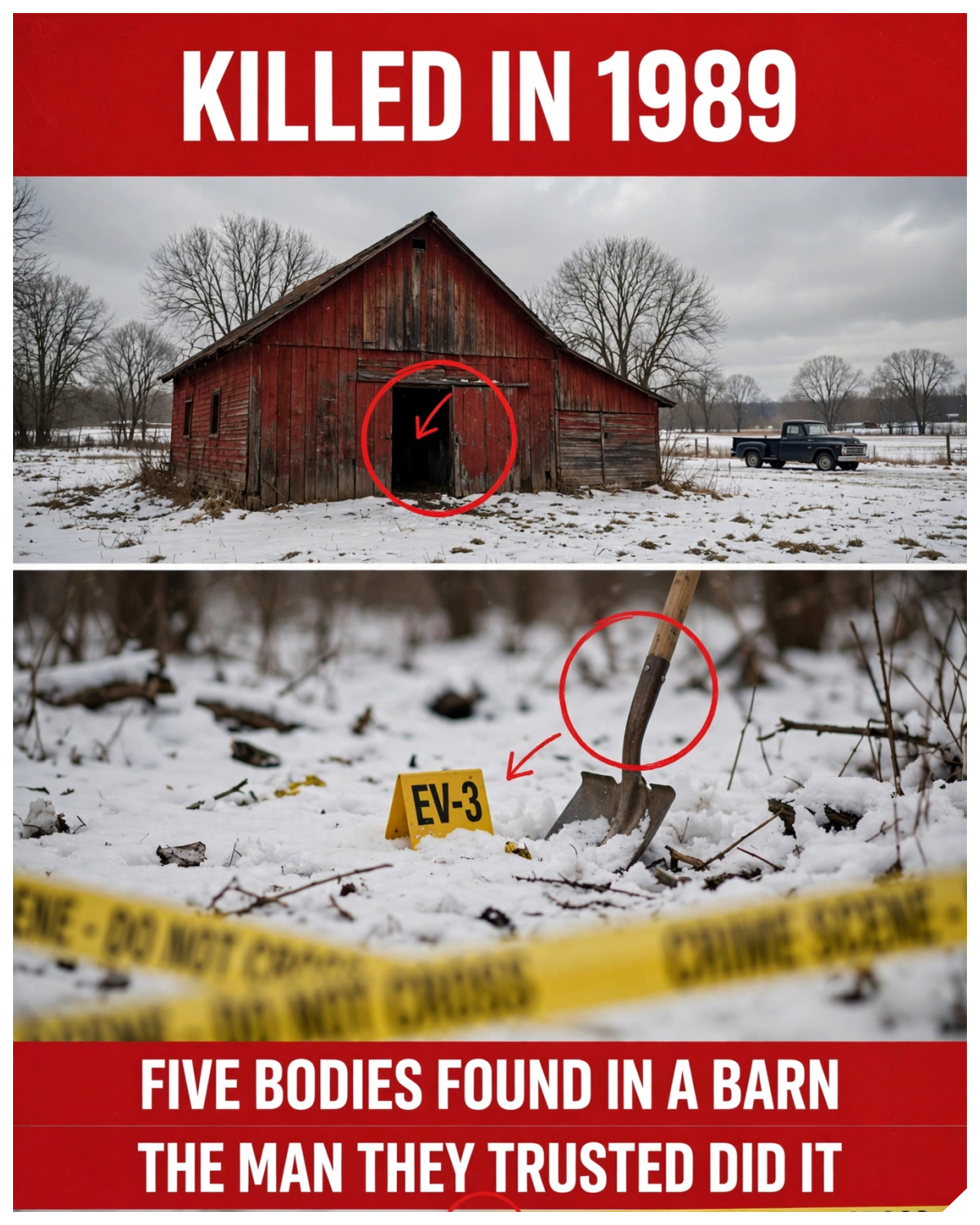
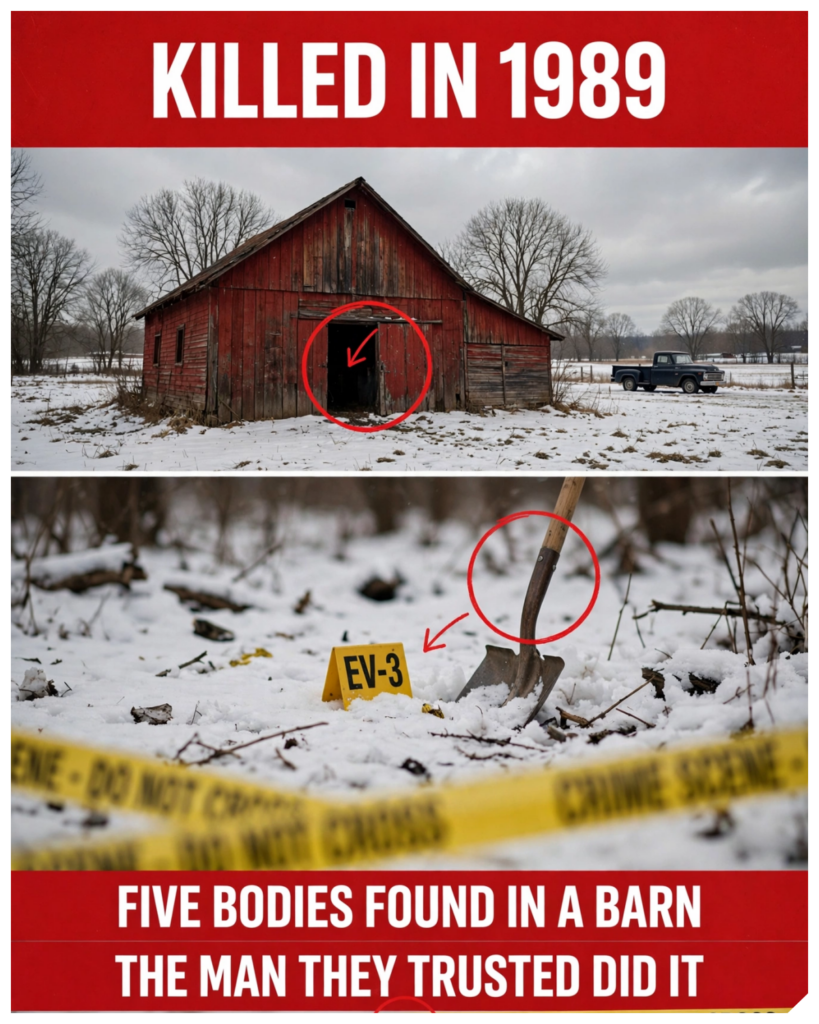
On the morning of January 3rd, 1990, police officers in Kirtland, Ohio, walked into a red barn behind a rented farmhouse on Uklid Chardan Road, picked up shovels, and started digging through frozen mart and garbage.
They did not know exactly what they would find.
They had been told to expect five.
Kirtland was a town of about 6,000 people, 25 minutes east of Cleveland, best known for a 153year-old temple on a hill.
One of the holiest sites of a church most Americans had never heard of.
The farmhouse had been rented until a few months before by a former tour guide at that temple.
A man who had stood in front of visitors explaining the scriptures, a man who had come to believe that he was a prophet and that God had told him a family of five had to die.
The family’s name was Avery.
Dennis and Cheryl and their three daughters, Trina, 15, Rebecca, 13, and Karen, seven.
They had moved from Missouri to follow this man.
They had given him their savings.
And on an April evening 9 months earlier, they had come to that farmhouse for dinner.
Nobody had reported them missing.
Their relatives back in Missouri thought they’d moved on.
Their church thought they’d left.
For 9 months, the Averies had simply ceased to exist.
And the only people who knew why had scattered across three states.
That is not a story about a family who vanished.
That is a story about a man who built a religion out of his own hunger and about what happened in a barn when a father, a mother, and three little girls were called out of a farmhouse one at a time.
It would take an informant, a frightened disciple, and a trench full of lime and trash to bring it into the light.
But before we get to that, you have to understand who the Averies were and why they followed him.
Kirtland in the late 1982s was quiet, rural, and strange in exactly one way.
In 1831, Joseph Smith had brought his new church here, and his followers had built a temple on the hill, the first Mormon temple in the world.
The main Mormon church had moved west long ago.
But a smaller branch, the reorganized Church of Jesus Christ of Latter-day Saints, headquartered in Independence, Missouri, still kept the Kirtland Temple, and gave tours.
For RLDS families, Kirtland was sacred ground.
Reagan’s second term was ending.
Cars had cassette decks, and in a farmhouse on Route 6, a lay minister was beginning to tell a handful of followers that the temple on the hill was about to be taken back by force.
Jeffrey Lungren had come from independence in 1984 with his wife Alice and their children, and the church had made him a temple guide.
He served there from 1985 to 1987.
He was charismatic, intense, gifted at scripture, and as the church eventually discovered, skimming money from the temple’s donations.
He was dismissed in 1987.
By then, it didn’t matter.
He had already gathered a group who believed he could read the scriptures the way no one else could, that he spoke with God, and that salvation ran through him.
The Averies were among them.
Dennis Avery was 49.
Cheryl was 46.
People of faith raised in the RLDS church.
The kind of couple who believe that when God calls, you go.
They had sold their home in Missouri around 1987 and moved their three girls to Ohio to be near Longren and they had handed him most of what the sale brought in.
Trina was a 9th grader at Madison local schools in Lake County.
Rebecca was 13.
Karen was seven and still small enough to be carried, but the Averies were not good at being followers.
Dennis kept some money back.
Cheryl asked questions.
The family lived in their own place rather than in the cramped farmhouse with the rest of the group.
In Lungren’s growing paranoia that made them weak, and weakness, he taught, was sin, he began telling his followers that the averies were a stain.
That before the group could coke the temple and see God, the stain had to be cleansed.
In the spring of 1989, the Averies were still coming to the farmhouse for dinners and scripture classes, still believing they were part of something holy.
On April 17th, they were invited to a special meal.
Monday, April 17th, 1989.
Court records and the testimony of the people who were in that house lay the evening out step by step.
Through the afternoon, the farmhouse on Uklid Chardan Road was busy.
The men of the group had spent days in the barn behind the house digging a pit 6 and 1/2 ft deep, 7 ft long into the dirt floor.
They had been told it was for a purpose that would be revealed.
Lungren revealed it that day.
He told his followers which family would be coming to dinner and what would happen after.
Early in the evening, the Averies arrived.
Dennis, Cheryl, Trina, Rebecca, Karen.
They sat down with the group and ate.
The scene has been described by people who were there as ordinary.
Dinner, conversation, children.
After the meal, a man named Ron L, one of Lungren’s most trusted disciples, came to Dennis Avery and asked him to come out to the barn to help with something.
Dennis went.
In the barn, Dennis Avery was bound with duct tape, gagged, and led to the edge of the pit.
Joffrey Lundren was waiting with a 45 caliber pistol.
He shot Dennis and he fell into the hall.
L went back to the house.
He came back with Cheryl, then Trina, then Rebecca, then Karen, who was seven, and who was carried.
Each of them was bound.
Each was shot by Lungren.
Each went into the pit.
A chainsaw had been run inside the barn to cover the sound.
When it was done, the group shoveled dirt over the family, then rocks, then layers of garbage, and spread lime to kill the smell.
Inside the farmhouse that evening was a young woman named Debbie Olivarez, a member of the group who had been told what was going to happen and did not stop it.
She stayed in the house.
Years later, she would still be asked why.
By midnight, the Averies were in the ground and the dishes were done.
Within a day or two, the group began packing.
Longren had been telling his followers for months that the time was coming to leave Kirtland and go into the wilderness to await the apocalypse.
Now there was a second reason.
By the end of April 1989, the farmhouse on Route 6 was empty.
The barn was quiet, and the Avery family, who had no close relatives in Ohio, and whose family in Missouri assumed they’d followed their prophets somewhere new, was not reported missing by anyone.
One more thing.
The Kirtland police chief, Dennis Yarbora, had been watching Lungren’s group for over a year.
He had received a warning.
He just hadn’t been able to act on it.
The warning had come in 1988.
And here is the institutional failure at the heart of this case.
A former member of the Gwick, a man named Kevin Curry, had left Lungren and gone to the FBI.
He told agents that Lungren was planning an armed assault on the Kirtland Temple, a takeover timed for May 3rd, 1988, in which guards and bystanders might be killed.
The FBI passed it to Kirtland police.
Chief Yabber took it seriously.
His small department put the farmhouse under surveillance in the spring of 1988.
Officers watched the house.
They watched the men come and go.
The date passed.
Nothing happened.
The temple plot had been called off.
Longren told his followers the signs weren’t right, but the surveillance had spooked him, and the group’s attention turned inward toward the family he’d decided was holding them back.
What police had been watching for was an attack on a building.
What they got, a year later, was an attack on five people in a barn they never looked inside.
Through the summer and fall of my 1989, the group lived in the hills of West Virginia in a campsite near Davis and then, as it frayed, scattered.
Some to Missouri, some elsewhere.
Lungren’s hold was loosening.
Members who had once believed he was a prophet were beginning to realize they had helped bury children.
Meanwhile, in Kirtland, nobody was looking for the Averies.
There was no missing person’s report.
The school noticed Trina and Rebecca had stopped coming and assumed the family had moved.
The farmhouse was rented to someone else.
The barn with its layers of dirt and rocks and trash was just a barn.
There was no family thread in this cold case because the family that would have searched was in the ground.
Cheryl’s brother, Donald Bailey, back in Missouri, would learn the truth only when the rest of the world did.
The nine months between April 1989 and January 1990 were not cold years in the way most cases on this channel are.
They were worse.
Nobody knew there was a case.
April became summer.
The Avery’s belongings sat wherever they’d left them.
In Madison local schools, the full semester opened without a ninth grader named Trina Avy.
And the empty seat didn’t raise an alarm.
In Independence, Missouri, the relatives who had always thought Jeffrey Lungren was trouble assumed Dennis and Cheryl had gone deeper into his world, not out of it.
In the hills of West Virginia, the group that had done this was coming apart.
Lungren was demanding more, more money, more obedience, and by the fall, the wives of his followers.
The men who had dug the pit and carried the children to the barn were living in tents, watching their profit become something they could no longer explain to themselves.
One of them was Kib Jan.
He had a wife, Kathy, and he had helped.
And by December of 1989, he could not carry it anymore.
Every case on this channel represents weeks of digging through court records, news archives, and interviews, trying to do right by people who deserved better.
If you want us to keep uncovering the truth behind stories like this one, take a second to like this video, subscribe, and tell us in the comments where in the world you’re watching from.
Now, let’s get back to the averies.
Because in late December of 1989, Keith Johnson walked into a federal office in Kansas City, Missouri, and told agents there was a family buried in a barn in Ohio.
Picture the agent who took that statement.
A man sits down and says, “I belong to a religious group.
Our leader is a prophet.
In April, we killed a family of five, a father, a mother, three girls, and buried them under the barn at a farmhouse in Kirtland, Ohio on Uklid Chardan Road.
I can tell you where to dig.
The call went to Kirtland.
It landed on the desk of Chief Dennis Yabber, the man who had watched that farmhouse for a temple attack that never came.
On January 3rd, 1990, Yabber’s officers with help from the Lake County Sheriff’s Office and the FBI went to the barn.
Among them was a detective named Ron Walters.
Decades later, he would still remember it clear as day.
The red barn, the mud, what was underneath.
They dug through the trash.
They dug through the rocks.
They found the lime.
And then they found Denniseri still bound with duct tape.
They kept digging.
By January 4th, 1990, they had recovered all five members of the Avery family from a single grave.
There was no DNA in this case, no forensic breakthrough.
The technology that solved it was a conscience, and the method was a shovel.
Walters would say the experience changed him.
It also hardened him.
Nine months of nobody looking he and his colleagues understood had come down to one man deciding to talk in Cland in Madison in the RLDS congregations across northeast Ohio.
The news landed like a bomb.
A 19 news reporter standing outside in the January cold described friends of the Dennis Avery family shedding tears.
The town held vigils.
The church which had dismissed Lungren as a tour guide three years earlier had to reckon with what he had built in its shadow and across the country.
The man who had pulled the trigger was living in a motel.
Now the hunt was short because the people who had followed Jeffrey Lungren were done protecting him.
On January 7th, 1990, 4 days after the dig began, federal agents arrested Lungren at a motel in National City, California, just south of San Diego, where he was staying with his wife, Alice, and their son, Damon.
He did not resist.
Within days, a dozen more members of the group had been arrested in Missouri, West Virginia, and elsewhere.
Several began talking immediately.
Here is how the mask came off in four stages.
First, the community had known Jeffrey Lungren as a temple guide, a devout man who explained the scriptures to visitors on the sacred hill.
Second, in hindsight, there had been signs, the money missing from the temple, the dismissal in 1987, a frightened ex-member going to the FBI, a surveillance operation that watched the wrong thing.
Third, the single moment when it became undeniable.
Five bodies bound in duct tape under a barn floor.
Fourth, what the community did with the knowledge it watched.
In the summer of 1990, as a prophet took the witness stand and tried to explain God’s reasons for shooting a 7-year-old, Lungren’s trial opened in Lake County in August of 1990.
He did not deny the killings.
He testified that he had been following God’s will, that the Averies had to die for the group to be purified, and that he was a prophet whom the court had no authority to judge.
He spoke of the Averies as a sacrifice.
He showed his victim’s relatives would say for the rest of their lives, no remorse.
Cheryl’s brother, Donald Bailey, sat through it.
The jury took little time.
On September 21st, 1990, Jeffrey Lungren was convicted of five counts of aggravated murder and five counts of kidnapping.
The same jury recommended the death penalty.
The judge agreed.
The rest of the group followed.
Alice Lungren, his wife, was convicted and sentenced to five consecutive life terms.
Damon Lungren, 19 at the time of the murders, received four consecutive terms of 20 to life.
Ron L, who had walked each member of the Avery family out of that house, was sentenced to 170 years.
Others got decades.
Keith Johnson, whose statement in Kansas City had opened the barn, was never charged.
Jeffrey Lungren spent 16 years on Ohio’s death row filing appeals and by every account never once admitting he had been wronged.
On October 24th, 2006 at the Southern Ohio Correctional Facility in Lucasville, he was executed by lethal injection.
Donald Bailey was there to watch.
17 years almost to the season after he called the Averies to dinner.
Picture the Avery family on an ordinary Sunday in the fall of 1988.
Before any of it.
Dennis in a pressed shirt.
Cheryl beside him.
Three girls in a row on a church pew.
Trina, 15, pretending she’s too old for this.
Rebecca, 13, elbowing her.
Karen, seven, swinging her feet because they don’t reach the floor.
A family that believed in something bigger than itself and moved across the country to be close to it.
That is who they were.
But that is the version worth keeping.
They are buried now in Independence, Missouri, their adopted hometown far from a balm in Ohio.
In the fall of 2026, 37 years after the murders and 20 years after the execution, Cleveland’s 19 News produced a full documentary on the case and went looking for the people who still carry it.
They found Ron Walters, who still remembers the red barn.
They found Debbie Olivars who was in the farmhouse that night and stayed silent.
They tried to reach the Avery’s surviving relatives.
Some things do not get closure.
They get remembered.
So, here is what this case leaves behind.
A church that had to admit a monster had walked its holiest halls.
A police department that watched the right house for the wrong crime.
A group of ordinary, frightened believers who dug a pit because a man told them God wanted it.
And one of them who 9 months later could not live with it and five people who were never reported missing because the only people who knew they were gone were the ones who had put them in the ground.
Maybe the lesson is about faith and how easily it can be turned into a weapon by someone who speaks its language.
Or maybe it’s simpler than that.
Nobody came looking for the avaries.
Not for 9 months.
If Keith Johnson had kept quiet, it’s not clear anyone ever would have.
So, we’ll leave it with you.
Was the execution of Jeffrey Lunger in justice?
Or was the real guilt sprinkled people who helped him?
What disturbs you more?
The barn or the nine months in which no one noticed a family of five was gone?
And what does it say that the only warning police ever got was about a building, not about people?
Justice came for the average family in a barn in 1990 and in a death chamber in 2006.
Stories like theirs remind us that truth, however buried, finds its way to the light.
If you believe that too, subscribe so you don’t miss the next case.
More solved cold cases are waiting in the description below.
Thank you for watching.