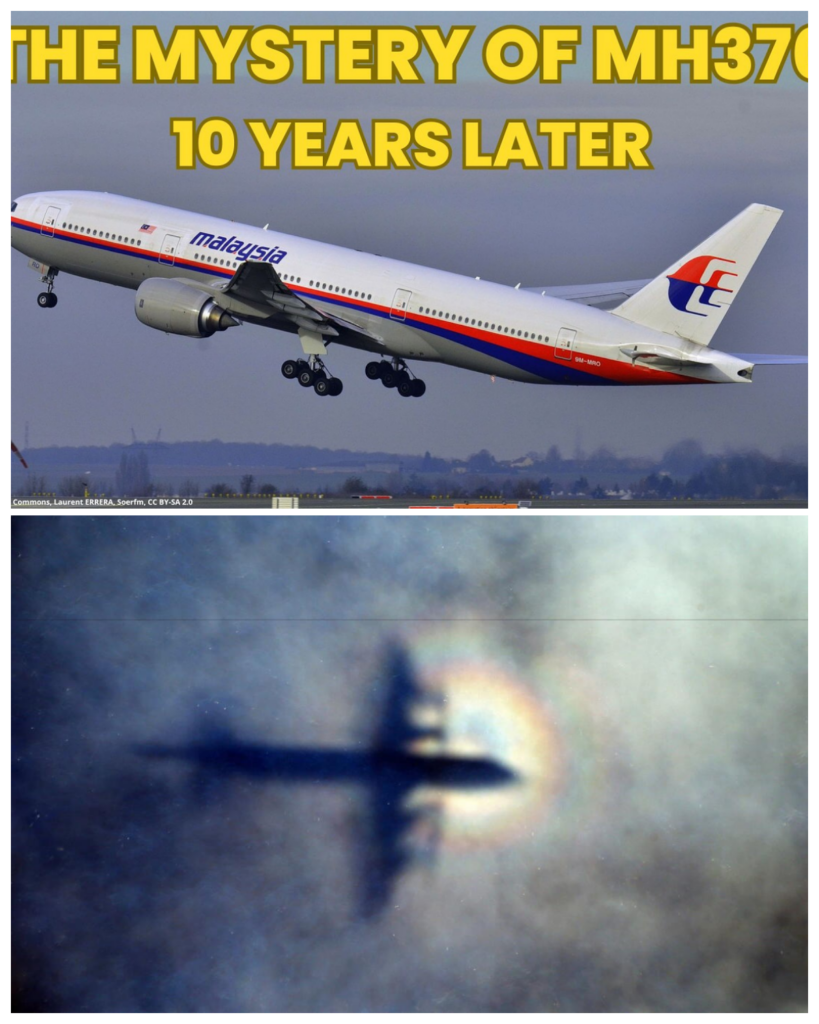
At 12.42am local time on Saturday 8 March 2014, this airplane, designated as Malaysian Airlines flight MH370 took off from Kuala Lumpur International Airport bound for Beijing.
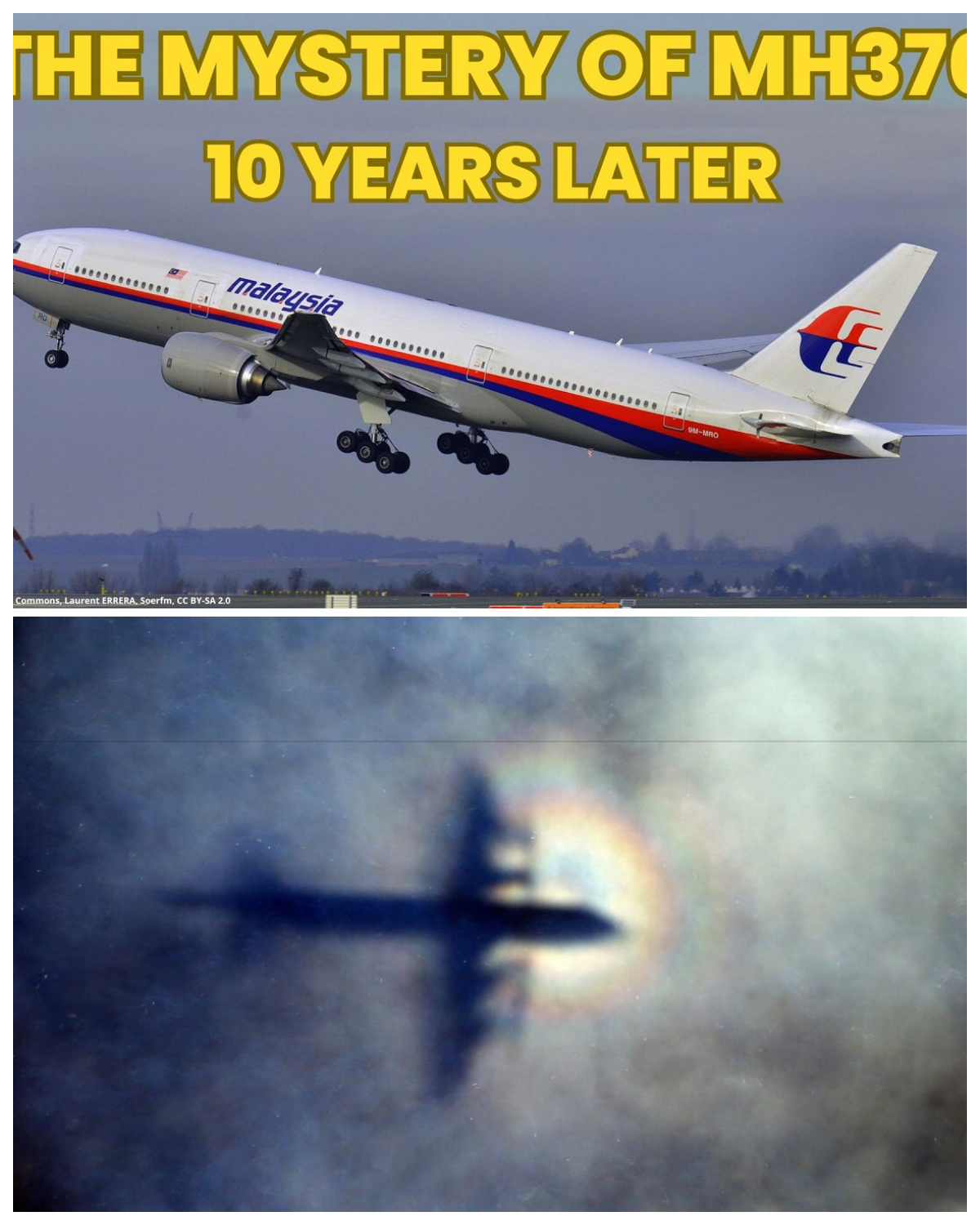
It never arrived and none of those onboard ever came home.
The fate of the plane and its occupants has since become arguably the biggest aviation mystery of all time.
So what do we know about what happened to MH370 and might it ever be found?
Disclaimer first: I’m an historian, not an aviation expert.
My main sources for this video were a 2017 report by the Australian Transport Safety Bureau (the ATSB) which focused on the search for the plane and a 2018 report by the Malaysian International Civil Aviation Organization Annex 13 safety investigation team, which looked at the whole incident, including search efforts up to that point.
I’ve linked them below for you and I’m just going to call them the 2017 and the 2018 reports going forwards.
Obviously, I’ve tried to provide all accurate information in this video, but I’m only human and I’m working to a tight schedule so there’s always the possibility of error or oversight.
If you want to double check anything, I advise you to refer to those reports.
Flight MH370 started off as unexceptionally as any other scheduled flight might be expected to do.
In Kuala Lumpur its 227 passengers, 10 cabin crew, pilot and co-pilot boarded the plane, which was a Boeing 777 manufactured in 2002 and prepared for what was expected to be a 5 hour 34 minute journey to China.
The plane was loaded with sufficient fuel to last 7 hours 31 minutes and the pilot, Captain Zaharie Ahmed Shah, assigned the first officer, Fariq Abdul Hamid, to be the pilot flying for this flight.
So far, so good.
This was all very normal.
As you can see from this breakdown of the nationalities of those onboard, the majority (153 people) were Chinese, with Malaysians making up the next largest group at 50 people, then small numbers of people from twelve other countries.
Five of the passengers were children and the total number of souls onboard was 239.
Communications with air traffic control initially contained nothing noteworthy and the tower cleared the plane for take-off at 12.40am.
Wheels up was two minutes later and it was cleared to climb to 18,000 feet.
Communications before take-off were made by the First Officer and after take-off by the Captain.
Again, there was nothing unusual here.
MH370 was expected to reach a waypoint on its journey, known as IGARI, at 1.22am and could be seen on secondary surveillance radar with the transponder code A2157.
If I understand radar correctly, secondary radar means that the radar signal communicates with a transponder on the plane, whereas primary radar just relies on reflecting a signal off an object, with the object itself being a passive participant in the exercise.
Most of the earth is not covered by primary radar and the majority of what is covered is on land.
The plane was given permission to ascend to 25,000 feet at 12.46am, then 35,000 feet at 12.50am.
The Captain reported in at 1.01am and 1.07am to state that they were at that altitude and it has been noted that it was odd that he reported this twice in six minutes.
The 2018 safety investigation report also remarked that only when cruising altitude had been reached could one of the pilots leave their seats for a break.
At 1.19am they were instructed by Kuala Lumpur’s air traffic control to contact Vietnamese air traffic control in Ho Chi Minh city on the frequency 120.9 MHz.
The Captain responded with the words ‘Good night Malaysian Three Seven Zero’.
This was slightly unusual as he didn’t read back the instructions he had been given, but it may have been nothing more than human error.
It was not followed up on by ground control and after this transmission, no one on the plane was ever heard from again.
It passed the IGARI waypoint at 1.20am and 31 seconds and ought to have reported in then, but did not.
Instead, within a minute its transponder became inactive and as a result its position symbol (known as a Mode S symbol) disappeared from primary and secondary radar screens in Kuala Lumpur, Vietnam and Thailand.
That doesn’t mean that it was invisible to radar, but it was no longer identified as MH370 because the plane was no longer talking back to the radar signal.
The air traffic controller working at Kuala Lumpur Area Control Centre later said he didn’t notice the Mode S symbol disappear as he was distracted dealing with four other planes.
Blips on the Kuala Lumpur radar which now represented MH370 appeared and disappeared between 1.30am and 1.52am and were coded with the letter P (meaning Primary Radar) and a four-digit number.
I don’t know why the signal dropped in and out, but the 2017 report does say that primary radar usually has a much shorter range than secondary.
Had the transponder failed on its own, the crew would have been alerted in the cockpit and could have manually switched on the plane’s second transponder.
This obviously didn’t happen, nor was any automatic message received from the plane indicating that this system had failed.
Such a message would have been expected from the plane’s ACARS which stands for Aircraft Communication Addressing and Reporting System.
It is basically a digital link between the plane and the ground that handles things like the flight plan, weather information and provides ground stations with details about what the plane is doing and how its systems are operating.
Its last transmission had been at 1.07am and 29 seconds, twenty-seven seconds before the second, unnecessary call was made that the plane was maintaining a flight level of 35,000 feet and thirteen or fourteen minutes before whatever event occurred which caused it to leave its flight path.
Had it failed the crew would have been alerted in the cockpit, yet no failure was reported.
Its download link could be switched off from inside the cockpit however so that it wouldn’t send information to the ground.
The 2017 and 2018 reports note that it was only expected to give a position report every 30 minutes and so didn’t miss such a check-in until 1.37am.
Despite the loss of the transponder and ACARS, as I’ve explained the plane remained on primary civilian radar for a time under a different identification code before going out of range and on primary military radar for longer.
We therefore know that at 1.12am it made a 40o turn to the right, then a 180o turn left and flew back across the Malay peninsula.
Later simulator tests showed that it had to be under manual control to make these turns.
At 1.52am it was 10 nautical miles south of the island of Penang, which is where Captain Shah was from.
At the exact same minute, a signal was picked up from the First Officer’s phone on a mobile phone tower on the island.
Later tests suggested that the tower’s ability to connect to the device indicates that the plane’s attitude was no more than 20,000 feet, though it was stressed that those tests were not ideal as the results they provided were really only valid for the test flights.
This seems like a good time to quickly explain possible reasons why no other calls were placed from the plane and why when relatives later tried to contact their loved ones, they heard a ring tone.
The reason for no calls from the plane, assuming for a moment that passengers and crew were still alive, awake, able to dial out and were trying to do so, is that airplanes at high altitude and speed are often out of the range of mobile phone towers and even if they briefly come into range, as the First Officer’s did, they can’t connect to any given tower for long enough for a call to be placed or received before the airplane has moved away.
The reason for a ringtone being heard when a call is placed to a mobile phone, even when the actual handset is no longer able to ring, is that the network is trying to connect the caller to the target phone and the ringtone you hear is basically just a holding noise to keep you on the line while it searches for the phone.
This is so that you know it’s working on the problem and don’t hang up because you can’t hear anything at all.
It doesn’t mean that the target phone is actually ringing somewhere.
Shortly after the plane went missing CNN aired a short interview with a tech expert who explained this and which I’ve linked in the description box below for you.
Having made a turn south of Penang, which could have been done either manually or via the autopilot, MH370 was flying northwest when it disappeared from military radar between 2.03am and 2.15am, then again for the final time, at 2.22am, just over an hour after its last contact with the ground.
At that point it was on a heading of 285 degrees and was about 195 nautical miles from Butterworth and ten nautical miles past another waypoint called MEKAR.
Although military radar did provide airspeed and altitude readings, according to both written reports I read, these readings are inherently unreliable and showed the plane doing things beyond its capability.
Nevertheless, there has been speculation based on this evidence that the plane climbed to about 40,000 feet and that this suggests that it was deliberately depressurised to render the passengers and crew unconscious and very quickly dead of hypoxia.
Had there been a decompression the oxygen masks in the cabin would have deployed to passengers but would only have provided air for about 22 minutes (because the idea is just to keep them going until the plane descends to a safe altitude where they can breathe normally).
There was also a supply of emergency oxygen available to the flight crew and delivered to the cockpit through four masks (because there could theoretically be as many as four people in the cockpit on some flights).
It was enough to support one person at 36,000 feet for 27 hours, more than enough time to keep a pilot alive until fuel exhaustion.
The deployment of the passenger oxygen masks cannot be deactivated from the cockpit so if the plane was depressurised, including on purpose, the passengers and crew in the cabin will have known about it.
Fifteen portable oxygen cylinders would have allowed the cabin crew to endure longer if used, as each cylinder is good for at least fifteen and a half minutes.
The military later claimed they knew that the plane was MH370 but did not view it as a threat and so did not intercept it.
I’ll come back to that claim and discuss it a little further later on, when I’m talking about the search efforts.
Weather conditions, later confirmed with satellite imagery, were good.
There was no rain or lightning recorded at the point where the plane dropped off civilian radar and little cloud.
Though the wind at that point could not be measured, weather forecasts did not anticipate any serious weather events, nor is there any evidence that such events occurred.
No mayday call was ever made from the plane and none of the four emergency locator transmitters kept onboard appear to have been activated.
Of these four, one was in the ceiling of the passenger cabin (but could be switched on from the cockpit), two were attached to exterior doors and designed to activate if the doors were opened and their life-rafts deployed and the fourth was portable and kept in a coat closet in the cabin.
Its battery was good until November 2014.
These ELTs were designed for use outside, but not underwater.
If they are switched on inside a plane, the place itself can block their signals.
On the ground, no one realised anything was seriously amiss at first.
Ho Chi Minh expected to have the plane transferred to their control at 1.22am (which was three minutes later than the time Kuala Lumpur actually told the plane to transfer) and when two-way communication was not established with MH370 within five minutes of 1.22am, they ought to have contacted Kuala Lumpur.
Instead, they made attempts to call the plane starting at 1.27am and it was 1.39am when the call to Kuala Lumpur was made, so twelve minutes late.
It is evident that there was confusion about who was responsible for the plane at the time it dropped off secondary radar as it was on the border between Malaysian and Vietnamese airspace and meant to be in the process of transferring from the control of one to the another.
There was also serious confusion as to where it was.
After Ho Chi Minh enquired after the plane at 1.39am, Kuala Lumpur made enquiries with Malaysian Airlines’ Operations Despatch Centre.
Ho Chi Minh also contacted other air traffic control towers in Hong Kong and Cambodia looking for the aircraft and Hong Kong in turn contacted Singapore.
Attempts were made by the Operations Despatch Centre to contact the plane starting at 2.03am, but no messages could get through via the ACARS and a ground to air telephone call went unanswered at 2.39am.
It was suggested incorrectly by Ho Chi Minh that it had reached another waypoint known as BITOD, but radar data showed that this was not true.
It was likewise incorrectly suggested that it was in Cambodian airspace and Malaysian Airlines’ Operations Despatch Centre even said at 2.33am that it knew the plane’s co-ordinates, only to admit at 3.30am that (and I quote the 2018 report) ‘the flight tracker was based on flight projection and not reliable for aircraft positioning.’ A lack of staff training on the flight-following system was later blamed for these mistakes which gave a false sense of security about the plane’s situation.
Kuala Lumpur ground control should have declared the Distress Phase, which is basically tech-speak for an emergency, at 2.27am, yet it was only at 5.30am that its Aeronautical Rescue Coordination Centre was activated and 6.32am that the Distress Phase message went out.
It was only then that the Search and Rescue Mission coordinator had enough information to act upon, though the Distress Phase message had numerous errors, including the plane’s take-off time.
The 2018 team later noted that the Duty Controller in Ho Chi Minh had trouble communicating in English and needed an interpreter when interviewed.
The team suggested that this language barrier may have hindered communications on the 8 March between Kuala Lumpur and Ho Chi Minh.
With the alarm at last raised a huge search operation was now mounted which at first focused on an area in the South China Sea.
Over the next few days information trickled out from the Malaysian military about the plane’s deviation from its flight path which turned attention to the Andaman Sea.
Then suddenly came the biggest twist in the entire tale.
On 13 March British company Inmarsat, which managed the airplane’s satellite communications (or SATCOM) told the Malaysian authorities that it had startling new evidence about MH370’s fate.
The SATCOM system was used to handle things like the plane’s communications, ACARS and its in-flight entertainment system.
When the plane was powered up, it logged onto the system and thereafter it had stayed in touch with it via a series of pings, known as handshakes.
These were automatically sent to the plane from the Ground Earth Station (or GES) in Perth, Australia and they elicited responses from it to show it was still logged on.
Incredibly, the handshakes, which numbered seven in all and which you can see listed on this chart, continued until 8.19am, showing that that the plane had remained powered up and presumably in flight for all of that time.
They would have occurred hourly, but the attempts to telephone the plane from the ground resulted in the system’s inactivity timer resetting on two occasions and there were also two periods when the SATCOM link failed.
One was after the ACARS went out and we aren’t certain what caused it beyond a probable power outage to the SATCOM.
The other was near the end of the plane’s flight.
The 2018 report specifically says that ‘There is no indication of the SATCOM link being manually Logged Off from the cockpit.
… Such activity would have been captured in the GES logs, but it was not’.
The 7th handshake was not initiated by the Ground Earth Station, but rather by the aircraft itself and came only eight minutes after the previous ping.
This suggests that the plane had run out of fuel, disconnecting the SATCOM (this is the second outage I just mentioned), which had then come back on when it began to be powered by the Auxiliary Power Unit (designed to come on automatically when the engines shut down) and so requested to log-on to the system again.
This indicates that the aircraft crashed or ditched shortly after this time and another handshake attempt at 9.15am failed.
Such conclusions chime, almost to the minute, with what we know about how much fuel the plane had set off with and how long it could remain airborne before fuel exhaustion.
The Inmarsat data had severe limits as it was never intended to be used to ascertain location.
Over the course of a few days however, the company’s technicians were able to establish how far away their satellite was from the plane based on the length of time the pings took to go between the two and this information was used to establish a series of seven rings (one per handshake) which could be superimposed on a map of the earth’s surface.
Every time a handshake occurred, it indicated that the plane had to be somewhere on a specific ring.
Based on where the aircraft was known to have been earlier in the flight thanks to radar data, the rings were immediately narrowed down to arcs, one taking a northern route over Kazakhstan, the other taking a southern route into the Indian ocean.
Thanks to some more complex maths and the fact that the plane clearly didn’t crash on land, it quickly became obvious that it had taken the southern route, a conclusion supported by the debris that eventually washed up on western Indian Ocean shorelines and which we’ll come to shortly.
The Malaysians didn’t stop searching in areas around their country until after the 15th March.
On 17th Australia took over the co-ordination of the aerial search of the southern arc in an area which the 2017 report points out is up to 2800km from the Australian coast, up to 6000m deep and with unknown underwater topography and currents.
The scale of the challenge facing them cannot be underestimated.
The 7th arc is over 3000km long and due to the delay in defining the correct search area, combined with the length of time it took to get search vessels there, any surface wreckage had been able to disperse to over a 100km away from its starting position and/or sink.
Satellite images of that section of the ocean which were taken between 16th and 27th March did flag up objects of interest and some may have been pieces of wreckage, but nothing actually recovered turned out to be from the plane.
Search teams scoured an area covering over 120,000 square km using sonar, but nothing was found except some long-lost shipwrecks.
That’s an area about the size of the US state of Pennsylvania by the way.
The pings from the locator beacons on the airplane’s black boxes will have run out of battery power sometime in April 2014 and later refinements of the search area suggested the boats weren’t looking in the correct spot anyway.
The acoustic search for the beacons was halted on 17th of that month.
The plane was declared officially lost and its occupants dead on 29 January 2015, thereby allowing for compensation and insurance claims by the families to be better pursued, but the search lasted far longer; 1064 days in fact and during that time some additional evidence did come to light in the form of partial wreckage.
The first piece of debris located was a flaperon, which is part of one of the wings.
This washed up on the tiny island of Reunion (to use its English pronunciation, but I do know it’s a French island), on the other side of the Indian ocean from where the plane was last known to have been.
It was located there on 29 July 2015 and ocean drift models, combined with the type and age of the barnacles which had grown on it showed that this discovery was in line with what would be expected if the plane had broken up on the 7th arc in March 2014.
Since that initial discovery, scores of additional pieces of wreckage have been found in places including Mozambique, South Africa and Mauritius.
Only a few (including the flaperon and a section of the left outboard aft flap, also from a wing) can be absolutely confirmed to have come from MH370 through the likes of serial numbers, while others are deemed highly likely or likely to have come from it by virtue of the fact that there are no other missing Boeing 777s which could have been the source of such parts.
The condition of the flaperon and the flap have been interpreted in different ways.
Damage to the flap suggested it was most likely in the retracted position, while the 2018 report says that the quote ‘right flaperon was probably at, or close to, the neutral position, at the time [it] separated from the wing’ end quote.
The 2017 report concluded that ‘It was established from the debris that the aircraft was not configured for a ditching at the end-of-flight’.
This is important because if the plane was glided then it could have stayed in the air for significantly longer after the fuel ran out and the search area would be much bigger.
Simulator tests suggested that in a dive scenario one would have seen, to quote the 2018 report ‘the end of flight occurring within a 100 nm2 box that extended 10 nm beyond fuel exhaustion and 10 nm to the left of the flight path.’ A controlled glide and ditching however would have extended the range which the plane could have travelled by about 120 nautical miles after the engine flameout and also limited the amount of wreckage.
The flap and flaperon suggest to many however, that this didn’t happen and an analysis of the final two satellite transmissions to Inmarsat indicated (and I quote the 2017 report): that the aircraft was descending at a rate of between 2,900 ft/min and 15,200 ft/min when the 7th arc was crossed.
Eight seconds later the rate of descent had increased to between 13,800 ft/min and 25,300 ft/min.
These rates of descent ruled out a controlled unpowered glide with the intent to extend range.
Something else to consider when thinking about whether it was a dive or a ditch is that while most pieces of debris found are from the exterior of the plane, on 6 June 2016 a seatback trim panel which would have encased one of the little TV screens you watch movies etc.
On in the back of the seat in front of you, was located.
For such a piece to have become separated from the plane suggests that it broke up upon impact with the ocean or possibly before if it was falling through the air at an extreme speed, rather than being put through a neat water landing of the type seen in 2009 when a plane was successfully ditched in New York’s Hudson River and remained intact.
In an episode of 60 Minutes Australia which I’ve left linked below for you, you can hear various experts debating where it was a dive or a ditch.
By reverse engineering the likely start position of the debris using drift patterns caused by ocean currents the search area was narrowed down, and the fact that no debris thought likely to be from the plane has been washed up in the eastern Indian ocean, on Australian beaches for example, further supports the conclusion that it met its end in the search zone selected, where ocean currents would have carried it west.
While no surface debris was ever found during the searches, the ATSB did note in 2017 that ‘Re-analysis of satellite imagery taken on 23 March 2014 in an area close to the 7th arc has identified a range of objects which may be MH370 debris’.
Sadly despite the hopes of all involved, the initial search proved fruitless and was finally called off by the trinational search team of China, Malaysia and Australia on 17 January 2017.
Just one year later though, search efforts resumed when US company Ocean Infinity agreed to comb the ocean floor again for 90 days.
They began their hunt on 22 January and finished on 29 May, covering over 112,000 square km in the process.
Again no sign of the plane was found.
Since then, no further search has taken place.
If we assume for a moment that the plane can and will be found, what might we get from it?
It was carrying two so-called black boxes (which are actually orange), like the ones you see here.
One was the flight data recorder which does as the name suggests – it gathers data about the flight and which could hold 25 hours’ worth of information.
The other was a cockpit voice recorder (again, it does as the name suggests) which could only record the final two hours of any given flight.
Both were in the ceiling above the aft cabin and both had underwater locator beacons with a battery life of at least 30 days and which could operate in up to 20,000 feet of water.
The battery in the locator beacon on the flight data recorder had expired in December 2012 though and not been replaced, though the CVR’s locator battery was good until June 2014.
If the plane was found now, the flight data recorder in particular would be incredibly important if it has survived.
Due to the cockpit voice recorder’s limited recording time it might not necessarily be as useful if there were no sounds in the cockpit other than the automated warnings we would expect to hear about for issues such as impending fuel exhaustion.
In fact, the limits of the CVR might even explain why the plane was not crashed immediately.
Keeping it airborne meant that by the time it ended its flight, the recording of whatever had happened at around 1.20am, when the plane deviated from its flight path and the transponder was switched off, had been recorded over and lost forever.
Other evidence available from the wreckage would depend on what condition it’s in.
If there were identifiable human remains, you might be able to get some indication of who was in the cockpit, but I think we need to bear in mind how much time has already passed and the fact that the plane may have shattered upon impact and the cockpit (or any given area of the aircraft), might no longer be recognisable.
A few theories about what had happened were quickly ruled out.
First, there is absolutely no evidence to support the idea that the plane was taken over remotely, as no such technology was ever installed on that aircraft.
Second, no onboard fire could have caused this scenario as the plane remained flying for such a long time, had to be under manual control for at least some of that (so it wasn’t a ghost plane on auto-pilot, at least not at the beginning of its deviation from its flight plan) and there was no distress signal.
Third, its continued flight with manual inputs also rules out an onboard bomb, accidental decompression leading to unconsciousness for all onboard, fuel exhaustion at the time it dropped off radar and any exterior event, such as a missile or mid-air collision.
No group ever claimed responsibility for this event either and none of the debris so far recovered shows explosion damage.
Once all other theories are excluded, the only one that remains is that one or more persons on the plane caused this incident and so concurrent with the early search efforts was an investigation into the crew and passengers to determine if any of them might have interfered with the normal functions of the plane.
One of the people looked at most closely who was on the aircraft was Captain Shah.
He was 53 years old, married with three children, had worked for Malaysia Airlines from 1981 and was very experienced at flying the Boeing 777.
He was well regarded within his job and had been promoted to be an instructor and an examiner.
He had not worked in the previous 24 hours before the flight, suggesting he will have been well rested.
He did not have any known ongoing medical issues, substance abuse problems or disciplinary problems at work.
His family and friends reported no changes in behaviour and he had not taken out any recent insurance cover in addition to what he already had.
He did not have any financial problems and was felt to be good at handling the stress of his job.
His home flight simulator was seized by the Royal Malaysia Police on 15 March 2014.
I’m going to quote the 2018 report to explain the police’s findings and the conclusions they did and didn’t draw from them.
It said that: The RMP Forensic Report dated 19 May 2014 documented more than 2,700 coordinates retrieved from separate file fragments and most of them are default game coordinates.
It was also discovered that there were seven ‘manually programmed’ waypoint coordinates … that when connected together, will create a flight path from KLIA [that’s Kuala Lumpur International Airport] to an area south of the Indian Ocean through the Andaman Sea.
These coordinates were stored in the Volume Shadow Information (VSI) file dated 03 February 2014.
The function of this file was to save information when a computer is left idle for more than 15 minutes.
Hence, the RMP Forensic Report could not determine if the waypoints came from one or more files.
The RMP Forensic Report on the simulator also did not find any data that showed the aircraft was performing climb, attitude or heading manoeuvres, nor did they find any data that showed a similar route flown by MH370.
The RMP Forensic Report concluded that there were no unusual activities other than game-related flight simulations.
The ATSB report also discussed this data and in the interests of thoroughness, I’m also going to tell you what it said, which was that: The simulator data was a partial reconstruction of a flight simulator session from 2 February 2014 [I don’t know why the ATSB says 2 February when the 2018 report says the 3rd, but it doesn’t make any real difference].
It comprised four complete and two partial data captures of various aircraft and simulator parameters at discrete points during the simulation.
The aircraft simulated was a B777-200LR.
Information on the data points is summarised below: • The initial data point indicated an aircraft at Kuala Lumpur airport.
• No useful location or aircraft information apart from simulator time was able to be recovered for the second data point.
• The next two data points indicated an aircraft tracking to the northwest along the Strait of Malacca.
• The aircraft had climbed to an altitude of 40,000 ft by the fourth data point and was in a 20° left bank, 4° nose down, on a heading of 255°.
[sidenote – this seems to contradict the other report I just read to you which says that there was no data quote ‘that showed the aircraft was performing climb, attitude or heading manoeuvres’ but perhaps I’m not understanding what they’re saying correctly.
I don’t know anything about simulators after all.
Now back the ATSB report.] • The final two data points were close together in the southern Indian Ocean, 820 NM southwest of Cape Leeuwin.
The data indicated that the simulated aircraft had exhausted its fuel.
The fifth data point was at an altitude of 37,651 ft, the aircraft was in an 11° right bank and heading almost due south at 178°.
• The data for the sixth data point was incomplete.
It was 2.5 NM from the previous data point and the aircraft right bank had reduced to 3°.
The aircraft was pitched nose down 5° and was on a heading of 193°.
At this time there was also a user input of an altitude of 4,000 ft.
Personally I thought there were some eerie parallels between this simulator data and MH370’s known movements, but I’ll leave it up to you to decide what you think the Captain’s simulator information means as some interpret it in a more sinister way than others.
Regarding his personal life, there have been some conflicting reports.
The official line from his family and the Malaysian government in 2014 and later in the 2018 report, whose investigators were mostly Malaysian, was that he had no issues.
Other sources have claimed that this was not so and that his wife had left him or was about to leave and that he had had affairs.
This is speculation though, not confirmed by any official source and I’d like to see some clear evidence before I would commit to that information.
Those who claim that he was experiencing problems argue that it was due to the importance within Malaysian culture of saving face, that his family, employer, government and the 2018 report covered for him.
As I know nothing about Malaysian culture, I can’t tell you if that is a fair assessment or not.
One of the sources making this claim was a pilot and author who spoke to journalist Megyn Kelly on her YouTube channel and I’ve left that interview linked below for you.
It also talks through and demolishes some of the deluded conspiracy theories about this flight which I won’t be looking at here.
Another noteworthy source, which I’ve also linked for you, was an interview with Tony Abbott, who was the Prime Minister of Australia in 2014 and who said that he was told by senior (but unnamed) officials within the Malaysian government within a week of the plane going missing, that they suspected the Captain.
On the other hand, in that same programme a woman whose mother was on the flight was interviewed and she said (which I thought showed great kindness and magnanimity) that she wouldn’t lay the blame for this at the Captain’s feet on the strength of the evidence we presently have, as she didn’t think it was sufficient and she was mindful of the effect of blaming him on his family.
So I guess my point here is that there are very different ways of looking at this.
Moving on to First Officer Fariq Abdul Hamid.
He was 27 years old and engaged to be married.
He hadn’t worked in the previous 72 hours (so also well rested we would think) and had quite limited experience on the Boeing 777 (just 39 hours).
Although he did not have a lot of money in savings, nor was he in financial trouble and family and friends did not report any changes in behaviour, nor did he have any known medical problems.
Like the pilot, there were no disciplinary issues on his record, he was seen as good at handling his job-related stress and he had not taken out any new insurance policies.
Both he and Captain Shah appeared to be acting perfectly normally on the CCTV footage of them in the airport just prior to the flight and there were no reports of any conflicts between them.
All the cabin crew were checked out and none appeared to have any flight training or any motive to interfere with the plane.
Their experience ranged from 13 years to 35 years (so a well-seasoned crew) and they were all well rested too.
Some had some minor disciplinary issues on their records, but nothing to cause any alarm and none had taken out any insurance policies or appeared to be in financial difficulties.
In short there were no red flags amongst any of the 12 crew.
None of the passengers seemed to fit the bill of a high-jacker either.
There were two men onboard travelling on stolen passports, but they were determined to be Iranian asylum seekers.
Since 2014, suspicion has most often focused on the one or other of the pilots for several reasons.
First, the way in which the plane was manoeuvred suggests that it was under the manual control of a skilled pilot.
Second, the fact that the transponder was deactivated in some way and the plane left its flight path just at the minute when it was supposed to switch from the control of Kuala Lumpur to Ho Chi Minh city again indicates that whoever did this knew what they were doing and how to skirt the air borders between the two countries.
Third, the pilots were already in the cockpit and since 9/11 cockpit doors are kept locked.
They are also very sturdy (literally bullet proof in fact) and hard to break down and they lock when electrical power is available, unlocking when it is not.
They can be opened from the inside by turning a handle and include a viewing port to enable the occupants of the cockpit to look out into the cabin.
Although there is a keypad outside the cockpit into which an emergency code can be entered to gain access, this is intended to be used if the pilots are incapacitated and can be overridden from within the cockpit by an active pilot.
The door is also designed to open if either the cockpit or the cabin suddenly depressurises.
So had someone else tried to force entry, not only is it highly unlikely they would have been successful, there would likely have been time for a mayday signal.
We have to wonder though if someone could have pushed in when one of the pilots left to go to the bathroom.
I think the likelihood of this is also low.
The cockpit had CCTV allowing the pilots to view the other side of the door and the galley before they would open that door and the chances that such an attempt would chime that so perfectly with the cross-over between airspaces and that none of the crew or passengers would be able to stop a would-be intruder and that that intruder would know about turning off the ACARS and transponder, make this scenario even more unlikely.
The limited time between the final verbal transmission from the plane at 1.19am and 30 seconds, when everything seemed to be in order and its transponder being deactivated at 1.20am and 36 seconds, also make it improbable that so many things could have gone wrong that fast.
The Captain has received more scrutiny than the First Officer because the plane seems to have flown over his home island which has been interpreted in some quarters as him wanting a last look at it, because of the points in the southern Indian Ocean found loaded into his home simulator and because of the slightly unusual messages he sent to ground control (the extra message about altitude and the failure to read back the frequency on the final message).
No clear motive has ever been found for either him or anyone else onboard to do this though.
So what conclusions can we draw in this bizarre case?
Well, they are quite limited, but here is what I would be comfortable saying.
The first sign something was amiss was the ACARS system deactivating sometime shortly after 1.07am.
The incident which caused the plane to deviate from its flight path was at 1.20am, when the transponder went dark and the plane failed to call Ho Chi Minh as it had been instructed to do a matter of seconds earlier.
Prior to that the Captain had done two things which were slightly unusual, but on their own not a cause for concern.
He reported the plane’s altitude of 35,000 feet twice in six minutes, though the second report was unnecessary and in his final transmission he failed to read back the frequency to Kuala Lumpur ground control that he was meant to use to call Ho Chi Minh.
The plane then flew on for about seven hours over the Malay peninsula, around the island of Penang and down into the southern Indian Ocean.
Its last (partial) handshake with the Inmarsat satellite was at 8.19am on 8 March 2014.
The flight probably ended within a few minutes of that due to fuel exhaustion, though it could have been glided for a period of time.
It was in the water no later than 9.15am when another handshake attempt failed.
Everyone on board died in the incident, though we don’t know at what point in the flight any of them passed away.
The type of wreckage found, which included small, interior pieces of the plane, make me think that it broke up very significantly upon hitting the water, or even as it fell from the sky, but that doesn’t mean that it definitely wasn’t glided to the end.
That area of the ocean is very rough and it wouldn’t be like the ‘miracle on the Hudson’ flight which was able to set down on a pretty calm river and so stay intact.
Even an attempt to land on water could have resulted in significant break-up.
The length of time MH370 flew for after communication ceased and secondary radar was lost and the lack of a mayday signal or claim of responsibility indicates that no fire, bomb, sudden electrical failure, or external event caused this disaster.
It was initiated by one or more persons, not a fault with the plane.
There is a small chance that someone gained access to the cockpit other than the pilots and forced one or both of them to do this, but that seems unlikely given the challenges of getting in there, the lack of a mayday call and the coincidence of such an event happening just as the plane was moving from Malaysian into Vietnamese airspace when its disappearance would be most likely to go unnoticed for a period of time.
I did consider the idea that passengers nowadays can often see where the plane is on a map on their in-flight entertainment systems, but I don’t know if such systems would give sufficient detail to tell passengers where the airspace border is.
Whoever was at the controls after 1.19am could manually fly a Boeing 777 and knew that to make the plane ‘disappear’ in inverted commas, it was necessary to deactivate its ACARS and its transponder.
They also knew how to do these things.
The only people on board known to have that knowledge and skillset were the pilots, though again we can’t completely rule out that they were coerced.
It is interesting though not conclusive, that the plane flew over the Captain’s home island and that his home flight simulator recorded a couple of manually entered waypoints in the southern Indian Ocean barely five weeks before the flight.
If it was one of the pilots who did this, then the other would have had to be incapacitated.
I thought the chances that the second pilot would get up for a bathroom break at the exact minute the plane was crossing from Malaysian oversight to Vietnamese then be locked out were rather low, though certainly not impossible and I considered that there are other ways of getting someone to leave.
One pilot could have said something as simple to the other as ‘would you grab me a sandwich from the galley please’.
Still, I wondered if perhaps the innocent pilot was incapacitated in the cockpit, possibly without anyone else realising.
Finally, despite concerns over the Captain, there is no definitive motive for anyone on board to have done this which only makes the whole thing even more terrifying in my view.
Regarding the actions of the ground control teams in Kuala Lumpur and Ho Chi Minh; I was persuaded by the opinions I read and heard from expert investigators that the Malaysian controller ought to have been paying attention to the radar blip that MH370 became after its transponder ceased functioning and I took their points that when concerns began to be raised there was a lot of confusion, procedures weren’t followed, more time was wasted and an emergency ought to have been declared much faster.
I don’t know that that would have resulted in any of the people onboard the plane surviving, for the flight may have ended in an equally tragic manner, but we might know where it was and possibly who did this.
That would be incredibly valuable information to have for the family and friends of those lost and for the investigation.
In the ground teams’ defence, a lack of certain training and issues of overwork seem to have contributed to some of the problems.
I also thought it was strange that the Malaysian military did nothing when they said they spotted the plane flying around over the Malay peninsula and beyond, clearly out of its expected position.
That lack of action and the fact that they delayed announcing for so long that they had tracked its course deviations even though there was an incredibly expensive search taking place in the South China Sea, makes me agree with an opinion expressed by the interviewee on the Megyn Kelly show, that they actually weren’t monitoring the flight in live time and when they later realised the data they had they didn’t want to admit to this oversight due to embarrassment.
This is all just supposition though and as it transpired, even if had they known about and admitted to the radar information earlier, it still wouldn’t have focused the search in the correct area as the southern Indian Ocean is well beyond any radar coverage.
I also ultimately put the blame for this incident on whoever took control of the plane, not anyone on the ground.
So do I think MH370 will ever be found?
I certainly hope so, but there are challenges which might make it all but impossible, at least with current technology.
If it broke into millions of little pieces which then dissipated over many square miles of ocean floor, there might not be a big enough chunk, or a concentrated enough debris field to show up on sonar.
Even if it stayed largely intact at the point of impact, if it hit an underwater mountain as it sank, it could be buried in an avalanche.
It’s not like the Titanic, which was much bigger to start off with, which stayed in two very big pieces after its sinking and for which there was a much narrower search area.
Still, I don’t think we should give up hope.
It may not have broken up that much and technology improves all the time.
Things which we take for granted today would have seemed like magic barely 100 years ago.
Perhaps new satellite technology will be invented which will enable the ocean to be scanned from space?
It sounds like sci-fi at the moment, but who knows?
That brings us to the question of the day which is do you think MH370 will ever be located?
Let me know in the comments below and until next time, keep learning.