The last photograph of Dan Carter alive was taken by a runner who did not know her name.
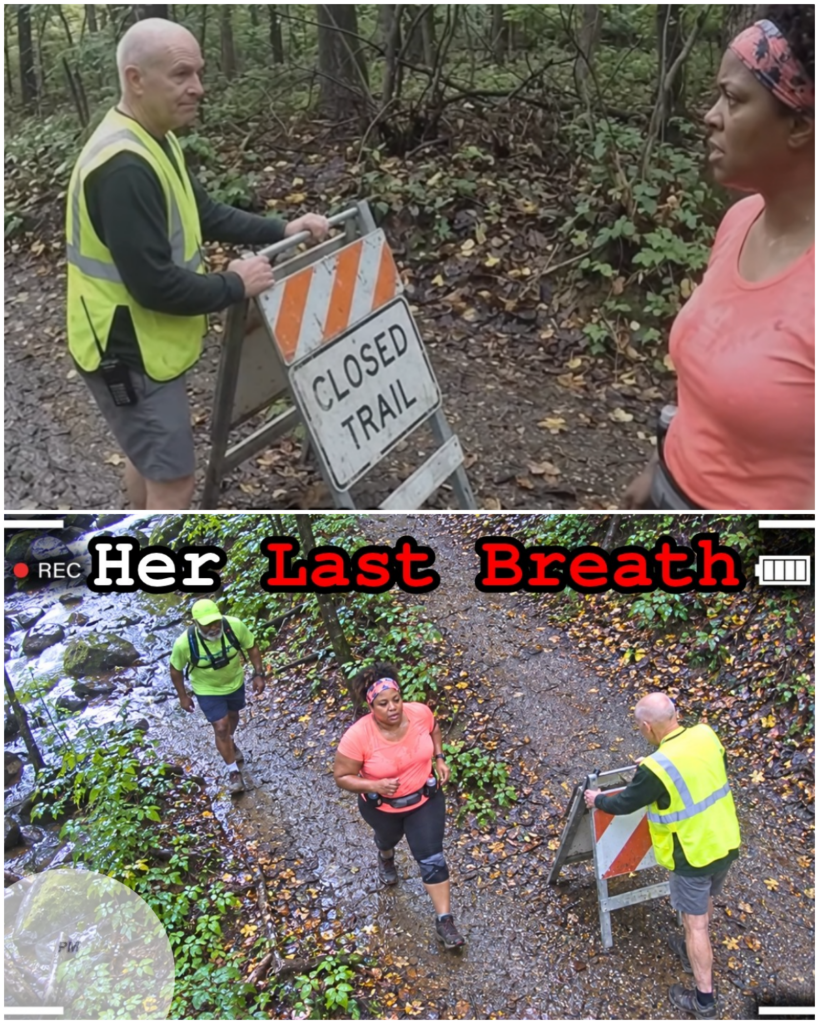
Da appears at the edge of the frame on the Topath Trail in Kyhoga Valley National Park, Ohio.
She is a 44year-old black woman with a wide stomach, powerful calves, soft upper arms, and a gate shaped by 12-hour nursing shifts.
Her neon coral running shirt is dark with sweat. One compression sleeve has rolled below her knee.
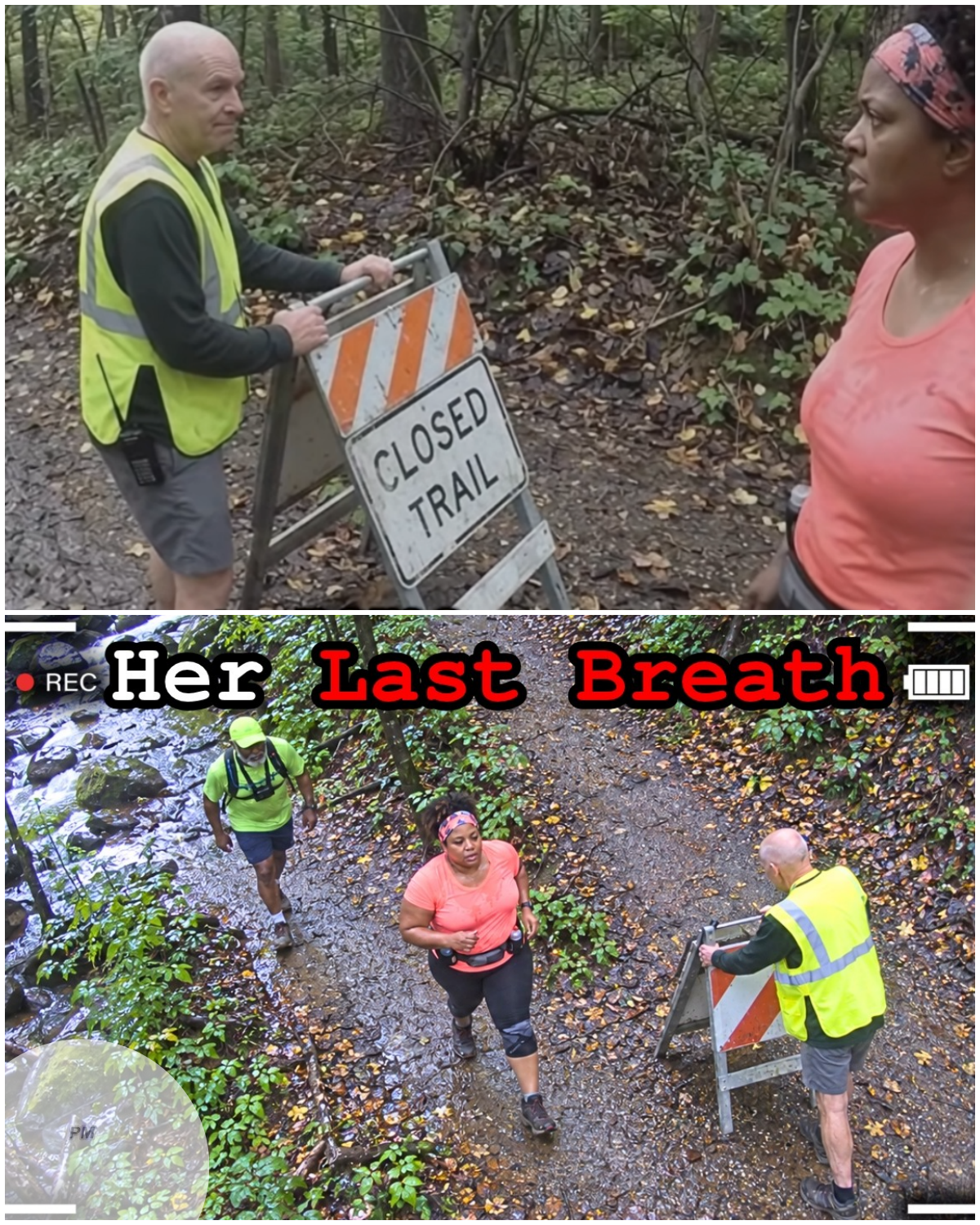
Her expression is tired, irritated, and completely ordinary. 20 ft ahead, a bald man in a fluorescent volunteer vest is turning a closed trail sign toward her.
The photograph was taken at 7:18 on a Sunday morning. At 7:19, Da’s interval timer sounded twice.
At 7:24, it sounded again inside a ravine where the trail was not closed. At 7:29, the timer recorded movement, but no running.
At 7:34, someone pressed stop. Da was found [music] 2 days later beneath a railway culvert half a mile from the route she trained every weekend.
The man in the vest, volunteer marshal Silas Kerna, told investigators he redirected her for safety.
Her timer proved he had studied exactly when she would slow down. Da worked nights in the cardiac unit at Saint Vincent Medical Center.
She began running after a patient in her 50s died while waiting for a transplant.
Da did not transform into the kind of athlete used in advertisements. She lost some weight, gained some back, developed shin pain, and continued anyway.
Her goal was a trail half marathon scheduled for October. She used a runw walk method.
4 minutes running, 1 minute walking. Her watch announced each interval through a small speaker because earbuds made her feel unsafe on wooded trails.
Friends could hear the beeps approaching before they saw her coral shirt. Da trained at the same time most Sundays after finishing her shift.
She parked near the blue heron lot around 6:50, stretched beside her car, and followed a 7m out and back route.
She posted no live location, varied the turnaround point, carried pepper spray, and sent her sister Immani an automated start alert.
She also spoke to volunteers. Silas Karna first approached her in May. He wore an official looking yellow vest and carried a radio.
He told Daea the park preferred runners to use headphones so interval sounds would not disturb wildlife.
She laughed because the claim made no sense. The following week, he apologized and said he admired her consistency.
By July, he knew her name, profession, target race, and interval schedule. Da did not give him all that information.
Silas learned it by listening, reading a public fundraising page for the hospital team, and checking registration lists.
When she realized, she told Emani the volunteer was collecting facts like he already owned the conversation.
On August 6th, Da reported him to a visitor center. She said Silas appeared at three different points during one run and criticized her for leaving the marked path when she stepped aside for cyclists.
A ranger documented the complaint and reminded Silas that volunteers could not issue orders. He lost his trail monitoring shifts for 30 days.
Silas treated the restriction as humiliation. His life outside the park had narrowed for years.
He had been dismissed from a warehouse after repeatedly timing co-workers bathroom breaks. His marriage ended after he installed trackers on his wife’s car.
He lived in his late mother’s house and kept notebooks recording neighborhood movements. As a child, Silas had severe asthma.
His mother entered local races and made him wait at finish lines, promising exercise would make him normal.
When she died, he filled a room with her medals and course maps. He told volunteer coordinators that trails were the only place where people followed rules in the correct order.
Da did not fit his idea of a runner. She walked by design, occupied space confidently, and rejected instruction from a thin man who assumed the vest gave him authority.
He began logging her intervals. Police later found eight pages marked 4R/1W. The times matched Da’s Sunday runs.
Beside certain minutes, Silas wrote words such as bridge, blind curve, alone, and breath loud.
He was not merely following her route. He was identifying the moments when she would slow.
On September 17th, Da ended her hospital shift at 6:12 a.m. A security camera showed her change into the neon coral shirt, eat half a banana, and refill a hydration belt.
She messaged 7 easy, home by 9. At 6:48, her car entered Blue Heron lot.
Another runner, Peter Vaughn, parked two spaces away. Peter was 59, white, thin-legged, and recovering from hip surgery.
He carried a small action camera because he had been struck by a bicycle earlier that summer.
Da helped him tighten the strap. They started separately. At 657, the park entrance camera recorded Da pass zero.
Her watch began the interval program. Four minutes later, two high tones told her to walk.
At 7:02, she ran again. The timer created a sequence more precise than any witness.
At 7:07, Da passed a dog walker near lock 27. At 7:12, she walked beneath the old sycamore.
At 7:17, she approached the junction with Quarry Spur. Silas was waiting. He had arrived at 539 in his mother’s faded minivan.
Although suspended from volunteer duties, he wore the fluorescent vest and carried a radio program to receive park channels.
He placed a folding closure sign at the junction and tied orange tape across the main route.
The sign cited bridge inspection. No inspection was scheduled. Peter caught up while Da questioned him.
His action camera took a still image every 30 seconds. One frame showed Da, Silas, and the sign.
Peter remembered Silas saying a maintenance vehicle had leaked hydraulic fluid and runners needed to use quarry spur for one mile.
Peter turned back because the spur was uneven for his hip. Da checked the park alert page.
It showed no closure. Silas said the update was delayed. He then used information designed to lower her suspicion.
He mentioned Ranger Melissa Grant, the person who received Da’s earlier complaint. Silas said Melissa authorized his return for emergency coverage.
That was false. Da photographed the sign and sent it to Ammani at 7:18. The message remained pending because coverage dropped.
Her walk interval began at 7:19. Silas offered to guide her around the spill. Da declined.
She said she would turn back. He moved the sign behind her, closing the route she had just used.
The action changed a questionable detour into a trap. Da activated audio recording on her watch.
At 7:201, she said, “Volunteer Silus Kern is blocking both directions at Quarry Spur.” Silas heard his name.
He told her she was being dramatic. Da stepped around the tape. He grabbed her hydration belt.
She drove an elbow into his chest and ran onto Quarry Spur, choosing movement over a fight at the junction.
Silas followed. The spur descended toward Brandy Ravine through roots and loose stone. Da’s 4-minute interval ended at 7:24.
Her timer beeped for walking. She did not slow. Her heart rate rose above 180.
The watch classified the movement as sprinting. Silas knew the next normal recovery would occur at 729.
He cut across an old maintenance switchback and reached the lower junction before her. At 7:26, Da rounded a bend and found him ahead.
He held a telescoping trail tool used to move branches. Da turned uphill. Her phone attempted an emergency call but could not connect.
The watch continued recording. Silus said, “You never follow the interval when someone tells you.”
Da answered, “You are not part of my run.” Those were her last clearly recorded words.
At 7:27, metal struck stone. Da screamed and the watch registered a fall. She stood again within 12 seconds.
Silas hit her left shoulder, not her head. He wanted control before he wanted death.
Da sprayed pepper spray across his face. Silas dropped the tool. She ran downhill. The ravine narrowed at a washed out foot bridge.
Da crossed on a fallen beam. Silas followed more slowly because of the spray. At 7:29, the timer beeped for her next run interval.
Da was hiding beneath the bridge, trying to keep her breathing quiet. The sound revealed her location.
Silas climbed down. He dragged her from the bank by the compression sleeve. She tore his vest and removed a reflective strip.
Later, that strip would be found beneath her fingernails. At 7:31, the watch recorded repeated impacts and a heart rate collapse.
The medical examiner concluded Silas struck Daea with a limestone fragment and compressed her neck with the hydration belt.
At 7:34, he pressed stop. The watch required a 2-cond hold. A random impact could not end the program that way.
Silas carried Daea toward a railway drainage culvert he had marked in his notebook as dead signal.
Her body weighed more than he expected. Drag marks, broken branches, and coral fibers created a visible path.
He covered her with brush and returned to the junction. At 8:03, Silas removed the closure sign.
At 8:14, he walked past Peter, who had resumed a shorter route. Silas had changed shirts, but still wore fluorescent yellow trousers.
His eyes were swollen from pepper spray. Peter’s camera captured him. Silas said insects caused the swelling.
At 8:27, he drove away. Immani received the pending photograph at 8:36 when Daet’s phone briefly reconnected near the parking lot.
The phone was inside Silus’s minivan. He used Dae’s fingerprint while she was unconscious to unlock it, then drove toward the lot, intending to stage her car departure.
The device uploaded the sign, image, and audio backup before he realized data had resumed.
Silas abandoned the phone beneath a trash liner and left Da’s car in place. He decided an apparent medical emergency on the trail would draw less suspicion than a missing vehicle.
At 9:04, Immani saw the photograph and called Dae. No answer. At 9:12, she called Park Dispatch and supplied Silas’s name.
The dispatcher found his suspension notice. Rangers searched Quarry Spur first. Silas volunteered to help.
He arrived at the visitor center at 10:01 wearing a clean volunteer shirt. He said he heard a runner was missing and wanted to support search teams.
Ranger Melissa Grant asked why his eyes were irritated. He repeated the insect story. She asked whether he had seen Dae.
Silas said no. Melissa showed him the pending photograph. His vest, face, and closure sign filled the background.
He changed the answer. He said he redirected Daea at 7:15, then watched her return toward the parking lot.
The official entrance camera never showed her returning. Silas claimed its angle missed the side path.
Search dogs followed Da’s scent down Quarry Spur. Heavy rain began at noon and washed the lower trail.
Teams found the fallen trail tool, blood on limestone, and an empty pepper spray canister.
They did not find the culvert before darkness. Silas remained near command, listening to radio locations.
At 6:22, he sent himself a text from a prepaid phone. Check South Railpipe. He then told Melissa an anonymous hiker had reported hearing cries near the south end.
The location was two miles from Dae. He hoped to pull searchers away overnight. Melissa asked to see the message header.
The prepaid number had been activated that afternoon at a kiosk captured by a grocery camera.
Silas appeared on the footage. He was removed from the search and interviewed. His notebook was found during a warrant search of the minivan.
Alongside Dan’s intervals were schedules for seven other female runners. The entries focused on women who trained alone, wore visible timing devices, or used runwalk methods.
One name belonged to Reena Patel, who disappeared from a county trail in 2020. Her death had been classified as an accidental fall after her body was found below a quarry ledge.
Silas’s notes placed him at that trail every Sunday for 6 weeks. The investigation expanded before Dan was recovered.
At 6:40 Monday morning, a railway maintenance worker saw a patch of neon coral beneath brush near the drainage culvert.
Dan’s body was found minutes later. The position disproved a running fall. Her shoes carried soil from the upper trail, but the culvert floor contained rail gravel embedded in the back of her shirt.
She had been moved after death. The hydration belt was tightened around her neck. Silas’s DNA remained inside the buckle.
His defense later argued that he touched the belt when he tried to help at the junction.
Peter’s photographs showed him never approach within arms reach before Dan ran. The watch became the center of the case.
Silas had stopped the visible workout, but he did not know Dan used a medicalrade cardiac monitoring application recommended by a colleague.
The application stored raw accelerometer data and 10-second audio buffers whenever her heart rate crossed 175.
Those emergency buffers continued after the workout stopped. They captured Silas breathing, dragging weight across leaves, and speaking to himself.
At 7:38, he said, “Four run, one walk. You changed it.” At 7:41, the railway crossing bell sounded in the distance.
Transportation records fixed the train’s location and placed the recording near the culvert. At 7:47, Silas’s radio received Melissa’s routine trail status check.
He did not answer. The device IDs in Da’s audio matched the radio recovered from his house.
Investigators compared Peter’s action camera images with Dan’s watch data. The still at 7:18 showed Silus touching the sign.
Dan’s photograph followed 12 seconds later. The 719 walk beep began while he blocked her return.
Each source was independent. Peter felt guilty for turning back. Prosecutors told him that his hip injury did not cause the murder.
His camera preserved the scene Silas tried to erase. A deeper search of Silus’s house revealed a map room.
Race routes covered the walls. Colored pins marked women. Interval programs, parking lots, blind curves, and places without cell service.
Photographs taken from behind showed runners of different ages and body types. Silas had a particular fixation on runners who did not match competitive stereotypes.
In his notes, he called them rule breakers. Even when they followed every posted regulation, their existence offended a hierarchy he invented.
Thin bodies belonged at the front. Everyone else should accept correction. D challenged that belief simply by training in public and deciding her own pace.
The room also contained Reena Patel’s missing watch band. Detectives reopened her case. Reena was 52, Indian-American, and trained for a charity 10K using 3minut run intervals.
Silas approached her as a safety volunteer. Her watch data had been unavailable because the device was never recovered.
A photograph in Silus’s notebook showed her at the quarry trail head. The date matched her disappearance.
Soil from the watch band contained minerals unique to the ledge where she was found.
Another page read, “Would not keep three. Went over on recovery.” Prosecutors charged Silas with both murders.
He denied killing Reena and claimed Dan attacked him after he enforced a closure. He said she slipped in the ravine, struck her head, and died.
He moved the body because he feared the prior complaint would make him look guilty.
The injuries rejected that sequence. Dan had defensive bruises on both forearms, pepper spray residue on Silus’s jacket, and neck compression inconsistent with a fall.
Reena had a fracture that occurred before she went over the ledge. Trail closure records showed neither route was closed.
The suspension added motive and planning. Silas was not scheduled to be in uniform. He stole the folding sign from a storage shed Friday night.
A camera recorded him test the sign angle in his yard, then photograph it from runner height.
He also practiced Dan’s interval cycle. A neighbor heard beeps from his backyard every 5 minutes on Saturday.
Silas walked between cones while timing the distance from one blind corner to another. His notebook calculated how far Dana covered during four running minutes at her average pace.
He selected Quarry Spur because the switchback allowed him to overtake her without matching her speed.
At trial, the defense tried to turn Dan’s body into doubt. Her weight, fatigue after a night shift, elevated heart rate, and uneven terrain were presented as reasons she might suffer a natural emergency.
A cardiologist testified that her heart was functioning normally before the assault. The sharp change followed the recorded impact, not exertion.
The prosecutor displayed her training history. Dany had completed longer distances at higher heart rates.
She knew when to walk, hydrate, and stop. The interval method was not evidence of weakness.
It was the structure that made Silus’s ambush visible. Every 5-minute block carried a location.
657 start. 707 lock 27. 717 Quarry Junction. 724 False Detour. 729 Bridge Concealment. 7:34 Workout Stopped by another hand.
The beeps turned the prosecution into a clock the defendant had created by studying her.
Silas’s attorney argued that anyone could purchase the same radio, sign, vest, and trail tool.
The case did not depend on equipment alone. His face appeared in Peter’s frame. His voice appeared in the watch buffers.
His DNA was inside the belt buckle. Da’s reflective strip was in his vehicle. Her phone connected to the minivan.
His notes predicted her location to the minute. Immani testified about Da’s precautions. She varied routes, avoided headphones, shared starts, carried spray, photographed unusual signs, named the person confronting her, and activated recording.
Online commenters had still asked why she ran alone. Ammani said the question assumed public trails belonged safely to men unless women supplied a perfect defense.
Da had supplied more precautions than most runners ever would. Silas turned those habits into targets because authority gave him access.
Melissa testified about the complaint that suspended him. She regretted treating it as a boundary issue rather than stalking.
Silas had not made a direct threat, but the pattern of appearing at multiple points showed surveillance.
The park changed policy after the murders, so volunteers named in repeated contact complaints lost access to radios, schedules, and uniforms pending review.
Peter’s camera captured more than the sign. In a reflection on its metal hinge, analysts saw Silas’s minivan parked on the service road.
He claimed he arrived on foot. The vehicle position gave him the shortcut used to intercept Da below.
A GPS unit beneath the dashboard stored the route despite his attempt to delete it.
The minivan traveled from the junction to the lower spur at 7:22, stopped for 3 minutes, then returned toward the culvert at 7:35.
Silas did not chase Da continuously. He used the road network to appear ahead of her.
That pattern linked Reena. A toll camera placed the same minivan on a quarry service road minutes before her fall.
The plate had been unreadable in the original case, but a roof dent and missing hubcap matched repair records.
The jury saw no graphic photographs. They saw Da at the edge of Peter’s frame, leaning slightly forward, sweat visible, compression sleeve, uneven, looking directly at the man moving the sign.
Silas had described her as careless and confused. The image showed recognition. She knew the closure was wrong.
She checked the alert page. She photographed the sign. She named him. She tried to leave.
His plan succeeded because he controlled both visible directions, not because she trusted him blindly.
During cross-examination, Silas’s former wife described his need to convert observation into ownership. He timed meals, showers, errands, and sleep.
When she changed a routine, he accused her of deception. She left after finding a root map of her drive to work with alternate interception points marked.
The defense objected that marital control did not prove murder. The judge admitted only the tracking evidence because it demonstrated the same planning method found in the runner notebooks.
Silas chose to testify. He said he wanted to protect trails from people who treated exercise as performance.
He complained that Da’s loud timer disturbed other visitors and that her social posts encouraged unprepared runners.
He described himself as a steward forced to act when the park failed to enforce standards.
The prosecutor asked which rule Da bro broke. Silas named none. He said she was too loud, too slow, too visible, and too resistant.
Each answer exposed a personal rule disguised as safety. When asked why he pressed stop on her watch, he claimed he tried to preserve the battery.
The watch was at 72%. When asked why he carried her to a dead signal culvert, he said he looked for shade.
The trail had shade everywhere. When asked why he spoke about changed intervals after her death, he said he was grieving the failed rescue.
He never called for help. The jury convicted Silas of first-degree murder in Da’s death.
Seconddegree murder in Reena’s death, stalking, kidnapping, impersonating an authorized volunteer, and evidence tampering. He received life without parole, plus 68 years.
At sentencing, Da’s co-workers wore neon coral ribbons. They did not present a before and after photograph or describe running as a weight loss journey.
They described a nurse who ate vending machine crackers at 3:00 in the morning, argued with broken medication scanners, and trained because finishing slowly still counted as finishing.
Immani played Da’s first recorded mile from the previous winter. Wind covered most of it.
Near the end, Da laughed and said, “This body got me here. It can take its time.”
Reena’s family spoke about the four years in which an intentional killing was treated as an unfortunate fall.
Her daughter said the new case returned agency to a woman whose pace had been mocked, even in investigative notes.
Kyhoga Valley removed volunteer access privileges from unscheduled personnel and added QR verification to closure signs.
A visitor could scan a sign and see who placed it, when, and under whose authority.
False closures became criminal offenses under state law. The old quarry spur sign was never returned to service.
Da’s hospital team completed the half marathon without replacing her place. Her bib number appeared on a banner at the final aid station.
Runners of many sizes used runwalk timers openly, and volunteers were instructed never to comment on pace unless a participant requested help.
Peter continued carrying his camera. He stopped blaming his repaired hip for turning back. The photograph he took became evidence precisely because he was moving slowly enough for the automatic shutter to fire at the junction.
The frame does not look cinematic. Da is not centered. Her shirt clings unevenly. Sweat shines on her neck.
One foot is planted wider than the other. Peter’s finger partly covers the corner. Silas stands farther up the trail with the sign half turned.
That incomplete motion matters. A legitimate closure sign would face approaching runners before they arrived.
Silas rotated it only when Da came into view. He did not close a dangerous trail.
He closed her route. The interval beeps continued after the sign, after the first blow, and after she hid beneath the bridge.
Silas believed the sounds made Da predictable. They did. They predicted where he waited, when he took the shortcut, when he found her, and when he held the button long enough to stop the run.
Da never crossed her half marathon finish line. But the training method he despised measured every decision that brought him to prison.